Author: Burt Webb
-
Geiger Readings for Mar 19, 2017
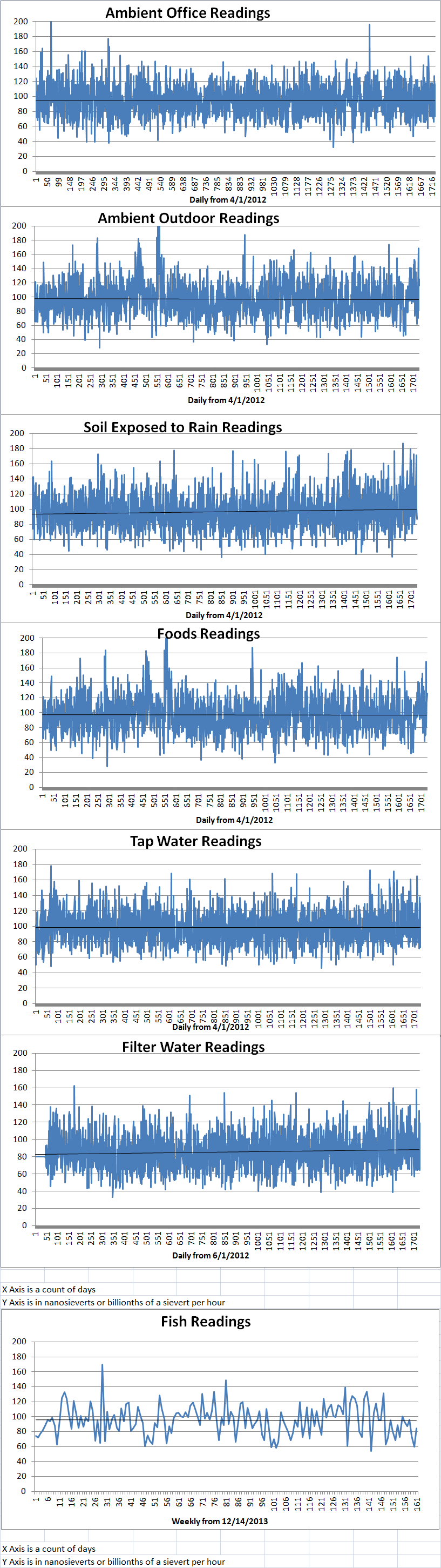
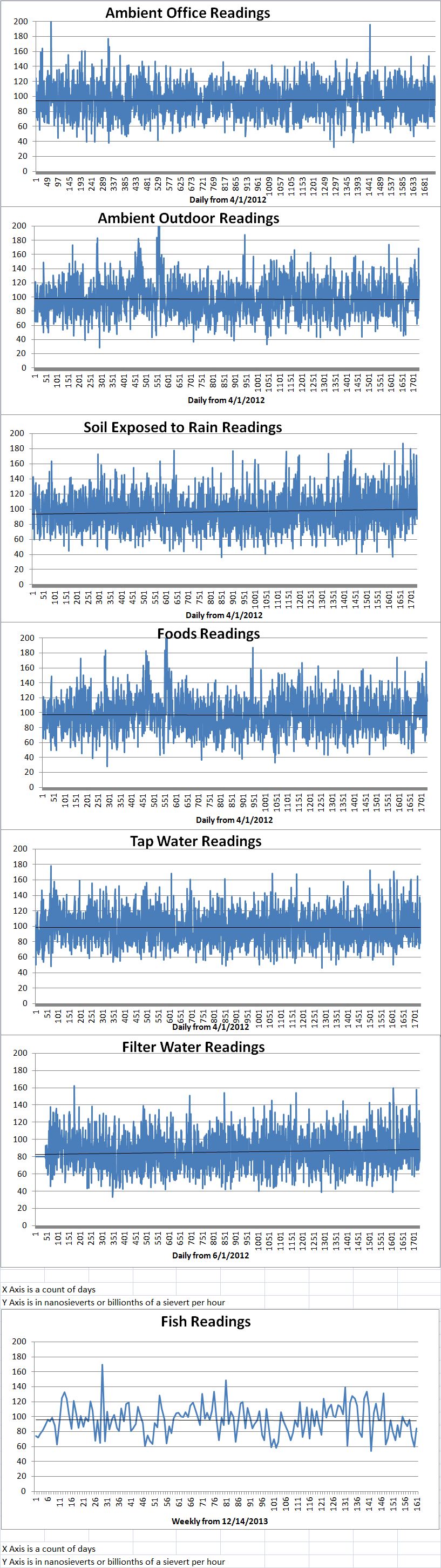
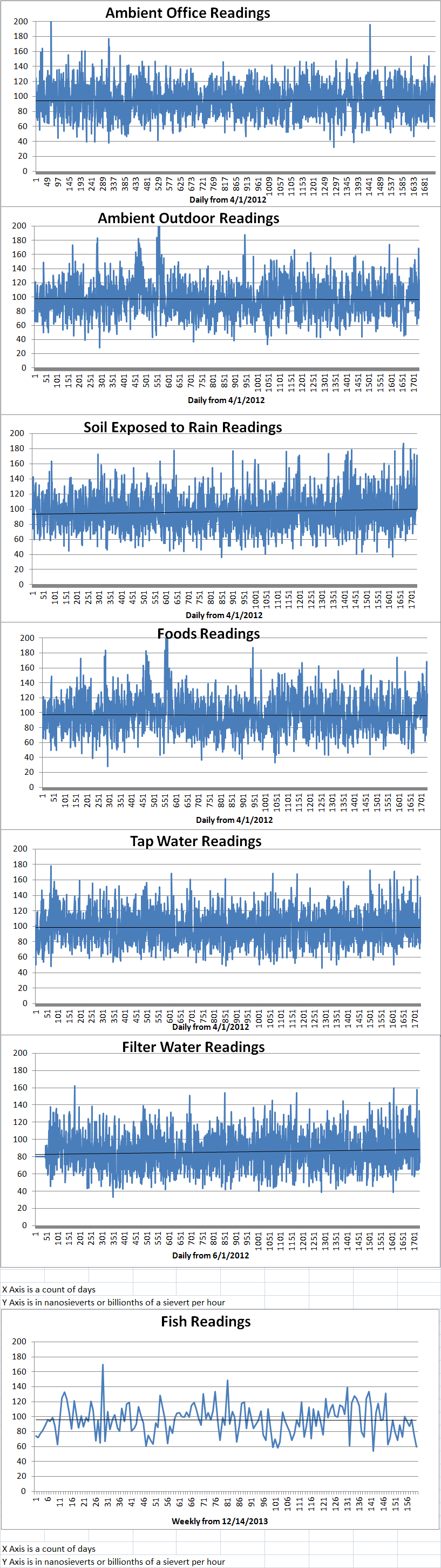
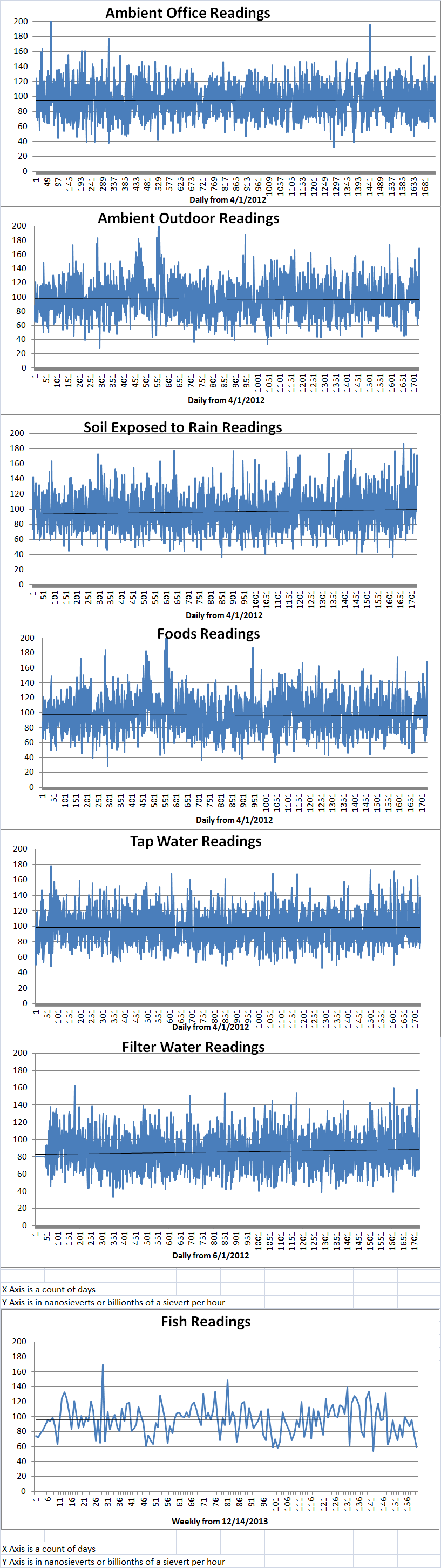
Ambient office = 73 nanosieverts per hourAmbient outside = 95 nanosieverts per hourSoil exposed to rain water = 89 nanosieverts per hourRoma tomato from Central Market = 126 nanosieverts per hourTap water = 72 nanosieverts per hourFilter water = 65 nanosieverts per hour -
Nuclear News Roundup Mar 18, 2017
How Russia Is Turning Syria into a Major Naval Base for Nuclear Warships (and Israel Is Worried) nationalinterest.org
Secretary of Energy Rick Perry said during his confirmation hearing in January that he’s been open to Texas helping solve the waste problem. houstonpublicmedia.org
Bechtel is to pull out of small modular reactor development, the US engineering giant has confirmed. constructionnew.co.uk
-
Geiger Readings for Mar 18, 2017
Ambient office = 89 nanosieverts per hourAmbient outside = 93 nanosieverts per hourSoil exposed to rain water = 87 nanosieverts per hourCrimini mushroom from Central Market = 116 nanosieverts per hourTap water = 130 nanosieverts per hourFilter water = 119 nanosieverts per hourDover sole – Caught in USA = 85 nanosieverts per hour -
Nuclear Reactors 268 – Serious Problems At Areva Le Creusot Forge in France
I have mentioned the Le Creusot Forge multiple times in previous posts. It is owned by Areva, a nuclear reactor construction firm that is a subsidiary of the French-owned utility EDF. For many years, the Le Creusot forge had one of the only forges in the world that was big enough to create reactor vessels for commercial power reactors. Now the question has been raised of whether or not nuclear reactor components should ever have been made at Le Creusot.
Tests of a reactor vessel manufactured at Le Creusot recently for use in one of the first of a new generation of reactors called European Pressurized Reactors (EPR) showed that there was too much carbon in the steel and it was only half as tough as it was supposed to be. This led to investigations into the quality control at Le Creusot Forge.
It was found that Le Creusot Forge staff falsified or out-right forged quality control documents for nuclear reactor components over the past forty years. The danger of brittle high carbon steel in reactor vessels and other components from the forge shuttered twenty French nuclear power reactors for inspection last year and threw doubt on many other reactors scattered around the world that contained Le Creusot Forge parts.
The French Nuclear Safety Authority (ASN) which has been investigating operations at the Le Creusot Forge has now declared that the equipment at the Forge is not adequate to the task of manufacturing acceptable nuclear components. An ASN official said “Le Creusot Forge is at the limit of its technical capacity. The tools at its disposal are not adequate to manufacture such huge components. In such a situation, errors are made. The inspection brought to light the fact that the safety culture in the plant is not sufficient to produce nuclear components.”
In addition to the forgeries at Le Creusot, it was also discovered that the staff kept special files on parts that they knew might be substandard but they had instructions to never show those files to people who purchased those parts or to inspectors from ASN. Areva was ultimately ordered to inspect by hand records for thousand of parts manufactured at the Forge over decades.
When the forgeries and special files were discovered, Areva shut down the Le Creusot Forge. They are hoping to restart the plant this summer if ASN authorizes it. If they cannot restart the plant this summer, they will have to go to outside suppliers for components to be used in the scheduled construction of nuclear power reactors for their customers. They may wind up losing customers if they cannot get the plant open soon and reassure customers that the quality control problems have been solved.
The ASN has presented Areva a list of questions about the culture and operation of the Forge that must be answered by March before ASN makes a decision on authorized the plant to reopen. Areva says that they are going to spend over eight million dollars to insure that the equipment at the plant is fully capable of making safe and fully functional components for use in the construction of nuclear power plants. ASN representatives have not said whether or not they believe that equipment must be replaced at Le Creusot Forge before they authorize its restart.
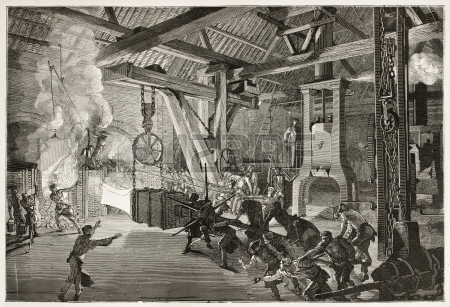
Historical Image of Le Creusot Forge:
-
Nuclear News Roundup Mar 17, 2017
China and Saudi Arabia have signed a cooperation agreement for a joint study on the feasibility of constructing high-temperature gas-cooled reactors (HTGRs) in the Middle Eastern country. world-nuclear-news.org
X-energy yesterday announced the start of work on the conceptual design of its Xe-100 high temperature gas-cooled pebble bed modular reactor, following a review of the company’s readiness by an external panel of industry experts. world-nuclear-news.org
The European Commission said Friday that the Belgian government’s plans to compensate Engie-Electrabel and EDF Belgium for potential financial risks linked to long-term operation of three nuclear plants – Tihange 1, Doel 1 and Doel 2 – to be in line with EU state aid rules. nuclearstreet.com
-
Geiger Readings for Mar 17, 2017
Ambient office = 115 nanosieverts per hourAmbient outside = 128 nanosieverts per hourSoil exposed to rain water = 101 nanosieverts per hourRomaine lettuce from Central Market = 125 nanosieverts per hourTap water = 88 nanosieverts per hourFilter water = 77 nanosieverts per hour -
Nuclear Reactors 267 – Texas A & M Researching Porous Nuclear Fuel Pellets
Researchers with the Fuel Cycles and Materials Laboratory within the Department of Nuclear Engineering at Texas A&M University are working on the development of a new approach to creating the fuel pellets that are used in nuclear power reactors. They are creating porous fuel pellets to replace the solid pellets that are now used to fuel reactors. The porous pellets promise to extend fuel life, get more power out of the same amount of fuel and possibly reduce the amount of waste generated by the fuel.
The new type of fuel pellets is being created with copper powder. The researchers are making pellets and testing them under different pressures and other conditions to see how they perform. Copper is being used because its properties are easier to translate into digital code for use in computer simulations of the new pellets.
Graduate student researcher Yesenia Salazar says “Our overall goal is that when we make this pellet, we take measurements for the porosity that it has. We’re trying to be able to have pores that are more or less homogeneous, where they are not just in one section of the pellet. If we can get more or less homogenous pores, we test them at these different pressure and temperature levels to see how they would perform inside a reactor setting.”
As conventional solid fuel pellets are burned in a nuclear reactor, the expulsion of gasses and fission products cause the pellets to swell. Over time, this expansion reduces the production of energy from the pellets. It also makes the removal of the fuel more difficult. The pores in the new fuel pellets delay the rate of expansion in the pellets as they are burned.
Salazar says “We believe that if you have even just a little bit of porosity introduced into these pellets, those gasses that are coming out and that swelling is happening will accumulate to make up for the space in those pores. It works very similarly to the way a kitchen sponge works, soaking up all the water it can before its pores are full, at which point it expels the water. We want to delay the expulsion as long as we can.”
The researchers are hoping to reduce the swelling of fuel pellets by at least five percent. At this time it is uncertain exactly how long it will take for the gasses and fission products to fill the pores in the pellets and the cause the pellets to swell. Different reactors with different fuels will yield different expansion rates.
Salazar continues “Regardless, when we do take the fuel out it will be more dangerous than it was when we put it in. We want to be able to use this research to leave that fuel in longer, which will increase the efficiency and allow us to delay taking out this material because we are getting more out of it per ton.”
Reactor fuel typically is replaced between sixteen and thirty-six months. The researchers are hoping that their new pellets will add at least an extra week. While that may not seem like much an improvement, it will still result in a significant extension of the amount of energy extracted from a ton of fuel.

-
Geiger Readings for Mar 16, 2017
Ambient office = 120 nanosieverts per hourAmbient outside = 162 nanosieverts per hourSoil exposed to rain water = 171 nanosieverts per hourIceberg lettuce from Central Market = 81 nanosieverts per hourTap water = 78 nanosieverts per hourFilter water = 73 nanosieverts per hour -
Nuclear Reactors 266 – EDF Hoping To Restart Four Power Reactors In France
I have blogged about problems that the French utility EDF is having with some of their nuclear reactors. Their subsidiary Areva which builds nuclear reactors was caught making substandard components for nuclear power plants with steel weakened by too much carbon in the alloy. Areva had faked quality control documents at the La Creusot foundry. Following the disclosure of this problem, twenty of the French fleet of fifty-eight nuclear power reactors were shut down for inspection as of October 2016. By mid-January 2017, nine of the twenty reactors were cleared to be restarted by the Autorité de Sûreté Nucléaire (ASN), the French nuclear regulatory agency. Having these reactors shut is costing EDF over a million dollars a day.
The head of EDFs nuclear power station division has just announced that they have some new technical procedures that should solve problems at two of the plants with substandard components not clear to restart as well as problems at two other plant that were shut down for other reasons. If ASN approves the “fixes” proposed by EDF for the four plants, EDF hopes to restart the plants between July and November of this year.
The Gravelines 5 reactor was shut down in October so its suspect components could be inspected. During the inspection, it was found that a new steam generator manufactured by Areva had “serious anomalies” so the intended replacement was cancelled. EDF is proposing that a process called “sleeving” be used to insert smaller pipes inside larger pipes that were weakened by too much carbon in the steel in order to extend the life of the current steam generator. If the sleeving is approved by ASN, then EDF believes that the repairs can be accomplished by June 30th of this year. The La Creusot foundry is closed until this summer. If it does not come back online so new steam generators can be built there, EDF will have to go to other manufacturers to purchase a new steam generator for the Gravelines 5 reactor.
The Fessenheim 2 reactor was shut down last June because of too much carbon in the steel. EDF does not plan any repairs at the Fessenheim 2 reactor. They are trying to convince ASN that the Fessenheim 2 reactor can be safely operated without repairs. EDF sent a report to ASN last year but ASN required more information before authorizing a restart. EDF hopes to send the additional information out in April and have the reactor back online by July 31st.
The Bugey 5 reactor has been shut down since August 2015 due to a small leak in the steel shell of the reactor building. EDF says that it has chosen to reline the entire bottom of the steel shell in the hopes that that will solve the problem of the leak they cannot locate. They hope to have approval of ASN for the resealing in the near future.
At the Paluel 2 reactor, a steam generator was dropped on the floor last year. EDF says that this accident did not damage the steel shell of the building and there should not be any problems with restarting the reactor once they have removed the old steam generators and replace them with new generators which have already been delivered. If the ASN signs off on the needed changes, EDF hopes to be able to restart the reactor on November 30.