Author: Burt Webb

  • Nuclear Reactors 454 – European Union Nervous About Purchase Of Russian Nuclear Reactors

           I have often mentioned in blog posts that nuclear power has serious international political issues. Major countries with nuclear industries such as the U.S., Russia, China, Japan and South Korea are trying to sell nuclear power reactors to other nations. These are such huge projects that they inevitably become involved with the political and economic relationships between the seller and the buyer. The amounts of money involved are in the billions of dollars and are often financed by special loan arrangements of the selling nation. In some cases, the seller offers to build, fuel and operate the new power reactor for the buyer. This would leave the buyer at the mercy of the seller if the seller decided to stop fueling and operating the reactor because of a political or economic dispute.

          Russia is currently negotiating to sell two nuclear power reactors to Hungary for about thirteen billion dollars. Rosatom, the Russian-owned nuclear reactor company, would build and operate the reactors at the Paks nuclear power plant on a fifty year contract. For the first decade, Rosatom would be the exclusive supplier of fuel for the Hungarian reactors. Russian banks would supply loans for up to eighty percent of the cost of the project.

           The Hungarian government wants to invest in the project. Because Hungary is a member of the European Union and Russia is not, the deal has to be approved by the European Commission which is reviewing the project. The issue before the Commission is whether or not to allow the Hungarian state to provide financial assistance for the purchase. The Commission is expect to approve the deal soon.

          The European Union has been trying to reduce its reliance Moscow for energy. Russia has threatened to shutoff flows of oil and gas to EU member nations in the past during political disputes. Russia recently annexed the Crimea from Ukraine and is currently involved in military conflict in eastern Ukraine. Critics of the Hungarian deal point out that it would not be wise to allow EU nations to become dependent on Russian nuclear power reactors given the past and present behavior of Russia.

           Ian Armstrong, a senior analyst at the news and analysis firm Global Risk Insights has said that “In instances where Moscow provides significant financial assistance as part of the deal, like in Hungary, [the deals] also serve as a direct purchasing of influence and political favors from EU member states.”

    Petr Topychkanov, a fellow in the Carnegie Moscow Center’s nonproliferation program, said that Paks II is a “ticket to the European nuclear market. Success there will help Rosatom to overcome the anti-nuclear lobby in Europe, and to have an upper hand over nuclear competitors in this region.”

          Czechoslovakia is also considering the purchase of a nuclear power reactor from Rosatom. They are seeking European Commission approval to skip the usual bidding process for their purchase. Unlike Hungary,  Czechoslovakia is not interested in a loan from Russian banks and believes that it can get better interest rates for the project elsewhere. Nonetheless, purchase of Russian nuclear technology will still be another way for Russia to consolidate its hold over the nuclear power reactor market in Eastern Europe.

           Rosatom began its current aggressive expansion into the nuclear power reactor market with the appointment of a new CEO in 2005. Rosatom claims that it has over a hundred billion dollars in contracts to supply reactors, fuel and services to forty nine countries in the next ten years. Nuclear industry analysts have questioned these numbers and say that some of the contracts are really just preliminary agreements to explore the possible purchase of Rosatom nuclear power systems.
     

  • Geiger Readings for Feb 02, 2016

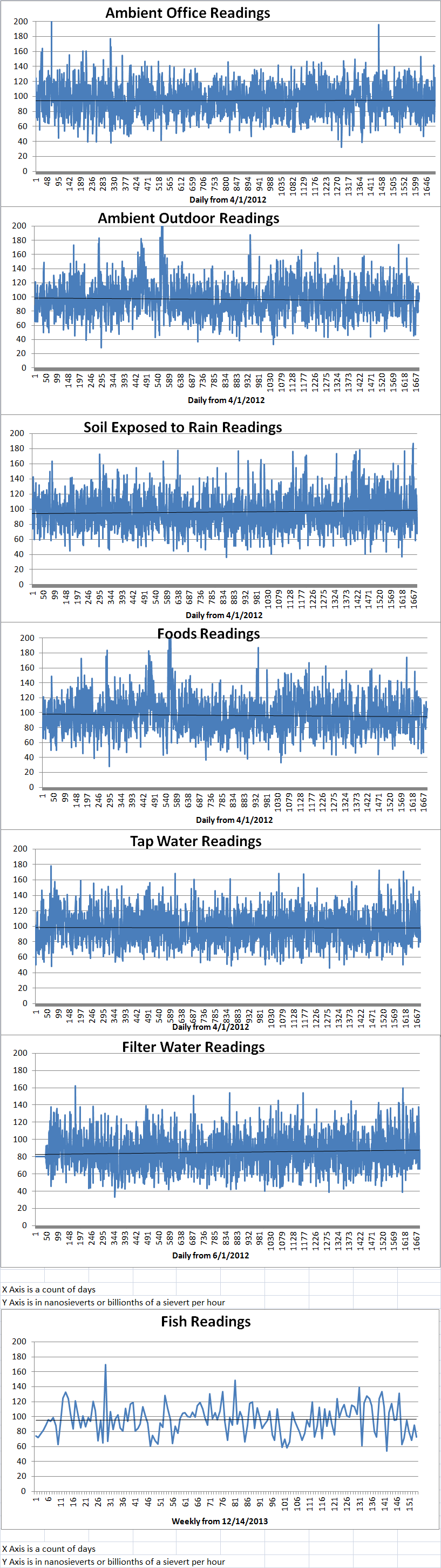
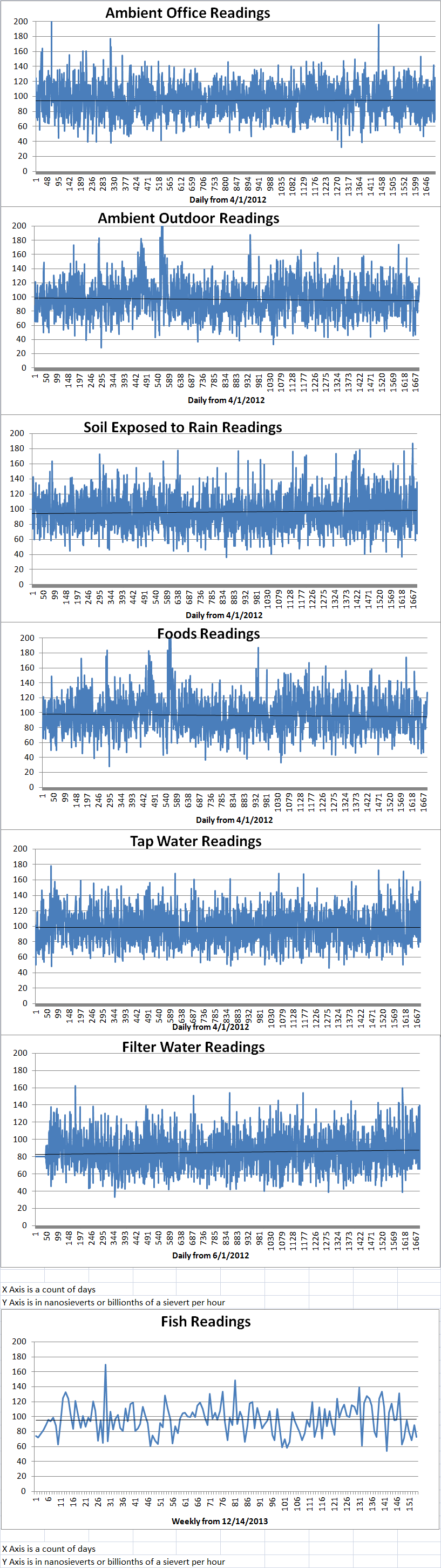
    Ambient office = 69 nanosieverts per hour
     
    Ambient outside = 151 nanosieverts per hour
     
    Soil exposed to rain water = 135 nanosieverts per hour
     
    Jalapeno pepper from Central Market = 127 nanosieverts per hour
     
    Tap water = 158 nanosieverts per hour
     
    Filter water = 140 nanosieverts per hour
     
  • Nuclear Weapons 250 – Dangers Of Pakistan Move To Tactical Nuclear Weapons

           I have blogged about Pakistan’s nuclear arsenal and nuclear policies before. Pakistan has over a hundred nuclear warheads and the means to deliver them. They are in a tense relationship with their neighbor India which also has over a hundred nuclear warheads and multiple delivery systems.

           Pakistan has a big stockpile of weapons grade uranium and is busy building more warheads. In the last ten years, many of the warheads constructed were low-yield tactical warheads. While Pakistan has tightly controlled their nuclear arsenal up to this point, they are now in the process of deploying tactical nuclear weapons to their border with India. They intend to use them if India invades with their much bigger army.

           Pakistan is a hotbed of Islamic jihadists and major attacks have been carried out against defense installations, including bases where nuclear weapons were stored. In some cases, there is evidence that the attacks were carried out with help from inside the Pakistani defense establishment. The distribution of Pakistani tactical nuclear weapons to border bases increases the possibility that jihadists might be able to get their hand on one or more of these tactical weapons.

          India has concluded that recent terrorist attacks from Pakistan have been condoned and facilitated by members of the Pakistani intelligence service. India is thought to have a “Cold Start” policy with respect to future terrorist attacks from across the border with Pakistan. If terrorists attack and then return across the border to Pakistan, India has plans to send the Indian army across the border in pursuit of the terrorists. Fear of this sort of attack is the reason that Pakistan is sending tactical nukes to the border bases. Pakistan feels that if they used tactical nukes on the battlefield inside Pakistan, the Indian invasion would be stopped but India would not respond with a full-scale nuclear retaliation as they would if Pakistan nuked Indian cities.

          With Pakistani tactical nukes at border bases under the control of local commanders and in a “ready to go at any moment” state, in a chaotic conflict situation, a local commander might decide on his own to deploy tactical nuclear weapons against an Indian invasion with unforeseen consequences following.

          If a terrorist group obtained a tactical nuclear weapon from a border base and detonated it inside India, it is likely the conflict would rapidly escalate into a full-scale nuclear war between India and Pakistan. This is a fear that many other nations have when confronted with the political instability and jihadist activity inside Pakistan.

          With the ongoing radicalization of the Pakistani army in the past few decades, there is a great danger of elements inside the army joining with jihadist to steal tactical nuclear weapons. Pakistan insists that it has excellent nuclear security but its secrecy with respect to the protection of its nuclear arsenal leaves the rest of the world wondering just how safe Pakistani nuclear weapons are. The U.S. military has contingency plans for entering Pakistan in case of the collapse of the government to secure Pakistani nukes. However, the deployment of tactical nuclear weapons to the border with India will make any such mission much more difficult.

    Pakistani National Command Authority emblem:

  • Geiger Readings for Feb 01, 2016

    Ambient office = 87 nanosieverts per hour
     
    Ambient outside = 70 nanosieverts per hour
     
    Soil exposed to rain water = 67 nanosieverts per hour
     
    Celery from Central Market = 105 nanosieverts per hour
     
    Tap water = 79 nanosieverts per hour
     
    Filter water = 66 nanosieverts per hour
     
  • Nuclear Weapons 249 – China Opts For Small But Effective Nuclear Arsenal

           Russia has about seven thousand nuclear warhead and the U.S. has about six thousand and eight hundred. Both countries have missiles, bombers and submarines to deliver those warheads. Both countries have announced ambitious plans to modernize their nuclear arsenals in the coming years. Each country believes that it needs such huge nuclear arsenal to deter an attack by the other.

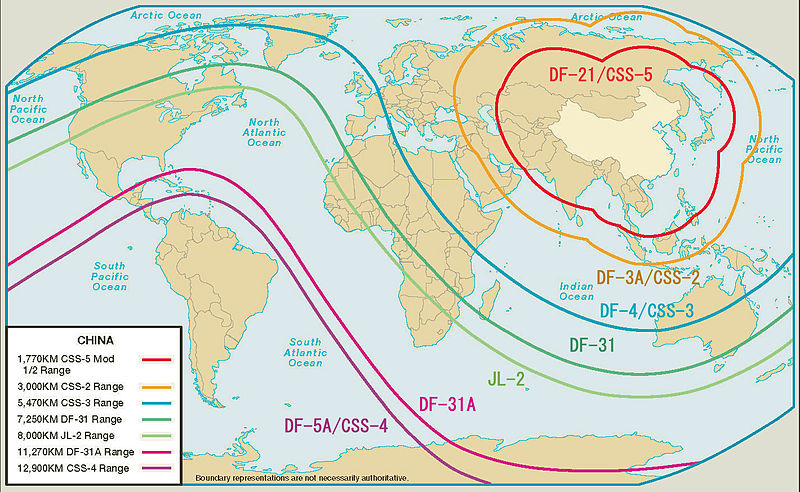
           China, on the other hand, only has about two hundred and sixty nuclear warheads. China’s population is much larger than either the U.S. or Russia and its economy is rapidly becoming one of the biggest in the world. There are tensions between China and the U.S. as well as tensions between China and Russia but apparently China does not believe that it needs to maintain a huge nuclear arsenal to deter nuclear attacks. Unlike Russia and the U.S., China does not have a large portion of its nuclear arsenal primed for immediate launch. China has a policy of support for nuclear disarmament and also says that it will never be the first to use nuclear weapons in a conflict.

          China believes that a few hundred nuclear warheads should be sufficient to deter an enemy from attacking them with nuclear weapons. If China’s existing nuclear arsenal could destroy one or a few major cities of an enemy, that should be enough deterrence. China does not have to spend hundreds of billions of dollars maintaining and upgrading a huge nuclear arsenal to be safe.

           Nuclear weapons are so destructive that they have little attraction for generals fighting wars. If only a hundred nuclear weapons are deployed, there is a good chance that the resulting nuclear winter would end human civilization regardless of who started the fight. Any country staging a major nuclear attack would probably be signing their own death warrant. With the money saved from building a huge nuclear arsenal, China is able to develop more conventional and unconventional weapons that might actually be used in future conflicts.

           Missile silos and bomber bases are massive and make easy targets for attack. Nuclear weapons are becoming obsolete in the age of cyberwarfare. Why use nuclear weapons against a nuclear-armed adversary when it might be possible to sabotage missile and bomber command and control systems with a cyberattack at a fraction of the cost of a conventional attack? Other weapons such as biological and chemical weapons are much cheaper to create and deploy. And, they could be much more difficult to backtrack to the attacker than a missile launch that paints a big red target on its launch point or a bomber that must fly over enemy territory.

           Although China has decided to maintain a small nuclear arsenal, that does not mean that they are not developing new systems like advanced multiple hypersonic reentry vehicles for nuclear warheads. These new delivery systems are designed to overwhelm any missile defense system. They are also working on anti-ballistic missiles systems to deal with possible missile attacks. China’s nuclear weapons and delivery systems may be less extensive and expensive that the nuclear arsenals of the Russia and the U.S. but they appear to be quite adequate to protect China from nuclear attack in the Twenty First Century.

    Estimated ranges of Chinese nuclear missiles:

  • Geiger Readings for Jan 31, 2016

    Ambient office = 126 nanosieverts per hour
     
    Ambient outside = 80 nanosieverts per hour
     
    Soil exposed to rain water = 85 nanosieverts per hour
     
    Roma tomato from Central Market = 99 nanosieverts per hour
     
    Tap water = 93 nanosieverts per hour
     
    Filter water = 88 nanosieverts per hour
     
  • Nuclear Reactors 453 – Small Modular Reactors Could Be Used For Engines On Cargo Ships.docx

         Nuclear power generation is under assault from a number of different directions. Old nuclear power plants are getting more and more expensive to maintain and operate. Cheap oil and natural gas are rendering nuclear power uncompetitive in the current energy marketplace. Solar and wind energy systems are becoming cheaper to build than nuclear power stations. The public is rejecting the construction of new nuclear power stations in many communities. Investors lack enthusiasm for nuclear power projects. The future of nuclear power generation is not bright. There is, however, an application for nuclear power that does not involve generating electricity for the grid.

          A report was recently presented to the Connecticut Maritime Association on the applicability of small modular reactors as power sources for cargo vessels. Small nuclear reactors have operated safely and efficiently to propel for submarines and surface vessels since the 1950s. Maybe it is time that cargo ship which carry more than ninety percent of world trade goods be equipped with nuclear power plants. This would definitely reduce fossil fuel carbon emission to help combat climate change.

          Current nuclear marine propulsions systems generate from ten to forty megawatts of power from uranium alloyed with metals such as zirconium or aluminum. Older nuclear marine engines could run for ten years on a single fueling. Newer designs could run for thirty years or more before needing to be refueled. The existing engines are about six feet wide by fifteen feet tall.

            In order to drive a cargo ship, their nuclear power plants would have to generate about one hundred and fifty megawatts. The new generation of small modular reactors being developed for power generation is capable of generating up to three hundred megawatts. They are much smaller than conventional reactors but still bigger than current nuclear marine systems.

                As with all introductions of new technologies, there are significant barriers to replacing current widespread systems such as that of diesel engines on existing cargo ships. First of all, diesel marine engine technology is well understood and reliable. Second, there is a well-established education system for training diesel engineers. Third, diesel engine manufacturers have construction and repair facilities around the world as well as global spare parts distribution systems. And, fourth, diesel fuel is readily available all over the world. In order for nuclear reactors to compete with diesel engines for cargo ship propulsion, nuclear engines will have to match or surpass the current advantages of diesel propulsion.

           The first step towards replacing diesel engines with nuclear engines in cargo ships is the development of designs for such nuclear engines. The second step is to find funding for the construction and testing of the new types of engine. It is likely that one or more national governments would have to be involved in this stage. Once there has been proof of concept, then commercial manufacturing of such engines will have to be researched and shown to be feasible. Finally, private companies will have to be found that have the funds and the expertise to create and service operational fleets of nuclear power cargo ships.