Author: Burt Webb
-
Geiger Readings for Jan 23, 2016
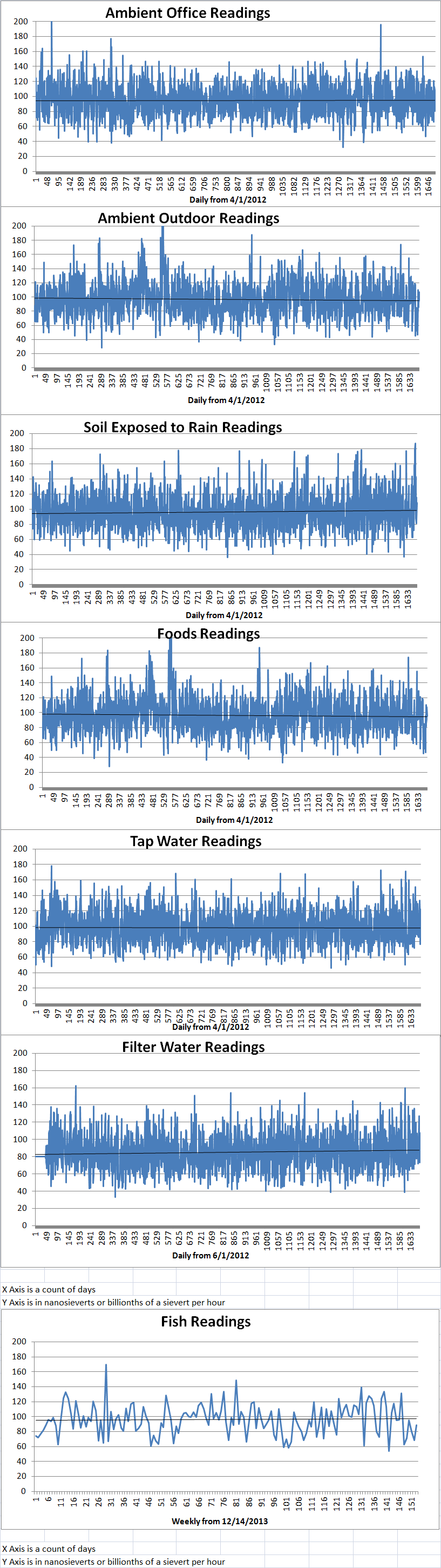
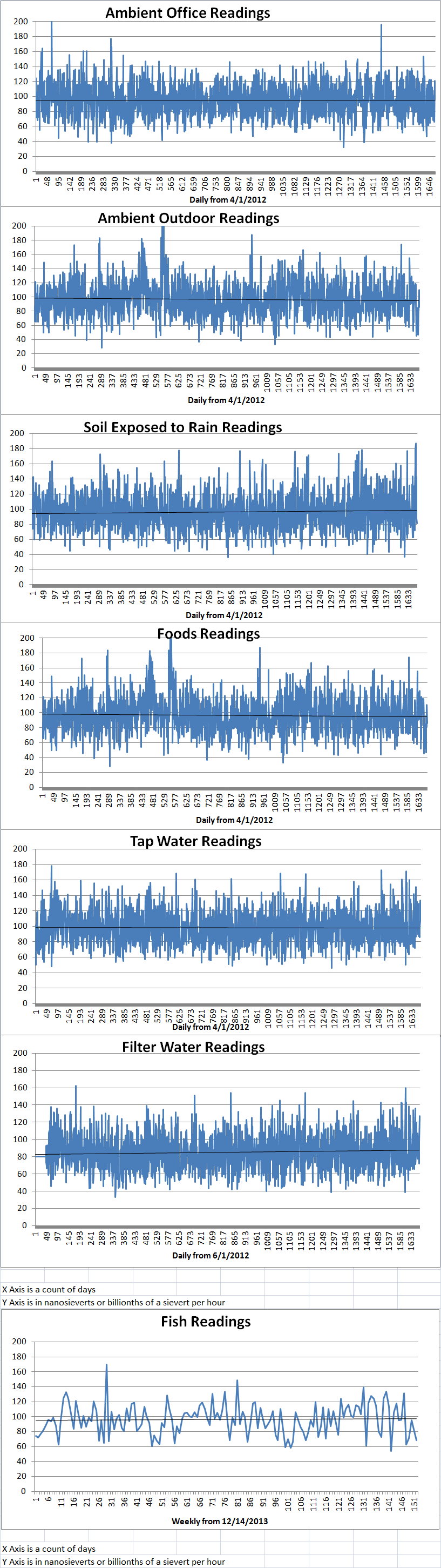
Ambient office = 82 nanosieverts per hourAmbient outside = 121 nanosieverts per hourSoil exposed to rain water = 108 nanosieverts per hourCarrot from Central Market = 95 nanosieverts per hourTap water = 77 nanosieverts per hourFilter water = 73 nanosieverts per hour -
Nuclear News Roundup Jan 22, 2016
Russia and Iran yesterday signed documents furthering their cooperation in the peaceful uses of nuclear energy. They were signed in Moscow by Nikolay Spassky, deputy director general for international affairs at Rosatom, the Russian state nuclear corporation, and Behrouz Kamalvandi, deputy head of the Atomic Energy Organization of Iran (AEOI) for International, Legal and Parliamentary Affairs. world-nuclear-news.org
-
Geiger Readings for Jan 22, 2016
Ambient office = 81 nanosieverts per hourAmbient outside = 94 nanosieverts per hourSoil exposed to rain water = 86 nanosieverts per hourAvocado from Central Market = 107 nanosieverts per hourTap water = 122 nanosieverts per hourFilter water = 108 nanosieverts per hour -
Geiger Readings for Jan 21, 2016
Ambient office = 108 nanosieverts per hourAmbient outside = 114 nanosieverts per hourSoil exposed to rain water = 116 nanosieverts per hourNaval orange from Central Market = 92 nanosieverts per hourTap water = 103 nanosieverts per hourFilter water = 88 nanosieverts per hourPacific Cod – Caught in USA = 89 nanosieverts per hour -
Nuclear Weapons 246 – India Admits To Having A Cold Start Policy To Respond To Attacks From Pakistan
I have blogged about the tensions between Pakistan and India. Both countries have around a hundred nuclear warheads and multiple means of delivery. Concerned about a possible invasion from India, Pakistan has stated that they would repel any such incursion with tactical nuclear weapons. Recently, they deployed tactical nuclear weapons to military positions near the Indian border. Recently Pakistan launched a nuclear-capable cruise missile from one of the submarines.
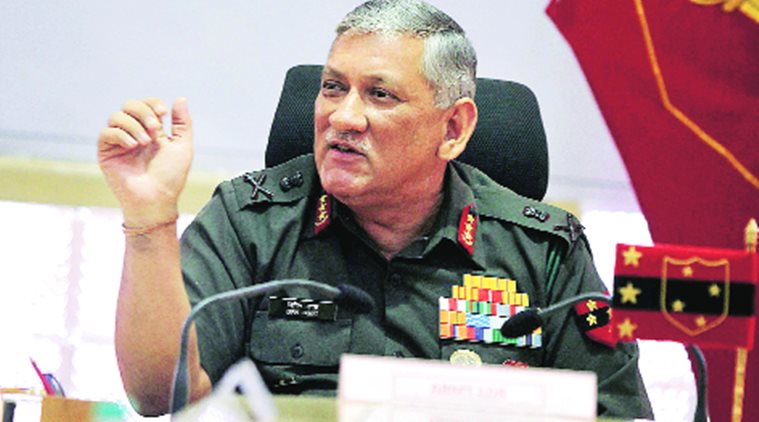
Two weeks ago, the new army chief of India has admitted that there are secret plans for a land invasion of Pakistan as a response to a major terrorist incident linked to Pakistan. This is part of what is referred to as a “cold-start” policy.
The idea behind the cold-start policy is that India should have the ability to respond very quickly to any threat to national security which would include responding to terrorist attacks from Pakistani territory. India has accused the Pakistani intelligence service of at the very least being aware of impending terrorist attacks against India and at the worst, being actively involved in planning such attacks.
An Indian response to Pakistani-based terrorists would consist of Indian troops crossing the border with Pakistan and taking up positions inside Pakistan before Pakistan or the international community could respond. In 2010, a cable was leaked by Wikileaks that indicated that India believed that using the cold-start policy and launching a rapid response to an attack could protect Indian national security without posing a threat to the Pakistani state or triggering a nuclear response.
When this news was made public, a Pakistan official responded by saying that, “If ever our national security is threatened by advancing foreign forces, Pakistan will use all of its weapons — and I mean all of our weapons — to defend our country.” This is obviously a reference to nuclear weapons and a restatement of previously stated Pakistani policy.
Although the existence of the India cold-start policy has just been officially admitted, rumors about it have been circulating for years. Pakistan has used such rumors as an excuse to deploy men and weapons to the Indian border. Allies have been urging Pakistan to redeploy the men and weapons to other parts of Pakistan to battle Islamic extremists.
Walter Ladwig, a lecturer in international relations at King’s College London, said: “It is understandable in the wake of the surgical strikes that the Modi government would want to signal to Pakistan that all options are on the table in the event of another terror attack within India. However, reviving cold start — if that is what has happened — certainly escalates the rhetoric, and may raise unrealistic expectations domestically about India’s ability to respond to a new terror attack.”
Mahmud Durrani, a former national security adviser to the Pakistani prime minister, said: “Pakistan already fears a rapid build-up of India’s conventional weapons. The danger is that with such warnings [of cold start], the escalatory ladder of going from conventional weapons to nuclear weapons for Pakistan will be shortened.”
Some international experts question whether India really has the resources necessary for a cold-start response to attacks from Pakistan. In any case, a Pakistani belief in such a possibility can only serve to destabilize the unstable relationship between the two nuclear-armed nations.
Bipin Rawat, new Chief of Indian Army:

-
Nuclear News Roundup Jan 20, 2016
-
Geiger Readings for Jan 20, 2016
Ambient office = 113 nanosieverts per hourAmbient outside = 83 nanosieverts per hourSoil exposed to rain water = 81 nanosieverts per hourJalapeno pepper from Central Market = 86 nanosieverts per hourTap water = 129 nanosieverts per hourFilter water = 122 nanosieverts per hour -
Radioactive Waste 211 – Oxidatively Modified Carbon May Be Effective And Economical To Decontaminate Water At Fukushima
The Fukushima nuclear disaster occurred in March of 2011 in Japan, almost 6 years ago. Since then billions of gallons of contaminated water have flowed into the Pacific Ocean from the destroyed power plant. Millions of gallons more are stored onsite in leaking tanks. It is too “hot” to dump into the ocean and, if left alone, it will seep into and contaminate the soil under the tank farm. Now there is hope that there may be a method to economically remove the contamination from the water in the tanks.
Scientists from Rice University in Texas and Kazan University in Russia are working on a method for removing the radioactive isotopes of cesium and strontium in the contaminated water. They have identified a cheap material called oxidatively modified carbon (OMC) which may be used in filters to remove the isotopes which would make the water safe enough to dump into the ocean.
Carbon is a common element used in many water filtration systems. However, the type of carbon used in common filters does not do a good job of removing radioactive materials from water. The team of scientists had previously found that carbon in the form of graphene oxide was good at removing strontium but not as good as removing the cesium. In addition, graphene oxide is expensive to manufacture.
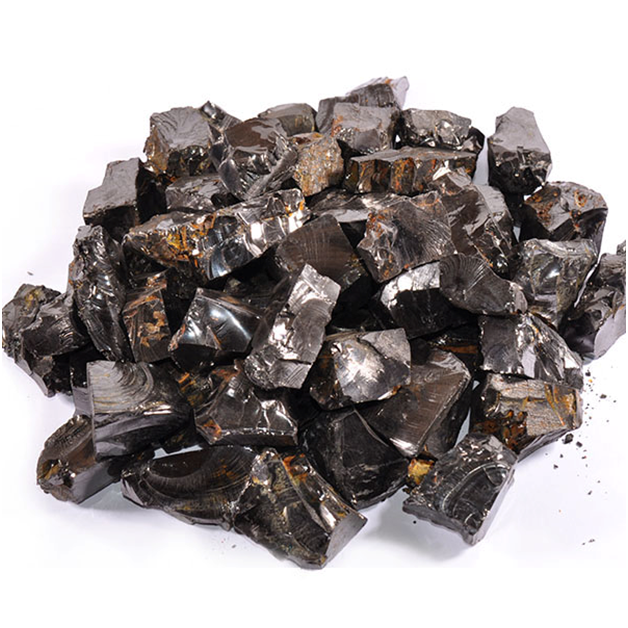
The team then began to explore the possibility of using OMC as a filter material. OMC is one tenth the cost of graphene oxide and much easier to use in standard filtration systems. OMC can be made from a commercial carbon coke source called C-seal-F which is a common additive for fracking oil fluids. OMC can also be made from “shungite” which is a common mineral in parts of Russia. The C-seal-F or shungite is treated with acids which create surfaces rich in oxygen on the carbon particles which are between ten and eighty microns wide. When brought into contact with OMC, heavy metal ions attach to those surfaces in a process called adhesion.
When water laced with cesium, strontium, and other heavy metals was run through filters made with OMC from C-seal-F, about eighty percent of the cesium and seventy percent of the strontium was removed. Running the same experiment with OMC made from shungite resulted in removal of about seventy percent of the cesium and fifty percent of the strontium. The efficiency of the OMC filters with respect to cesium is especially promising because cesium is one of the most difficult isotopes to remove from contaminated water.
Previous types of sorbent materials used to filter radioactive materials from water have to be stored as radioactive waste once they are used. OMC can be burned in a nuclear incinerator producing a small amount of radioactive ash.
These experiments were just a proof of the basic concept and were run without the radioactive isotopes of cesium and strontium. Research still needs to be done to determine whether or not the radioactive isotope will have any influence on the percentage of removal as well as the integrity and lifespan of the filter material.
Shungite: