It will come as no surprise to anyone who reads this blog that I am no fan of nuclear power. I think it has many more negatives than even fossil fuels which I also don’t like. It has saddened me to hear long time environmentalists pushing nuclear power as a good way to mitigate climate changes. Nuclear power is said to be carbon free but it is not. There is more carbon dioxide released in the construction, fueling, and decommissioning of a nuclear power plant over its lifetime than hydro, solar, wind or geothermal power plants. Another major issue with nuclear power is the fact that it takes years that we do not have to plan, license and construct a nuclear power plant. I have always said that sustainable alternative energy sources are a far better way to fight climate change. So how is alternative energy doing in competition with nuclear power?
Two new reports from the Federal Energy Regulatory Commission (FERC) and the U.S. Energy Information Administration (EIA) offer evidence that nuclear power is falling behind renewable energy sources in the race to replace fossil fuels.
A British thermal unit (Btu) is the amount of energy that must be expended to raise the temperature of a one pound of water by one degree Fahrenheit. EIA latest Monthly Energy Review says that over the last six months biofuels, biomass, geothermal, hydropower, solar and wind power have provided about five and one quarter quadrillion Btus of domestic energy production. ( A quadrillion is a one followed by fifteen zeros or a million billion.) Nuclear power provided four and two tenths quadrillion Btus. Thus alternative sources provided twenty five percent more Btus than nuclear sources. This energy provides heat, hot water and electricity for the U.S.
FERC’s Energy Infrastructure Update says that the total installed U.S. capacity for hydropower, wind, solar, biomass, and geothermal in terms of sources producing more than one megawatt is about two hundred and sixteen gigawatts, or a little over eighteen percent of national capacity. Nuclear power’s installed capacity is a little over one hundred and seven gigawatts. This represents a little over nine percent. By this measure, these alternative sources have more than double the capacity of nuclear power in the U.S.
In terms of actual generation of electricity, in the past seven months nuclear power generated about twenty percent of the electricity in the U.S. as opposed to about fifteen percent of the electricity in the U.S. provided by alternative energy. However, the share of electricity produced by nuclear power has remained about the same over the last ten years while alternative sources have grown by more than fifty percent and are projected to maintain strong growth in the future.
It is possible that if trends continue, within five years alternative sources of energy could surpass nuclear power in terms of actual energy generation. The nuclear industry is working hard to obtain government subsidies in order to continue to compete in the marketplace with other cheaper alternative sources of energy. Such subsidies are a very bad idea and waste of public money. Let the market decide if nuclear power lives or dies.
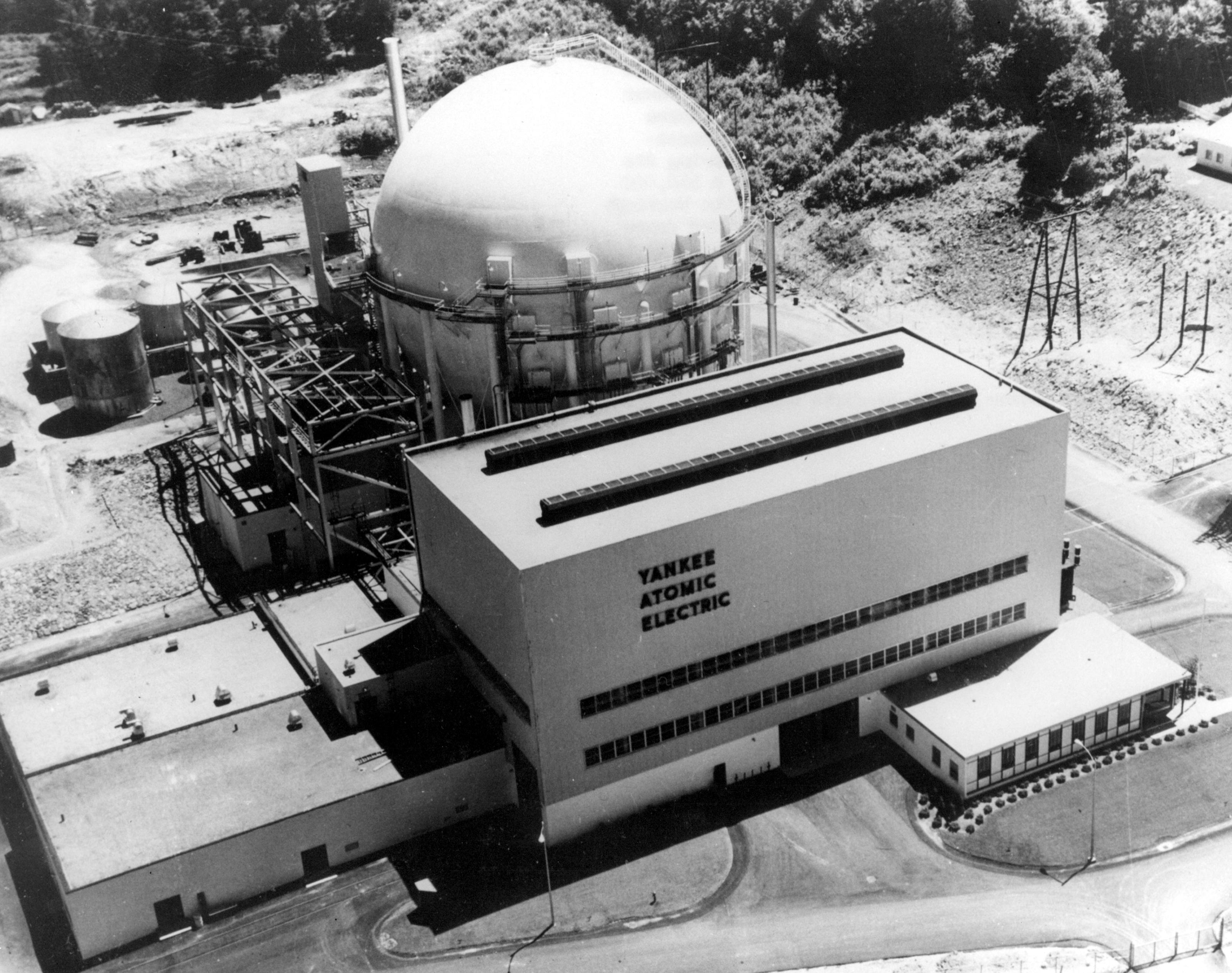
The Yankee Rowe Nuclear Power Station is located on the Deerfield River in the town of Rowe, Massachusetts. The plant operated from 1960 to 1992 and was shut down permanently in February 29 of 1992. The plant was demolished and decommissioned in 2007. There are still twenty seven tons of high-level radioactive waste in the form of spent nuclear fuel in twelve dry casks at the site which require twenty four hour security.
The economies of the communities around the plant used to benefit from the operating plant but that ended in 1992. However, the communities are still affected by the presence of the nuclear waste in the casks on the site.
A U.S. Representative and a state senator recently toured the site in support of legislation being introduced in Congress to compensate local communities which have to host nuclear waste. The “Interim Spent Nuclear Fuel Storage Compensation Act” would authorize up to one hundred million dollars for 13 towns spread from Illinois to Maine.
“The federal government is obligated to provide mitigation costs to communities such as Rowe, considering that the Department of Energy failed to remove the waste as promised,” said the state senator who is a Democrat.
The Nuclear Waste Act of 1982 mandated that a permanent national geological repository for spent nuclear fuel be operational by 1999. The project schedule slipped for the Yucca Mountain Repository in Nevada and, in 2011, the project was cancelled. Now it appears that there will not be any national repository until 2050 at the earliest. This leaves tons of spent nuclear fuel piling up in the cooling pools of reactors all over the country. The only current choice to relieve the crowding in the fuel pools is dry cask storage on site or at temporary remote facilities.
Nuclear plant operators were required to pay into a fund to finance a national repository which was suppose to open by 1999. Some of these plant operators are successfully suing the U.S. government for return of the funds that they paid. Unfortunately, the fund which reached thirty two billion dollars cannot be used for dry cast storage which is the only choice at present.
The town of Rowe has less than four hundred residents. When the Yankee Rowe plant was operational, the company that operated the plant paid for the town’s police, fire and emergency response budgets as well as significant property taxes. The cost of public services now falls on the town’s taxpayers.
Now the company which pays millions of dollars for security of the nuclear waste stored at the site of the old plant agrees that something should be done to help the town bear its share of the costs associated with the waste. One solution might be a national temporary spent fuel storage facility such as the one proposed by Waste Control Specialists to take four hundred thousand tons of spent fuel waste in west Texas. Something must be done soon because two thousand tons of spent nuclear fuel waste are being created every year in the United States.
Yankee Rowe Nuclear Power Station:
China apprehends that India will deploy the 36 nuclear-capable Rafale fighter jets to be acquired from France in the border regions of China and Pakistan to enhance its deterrence capability, a media report here said. economictimes.indiatimes.com
Federal regulators say they’ve found there was a “substantial potential” for an accident that could have injured workers at the Westinghouse nuclear fuel plant near Columbia. insurancejournal.com
.
I have blogged before about the deteriorating relationship between the U.S. and Russia. Russia has been doing a lot of nuclear saber rattling in the past few years and the U.S. has responded with a little saber rattling of its own. The Russian seizure of Crimea and agitation in Eastern Ukraine has increased tensions between NATO and Russia in Eastern Europe. The Syrian civil war and ISIS have raised tensions in the Middle East between the U.S. and Russia. Russia has mentioned the possible use of tactical nuclear weapons in both Eastern Europe and Syria. Just a few day ago, plans for cooperation between the U.S. and Russia in Syria following the ceasefire have been cancelled.
In the interest of nuclear disarmament the U.S. has purchased nuclear fuel from Russia that was created by decommissioning Russian nuclear warheads. A lot of U.S. reactors have been burning this fuel for years. This particular program has ended and a new program was being put in place. Unfortunately, rising tensions between the U.S. and Russia have now prompted Russia to cancel a program to recycle more Russia nuclear weapons into nuclear fuel.
The US-Russian Plutonium Management and Disposition Agreement was signed in the year 2000. It commits the U.S. and Russia to dispose of more than thirty four tons of weapons grade plutonium by converting it into mixed oxide (MOX) nuclear fuel.
The plutonium removed from the warheads was to be mixed with uranium and then used for nuclear fuel in light water reactors. Once irradiated and used to generate electricity, the resulting spent fuel could not be used as a material for nuclear weapons manufacture, fulfilling the intent of the agreement.
The conversion was to be carried out with full transparency and verification to insure that the plutonium could never be used to construct nuclear weapons. There were problems with implementation because the first plans drafted did not take into account changes that were being made to the Russia program for the development of nuclear energy. The new Russian plans came out in 2006. Russian suggestions for disposal were presented in 2008. In 2010, the amended PMDA was signed by the U.S. and Russia. This amendment was referred to as the Plutonium Disposition Protocol. The Protocol details the rights, obligations, principles and procedures for monitoring and inspecting the disposition activities of the two countries. The two countries were going to start the disposal program in 2018.
The U.S. MOX fuel fabrication facility is being constructed at the Department of Energy’s Savannah River Site. Russia already has facilities for producing MOX fuel. They will be expanding and upgrading their MOX plant to comply with the PMDA. The U.S. committed to paying three hundred million dollars for development and construction in Russia. The U.S. has agreed to spend one hundred million dollars in fixed price payments for tons of MOX fuel made from Russian plutonium.
Vladimir Putin, the Russian President has just announced that Russia is cancelling the PMDA because of “unfriendly actions” of the U.S. including sanctions following the Crimea seizure and the tension between NATO and Russia exacerbated by the movement of NATO troops near the Russian border in Eastern Europe. Putin also claimed that the terms of the PMDA would cause problems for Russia’s defense program.
A bill was submitted to the Russian Parliament by Putin that lays out terms for reinstatement of the PMDA. The U.S. must move NATO forces out of Eastern European countries that became NATO members after the year 2000, remove all the sanctions from the Crimea seizure and compensate Russia for the money lost due to the sanctions. It is unlikely that the U.S. will agree to these terms.
MOX plant under construction at Savannah River Site: