Category: Uncategorized

  • Geiger Readings for May 31, 2022

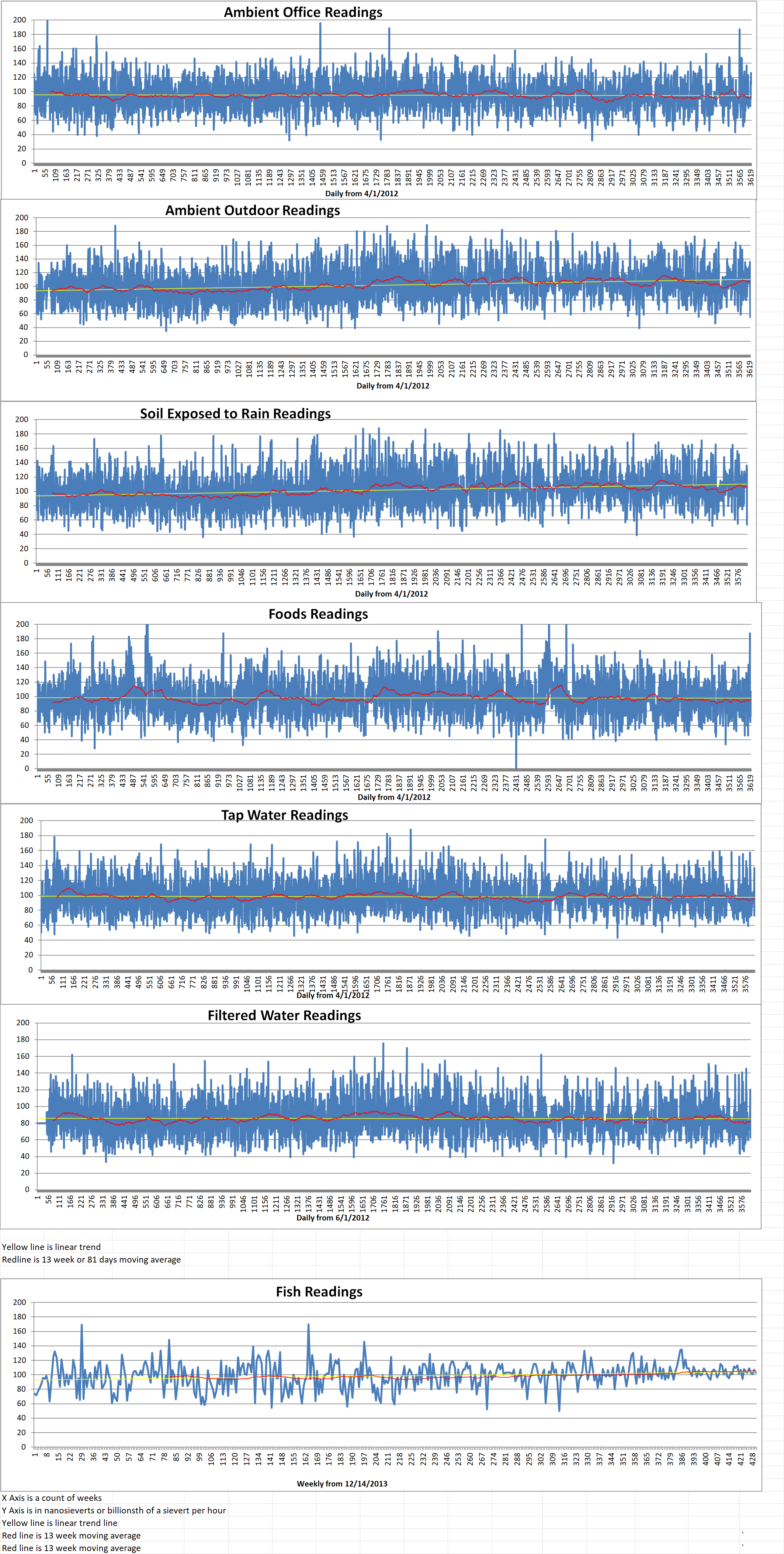
    Geiger Readings for May 31, 2022

    Ambient office = 111 nanosieverts per hour

    Ambient outside = 104 nanosieverts per hour

    Soil exposed to rain water = 107 nanosieverts per hour

    English cucumber from Central Market = 107 nanosieverts per hour

    Tap water = 74 nanosieverts per hour

    Filter water = 63 nanosieverts per hour

  • Nuclear Reactors 1031 – New Study Suggests Small Modular Reactors Produce More Spent Nuclear Fuel – Part 1 of 2 Parts

    Nuclear Reactors 1031 – New Study Suggests Small Modular Reactors Produce More Spent Nuclear Fuel – Part 1 of 2 Parts

    Part 1 of 2 Parts
         Nuclear fission reactors generate reliable supplies of electricity while emitting little carbon dioxide when operating. A conventional nuclear power reactors in the one-gigawatt range also produces spent nuclear fuel that must be isolated from the environment for hundreds of thousands of years. The cost of such a reactor can be tens of billions of dollars.
         In order to deal with these challenges, the nuclear industry is developing small modular reactors (SMRs) that generate less than three hundred megawatts of electricity and can be assembled in a factory. Nuclear industry analysts say that these advanced modular designs will be cheaper and produce fewer radioactive byproducts than conventional large-scale reactors.
        However, a report published on May 30th in the Proceedings of the National Academy of Sciences has reached the opposite conclusion.
          Lindsay Krall is a former MacArthur Postdoctoral Fellow at Stanford University’s Center for International Security and Cooperation (CISAC). She headed up the team that produced the new report. She said, “Our results show that most small modular reactor designs will actually increase the volume of nuclear waste in need of management and disposal, by factors of 2 to 30 for the reactors in our case study. These findings stand in sharp contrast to the cost and waste reduction benefits that advocates have claimed for advanced nuclear technologies.”
         There are four hundred and forty operating nuclear power reactors in the world. They provide about ten percent of the world’s electricity. In the U.S. alone, ninety-three nuclear power reactors generate almost one fifth of the nation’s electricity.
         Nuclear power plants emit little carbon dioxide which is a major contributor to global warming. Nuclear advocates claim that as the worldwide demand for clean energy increases, more nuclear power plants will need to be constructed to minimize the effects of power generation on climate change.
         Nuclear energy is not a risk-free energy source. In the U.S., commercial nuclear power plants have produced over eighty-eight metric tons of spent nuclear fuel. They have also produced substantial volumes of intermediate and low-level radioactive waste. Spent nuclear fuel constitutes most of the most highly radioactive waste. It will have to be isolated in deep-mined geologic repositories for hundreds of thousands of years. Currently, the U.S. has no program to develop a geological repository even after spending decades and billions of dollars on the Yucca Mountain site in Nevada. Spent nuclear fuel is currently stored in cooling pools or dry storage casks at nuclear reactor sites. It is accumulating at a rate of about two thousand metric tons per year.
         Some energy analysts claim that SMRs will significantly reduce the mass of spent nuclear fuel being generated when compared to larger, conventional nuclear reactors. Apparently that conclusion is overly optimistic.
         Krall is now a scientist at the Swedish Nuclear Fuel and Waste Management Company. She said, “Simple metrics, such as estimates of the mass of spent fuel, offer little insight into the resources that will be required to store, package, and dispose of the spent fuel and other radioactive waste. In fact, remarkably few studies have analyzed the management and disposal of nuclear waste streams from small modular reactors.”
    Please read Part 2 next
  • Geiger Readings for May 30, 2022

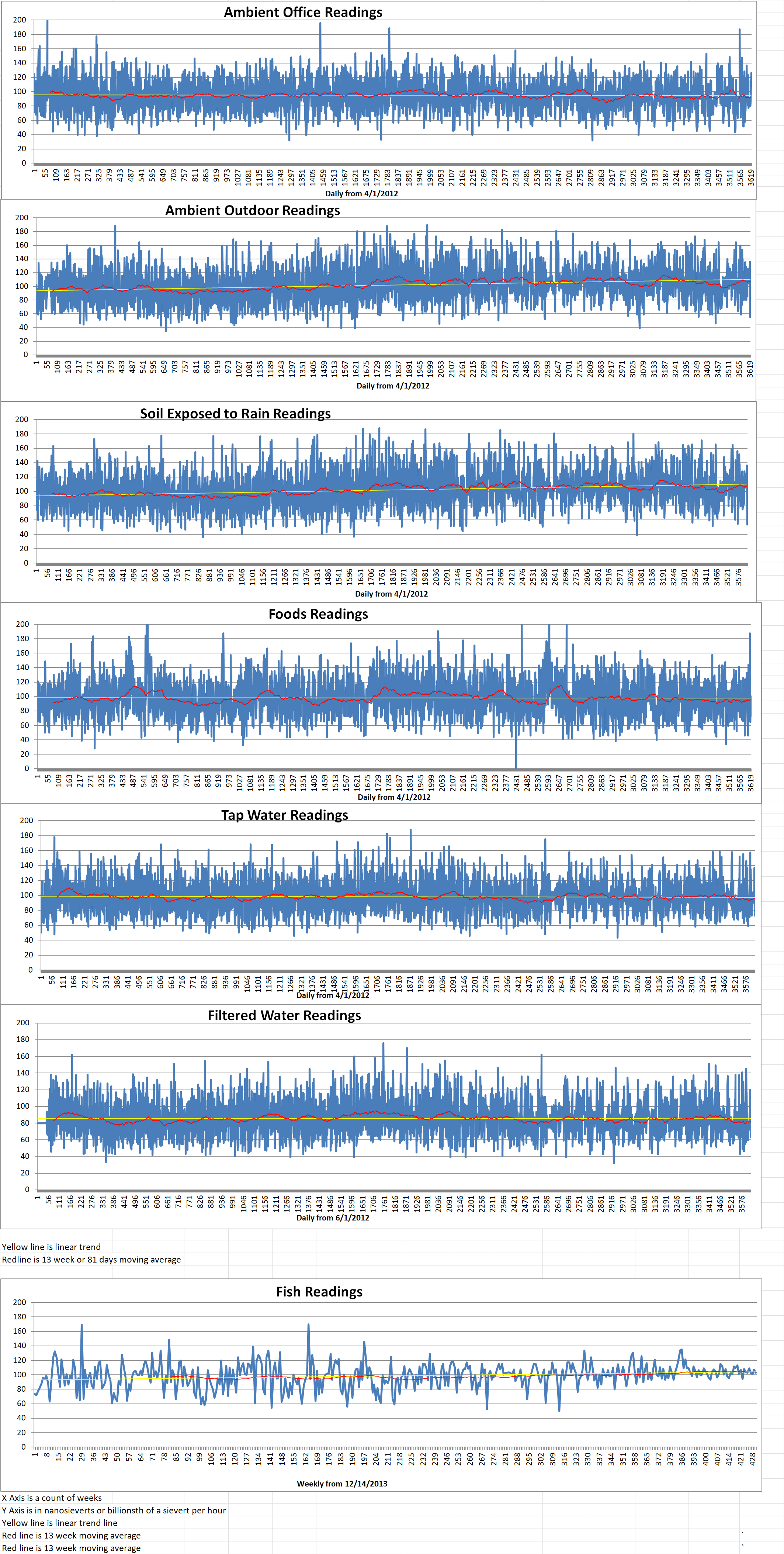
    Geiger Readings for May 30, 2022

    Ambient office = 126 nanosieverts per hour

    Ambient outside = 55 nanosieverts per hour

    Soil exposed to rain water = 54 nanosieverts per hour

    Carrot from Central Market = 100 nanosieverts per hour

    Tap water = 108 nanosieverts per hour

    Filter water = 93 nanosieverts per hour

  • Geiger Readings for May 29, 2022

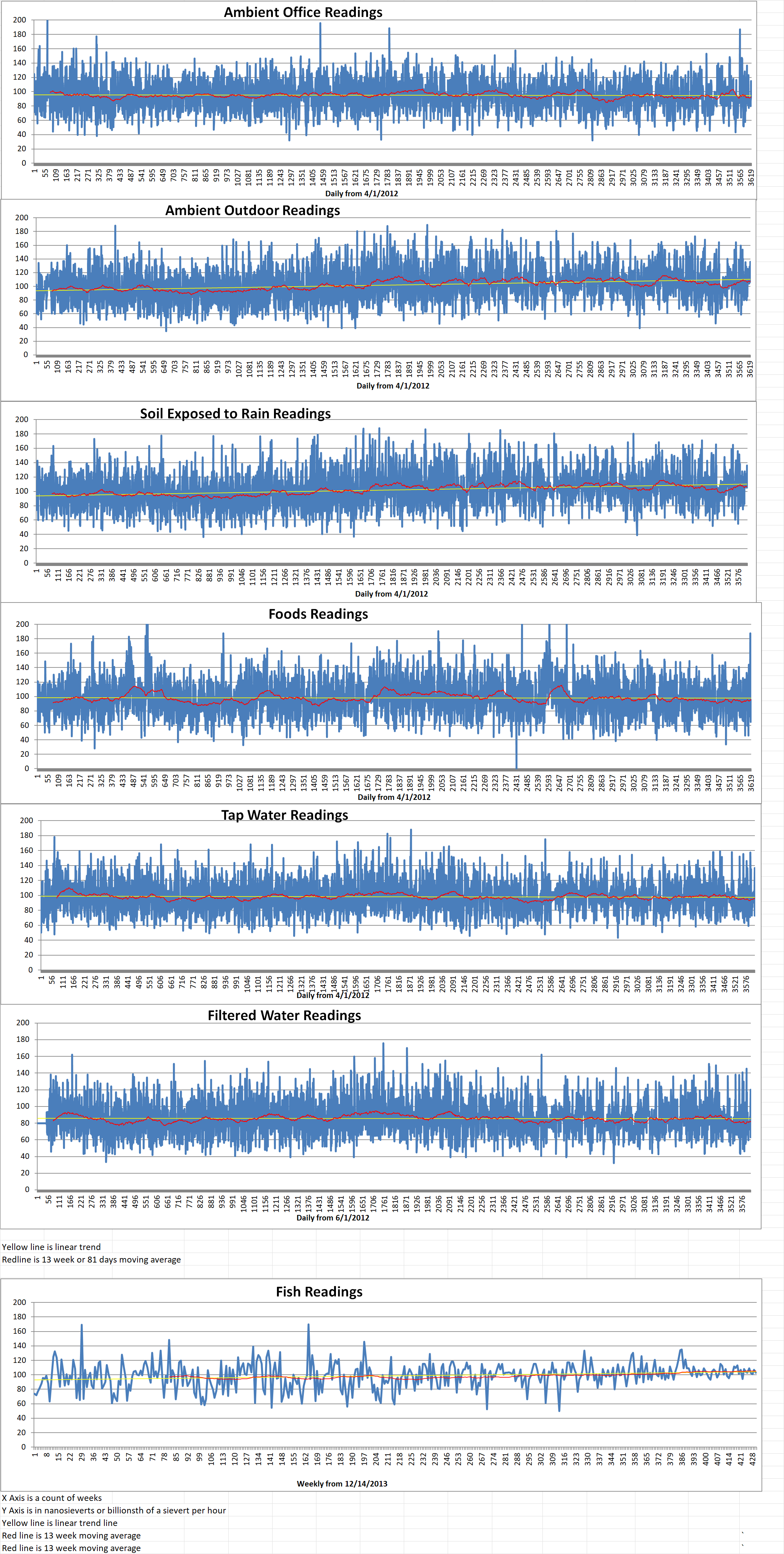
    Geiger Readings for May 29, 2022

    Ambient office = 110 nanosieverts per hour

    Ambient outside = 27 nanosieverts per hour

    Soil exposed to rain water = 129 nanosieverts per hour

    Blueberry from Central Market = 95 nanosieverts per hour

    Tap water = 73 nanosieverts per hour

    Filter water = 63 nanosieverts per hour

  • Geiger Readings for May 28, 2022

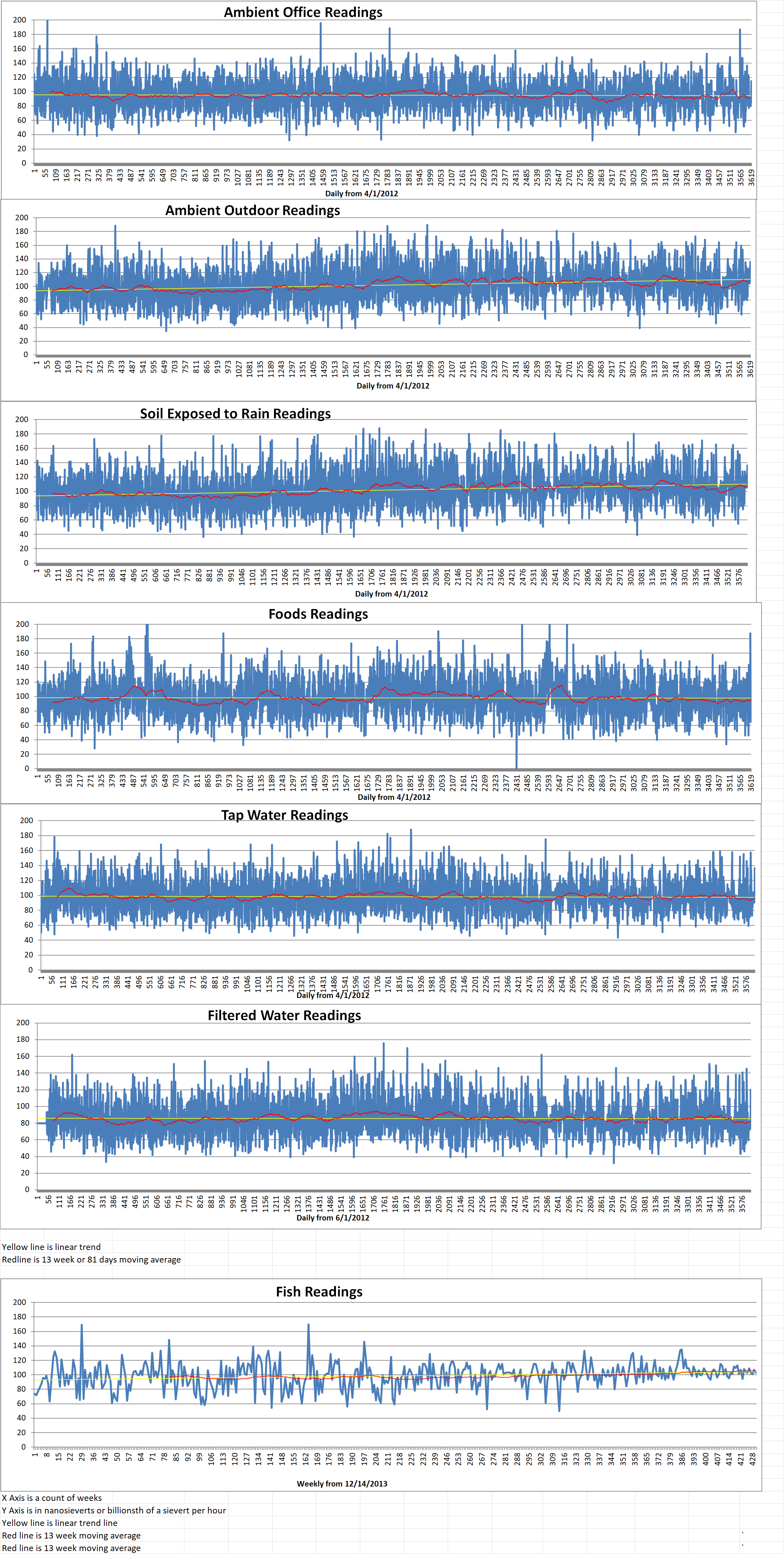
    Geiger Readings for May 28, 2022

    Ambient office = 115 nanosieverts per hour

    Ambient outside = 136 nanosieverts per hour

    Soil exposed to rain water = 136 nanosieverts per hour

    Avocado from Central Market = 73 nanosieverts per hour

    Tap water = 137 nanosieverts per hour

    Filter water = 120 nanosieverts per hour

    Dover sole = 103 nanosieverts per hour

  • Nuclear Reactors 1030 – University of Pittsburg Is Working On Small Modular Reactors – Part 2 of 2 Parts

    Nuclear Reactors 1030 – University of Pittsburg Is Working On Small Modular Reactors – Part 2 of 2 Parts

    Part 2 of 2 Parts (Please read Part 1 first)
         Even in the improbable event of a core meltdown, Dr. Talabi said that SMRs are still remarkably safe. Unlike the current large-scale power reactors, the advanced designs of the SMRs eliminates the need for active safety systems supported by human operators. If radioactive particles are released from the reactor core, gravity and other natural phenomena such as thermal and steam concentration will force them to settle down within the confines of the reactor containment vessel. In the even more unlikely case that radioactive particles escape the containment vessel, Dr. Talabi’s research suggests that such particles will settle over a much smaller area than if there was a containment breach in a large-scale power reactor. This poses far less of a health and environmental hazard and simplifies cleanup.
         Aside from the issue of safety, one of the other great concerns that critics have is the cost. A recent production cost study by the German government states that over three thousand SMRs will need to be manufactured to offset their initial construction cost. However, Talabi said that estimates like that of the German government were just wrong. He said, “It’s as though we’ve only ever built tractor-trailers and we’re trying to figure out what the cost of a motorcycle is.”
         Dr. Talabi claims that most economists just take the production cost of a Westinghouse large scale AP1000 power reactor which is a popular design and assume that the cost of an SMR will be proportionally smaller. For instance, they figure that an SMR that produces one hundred megawatts will cost one tenth of the cost of an AP1000 that produces one gigawatt. What economists don’t realize is that many of the systems required by the large-scale power reactors such as the systems that maintain pressure and coolant flow in the reactor’s core will not have to miniaturized in the SMR plants because they will be eliminated.
         The theory is that SMRs should also be less expensive because they can be easily factory fabricated. Their smaller parts will be easy for more manufacturers to produce. Only one or two suppliers in the world can produce a reactor vessel for an AP1000, many manufacturers in the U.S. alone should be able to make one for an SMR.
        In spite of his optimism for the potential of SMRs, Talabi admits that they do have some drawbacks. Widespread use of SMRs may slash carbon emissions but will necessitate increased uranium mining. They also create a security risk because nuclear fuel will have to be transported between thousands of locations. In addition, reactor sites may be targeted by warring states and terrorists. Current U.S. government statues fail to account for the differences between SMRs and large-scale reactors which will inhibit their construction. Developing countries are in serious need of electric power but they lack the regulatory infrastructure to accept the technology. Their citizens have been exposed to many negative stories about nuclear power through the global press. They may be harder to win over to nuclear power than the U.S. citizens.
          Dr. Talabi still believes that the potential for SMRs to help solve the climate change crisis and global energy poverty far outweigh their risks. This makes overcoming their obstacles well worth the effort and cost. In order to support that goal, he founded the Climate Action Through Nuclear Deployment in Developing Countries (CANDiD). CANDiD intends to use technology to create regulatory frameworks that developing nations can utilize to accept and operate SMRs. It also aims to improve the familiarization that the global population needs with the operation and benefits of nuclear power plants.
           Dr. Talabi said, “It’s not a technology challenge.” With government and public support, SMRs could soon be powering the globe with carbon-free electricity. To Dr. Talabi, it’s just a matter of awareness and understanding.