Category: Uncategorized

  • Geiger Readings for  Apr 17, 2022

    Geiger Readings for Apr 17, 2022

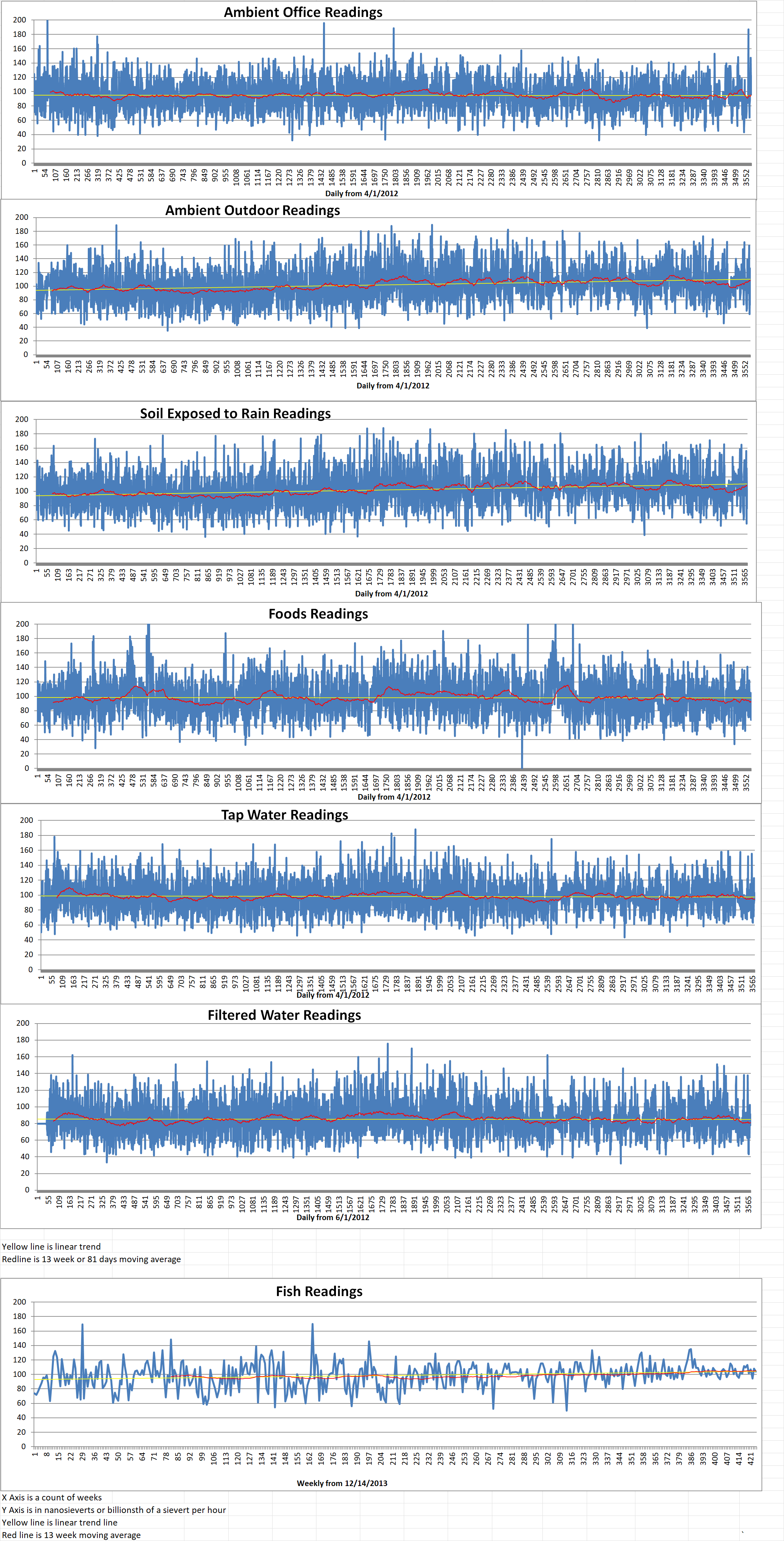
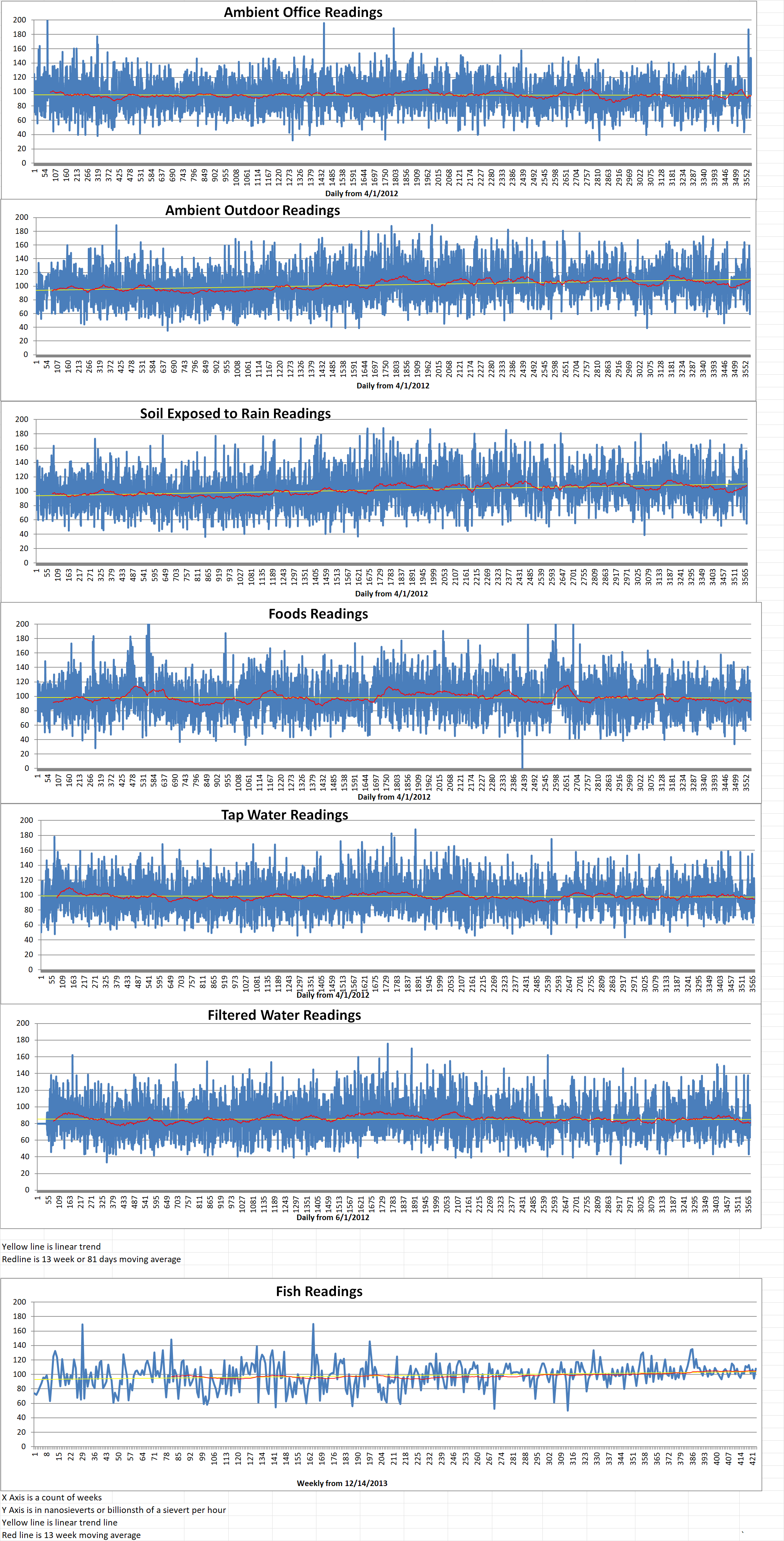
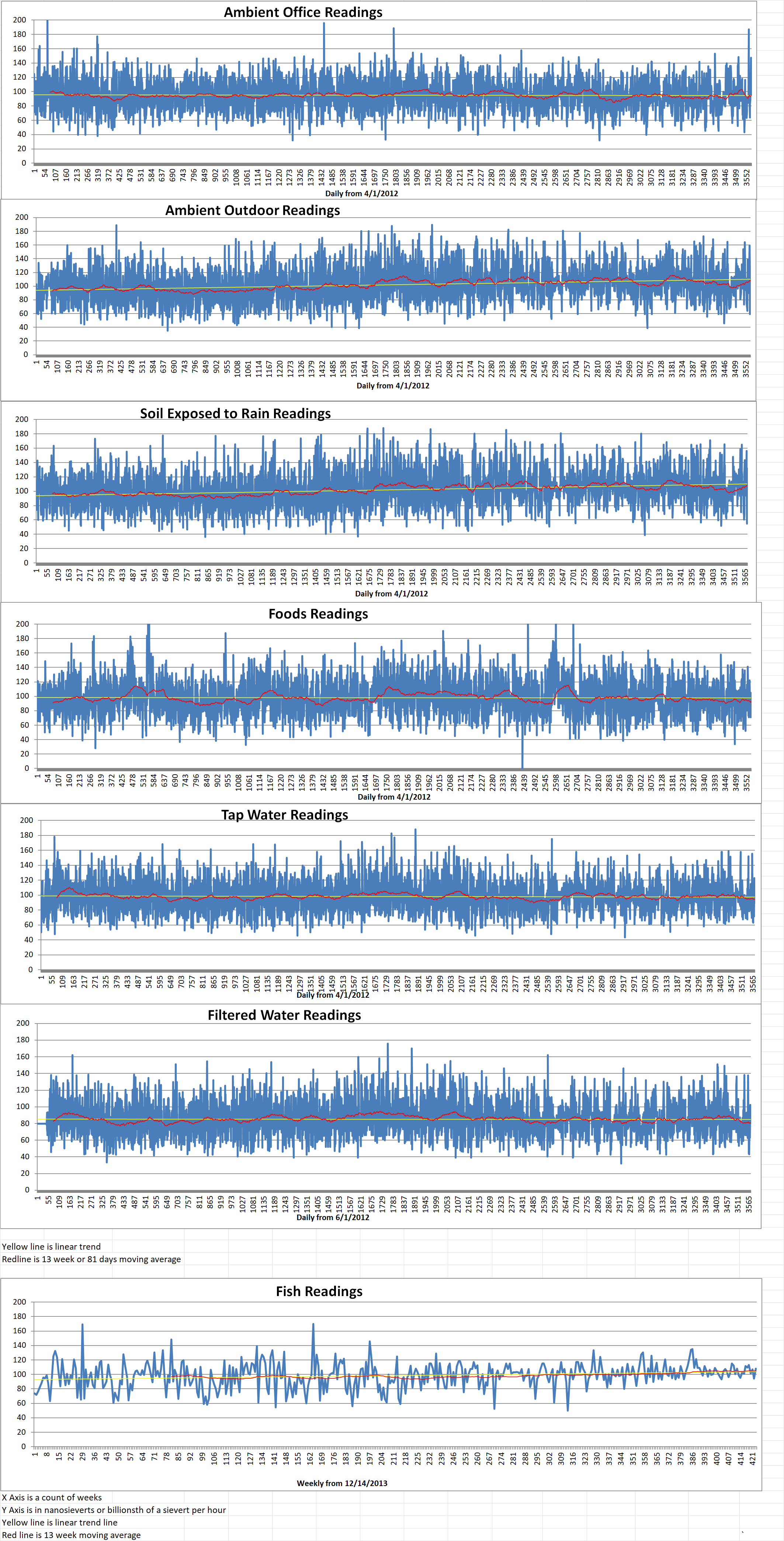
    Ambient office = 81 nanosieverts per hour

    Ambient outside = 119 nanosieverts per hour

    Soil exposed to rain water = 115 nanosieverts per hour

    White onion from Central Market = 100 nanosieverts per hour

    Tap water = 146 nanosieverts per hour

    Filter water = 141  nanosieverts per hour

  • Geiger Readings for  Apr 16, 2022

    Geiger Readings for Apr 16, 2022

    Ambient office = 122 nanosieverts per hour

    Ambient outside = 73 nanosieverts per hour

    Soil exposed to rain water = 77 nanosieverts per hour

    Romaine lettuce from Central Market = 87 nanosieverts per hour

    Tap water = 100 nanosieverts per hour

    Filter water = 91  nanosieverts per hour

    Dover sole = 104 nanosieverts per hour

  • Nuclear Fusion 176 – Cerberus and Assystem Collaborate To Improve Shielding For Fusion Reactor Prototype

    Nuclear Fusion 176 – Cerberus and Assystem Collaborate To Improve Shielding For Fusion Reactor Prototype

          Cerberus Nuclear and Assystem have been chosen to supply the Spherical Tokamak for Energy Production (STEP) reactor in-board shield design as part of the STEP Engineering Framework. STEP is intended to be the prototype for a U.K. nuclear fusion energy power plant.
         The STEP project will deal with the extreme environment inside the central column of the STEP fusion reactor. The temperatures inside the STEP reactor can vary from two hundred million degrees Fahrenheit within the plasma to less than minus three hundred and twenty-eight degrees Fahrenheit within just a few yard.
          Cerberus Nuclear and Assystem are collaborating with the STEP research team at the U.K. Atomic Energy Agency (UKAEA) which carries out fusion energy research on behalf of the U.K. government. The collaboration is dedicated to developing radiation shielding and cooling strategies inside the in-board shield section of the central column.
         The overall goal of STEP is to protect the sensitive toroidal magnets within the central column that work to control the high temperature plasma. The role of Cerberus involves the optimization of the shielding to maximize the operational lifetime of these critical reactor components. Utilizing its knowledge and expertise in neutronics transport as well as interaction cross sections, the company will be simulating a wide variety of arrangements to support continued development.
         Gary Reed is the Transitional Energy Business Manager at Assystem. He said, “We are pleased to be working alongside Cerberus Nuclear on this key aspect of STEP. Collectively we will pool the engineering and design expertise, and specialist knowledge needed to ensure success in this project. Assystem is a well-established fusion engineering company working on multiple international projects, and we are invested in the UK’s ambition to accelerate progress in the development of this game-changing technology.”
         Daniel Cork is the Nuclear Director at Cerberus. He said, “Cerberus is very proud to be contributing to such a noteworthy project with worldwide importance. The skills and experience we have in-house regarding radiation shielding is uniquely suited to support the project. Working closely with our colleagues at Assystem we look forward to the challenge of what will be a highly significant and exciting project.”
         The goal of the first phase of work on the STEP project is to produce a concept design by 2024. The second phase will include detailed engineering designs, with all relevant permissions and consents to construct the prototype. The third and final phase of the project is construction, with operations scheduled to begin around 2040. The aim is to have a fully evolved design and approval to construct the prototype by 2032 which will enable the construction to begin.
         In December of 2020, the U.K. government called on local communities across the U.K. to put forward proposals to host STEP. Interested communities had until the end of March 2021 to submit their nominations. They were required to demonstrate that their local area has the right mixture of social, commercial and technical conditions to host the new plant. These include adequate land conditions, grid connection and water supply.
         In October of 2021, UKAEA announced the that five sites, including one in Scotland and four in England have been short listed to host STEP. The short-listed communities include Ardeer in North Ayrshire; Goole in East Riding of Yorkshire; Moorside in Cumbria; Ratcliffe-on-Soar in Nottinghamshire; and the so-called ‘Severn Edge’ bid from South Gloucestershire and Gloucestershire.
         On the conclusion of its assessment, UKAEA will make a recommendation to the Secretary of State for Business, Energy and Industrial Strategy with the successful site scheduled to be announced around the end of 2022.

  • Geiger Readings for  Apr 15, 2022

    Geiger Readings for Apr 15, 2022

    Ambient office = 115 nanosieverts per hour

    Ambient outside = 93 nanosieverts per hour

    Soil exposed to rain water = 100 nanosieverts per hour

    Red leaf lettuce from Central Market =67 nanosieverts per hour

    Tap water = 93 nanosieverts per hour

    Filter water = 78 nanosieverts per hour

  • Nuclear Weapons 773 – U.K. Storage Bunkers Being Upgraded To Store U.S. Nuclear Weapons – Part 2 of 2 Parts

    Nuclear Weapons 773 – U.K. Storage Bunkers Being Upgraded To Store U.S. Nuclear Weapons – Part 2 of 2 Parts

    Part 2 of 2 Parts (Please read Part 1 first)

          Hans Kristensen of the FAS said, “One of the things they have talked about is protecting the deterrent against Russia’s improved cruise missiles capabilities. So, they could be trying to beef up the readiness of more sites without them necessarily receiving nukes, so that they have the options to move things around in a contingency if they need to.”

         Britain has become enthusiastic about taking a more assertive role when it comes to its own nuclear deterrent. Last year it announced that it would increase its own stockpile of Trident nuclear warheads by forty percent to two hundred and sixty. This is the first such increase since the end of the Cold War in 1991. U.K. government sources say that the U.K. has a “clearer appreciation” of its role as a nuclear weapons state in a renewed era of state competition with Russia and China.

         The U.K. Ministry of Defense (MoD) made no comment on the upgrade mentioned in the U.S. budget request. One U.K. official said, “We won’t provide anything on this as it relates to the storage of nuclear weapons.” However, the news comes just four months after the arrival in Lakenheath of the first of a new generation of nuclear-capable U.S. combat aircraft, the F-35A Lightening II, the first such deployment in Europe.
         Daryll Kimball is the executive director of the Arms Control Association (ACA). He said that the upgrade of the U.K. storage facilities is “an early sign that the US and NATO are preparing to engage in a protracted and maybe heightened standoff with Putin’s Russia. The administration should provide some clarity about the military necessity and goals of possibly bringing nuclear weapons back to the UK.
         The developments in Europe are part of a broader retreat from arms control. The Biden administration’s nuclear posture review has been sent to Congress but not yet declassified. It is reported that it does not contain the changes pledged during his campaign.
         In 2020, Biden said that he would formally declare the sole purpose of nuclear weapons to be deterrence of a nuclear attack against the U.S. or its allies. However, the review does leave open the possibility of using nuclear arms to respond to non-nuclear threats as well.
         The nuclear disarmament group Campaign for Nuclear Disarmament (CND) said that the “quiet announcement” by the U.S. amounted to more militarization at a time of growing risk. It would add to the risks faced by the U.K. citizens. Kate Hudson is the general secretary of the CND. She said that she feared that it could lead to U.S. warheads being deployed in the U.K. She added that “Nuclear weapons don’t make us safe – they make us a target.”
         The movement to ban nuclear weapons worldwide was gaining momentum and many nations were signing onto the project. Unfortunately, that did not include any of the nuclear armed nations. Now with the Russian belligerence and threat of the use of nuclear weapons, global disarmament hopes have been dashed.

  • Geiger Readings for  Apr 14, 2022

    Geiger Readings for Apr 14, 2022

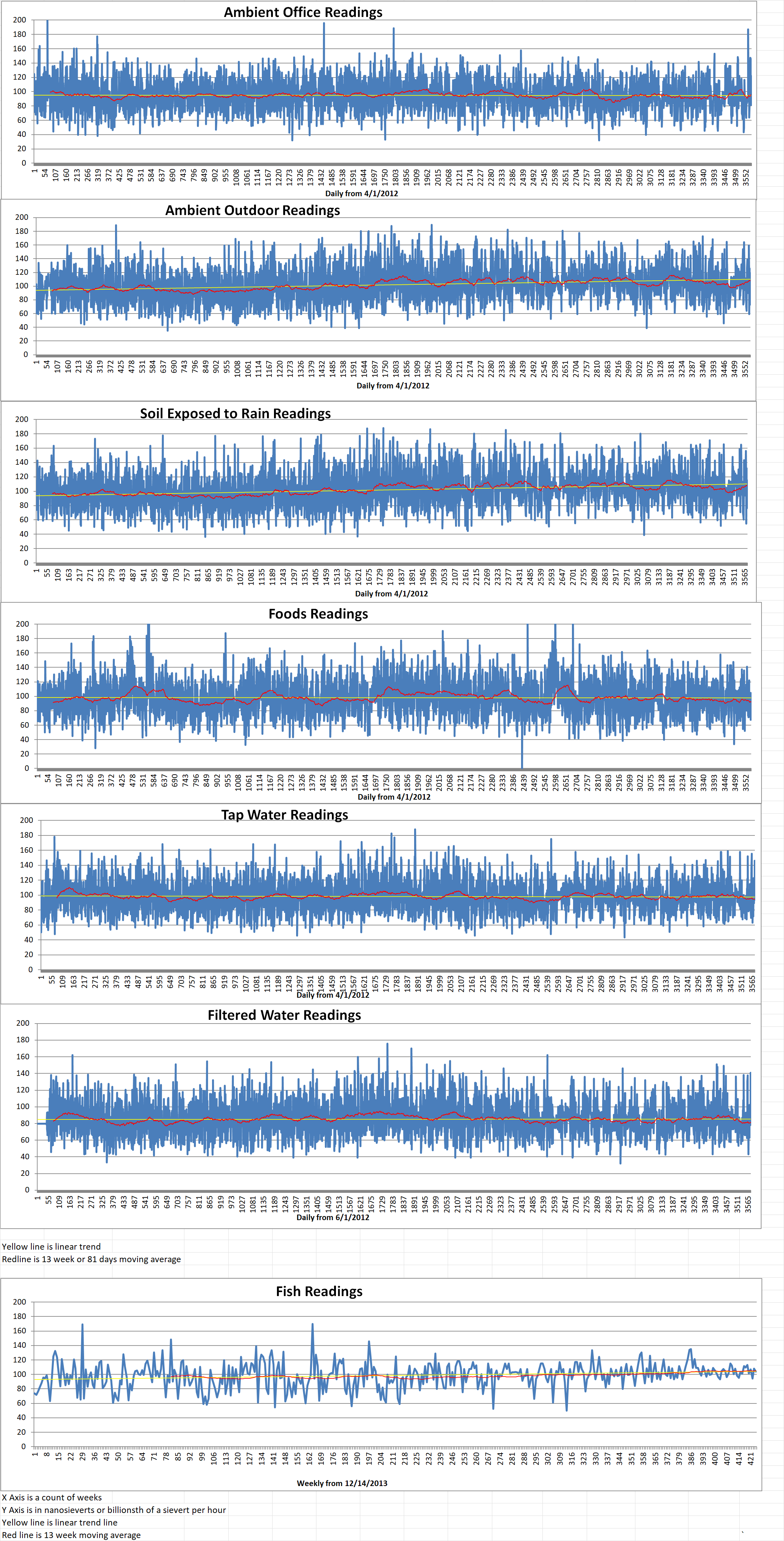
    Ambient office = 96 nanosieverts per hour

    Ambient outside = 83 nanosieverts per hour

    Soil exposed to rain water = 84 nanosieverts per hour

    Portabella mushroom from Central Market = 105 nanosieverts per hour

    Tap water = 95 nanosieverts per hour

    Filter water = 87 nanosieverts per hour

  • Nuclear Weapons 772 – U.K. Storage Bunkers Being Upgraded To Store U.S. Nuclear Weapons – Part 1 of 2 Parts

    Nuclear Weapons 772 – U.K. Storage Bunkers Being Upgraded To Store U.S. Nuclear Weapons – Part 1 of 2 Parts

    Part 1 of 2 Parts

         Military bunkers in the U.K. are being upgraded so that they can be used for long term storage of U.S. nuclear weapons again after being empty for fourteen years. In the Biden administration’s 2023 defense budget request, the U.K. was added to the list of countries where infrastructure investments are taking place at “special weapons” storage sites. Along with the U.K, Belgium, Germany, Italy, the Netherlands and Turkey are all countries where the U.S. stores an estimate of one hundred nuclear bombs.
         Hans Kristensen is the director of the nuclear information project at the Federation of American Scientists. He was the first analyst who reported on that particular budget item. He said that he believed that the U.K. site which is being upgraded is the U.S. airbase at RAF Lakenheath which is about sixty two miles north-east of London.
         The U.S. removed its stockpile B61 nuclear munitions from Lakenheath in 2008. This marked the end of more than half a century of maintaining a U.S. nuclear stockpile in the U.K. At the time of removal, the B61 gravity bombs were widely seen as militarily obsolete. There were high hopes for further nuclear disarmament by the nations armed with nuclear weapons.
          That optimism has since faced because of Vladimir Putin’s invasion of Ukraine, Russia’s nuclear threats against NATO, and extensive nuclear weapons modernization programs pursued by both Russia and the U.S. As part of the U.S. plan, the B61 has been given a new extension of capability with the addition of the B61-12 variant. This new version of the original B61 is scheduled to go into production in May of this year.
         The 2023 budget request says that NATO “is wrapping up a 13-year, $384m infrastructure investment program at storage sites in Belgium, Germany, Italy, the Netherlands, the UK, and Turkey to upgrade security measures, communication systems, and facilities”.
         In the 1990s, RAF Lakenheath has thirty-three underground storage vaults. One hundred and ten B61 nuclear bombs were stored in the vaults according to the FAS. Since the B61 bombs were removed, the vaults have been mothballed. Kristensen said that he believes the vaults are now being upgraded in order for the new B61-12 bombs to be stored there if necessary.
         The Biden administration has been very careful not to carry out any activities that might be seen as escalatory in the nuclear arena in response to Putin’s announcement that he would put Russia’s nuclear forces on higher alert a few days after he invaded Ukraine. The U.S. has cancelled previously scheduled tests of its intercontinental ballistic missiles.
         For the same reason, Kristensen said that he doubted the Biden administration is planning to increase the U.S. stockpile in European nations. When the new B61-12 bombs are delivered, they are expected to replace the older models already being stored in Europe. He believes that the Lakenheath upgrade is actually intended to provide more flexibility to move the nuclear weapons around Europe as needed.

    Please read Part 2 next