Category: Uncategorized

  • Geiger Readings for Sep 11, 2021

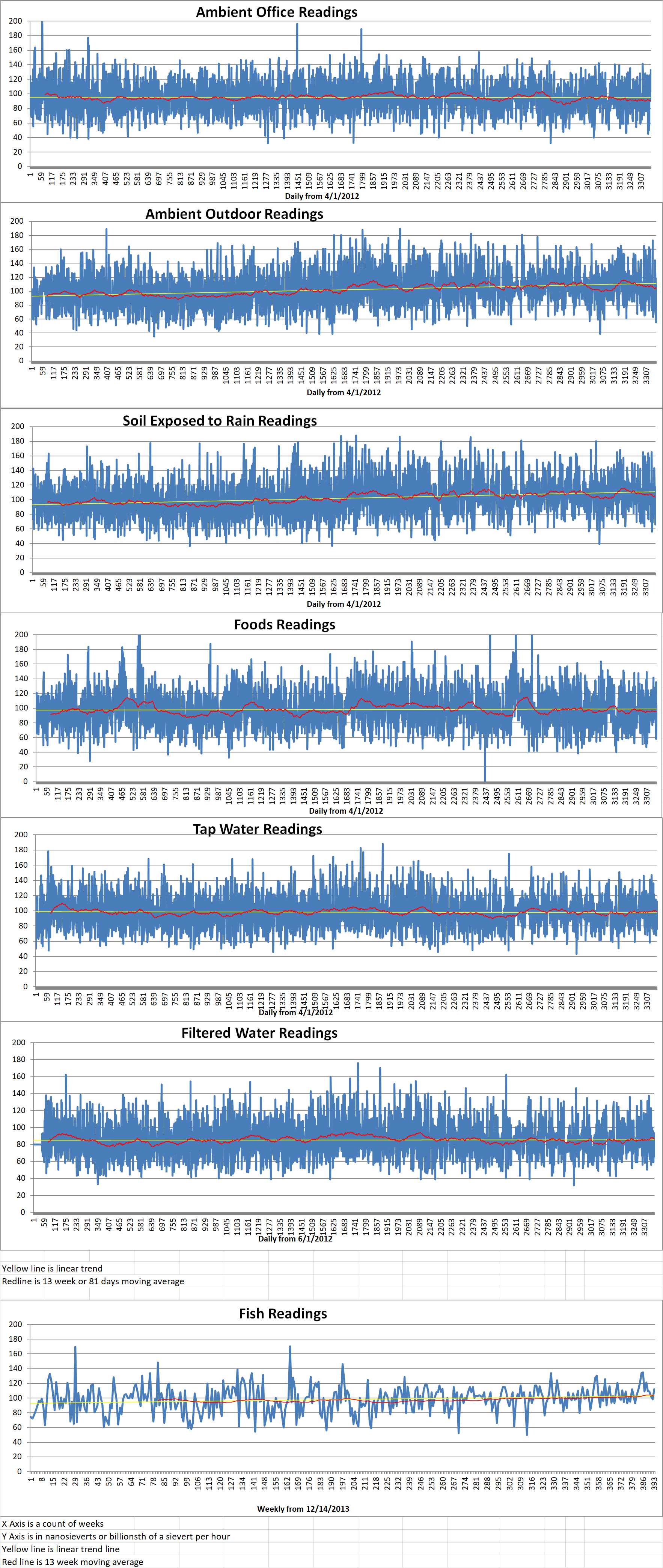
    Geiger Readings for Sep 11, 2021

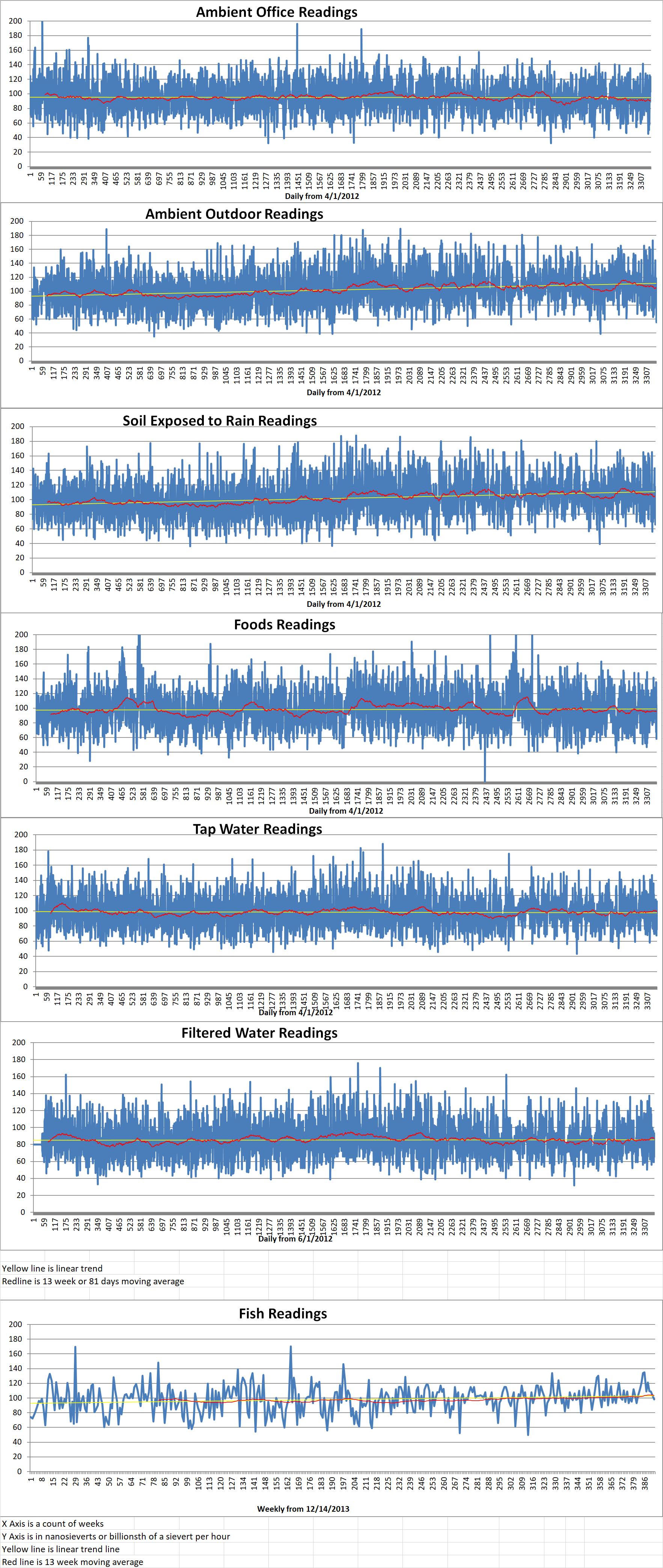
    Ambient office = 133 nanosieverts per hour

    Ambient outside = 108 nanosieverts per hour

    Soil exposed to rain water = 104 nanosieverts per hour

    English cucumber from Central Market = 102 nanosieverts per hour

    Tap water = 93 nanosieverts per hour

    Filter water = 87 nanosieverts per hour

    Dover sole – Caught in USA = 93 nanosieverts per hour

  • Nuclear Reactors 948 – Boston Dynamics Tests Robot Dog At UK Nuclear Site

    Nuclear Reactors 948 – Boston Dynamics Tests Robot Dog At UK Nuclear Site

         People have been fascinated by humanoid robots for a long time. In Greek mythology, Hephaestus, the blacksmith of the gods on Mount Olympus built mechanical servants and patrol dogs. Down through the centuries, humanoid and animal robots appear again and again in fiction and engineering. While a great deal of research and development is dedicated to creating ever more realistic simulations of real humans, robot animals have also enjoyed an explosion of development. Like humanoid robots, animal robots that duplicated living animals have many benefits.
         There is a robot dog design that has been developed by Boston Dynamics (BD) that they call Spot. There have been a lot of videos released of the amazing things that the robot is capable of, and more features and abilities are being rapidly added. Spot went into production recently and is now for sale. They are not cheap but are already being purchased and put to work.
         Recently, BD collaborated with Createc engineering consultants and the U.K. Atomic Energy Authority (UKAEA) in three days of demonstration and testing of the use of a Spot robot for nuclear plant inspection and maintenance at Calder Hall, a former U.K. nuclear power plant which is being decommissioned. Calder Hall is part of the big Sellafield multi-function nuclear site near Seascale on the coast of Cumbria, England.
          The use of robotic equipment is not new at Sellafield. A whole fleet of land, air, and underwater autonomous vehicles has already been contributing to the decommissioning and clean-up of the site. Using robots instead of humans for plant maintenance removes the risk of radiation exposure for nuclear plant workers. Any equipment being considered for use at nuclear power plants must be thoroughly tested.
          The Spot robot was tested in the Calder Hall plant’s complex turbine hall. If Spot performs satisfactorily, it could be added to Sellafield’s existing fleet of robots for inspections and data collection across the site.
           Ray Chunilal is the head of robotics and artificial intelligence for Sellafield. He said, “Our mission is to create a clean and safe environment for future generations. Robots like Spot are an integral part of our future. They offer us a way of getting jobs done in hazardous environments while keeping people out of harm’s way. Robots are excellent at performing repetitive and time-consuming tasks. This allows us to free up our people to undertake more fulfilling work contributing to our purpose: creating a clean and safe environment for future generations. Spot’s active demonstration has given us great insight into its capabilities. We’ll now study the findings before we take a decision on whether to deploy this technology at Sellafield.”
         Guy Burroughes is a senior control systems engineer at UKAEA. He said, “We’ve been using Spot for over a year in our work to develop robotics for challenging environments like nuclear facilities. We were delighted to bring this experience to support the trials at Sellafield and hope it can lead to safer, more efficient decommissioning.”
            Will Newsom is the head of nuclear at Createc. He said,” Spot is the ideal tool to deploy equipment into industrial environments which have been designed for bipedal human exploration only. It will be an important part of the toolset to add to Sellafield’s remote-operations capability. We are working with BD as their preferred partner for nuclear applications to deliver this cutting-edge technology and integrate new capabilities, making the solution business-as-usual for our customers.”

  • Geiger Readings for Sep 10, 2021

    Geiger Readings for Sep 10, 2021

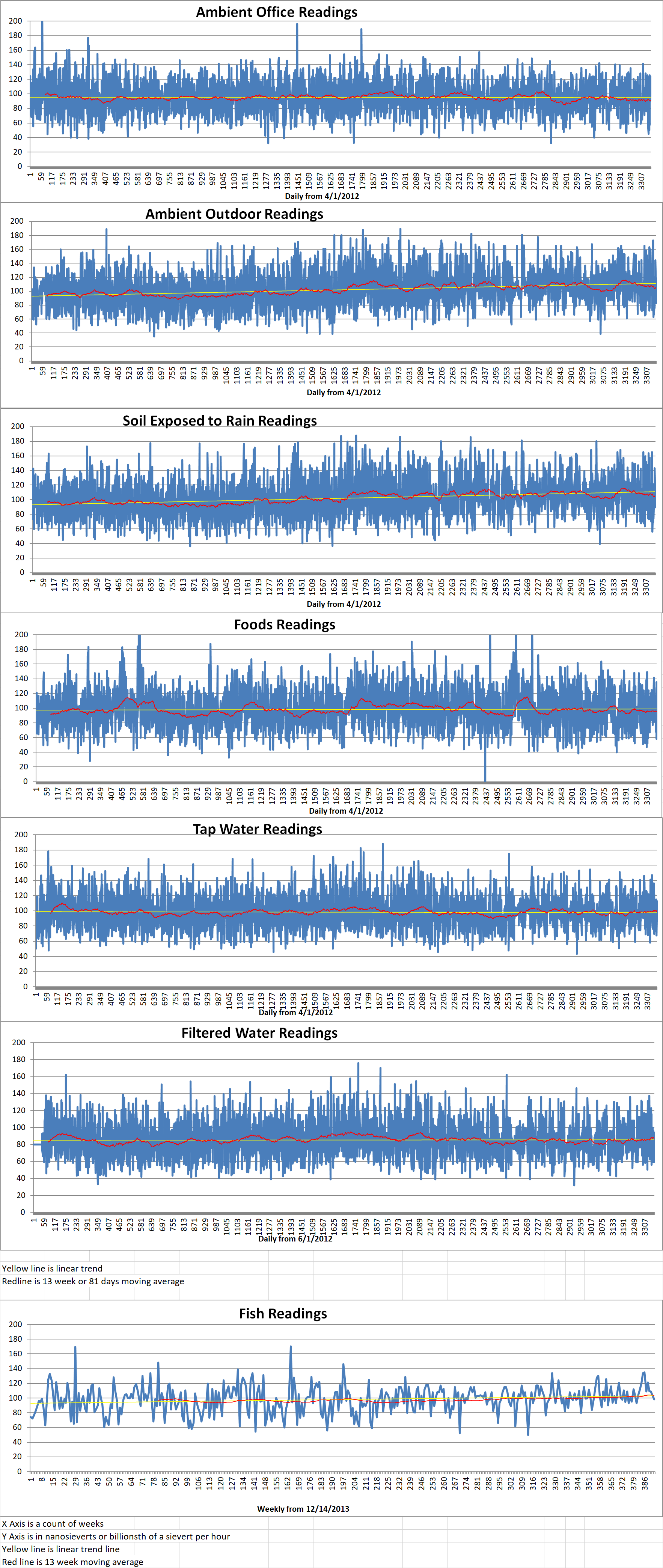
    Ambient office = 103 nanosieverts per hour

    Ambient outside = 56 nanosieverts per hour

    Soil exposed to rain water = 66 nanosieverts per hour

    White onion from Central Market = 93 nanosieverts per hour

    Tap water = 76 nanosieverts per hour

    Filter water = 66 nanosieverts per hour

  • Nuclear Fusion 151 – Research Into Plasma Configurations In Tokamaks Indicates That Negative Triangularity Is A Superior Approach

    Nuclear Fusion 151 – Research Into Plasma Configurations In Tokamaks Indicates That Negative Triangularity Is A Superior Approach

         There is a race to develop commercial nuclear fusion reactors. A lot of milestones are being passed as the race heats up. Now there are companies who say they expect to have a working prototype in five years. One encouraging fact with respect to current fusion research is that many different types of processes and technologies are being pursued.
         Tokamak fusion reactors were first developed by the Soviet Union in the 1950s. They are donut-shaped chambers that confine and heat plasmas to generate fusion reactions. The shape of the plasma cross-section influences the quality of the containment.
         Tokamaks utilize powerful magnetic field to confine and shape the plasma that contains the fuel needed to achieve fusion. The shape of the plasma has a strong effect on the ease with which viable fusion can be achieved. In a conventional tokamak, the cross-section of the plasma is shaped to resemble a capital “D”. When the straight side of the D shape faces the center of the donut-shaped tokamak, this configuration is called positive triangularity. When the curved part of the D shape faces the center of the tokamak, it is called negative triangularity. Recent research indicates that negative triangularity reduces how much the plasma interacts with the plasma-facing material surfaces of the interior of the tokamak. This new research shows that there are critical benefits for negative triangularity in the quest for viable fusion.
         One of the major challenges for fusion energy science and technology is how to build future power plants that control plasmas that are many times hotter than the center of the Sun. At these extreme temperatures, interactions of the plasma with the material walls of the power reactors have to be controlled and minimized. Undesirable interactions happen due to turbulence in the boundary region of the plasma. This new research shows that the boundary turbulence in negative triangularity plasmas is significantly reduced when compared with that occurring in plasmas with a positive triangularity shape. In addition, the undesirable interacts with the plasma-facing walls is also much reduced. This should result in principle to longer lifetimes for the walls of the chamber and also a reduction in the risk of damage to the walls. Such damage could require that the tokamak be shut down.
          It is known to scientists that in tokamak fusion devices, core plasmas shaped into negative triangularity exhibits a significant increase in energy confinement when compared to positive triangularity. Negative triangularity plasma shapes also show reductions in the fluctuation levels of the electron temperature and density of the core. This makes negative triangularity plasmas promising candidates for a future commercial nuclear fusion power reactor.
          The new research being reported here shows that the sign and degree of triangularity also have a big effect on plasma edge dynamics and power and particle exhaust properties. However, scientists know relatively little about such effects. Experiments at the Tokamak à Configuration Variable (TCV), located at the École Polytechnique Fédérale de Lausanne (EPFL) in Lausanne, Switzerland, revealed a strong reduction of boundary-plasma fluctuation and plasma interaction with the facing wall for sufficiently negative triangularity values. The researchers observed the reported effects in both inner-wall-limited and diverted plasmas. This significant reduction in plasma-wall interaction at sufficiently negative triangularity strengthens the prospects of negative triangularity as a potential nuclear fusion reactor solution.

  • Geiger Readings for Sep 09, 2021

    Geiger Readings for Sep 09, 2021

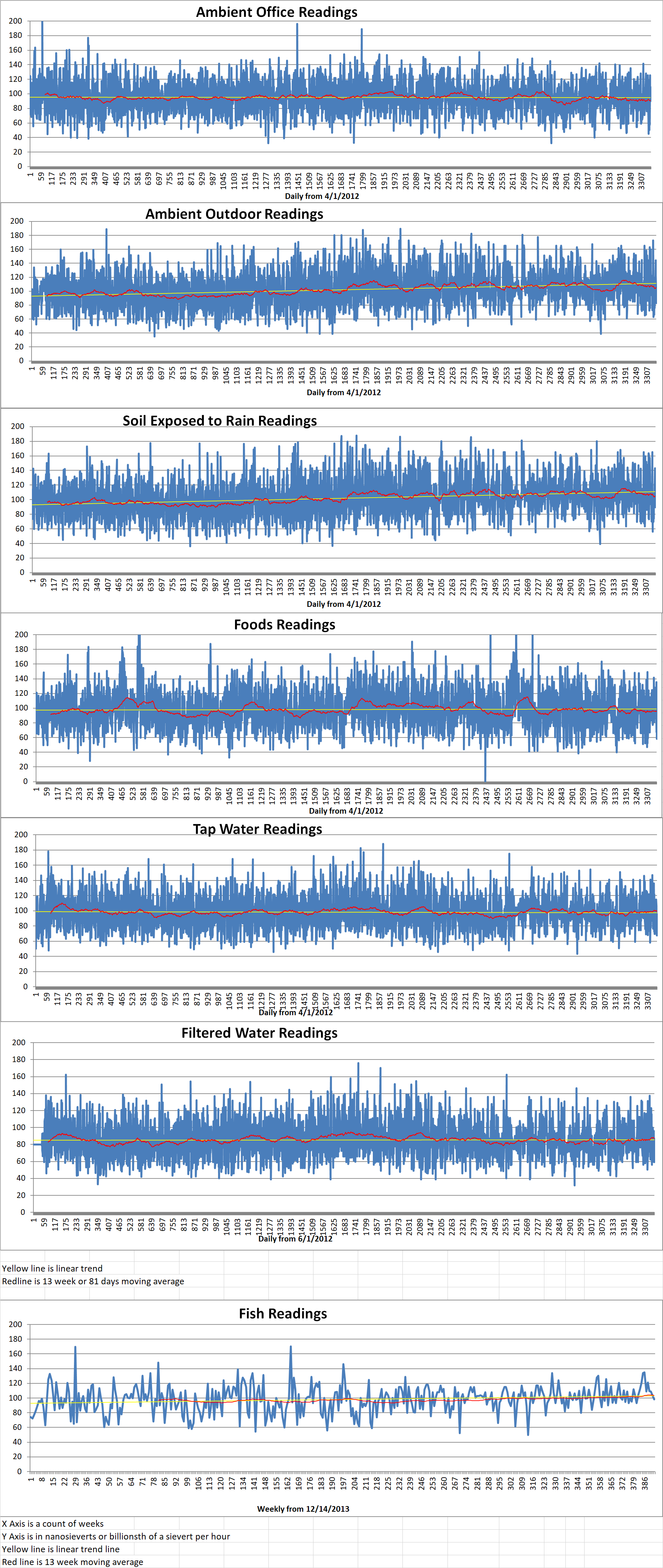
    Ambient office = 123 nanosieverts per hour

    Ambient outside = 119 nanosieverts per hour

    Soil exposed to rain water = 117 nanosieverts per hour

    Tomato from Central Market =104 nanosieverts per hour

    Tap water = 113 nanosieverts per hour

    Filter water = 93 nanosieverts per hour

  • Nuclear Reactor 947 – Comparison of China’s Wind – Solar – Nuclear Power Scalability – Part 3 of 3 Parts

    Nuclear Reactor 947 – Comparison of China’s Wind – Solar – Nuclear Power Scalability – Part 3 of 3 Parts

    Part 3 of 3 Parts (Please read Part 1 and Part 2 first)
         In the last two years, there was a reversal in wind and solar deployments in China. In 2019 and 2020, double the actual generation was added by wind than solar. Some of this is due to an expected elimination of federal subsidies for utility-scale solar, commercial solar and onshore wind projects in 2021. “The new rule, effective from Aug. 1, follows a drastic fall in manufacturing costs for solar and wind devices amid booming renewable capacity in China.”
         It appears that Chinese wind energy deployments have been driven to ensure that they would received adequate compensation. This is similar to the situation in the U.S. where U.S. deployments have seen serious surges and lulls do to changes in the production tax credit for wind installation. A result of this is speculation that the announced wind generation capacity is not as fully completed as was announced. However, that should not alter the expect capacity factors for the coming years. One hundred and twenty terawatts is still expected from wind farms that were deployed in 2020.
         Today, seven of the ten biggest wind turbine manufacturers and nine of the ten largest solar component manufacturers are Chinese companies. China is still the only scaled manufacturer of many of the technologies necessary for the generation of zero-carbon electricity. In addition, China is expanding its market share in those low-carbon technologies rapidly.
         The nuclear industry is counting on a new generation of advanced nuclear reactors including what are called small modular reactors (SMRs) which generate three hundred megawatts or less. Some analysts believe that China has fallen into one of many possible failure conditions of rapid deployment of nuclear power. They are relying on an expanding set of technologies instead of standardizing a single technology. This is one of the main reasons why it is doubtful that SMRs will every be deployed in significant numbers.
          While the Chinese government has a great deal of power with respect to the siting and construction of nuclear installations, it has not been able to force some deployments. In the past decade, there have been attempts on the part of the Chinese national nuclear company to site various nuclear installations including fuel recycling plants and nuclear power plants near major cities which have been prevented by social rejection and mass protests. China has a spotty record of safety and maintenance at their nuclear power plants. The situation has been improving but it is virtually inevitable that sooner or later, there will be a major nuclear accident which will result in even more social rejection. This will inevitably ensure that wind and solar will rule the Chinese energy industry in the near future.
         Wind and solar will most likely be the primary providers of low-carbon energy generation in the coming century. As our global society electrifies everything, the electrons will be coming mostly from the wind and the sun. This will take place in an efficient, effective and low-cost energy model that does not pollute or cause global warming. It is definitely good news that these technologies are clearly delivering on their promise to help us with the climate crisis.

  • Geiger Readings for Sep 08, 2021

    Geiger Readings for Sep 08, 2021

    Ambient office = 109 nanosieverts per hour

    Ambient outside = 83 nanosieverts per hour

    Soil exposed to rain water = 89 nanosieverts per hour

    Blueberry from Central Market = 58 nanosieverts per hour

    Tap water = 91 nanosieverts per hour

    Filter water = 77 nanosieverts per hour