Blog
-
Geiger Readings for May 17, 2015
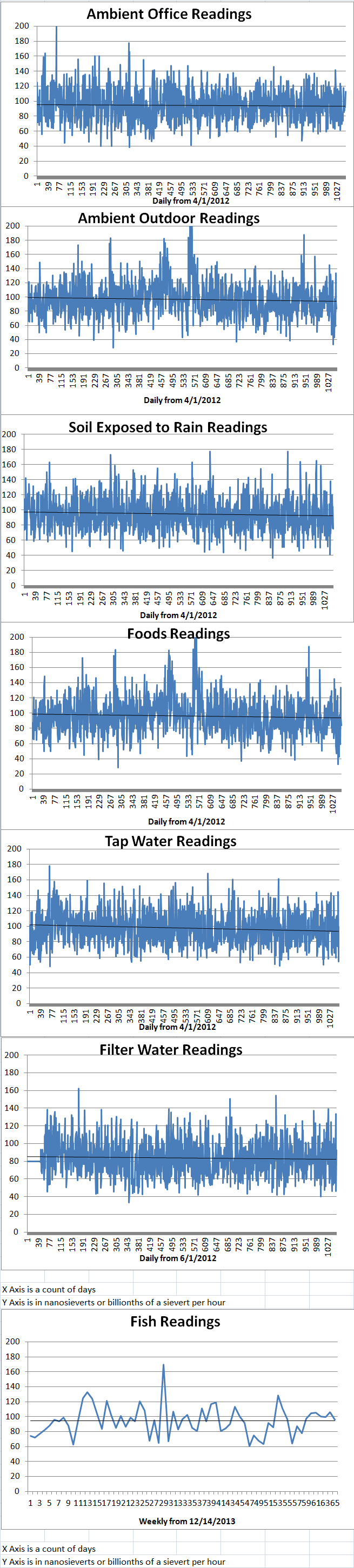
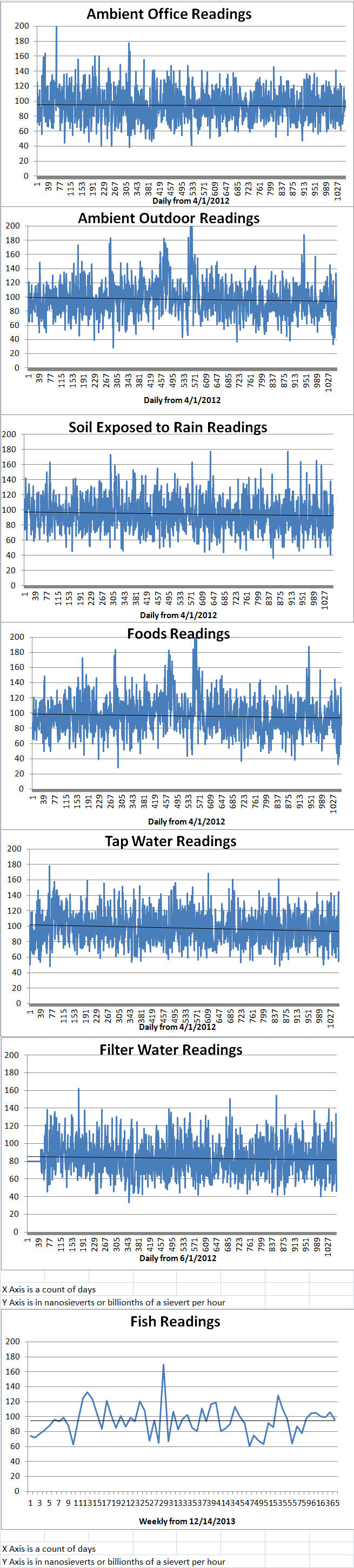
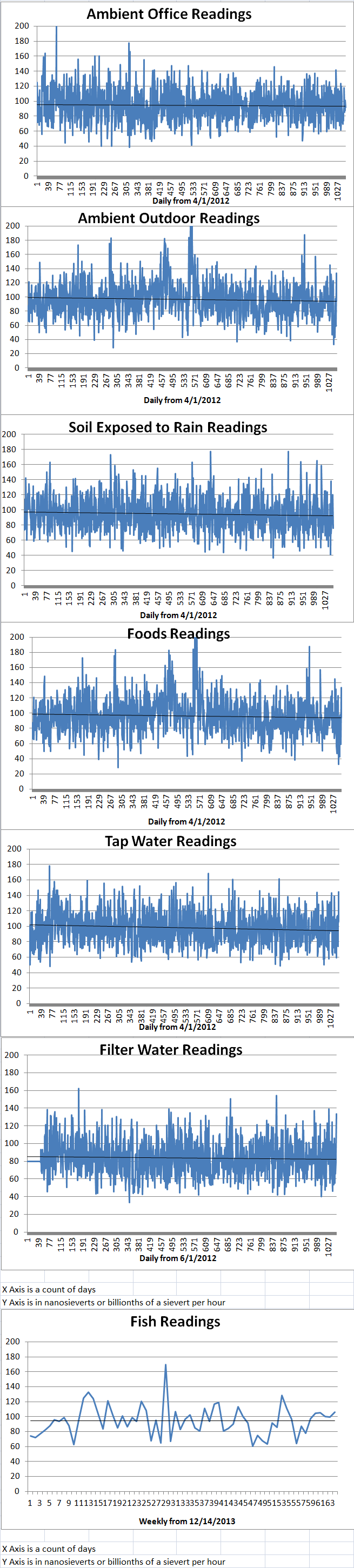
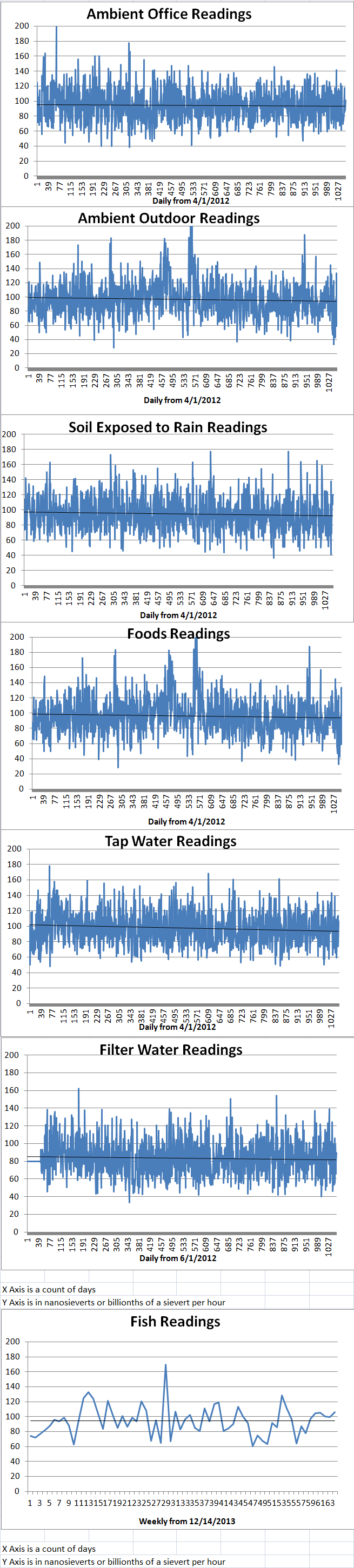
Ambient office = 113 nanosieverts per hourAmbient outside = 70 nanosieverts per hourSoil exposed to rain water = 75 nanosieverts per hourMedjool date from Central Market = 85 nanosieverts per hourTap water = 99 nanosieverts per hourFiltered water = 93 nanosieverts per hour -
Geiger Readings for May 16, 2015
Ambient office = 92 nanosieverts per hourAmbient outside = 120 nanosieverts per hourSoil exposed to rain water = 105 nanosieverts per hourMedjool date from Central Market = 84 nanosieverts per hourTap water = 55 nanosieverts per hourFiltered water = 46 nanosieverts per hourPetrale sole – Caught in USA = 96 nanosieverts per hour -
Nuclear Reactors 239 – Forbes Articles Says That Nuclear Scientists Don’t Get No Respect
I just read an article in Forbes magazine titled “Climate Scientists Get Respect, So Why Don’t Nuclear Scientists?” The author, James Conca, said that in discussions of climate change, it is often mentioned that ninety seven percent of climate scientists agree that climate change is real and we should do something about it. He goes on to say that one hundred percent of geologists agree that biological evolutions has been acting on the Earth for four billion years and that ninety nine percent of physicians agree that everyone should be vaccinated. All of this was a build up to comments about the absence of nuclear scientists in the main-stream media when nuclear power is being debated. He said that you could not understand the reality of nuclear science without them.
He said, “As a research scientist, a geologist and a nuclear scientist, this is really annoying. And sad. Nuclear is such a complicated scientific discipline that it is insane not to tap this group of scientists if you want to know the reality. Because without them, you will not get any real understanding of this subject.” He goes on to say that nuclear scientists are often unfairly accused of selling out to the nuclear industry but dismisses that charge. He suggests that part of the reason for lack of respect and media coverage of nuclear scientists is that there is no “constituency” for nuclear power like Texas is for oil, West Virginia is for coal and Pennsylvania is for natural gas. He concluded by pointing out that the global media failed to cover the call for nuclear power by a group international scientific societies in the recent “Nuclear For Climate Declaration”.
I have great respect for nuclear scientists and am always ready to listen to their statements in the realm of nuclear science. However, nuclear power involves many issues that are outside of academic understanding of nuclear science. If a nuclear scientist says that a particular radioactive nucleus fissions into a particular set of daughter particles, I will accept what he says. On the other hand, when a nuclear scientists says that nuclear power is the best solution to the problem of anthropogenic climate change, he is way out of his area of expertise. There are social issues, political issues, economic issues and environmental issues that he may not be an expert in. All of these weight heavily on any consideration and debate on the expansion of nuclear power for combating climate change. Perhaps the reason that more nuclear scientists are not seen in the debates is because the debates are not about the facts of nuclear science.
I reject his contention that there is no constituency for nuclear power. There are many leaders in developing nations trying to lift their citizens out of poverty who see nuclear power as their best chance for economic expansion. There are major nations with nuclear technology who see it as an excellent source of export revenue and are promoting it vigorously. And there are very wealthy corporations which stand to make billions and billions of dollars from nuclear plant construction and are spending millions to promote it. There are also many people concerned about climate change who believe that nuclear power is the answer.
The bottom line in my rejection of nuclear power is this. I have no doubt that nuclear scientists and nuclear engineers are capable of designing nuclear power reactors that are safe and reliable. The problem is that you have to be able to rely on governments to regulate reactor construction and operation. And you have to be able to depend on corporations to follow regulations in the construction and operation of power reactors.
The terrible nuclear disaster at Fukushima could have been prevented if the Japanese government has regulated properly and TEPCO had acted properly in the operation of the plant. But they did not. The history of government regulation of nuclear power and corporations construction and operation of nuclear power plants is littered with terrible examples of corruption, greed, and incompetence. The problem with nuclear power is not nuclear science, the problem is human institutions.
-
Radiation News Roundup May 15, 2015
Powerful M6.8 quake rocks NE Japan. enenews.com
NATO’s military commander accused Russia Wednesday of irresponsibly stepping up its nuclear threats and using threatening language, which he said were intended to stun NATO and make the alliance think twice before responding to Russia’s actions. valuewalk.com
-
Geiger Readings for May 15, 2015
Ambient office = 92 nanosieverts per hourAmbient outside = 89 nanosieverts per hourSoil exposed to rain water = 76 nanosieverts per hourBanana from Central Market = 94 nanosieverts per hourTap water = 145 nanosieverts per hourFiltered water = 134 nanosieverts per hour -
Nuclear Weapons 142 – Dangerous Oil Shipments Pose a Threat to Missile Installations in North Dakota
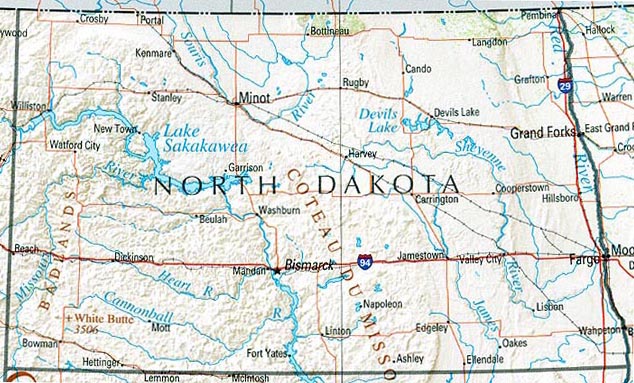
Some of the essays that I post are historical, some are technical and some are topical. Last night a story on the Rachael Maddow show on MSNBC caught my attention. I have blogged in the past about the problems at the Minot nuclear missile base in North Dakota. However, the problems discussed in the MSNBC story were not the fault of the missile command or the personnel of the missiles installation.
Minute Man missile silos were constructed in North Dakota during the Cold War. At the time, there was little in the way of farming, population or infrastructure in that part of North Dakota. In addition, the location was selected because the shortest route for U.S. missiles to strike Russia was over the North Pole.
The western half of North Dakota is located over part of the Bakken oil field. Recently there has been intense activity in drilling oil wells in North Dakota. The oil that is extracted has to be moved to market and a great deal of the oil is shipped out of North Dakota on trains.
Oil trains have been derailing, exploding and causing big fires for years but the huge increase in oil shipments in the past few years has also increased the number of accidents and the attendant publicity. The crude oil from North Dakota is especially flammable and when these oil trains derail, there have been huge explosions that have killed people and required evacuation in populated areas. There really is no easy way to put out the fires that result and often the burning rail cars and pools of oil are just left to burn out. For years, the U.S. transportation department has been trying to get the shippers to retire the old dangerous single walled tank cars in favor of safer double walled tank cars. Even derailments of the new type of cars are disastrous.
Normally, the U.S. military requires that any buildings or farms have to be at least one thousand and two hundred feet from a missile silo. However, the breaking story on MSNBC pointed out five missile silos in North Dakota that were less than that distance from rail lines that carry Bakken crude oil shipments. The U.S. military has submitted lists of concerns to North Dakota state officials about the proximity of the rail lines to the silos.
If one of these trains derailed and exploded near a missile silo, the resulting fire could spread to the missile installation. In addition to the damage that that would be caused to the silo and the missile, as well as the danger to the personnel, there is the possibility that such a fire could set off the propellant for the missile. The resulting explosion could release radioactive materials from the warhead and rain down radioactive fallout over the area, posing a threat to the environment, animals , and people living in the area.
As the report pointed out, this should not just be a concern of location authorities but a concern that must be addressed by the federal government at the national level. This problem should have been address long before now.

-
Geiger Readings for May 14, 2015
Ambient office = 101 nanosieverts per hourAmbient outside = 132 nanosieverts per hourSoil exposed to rain water = 120 nanosieverts per hourRed seedless grape from Central Market = 134 nanosieverts per hourTap water = 107 nanosieverts per hourFiltered water = 90 nanosieverts per hour -
Nuclear Reactors 238 – U.S. Administration Working On Renewal of Nuclear Cooperation Agreement with China
The United States government seems to have a love-hate relationship with China. While U.S. military officials warn of the rising influence of China’s military, President Obama makes comments about how the new TPP trade deal is necessary or “China will write the trade rules.” On the other hand, China is a huge investor in the U.S. and we are its major trading partner. While the attempt to craft a nuclear power/weapons agreement with Iran has been getting all the headlines lately, the U.S. has been quietly working on an extension of a nuclear agreement with China.
Without any publicity, President Obama announced to Congress that he is going to renew a nuclear cooperation agreement with China. It is called a 123 agreement under the terms of the Atomic Energy Act of 1954. Supporters of the renewal say that it would facilitate the sales of U.S. nuclear technology to China which is on a reactor buying and building binge of late. There is a potential for dozens of reactor sales to China representing hundreds of billions of dollars.
The renewal of the agreement would let China purchase U.S. designed reactors. The deal would also allow China to purchase a facility or the technology that would permit China to reprocess spent nuclear fuel to obtain plutonium. In addition, China will be allowed to buy new reactor coolant technology. Experts claim that such technology could be modified to make Chinese submarines quieter and much more difficult to detect. The lack of publicity is an indication of the concerns that the U.S. President has about Congressionl and non-proliferation experts resistance to the renewal.
Congress is now getting involved with the renewal effort. The Senate Foreign Relations Committee will be reviewing the commercial, political and security implications of the renewal. The closed door meeting with five administration officials will permit the review of classified information about Chinese nuclear export control processes. There is a fear that nuclear technology sold to China could find its way to third parties which pose a nuclear proliferation threat.
China has been assisting the U.S. negotiations with Iran over Iran’s nuclear program. Concerns have been raised by China’s close relationship with Iran. In order to facilitate the negotiations with Iran and expand nuclear trade with the U.S., China has been willing to commit to much tighter controls on the movement of nuclear technology and nuclear materials than are in the original agreement that is being renewed. In the past, China has been accused of selling dangerous missile and nuclear technology to “countries of concern.”
Critics of the renewal such at the Nonproliferation Policy Education Center (NPEC) have been pushing Congress to make advanced consent a requirement for allowing China to purchase the plutonium-reprocessing plant mentioned above. The NPEC also “opposes the sale of nuclear energy technologies, especially coolant pumps and high quality valves known as squib valves, with possible naval use.” This particular issue has risen in importance with reports that China appears to be building a military base on disputed reefs in the South China Sea.
However worried U.S. officials are about China’s military ambitions in Southern Asia and sharing sensitive nuclear technology with other countries, U.S. nuclear technology companies are very eager to export nuclear reactors and technology to China and exerting a lot of pressure on the U.S. government to help them expand nuclear trade with China. Time will tell which interest is the wiser.