
Blog
-
Geiger Readings for May 09, 2015
Ambient office = 92 nanosieverts per hourAmbient outside = 74 nanosieverts per hourSoil exposed to rain water = 69 nanosieverts per hourIceberg lettuce from Central Market = 43 nanosieverts per hourTap water = 109 nanosieverts per hourFiltered water = 90 nanosieverts per hourPetrale sole – Caught in USA = 106 nanosieverts per hour -
Nuclear Reactors 235 – China Signs Deal to Build Chinese Designed Hualong One Reactor for Argentina
China has great ambitions for nuclear power. In addition to construction of dozens of new domestic nuclear power reactors, China is aggressively marketing nuclear power to other nations, such as Argentina. The China National Nuclear Corporation has signed a preliminary agreement to build a nuclear power reactor for the South American country based on the first Chinese designed reactor, the Hualong One. A final contract is to be signed in 2017.
In order for the deal to go forward, China must provide all the financing for the project. Several government agencies in China are demanding conditions for the loan. They say that in order to provide the money, Chinese companies must be “given priority in all aspects, including design, construction and fuel cycle.” Argentina is concerned about the demanded conditions because the construction of the first Hualong One reactor in China is behind schedule. That is why the Argentineans want to wait until 2017 to sign the final contract.
Argentina’s state nuclear power company, Nucleoelectria Arengetina SA (NASA) intends to add three gigawatts of nuclear power in the next decade. In addition,f gigawatts of nuclear power must also be added to replace aging nuclear power reactors that will be retired around 2035.
NASA has plans to begin construction of a six billion dollar eight hundred megawatt pressurized heavy water reactor in 2016 at the Atucha Nuclear Power Plant Complex in Buenos Aires where two reactors are already located. The Atucha 3 will be a CANDU reactor partly developed by Canada.
The second Argentinean project which is just in the preliminary planning stage will be the seven billion dollar Chinese eleven hundred megawatt pressurized light water Hualong One. It was supposed to begin construction in 2017 but with Chinese insistence that Chinese components are essential to the project, the project cannot proceed until after the contract is signed in 2017. The site for the reactor has not been chosen yet. Several different Chinese companies are involve in the project to build the second reactor.
There are several reasons that Argentina chose China to build a nuclear power reactor. China is willing to finance the reactor construction project. China will provide up to seventy percent of the components and the rest will come from Argentina. China will provide one hundred percent of the civil work needed for the reactor. And, finally, China will transfer nuclear technology for pressurized water reactors to Argentina.
The next target for Chinese nuclear technology exports is Egypt. Two of the main sources of Chinese oil imports, Saudi Arabia and the Sudan, are also on the list of potential customers for Chinese nuclear exports. The list was circulated by a Chinese state council in an Energy Development Strategic Action Plan 2014-2020 at the annual meeting of the China Nuclear Association, a nuclear industry lobbying group. The plan states that China has signed nuclear cooperation agreements with sixteen countries. The plan emphasized the Middle East, South Africa and Turkey as very important customers. The European countries of Poland and the Czech republic were also on the list.
There is stiff competition between Chinese nuclear technology firms to lock up foreign contracts. However, rumors have been circulating that the big four Chinese nuclear companies may merge into a single company. The China Institute of Atomic Energy is pushing for the creation of such a merged company in order to have a ” single well known Chinese nuclear brand which can compete with international brands like Areva and Westinghouse.”
Atucha Nuclear Power Plant:
-
Geiger Readings for May 08, 2015
Ambient office = 84 nanosieverts per hourAmbient outside = 150 nanosieverts per hourSoil exposed to rain water = 138 nanosieverts per hourRedleaf lettuce from Central Market = 59 nanosieverts per hourTap water = 91 nanosieverts per hourFiltered water = 90 nanosieverts per hour -
Nuclear Reactors 234 – Construction of New Reactors at Tukey Point in Florida is a Bad Idea
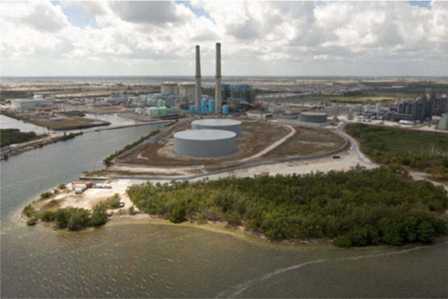
Florida Power and Light (FPL) is trying to get permission from the Nuclear Regulatory Commission to build two new reactors at their Turkey Point power station. FPL will also have to build miles of ten-story power transmission lines to carry the electricity to the Miami area. FPL says that its new nuclear reactors would be environmentally friendly, economically beneficial and safe. There are critics of the project who state that none of these claims are valid.
Nuclear reactors require huge amounts of water to cool the reactors. Currently, FPL utilizes about one percent of the water consumed in Miami-Dade County. If the proposed reactors are constructed, that would rise to ten percent of the water consumption. Current projections of water use in the next twenty years estimate that consumption of water will rise dramatically without the additional draw of the proposed reactors. In response to this concern, FPL says that they will use reclaimed waste water to cool their reactors. However, the backup cooling system for the proposed reactors would draw more than seven billion gallons of water from Biscayne Bay and the Biscayne Aquifer. The Biscayne Aquifer is the only source of drinking water for the County. Overdrawing from the Aquifer would threaten the coastal Everglades, Biscayne National Park and wells in South Dade.
When first proposed, the construction of the new reactors at Turkey Point was seven billion dollars. The most recent estimates put the cost at twenty billion dollars. Approval of the new Turkey Point reactors would commit Miami-Dade County to use of nuclear generated electricity for the next sixty years. Critics of the project say that aggressive conservation would be cost one fifth the optimistic estimated of the cost of nuclear power. FPL has been lobbying against conservation proposals. Critics say that other sources of sustainable alternative energy would be much cheaper, cleaner and safer than nuclear power.
The utility laws in Florida allow FPL to charge its customers for the cost of licensing and constructing the new reactors. To data, FPL has passed over two hundred million dollars of such costs along to the Miami-Dade rate payers. Even if the new reactors at Turkey Point are not approved and constructed, FPL rate payers will not see that initial money refunded.
Included in the cost of construction are huge one hundred and fifty foot tall transmission towers and their transmission lines in Everglades National Park and in the middle of dense commercial and residential neighborhoods in Miami-Dade County. The loss from property taxes alone would run into the tens of millions of dollars annually. In addition, the lost businesses would remove thousands of jobs from the area. The proposed transmission towers do not meet Florida hurricane safety standards. If a transmission tower was toppled in a storm, it could destroy many businesses, homes and even cripple the County rail transit system.
The addition of new reactors to the Turkey Point power station was made fifty years ago, long before climate change, sea level rise and the probability of more power storms in the Turkey Point area were understood. The new reactors will be expected to function until at least 2080 by which time the National Oceanic and Atmospheric Administration recommends that nuclear power reactors be designed to cope with as much as a six foot rise in sea level. The FPL application provides for only one foot of sea level rise. This is obviously inadequate given that sea level at Turkey Point has risen by five inches in the last six years. Although the site for the new reactors is twenty five feet above current sea level, a two foot rise in sea level would turn Turkey Point into a remote island. There is also the danger of extreme storm surges that may accompany more power storms there.
The expansion of Turkey Point is a bad idea environmentally and financially. There has also been no provision for the cost of the nuclear waste that would be generated by the new reactors. FPL ratepayers, Florida state government and the NRC should not approve these new reactors.
Turkey Point Power Station:
-
Geiger Readings for May 07, 2015
Ambient office = 74 nanosieverts per hourAmbient outside = 54 nanosieverts per hourSoil exposed to rain water = 41 nanosieverts per hourMango from Central Market = 65 nanosieverts per hourTap water = 59 nanosieverts per hourFiltered water = 54 nanosieverts per hour -
Radioactive Waste 131 – Three Fouths of U.S. Nuclear Power Plants Are Leaking Tritium
Tritium is a radioactive isotope of hydrogen that has two neutrons in the nucleus in addition to the single proton. Radioactive beta particles are emitted by tritium. (Beta particles are high energy electrons or positrons.) Since water is contained in living cells, heavy water with tritium instead of normal hydrogen is easily absorbed by living tissue when it is consumed. It can also enter a living body by being inhaled as water vapor. If the tritium is incorporated into organic compounds instead of being excreted or exhaled, it is referred to as organically bound tritium (OBT) and it can remain in a human body for up ten years, emitting beta particles.
If a beta particle from tritium hits the DNA in the nucleus of a living cell, it can cause mutations. If the DNA mutated is part of an important gene, the mutation can cause serious diseases. Laboratory animals exposed to tritium have developed cancer and birth defects. Research has shown that tritium can deliver what is called relative biological effectiveness in terms of radiation damage to living tissue at a rate of up to five times that of cosmic rays or x-rays.
The Associated Press has been conducting a year-long study of the release of tritium from nuclear power plants in the United States. Their research has shown that tritium has been leaking from at least forty eight of the sixty five nuclear power plants which represent three-quarters of the operating plants in the U.S. “The number and severity of the leaks has been escalating, even as federal regulators have been extending the licenses of more and more reactors across the nation.”
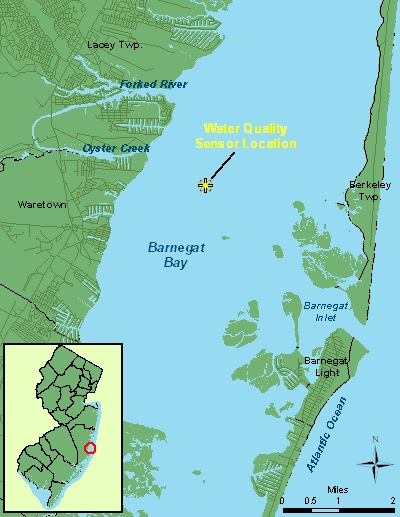
Thirty seven of the U.S. nuclear power plants are leaking amounts of tritium greater than the federal standard for drinking water. Some leaks are hundreds of times above the federal standard. Most of the leaking tritium has been within the boundaries of the power plants but some of the leaking tritium has migrated offsite. None of the leaks have been found to be contaminating public water supplies yet, although tritium leaks at three sites have contaminated wells that provide water for nearby homes. The tritium from these leaks has not yet exceeded the federal standards for drinking water. A fourth leak has penetrated an aquifer and a canal that discharges into to Barnegat Bay in the Atlantic Ocean. One major concern about tritium leaks is that they are often accompanied by other dangerous radionuclides.
Previous reports from the Associated Press have revealed that nuclear regulators and the nuclear industry have been weakening safety standards for decades in order to keep U.S nuclear power reactors operating “within” the rules. While the regulators and industry claim that it is safe to reduce safety margins at nuclear power plants, critics of the trend say that this practice is allowing nuclear power plants to move closer and closer to accidents.
Prompted by the AP study, two U.S. Congressmen recently released a study by independent federal analysts which detailed problems with the regulation of underground piping which are thought to be contributing to the tritium leaks. The report points out that while there is a voluntary industry monitoring system currently in use for tritium leaks, the Nuclear Regulatory Agency has not evaluated the efficacy of such monitoring. The report concludes that, “Absent such an assessment, we continue to believe that the NRC has no assurance that the industry Groundwater Protection Initiative will lead to prompt detection of underground piping system leaks as nuclear power plants age.”
Barnegat Bay on the New Jersey shore: