Blog
-
Geiger Readings for May 02, 2015
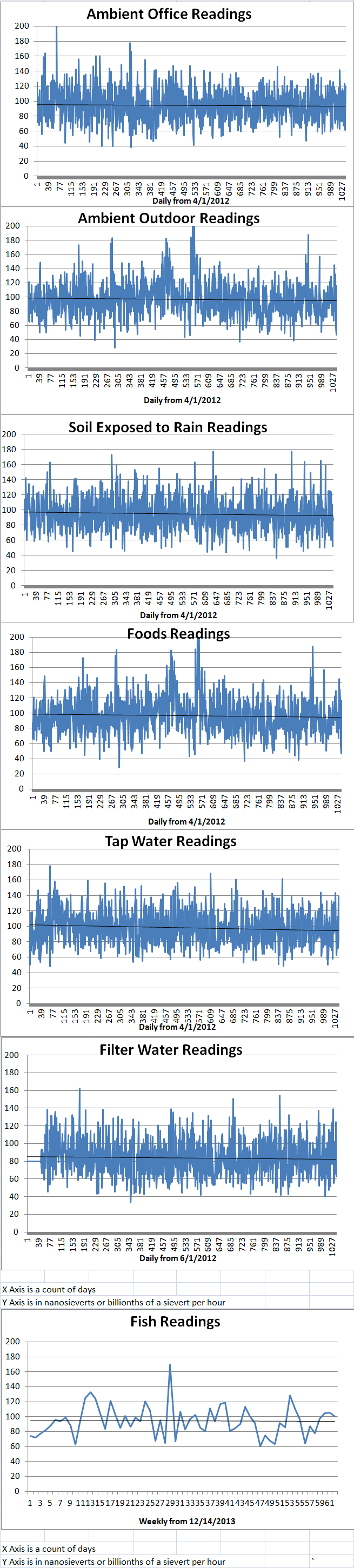
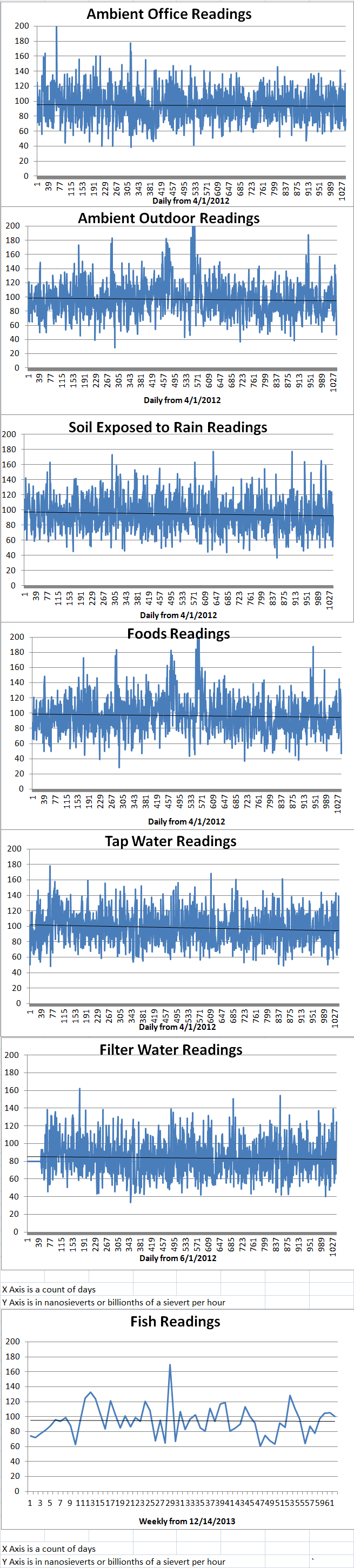
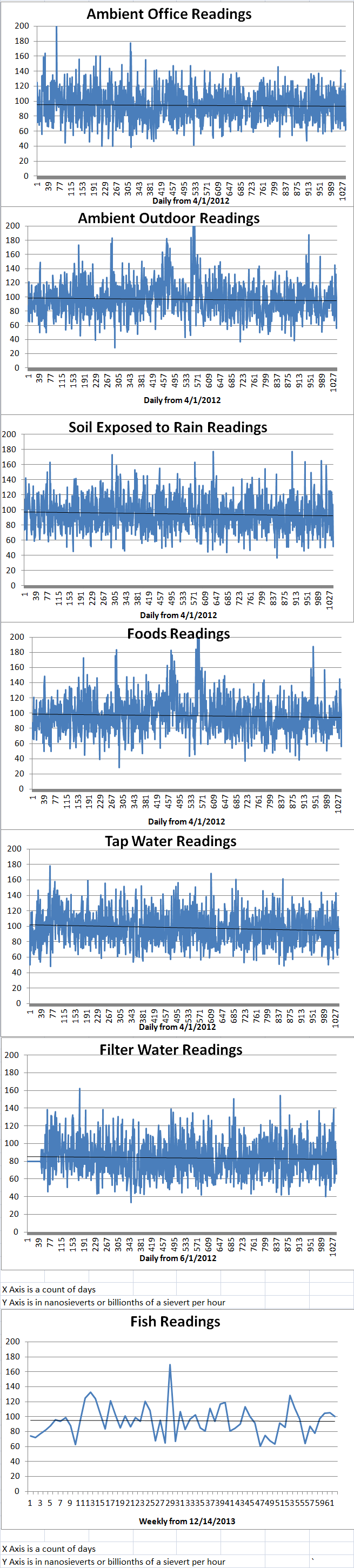
Ambient office = 106 nanosieverts per hourAmbient outside = 97 nanosieverts per hourSoil exposed to rain water = 87 nanosieverts per hourRed bell pepper from Central Market = 107 nanosieverts per hourTap water = 65 nanosieverts per hourFiltered water = 46 nanosieverts per hourPetrale sole – Caught in USA = 100 nanosieverts per hour -
Nuclear Reactors 233 – The History of Small Nuclear Reactors – Part Three of Three Parts
Part Three of Three Parts (Please read Part One and Part Two first)
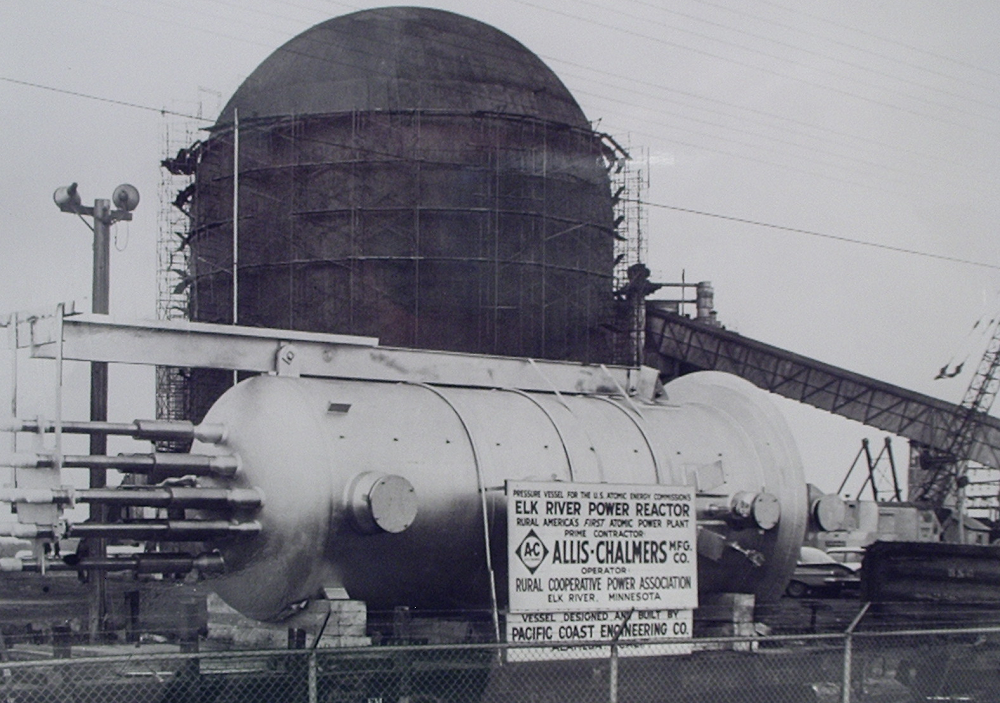
The Elk River reactor was made from prefabricated modules and shipped to the operational site on flat railroad cars. The design was a variation on the boiling water reactors which are the second most common type in use today. The fuel was a non-standard type thought. It consisted of a mixture of uranium that was more highly enriched than usual and the element thorium. The thorium was included because of concerns that uranium resources might run out in the near future. There are still supporters of the idea of using thorium as the primary nuclear fuel for future reactors.
The reactor was almost four years behind schedule when it went operational in 1964 and the cost had risen from about six million to sixteen million dollars. The Elk River reactor only operated for three and one half years. Cracks in the cooling system pipes forced the shutdown of the reactor in 1968. Rejecting proposed repairs that would have cost over a million dollars, the operators remarked that the reactor was too small to be economical and the electricity cost twice that of electricity generate by a coal-fired power plant. New technology had to be invented to decommission the reactor and the cost of decommissioning was six million dollars.
Also in 1968, the La Crosse fifty megawatt boiling water reactor, the last of the AEC funded reactors, was connected to the grid. It operated for eighteen years and, at the end of its life, the electricity that it generated cost three times that of a nearby coal-fired power plant. Since the La Crosse reactor was built and turned on, not a single small nuclear power reactors has been ordered to generate power in the U.S. By the mid 1970s, large reactors generating between eight hundred megawatts and thirteen hundred megawatts were being built.
Other countries built small reactors but they were mostly intended as intermediate steps in the development of large reactors. India was still building two hundred megawatt reactors until recently. These reactors were similar to the SMRs being promoted today. They were manufactured according to a “relatively” standardized design and operated by single utilities. Ultimately India decided to build bigger reactors in the seven hundred megawatt range.
One major difference between the U.S. nuclear power reactors and the reactors in use in other countries is the fact that the U.S. reactors are owned and operated by utility companies where most other countries have reactors operated by an agency of their central governments. Utilities have to operate with tighter budgets and competition from other types of power generation as opposed to government monopolies. Small reactor development outside the U.S. is primarily aimed at the export market.
Despite the poor record of small reactors in the U.S. during the 1960s, the nuclear industry resurrected the small reactor concept in the 1980s because of cost overruns and scheduling delays in the construction of large reactors in the previous decade. An article was published in the journal Energy in 1983 by an analyst that proposed, “A novel, factory-based approach to manufacturing reactors under 400-MWe size may alleviate many of the pragmatic constraints on nuclear business,” and the author suggested that “prefabrication and standardization of major plant components could lower dollar-per-kilowatt capital costs to levels now boasted by 1,000-MW models.” He went on to say that the proposed SMRs could also reduce regulations, shorten construction schedules and avoid quality control problems with components. Unfortunately, the market found the new reactors proposals too expensive and they were never built.
And now, in the Twenty First Century, the idea of cheap, safe, small modular reactors has been resurrected once again. Sadly, the record of history is clear. SMRs are too expensive because of design and construction problems and small electrical capacities. In 1966, an analyst from General Electric said that ” Nuclear power is a big-plant business: it is most competitive in the large plant sizes.” Today, large nuclear reactors are pricing themselves out of the electricity market. If they cannot compete, it is almost certain that the proposed SMRs will be able to compete either.
La Cross Reactor:
-
Geiger Readings for May 01, 2015
Ambient office = 120 nanosieverts per hourAmbient outside = 72 nanosieverts per hourSoil exposed to rain water = 86 nanosieverts per hourBartlett Pear from Central Market = 116 nanosieverts per hourTap water = 82 nanosieverts per hourFiltered water = 63 nanosieverts per hour -
Radiation News Roundup May 01, 2015
Like the proverbial canary in a coalmine, avian abundances may paint a grim picture of the effects of nuclear disasters on wildlife. smithsonianmag.com
Government report says that radioactive release “orders of magnitude” worse than predicted at US WIPP nuclear dump. enenews.com
Some $73 million will be spent on “mutually beneficial and critical projects” in New Mexico by the US Department of Energy (DOE) and its contractors under an agreement reached with the New Mexico Environment Department (NMED). The investments will be in lieu of proposed fines for two incidents at the Waste Isolation Pilot Plant (WIPP) in February 2014. world-nuclear-news.org
The Nuclear Regulatory Commission on Thursday granted permission for DTE Energy in Michigan to add another nuclear reactor to the Enrico Fermi Nuclear Generating Station in the Frenchtown Charter Township in Michigan on the shores of Lake Erie. nuclearstreet.com
-
Nuclear Reactors 232 – The History of Small Nuclear Reactors – Part Two of Three Parts
Part Two of Three Parts (Please read Part One first)
The AEC was the predecessor of the Nuclear Regulatory Commission. It was very interested in the development of small nuclear power reactors. Beginning in the 1950s, there were proposals for small nuclear reactors and, eventually, seventeen such reactors with outputs under three hundred megawatts were built, many with the support of the AEC. The AEC funded its first reactor project in 1955 in the hope that the small reactors would be prototypes for large power reactors. The AEC funded three of four designs submitted. The three reactors were the Yankee, the Dresden-I and the Fermi-I. While the Fermi reactor experienced a meltdown that could have be catastrophic for the nearby city of Detroit, the other two were built and operated successfully. The Yankee generated one hundred eight five megawatts and ran for thirty one years. However, it took sixteen years and six hundred million to decommission.
Ironically, the AEC saw the ultimate goal as developing really big nuclear power reactors because they felt that economies of scale would make them more viable in the marketplace. They understood that a lot of the costs associated with constructing a nuclear power reactor did not scale in a linear proportion to the amount of energy generated. For example, it does not cost twice as much for the concrete to build a reactor that generates twice the power and it does not take twice as many people to operate it.
A 1961 article in Science Magazine by a senior staffer of the AEC concluded that “competition from fossil fuel plants is indeed formidable” and suggested that “with current pressurized-water reactor technology, lower nuclear power costs can be achieved most readily with large plants.” In the early 1960s, consortiums of utilities were formed to take the power generated by a large reactor because a single utility company could not use all the electricity produced.
On the other hand, at the first International Conference on the Peaceful Uses of Atomic Energy, a senior executive of a Los Angles utility made a case for small nuclear reactors. He said that due to the fact that there would need to be many more small reactors built to supply the same energy as one large reactor, the economies of scale of mass manufacture could reduce the ultimate cost of small reactors to less than the cost of large reactors they replaced. In addition, the operators of small utilities, especially in rural areas, could not afford to buy electricity from remote large reactors.
The AEC listened to the arguments made for small nuclear power reactors and issued a second round of funding to build small reactors that would be used to actually generate electricity for utilities. Seven reactors designs were proposed and two were built. A twenty two megawatt reactor was built in Elk River near Minneapolis, MN and a twelve megawatt reactor was built near Piqua, OH. Later, an additional two reactors were funded by the AEC as part of the program, including the Boiling Nuclear Superheater (Bonus) reactor in Punta Higuera, PR and the La Crosse boiling water reactor in Genoa, WI.
(See Part Three)
Elk River Reactor:
-
Radiation News Roundup April 30, 2015
Massive fire ‘dangerously close’ to Chernobyl plant: Just 3 miles from nuclear waste. enenews.com
A major forest fire not far from Ukraine’s Chernobyl nuclear power plant is under control, Zorian Shkiryak, adviser to the Minister of Internal Affairs of Ukraine, said, calling to avoid panic. sputniknews.com
-
Geiger Readings for April 30, 2015
Ambient office = 76 nanosieverts per hour
Ambient outside = 87 nanosieverts per hourSoil exposed to rain water = 92 nanosieverts per hourVine ripened tomato from Central Market = 47 nanosieverts per hourTap water = 139 nanosieverts per hourFiltered water = 124 nanosieverts per hour -
Nuclear Reactors 231 – The History of Small Nuclear Reactors – Part One of Three Parts
Part One of three parts:
I have blogged about small modular reactors (SMR). This type of nuclear power reactor generates less than three hundred megawatts by definition. They are to be built in modules in factories on a production line and then transported to the site where they will be operated. This is supposed to allow economies of production scale to lower costs. Despite much design and development work, none of the new SMRs have not actually been built yet. Most of the new SMR designs being discussed are based on the current popular full sized light-water reactors. The global nuclear industry is trying to sell SMRs as the economical answer to power needs and the need for low carbon emissions.
The basic idea of a small nuclear reactor has been around since the 1940s when the branches of the U.S. military started research and development of different small reactor designs. Between 1946 and 1961, the U.S. Air Force spent over a billion dollars trying to build a small nuclear reactor that could be used to power a long-range bomber but they failed.
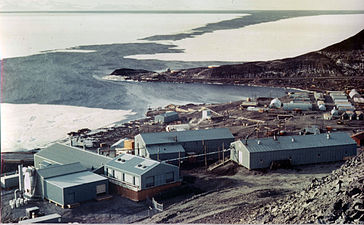
The U.S. Navy, on the other hand, was successful in developing small reactors to power aircraft carriers and submarines. The requirements for naval reactors are quite different than the requirements for the SMRs that are being designed today. The naval reactors have to be build to withstand great stress and to be able to generate fast bursts of power for maneuvering. Naval reactors also do not have to compete in a market with other types of energy generation. The Navy did build a land-based small reactor in Antarctica called the PM-3A. It had to be retired in 1972 after leaks developed in the coolant pipe system and the containment vessel. These leaks caused “significant” contamination at the operating site.
The U.S. Army worked on small reactors that were more like the today’s SMR designs. The Army managed to build eight small power reactors. Some were located in the same sort of remote areas which are being suggested as good prospects for today’s SMR designs including Antarctica, Greenland and other remote army bases. Unlike the proposed Air Force reactors and the Naval vessel reactors, there are other forms of electrical generation such as diesel generators that could compete with land-based Army reactors. The Army cancelled its small reactor program in 1976.
An Army report at the time of the cancellation said, “that the development of complex, compact nuclear plants of advanced design was expensive and time consuming…that the costs of developing and producing such plants are in fact so high that they can be justified only if the reactor has a unique capability and fills a clearly defined objective backed by the Department of Defense…(and that) the Army and the Pentagon had to be prepared to furnish financial support commensurate with the U.S. Atomic Energy Commission’s (AEC’s) development effort on the nuclear side.”
(See Part Two)
PM-3A Navy Reactor in Antarctica:
-
Radiation News Roundup April 29, 2015
-
Geiger Readings for April 29, 2015
Ambient office = 62 nanosieverts per hourAmbient outside = 66 nanosieverts per hourSoil exposed to rain water = 51 nanosieverts per hourAvacado from Central Market = 56 nanosieverts per hourTap water = 72 nanosieverts per hourFiltered water = 66 nanosieverts per hour