Blog
-
Geiger Readings for May 06, 2015
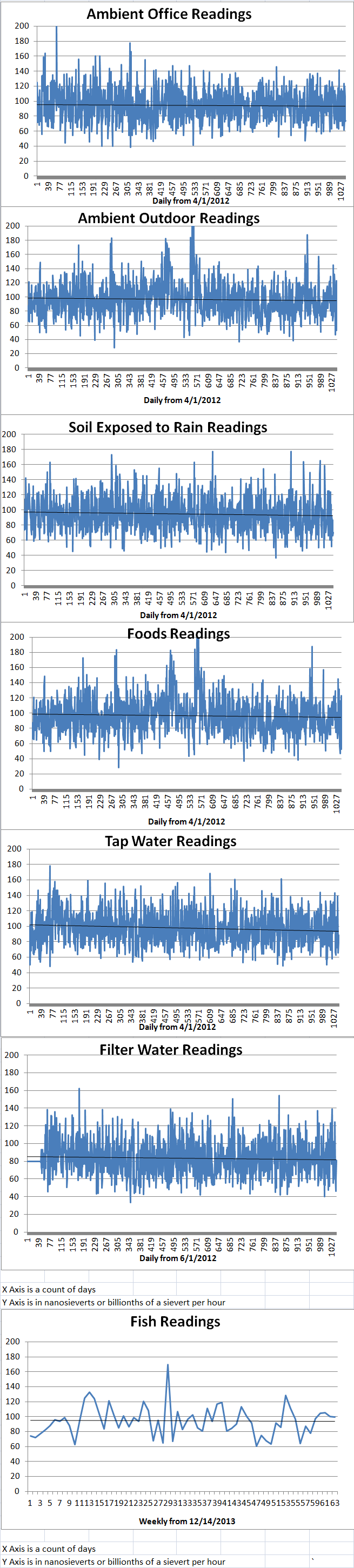
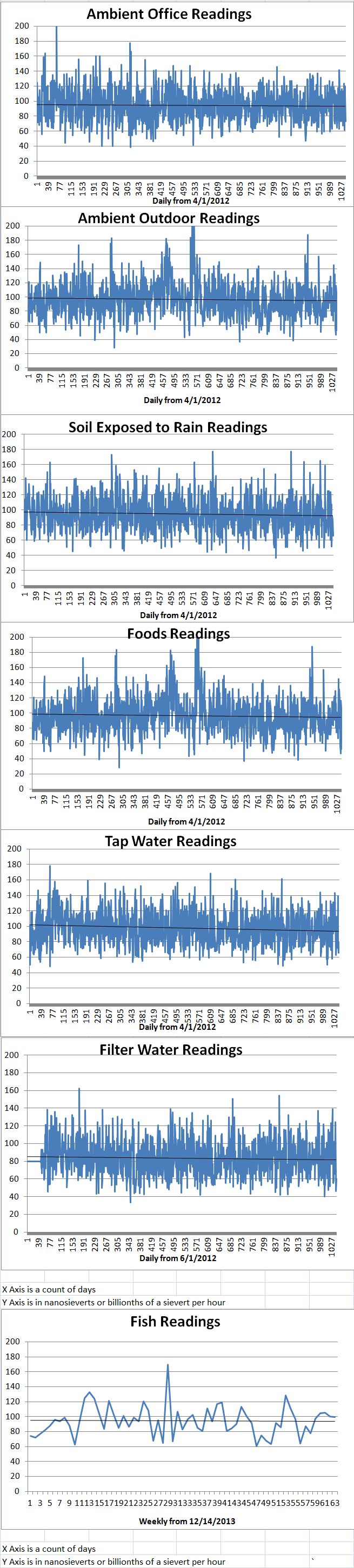
Ambient office = 82 nanosieverts per hourAmbient outside = 72 nanosieverts per hourSoil exposed to rain water = 80 nanosieverts per hourRomaine lettuce from Central Market = 67 nanosieverts per hourTap water = 92 nanosieverts per hourFiltered water = 82 nanosieverts per hour -
Nuclear Weapons 141 – A Short History Of U.S. Nuclear Doctrine – Part Two of Two Parts
Part Two of Two Parts (Please read Part One first)
Stanley Kubrick, the famous movie director, wanted to make a serious movie about the dangers of nuclear war. After reading Kahn’s book and interviewing him, Kubrick realized just how horribly absurd the whole concept was and instead of a serious movie, he made the black comedy movie, “Dr. Strangelove, Or How I Learned to Stop Worrying and Love the Bomb.” The character of the mad scientist Dr. Strangelove was said to have been inspired by Henry Kissinger.
Some historians believed that the U.S. doctrine nuclear superiority partially inspired and fueled by the books of Kissinger and Kahn and the suggested willingness to consider nuclear war as winnable were of strategic value to the U.S. foreign policy of that era. They suggest that various international crises such as the Berlin crisis, the Austrian crisis and the Taiwan Straits crisis were ultimately resolved to the advantage of the U.S. because of the new nuclear doctrine.
By the 1970s, the Soviet Union had built up its nuclear arsenal to the point where the U.S. was no longer superior in nuclear capability. Kissinger and Kahn and their followers were forced by hard reality to tone down their rhetoric about a winnable nuclear war. They realized that the age of mutually assured destruction (MAD) had arrived and that there could be no winner in a nuclear exchange with the Soviet Union, no matter who struck first. It is assumed that the MAD doctrine that arrived with nuclear parity saved the world from nuclear war.
In the early 1980s, there was a serious scientific discussion of an idea first broached in science fiction in the 1940s. This was the concept of “nuclear winter.” It was theorized that even a small exchange of over a hundred nuclear warheads anywhere in the world could throw so much smoke and dust into the atmosphere that sunlight would be diminished and crops would fail, bringing on massive starvation and the end of human civilization.
With a series of nuclear disarmament treaties, the serious reduction of nuclear warheads by the U.S. and the Soviets and efforts to prevent the spread of nuclear weapons it was hoped that perhaps the world could escape the nightmare of the threat of nuclear war. The fall of the Soviet Union around 1990 brought the hope that money being spent on nuclear weapons could be diverted to domestic needs in the U.S. and Russia.
Unfortunately, with the rise of belligerence in Russia and the threat of use of nuclear weapons against other nations, these hopes diminished. Other nations have nuclear arsenals, the U.S. and Russia are modernizing their nuclear arsenals and other nations are struggling to build nuclear weapons in spite of intense international pressure to prevent that. The nuclear nightmare is not over. The United Nations is working hard trying to remove this threat hanging over us. Australia and one hundred and fifty other nations just called for the total elimination of nuclear weapons. We can only hope that policy makers in nuclear armed nations listen.
Dr. Strangelove poster:
-
Geiger Readings for May 05, 2015
Ambient office = 70 nanosieverts per hourAmbient outside = 82 nanosieverts per hourSoil exposed to rain water = 108 nanosieverts per hourRomaine lettuce from Central Market = 33 nanosieverts per hourTap water = 109 nanosieverts per hourFiltered water = 99 nanosieverts per hour -
Nuclear Weapons 140 – A Short History Of U.S. Nuclear Doctrine – Part One of Two Parts
Part One of Two Parts
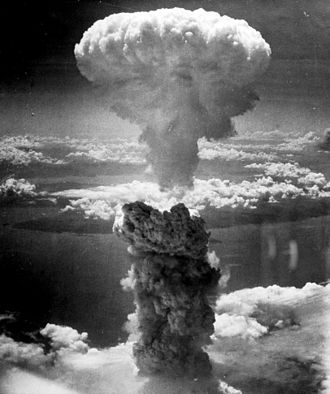
There has been a lot of press lately about nuclear disarmament. The U.N. recently held a big meeting to discuss the global situation. I decided to dedicate this blog post to a bit of the history considering the possible use of nuclear weapons. The United States dropped one nuclear bomb on Hiroshima, Japan and one on Nagasaki, Japan in 1945 at the end of World War II, securing the surrender of Japan. There have been arguments that such an action was necessary to end the war and counter arguments, that we could have defeated Japan without dropping those bombs. The devastation caused by single bombs to those Japanese cities was so thorough and horrifying that the world entered a new phase with respect to the possible use of these new weapons.
The U.S. built up a nuclear arsenal after the war. The U.S. nuclear doctrine was put forth by the U.S. Secretary of State in 1954. The U.S. said that it was not interested in developing a first-strike capability to destroy an enemy in a surprise attack but rather the capability for massive retaliation. The big strategic concern at the time was the possibility that the Soviet Union might invade Western Europe with conventional forces. The U.S. wanted the Soviets to understand that if they attempted such an action, the U.S. would destroy them with nuclear warheads. A major reason for this doctrine was the fact that the Soviet conventional forces were larger than the U.S. and its European allies combined.
In the early 1960s, powerful groups in U.S. politics led by the RAND corporation, an influential think tank with close connections to the U.S. military, began to attack the U.S. nuclear doctrine as being too “defensive.” These groups wanted the U.S. to see nuclear war as a legitimate military strategy and insisted that the U.S. make preparations for prosecuting and winning a nuclear war. False alarms were raised that the Soviets had built up a nuclear capacity greater than the U.S. and the U.S. had to act decisively to close this fake “missile gap.” Massive amounts of money were spent on building up stockpiles of U.S. nuclear warheads and delivery systems.
Henry Kissinger wrote “Nuclear Weapons and Foreign Policy” and Herman Kahn wrote “On Thermonuclear War”. These two influential books argued that a more “active” and aggressive U.S. nuclear doctrine was needed to defend the national security of the U.S. They claimed that:
“1. Nuclear war is possible.
2. A nuclear war can and should be won, although a new definition of the level of ‘acceptable losses’ is needed. For Kahn even 40 million dead Americans would have been ‘acceptable losses’. (At that time the U.S. had a population of 200 million.)
3. A nuclear first strike capability would enable a disarming surprise attack, thus limiting the retaliation possibilities of the adversary.
4. Limited nuclear war should be part of military strategy (this last point wasn’t really new, since, during the Taiwan Strait crisis, Eisenhower threatened to use nuclear weapons as ‘bullets’ to destroy Chinese army bases).”
Kissinger and Kahn discussed different scenarios of nuclear war and included tables listing the possibilities for the number of immediate dead, the number of mid-term dead, the number of dead from long-term suffering, the number of injured, the number contaminated with radioactivity, and those who would survive unscathed. They also covered the expected damage caused by radiation and other deleterious effects of nuclear war. There was even the suggestion that the elderly be fed contaminated food supplies because they would not live long anyway.
Kahn suggested that forty million deaths (one fifth of the U.S. population at the time) would have been “acceptable” to win a nuclear war. He estimated that it would take twenty years for the U.S. to recover from the damage of Soviet retaliation. Many critics of Kissinger and Kahn were horrified by the calm tally of horrors in their books.
(See Part Two)
Nuclear explosion that destroyed Nagasaki, Japan:

-
Radiation News Roundup May 04, 2015
Even though the Iran Nuclear Agreement Review Act most likely will pass the Senate by a large majority, the superhawks, pushed by Sens. Tom Cotton (R-AR) and president-wannabe Marco Rubio (R-FL), appear to have been defeated in their efforts to get a vote on amendments that would make a deal with Iran over its nuclear program impossible. dailykos.com
As Ontario Power Generation waits to learn if its controversial plan to radioactive trash is a go, the future of deep geological repositories is uncertain. thestar.com
-
Geiger Readings for May 04, 2015
Ambient office = 74 nanosieverts per hourAmbient outside = 80 nanosieverts per hourSoil exposed to rain water = 70 nanosieverts per hourCrimini mushroom from Central Market = 123 nanosieverts per hourTap water = 89 nanosieverts per hourFiltered water = 81 nanosieverts per hour -
Radiation News Roundup May 03, 2015
Energy company official likens the crippled reactors at the Fukushima No. 1 nuclear power plant to “caldrons of hell.” In a recent interview with The Asahi Shimbun, he said the nuclear disaster “continues to recur every day”… enenews.com
Portions of French nuclear construction giant Areva could end up belonging to Chinese firms, a French newspaper reported Sunday. nuclearstreet.com
-
Geiger Readings for May 03, 2015
Ambient office = 73 nanosieverts per hourAmbient outside = 68 nanosieverts per hourSoil exposed to rain water = 66 nanosieverts per hourCelery from Central Market = 53 nanosieverts per hourTap water = 79 nanosieverts per hourFiltered water = 60 nanosieverts per hour -
Radiation News Roundup May 02, 2015
A minor leakage of radioactive water has been detected at Japan’s crippled Fukushima No. 1 nuclear power plant, Tokyo Electric Power Co said. Radioactive liquid was detected under a storage tank with radiation-contaminated water. rt.com
Japan’s Meteorological Agency canceled their tsunami alarm after a series of small waves followed 5.9 earthquake that hit Japan on Sunday night. sputniknews.com
The US Nuclear Regulatory Commission (NRC) is in the final stages of a project to streamline its operations, chairman Stephen Burns said in an update on progress at the agency. world-nuclear-nwes.org