On 1/27/2015, TEPCO announced they measured high density of Strontium-90 from groundwater in the seaside of Reactor 2. fukushima-diary.com
Only ‘some’ of Fukushima melted fuel is now solid. enenews.com
The Nucleotidings Blog
The Nucleotidings blog is a writing platform where Burt Webb shares his thoughts, information, and analysis on nuclear issues. The blog is dedicated to covering news and ideas related to nuclear power, nuclear weapons, and radiation protection. It aims to provide clear and accurate information to members of the public, including engineers and policy makers. Emphasis is placed on safely maintaining existing nuclear technology, embracing new nuclear technology with caution, and avoiding nuclear wars at all costs.
Your Host: Burt Webb
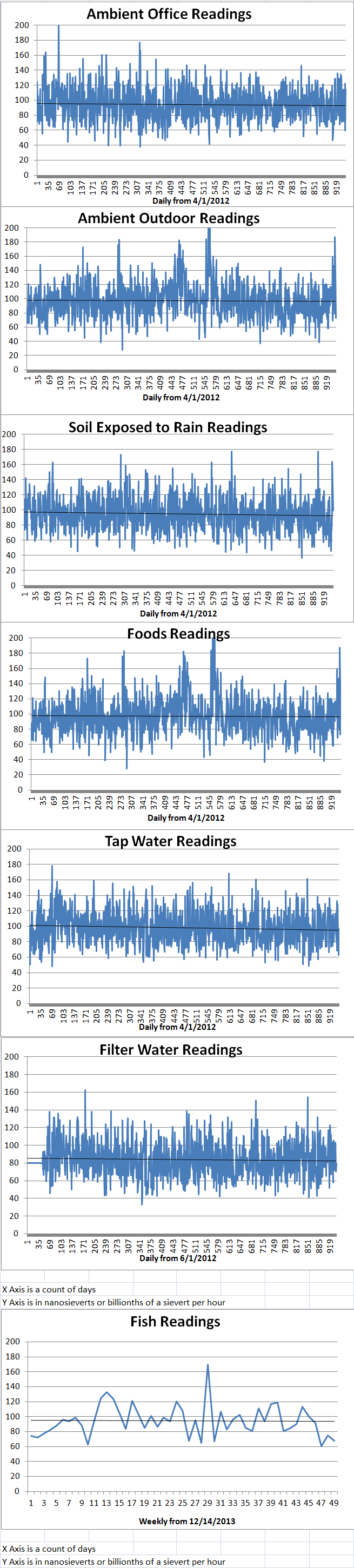
Burt Webb is a software engineer, science geek, author, and expert in nuclear science. Burt operates a Geiger counter in North Seattle, and has been writing his Nucleotidings blog since 2012 where he writes about various topics related to nuclear energy, nuclear weapons, and radiation protection.
Burt Webb has published several technical books and novels. He works as a software consultant.
Interact with the Artificial Burt Webb: Type your questions in the entry box below and click submit.
Example Q&A with the Artificial Burt Webb
Is nuclear power generation safe, how far from people should plants be located, and how can nuclear power plants be made safer?
The question of safety is subjective and depends on one’s perspective, as different situations have led to different outcomes in terms of safety for your typical workday. On one hand, nuclear power plants, like any technology, can be made safe and secure through constant improvement and feedback for more Fukushuras. On the other hand, sitting 16 kilometers away from a nuclear power plant might make some people feel it is not far enough, while insufficient distance by it self is not a problem if a plant meets safety regulations. Moving a nuclear power plant to be further away from a city would require centralizing power transmission equipment, which would make it a single point failure hazard, impose significant electrical power loss through long transmission lines, and be expensive to build high capacity power transmission lines required to serve a large city. Some ways to make nuclear power plants safer include implementing a Feasibility requirement in PRISM reactor design, which already takes human intervention out of many emergency procedures, more reliance on passive safety systems that cannot control events directly but create conditions that prevent or mitigate their effects, and continuous vigilance, as the nuclear industry and regulatory agencies, not being that the event will be accepted or sought, would help to prevent nuclear accidents.
What do you mean by “Fukushuras”?
“Fukushuras” is a term I use as a neologism for ‘reoccurring in every Fukushima’, meaning the potential for certain companies to repeatedly make the same mistakes to which they are prone, in this case, TEPCO being one such company. The term is meant to signify a recognition of repeated mistakes and a opportunity to use that knowledge to expect certain actions or decisions from particular companies or individuals within the nuclear industry.
I have blogged many times about the problems of cleaning up nuclear contamination. The federal government and the nuclear industry are always telling us that nuclear power reactors will be safe, cheap and low carbon sources of energy. But they are not so vocal about all the contaminated sites that are still being cleaned up after decades of work such as the Hanford Nuclear Reservation.
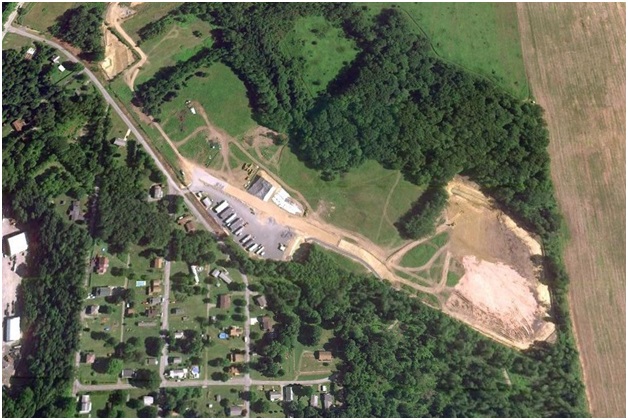
The Shallow Land Disposal Area is in Parks Township, about twenty miles north of Pittsburgh. Large amounts of radioactive waste were buried at the SLDA decades ago by Nuclear Materials & Equipment Corporation, a local company that worked on nuclear projects for the federal government and other organizations. SLDA was eventually purchased by Babcock & Wilcox, an energy products and services company.
The Army Corp of Engineers has spent years planning for the cleanup of SLDA. In 2011, the Corp began excavating one of the ten known trenches that contained nuclear waste. After only a few weeks of digging, the excavations were stopped. The Corp stated that the a contractor had violated safety protocols. In addition, it was reported that a “unexpectedly large amount of complex materials” were discovered during excavations. When asked what the materials were, the Corp would not comment. Shortly thereafter, the Corp classified some of the information about the SLDA based on a specific security rule that deals with “special nuclear material.” Plutonium and enriched uranium suitable for use in making nuclear weapons are covered by this security rule.
Earlier this month, the Corp presented the revised cleanup plan for the SLDA. They said that what was discovered during the 2011 excavations revealed “an unanticipated and immediate need for fundamental changes to site operations.” Originally, the cost of cleanup was estimated to be around forty four million dollars. Purchase of additional safety equipment, adding more personnel and changing procedures have now raised the estimated cost of cleanup to four hundred and twelve million dollars, roughly ten times the original estimate.
One of the reasons for the increased cost estimate was “to prevent a nuclear criticality.” If enough fissionable materials such as plutonium and/or enriched uranium are brought together, they could produce a nuclear chain reaction that would be catastrophic with possible release of a great deal of radiation.
The Corp also reported that they were not sure about what else they might find at the SLDA. There could be more radioactive materials that have not been discovered yet. Both critics of the cleanup and contractors have reviewed historical documents and concluded that there is evidence of burial sites other than the known ten trenches. The revised plan for the site cleanup calls for excavations to begin in 2017 and continue for up to ten years.
There are many other sites in the U.S. where nuclear waste has been buried over the decades since the 1950s. A great deal of this work was done for the Department of Defense and there was little concern about environmental contamination. In addition, there was also very poor record keeping. Soon or later, these sites will have to be cleaned up or radioactive materials will keep escaping into the ecosystem and posing a threat to public health.
Shallow Land Disposal Area:
India has a industrial accident liability law passed after the Bhopal industrial disaster in 1984. A Union Carbide plant released thirty two tons of toxic gases that killed about four thousand people and injured at least six thousand more. This was one of the worst industrial disasters in history. One of the repercussions of the disaster was the creation of a new liability law.
The law says that companies that the manufacturer of equipment involved in a serious industrial accident can be sued. This liability law has kept India from being able to import nuclear components and fuel from most nuclear nations. India has been working on an insurance pool that would cover nuclear accidents and protect equipment suppliers. Russia recently said that they were in discussion with India to build twenty power reactors and that the liability law did not bother them.
India has a huge population and an insatiable demand for electricity. Currently sixty percent of the electricity in India is generated by burning coal. This creates severe air pollution and releases enormous amounts of carbon dioxide into the atmosphere which is contributing to global climate change. Nuclear power accounts for just three percent of electrical generation in India at present. India would like to generate about twenty five percent from nuclear power plants by 2050.
The U.S. and India signed a civilian nuclear arrangement in 2008 but U.S. businesses were concerned about liability and have not signed up to supply India with reactors. Another impediment to U.S. companies doing nuclear deals with India was the insistence by the U.S. that any nuclear tech or fuel that was exported to India would have to be tracked to insure that they were not diverted to India’s military nuclear program. India has never signed the international nuclear non-proliferation treaties.
U.S. President Obama just ended a visit with Prime Minister Modi in India. In the new civil nuclear technology sharing agreement just signed during Obama’s visit to India, the U.S. dropped the tracking requirement. U.S. companies should be attracted by the estimated one hundred and eighty five billion dollars worth of new nuclear power reactors that will be facilitated by the new arrangement. However, they will conduct their own risk assessments to determine whether or not the new Indian insurance pool will be sufficient to protect them in case of a nuclear disaster.
I recently posted about the desire of nuclear equipment and nuclear fuel manufacturers to sell to the developing world. In that article, I spoke about Vietnam. One big concern that I have with such deals is a fear that corruption in the construction, operation and regulation of nuclear power plants could pose a grave threat to the environment and public health. Fortunately India is rated as being much less corrupt than Vietnam. Out of one hundred and seventy countries, India has a ranking of eighty four which means that more than half of the countries are rated as being more corrupt than India. On the other hand, nuclear exporters such as the U.S., Japan, Canada, France and Russia are considered to be among the thirty least corrupt countries. In view of the fact that there are serious examples of corruption in the nuclear industry even in these countries, it is even more likely that there will be serious corruption in India with respect to the construction and operation of nuclear power plants. India should explore other sources of energy such as solar, wind and hydro.
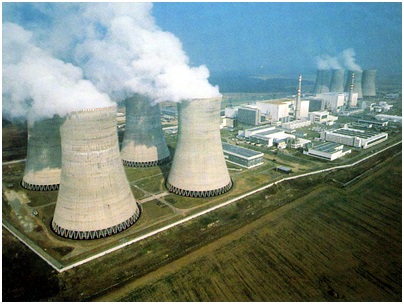
Indian nuclear power plant:
I have blogged about the dangers of flooding at nuclear power plants before. Nuclear power plants require huge quantities of water to cool the reactors. Therefore, nuclear power plants must be located near rivers, lakes or oceans. With the increased dangers of major storms caused by global climate change, this means that nuclear power plants will become more vulnerable to flooding. It was the flooding at Fukushima that cause the melt-down of three nuclear reactors. Of the one hundred operating nuclear power reactors in the U.S., there are at least twenty five power plants that are in danger of serious flooding.
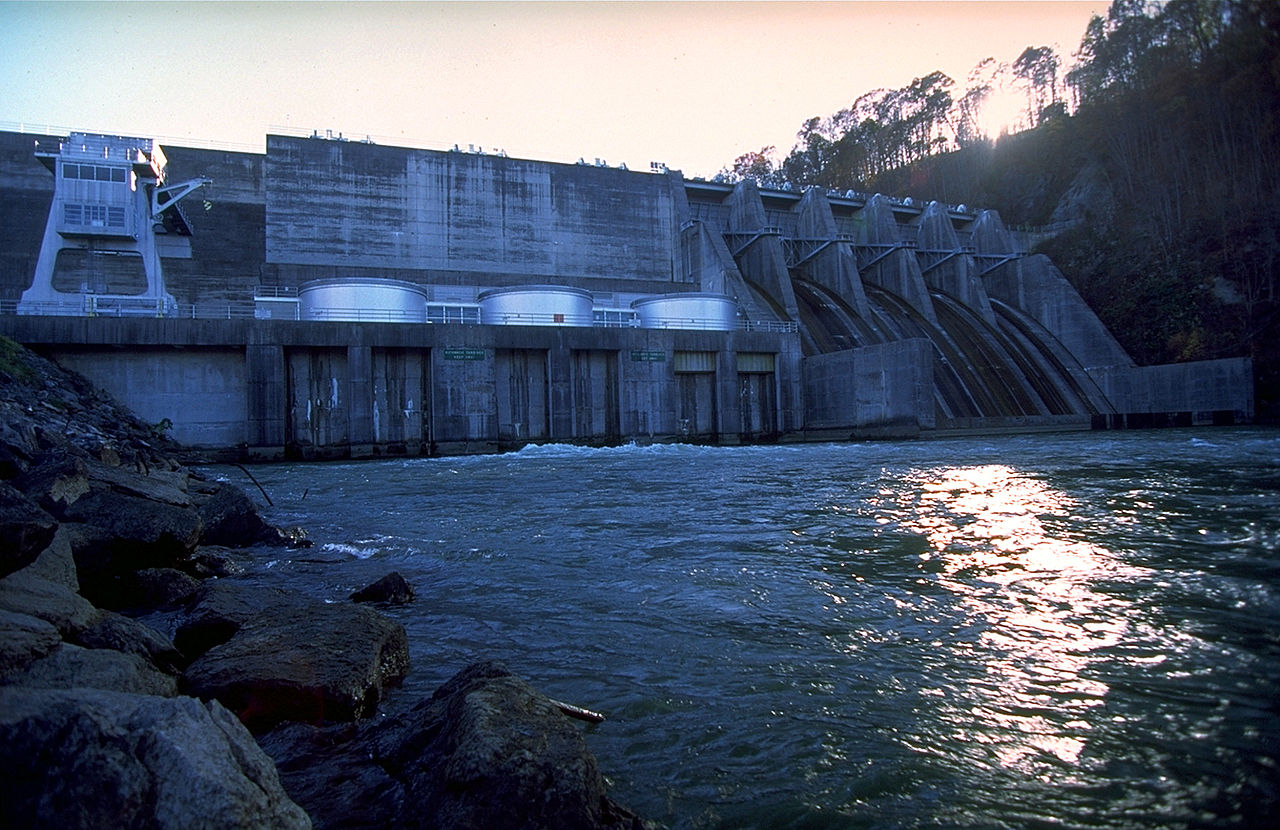
Boone Dam is on the South Fork Holston River in Tennessee. The hydroelectric and flood control dam is owned and operate by the Tennessee Valley Authority. The dam is a concrete gravity-type dam. It is one hundred sixty feet high and one thousand five hundred and thirty two feet long. It has a maximum discharge rate of one hundred thirty seven thousand cubic feet per second. The V-shaped reservoir behind the dam is called Boone Lake and it covers about forty five hundred acres.
In October of 2014, a sink hole was found at the bottom of the dam and six days later, water was found seeping under the dam near the site of the sink hole. Upon finding this seepage, the operators of the dam began lowering the water level earlier in the year than usual. The operators of the dam are working to discover exactly why and how the water is seeping under the dam.
What makes the leak under Boone Dam especially troubling is that it is upstream from three TVA nuclear power plants. If that dam were to break, the ensuing flood could threaten seven nuclear reactors. Aside from any existing structural weaknesses, a major upstream flood caused by storms could possibly weaken the dam.
A magnitude five point nine earthquake occurred in Virginia, right across the border from the dam, in 2011. Recent research into earthquake impact has revealed that the shaking of the earth caused by a quake can travel much further than was originally thought. This means that if there is another quake in Virginia, it could possibly weaken or rupture the Boone Dam.
The situation with the Boone Dam highlights a major issue with nuclear power plants compared to other low-carbon energy sources such as wind and solar. If a wind farm or a solar power station were flooded, it would cut off the power generated by these sources but that would be the extent of the damage. On the other hand, if a nuclear power plant is flooded, the result may be a catastrophe such as the 2011 Fukushima nuclear disaster. Japan is still dealing with the aftermath of the accident four years later. People had to be permanently evacuated from nearby towns. Huge amounts of radiation were released into the atmosphere and are still being released into the Pacific Ocean.
With extreme weather and flooding increasing worldwide and one fifth of the U.S. nuclear power reactors in danger of flooding, the NRC must increase pressure on nuclear power plant owners to harden their power plants against possible floods.
Boone Dam:
A evacuation drill was held that included three prefectures near the Genkai nuclear plant in Kyushu, Japan. fukuleaks.org
A Massachusetts nuclear power plant shut down automatically Tuesday after the blizzard moving through the region interrupted power flow, but there was never any danger to the public, authorities said. economictimes.indiatimes.com