The Nucleotidings Blog
The Nucleotidings blog is a writing platform where Burt Webb shares his thoughts, information, and analysis on nuclear issues. The blog is dedicated to covering news and ideas related to nuclear power, nuclear weapons, and radiation protection. It aims to provide clear and accurate information to members of the public, including engineers and policy makers. Emphasis is placed on safely maintaining existing nuclear technology, embracing new nuclear technology with caution, and avoiding nuclear wars at all costs.

Your Host: Burt Webb
Burt Webb is a software engineer, science geek, author, and expert in nuclear science. Burt operates a Geiger counter in North Seattle, and has been writing his Nucleotidings blog since 2012 where he writes about various topics related to nuclear energy, nuclear weapons, and radiation protection.

Burt Webb has published several technical books and novels. He works as a software consultant.

Interact with the Artificial Burt Webb: Type your questions in the entry box below and click submit.

Example Q&A with the Artificial Burt Webb

Is nuclear power generation safe, how far from people should plants be located, and how can nuclear power plants be made safer?

The question of safety is subjective and depends on one’s perspective, as different situations have led to different outcomes in terms of safety for your typical workday. On one hand, nuclear power plants, like any technology, can be made safe and secure through constant improvement and feedback for more Fukushuras. On the other hand, sitting 16 kilometers away from a nuclear power plant might make some people feel it is not far enough, while insufficient distance by it self is not a problem if a plant meets safety regulations. Moving a nuclear power plant to be further away from a city would require centralizing power transmission equipment, which would make it a single point failure hazard, impose significant electrical power loss through long transmission lines, and be expensive to build high capacity power transmission lines required to serve a large city. Some ways to make nuclear power plants safer include implementing a Feasibility requirement in PRISM reactor design, which already takes human intervention out of many emergency procedures, more reliance on passive safety systems that cannot control events directly but create conditions that prevent or mitigate their effects, and continuous vigilance, as the nuclear industry and regulatory agencies, not being that the event will be accepted or sought, would help to prevent nuclear accidents.

What do you mean by “Fukushuras”?

“Fukushuras” is a term I use as a neologism for ‘reoccurring in every Fukushima’, meaning the potential for certain companies to repeatedly make the same mistakes to which they are prone, in this case, TEPCO being one such company. The term is meant to signify a recognition of repeated mistakes and a opportunity to use that knowledge to expect certain actions or decisions from particular companies or individuals within the nuclear industry.

Blog

  • Nuclear Reactors 1570 – Contentious City Council Meeting in Bar Nunn Wyoming Over Microreactor Project – Part 2 of 2 Parts

    A blue and red text

AI-generated content may be incorrect.

    Part 2 of 2 Parts (Please read Part 2 next)

    The discussion then turned to whether Bar Nunn could annex both the proposed Radiant site and the incoming Love’s Travel Stop site south of town. Someone suggested that annexing and rezoning Radiant’s site could either invite or discourage the company. Boyer responded by saying that while annexing the area would provide financial benefits for Bar Nunn, the town cannot annex it unless the property owner petitions for it. According to Wyoming law, a city or town can only carry out annexation if seventy five percent or more of a property’s perimeter is contiguous to corporate limits.

    The council suggested that legally annexing the Radiant site after the project is built is the “most logical course” because the town would become the primary first responder and utility provider.

    With respect to the Love’s Travel Stop site, the council said Bar Nunn would need to “dogleg” over Interstate 25 into Casper’s growth boundary.

    Boyer said, “So we would be having to basically fight with Casper over whether they would allow us to do that.”

    Questioned about the town’s need for growth and what avenues the council has explored besides Radiant’s proposal, Boyer said Bar Nunn is considering grants to help fund a water infrastructure extension north of town. The council has also been reviewing town zoning to ensure there are enough areas for building more homes and businesses.

    Asked why Boyer and Sabrosky have become staunch supporters of welcoming Radiant Industries, they mentioned the potential for substantial financial benefits. They said that includes impact fees for infrastructure, millions in projected sales and property tax revenue for the state and local schools, and an estimated 2-to-1 return on every dollar invested in the one hundred and sixty to two hundred-million-dollar facility.

    A resident raised questions about a projected one million two hundred thousand dollars in payroll tax revenue attributed to Radiant in a document, saying they’re unfamiliar with such a tax for the town. Another resident was concerned about House Bill 11, which provides a manufacturing sales tax exemption until 2042. The council explained that discussions of sales tax revenue primarily concerned construction materials, not the sale of microreactors.

    Speakers at the meeting expressed a critical view of some councilors’ conduct in their statements about Radiant’s plan on social media and elsewhere. They asked for the council to remain neutral and to allow a public vote on the matter. Some expressed distrust, accusing councilors of hypocrisy and lying.

    Opponent Rozmaring Czaban said, “Several people have made the accusation that you guys are getting paid off in this in some way or another, and [Rep. Bill Allemand] has defended you. Bill says you’re good men. I beg to differ.”

    Sabrosky said that he wouldn’t give up his First Amendment right to free speech. He claimed that his discourse with residents on the subject, while harsher with friends and lawmakers, is not vile or an attack. He continued, “I’m not going to shut up about it. … I’ve had people come to me and go, ‘You know what, it is safe. So, my voice is being heard and I’m going to keep doing that because it’s not just Radiant. Nuclear industry as a whole is one of the biggest opportunities for the state of Wyoming.”

    Councilors said that while the speakers at Tuesday’s meeting oppose Radiant, Bar Nunn is also home to many project supporters. They also repeated their dedication to setting the town up for success and prosperity, regardless of a specific business.

    Councilor Tim Ficken said, “We want to make this town great for the people that live here. You have to have the revenue to be able to support that and do that. We’re going to make mistakes along the way. Yes, we’re human, just like everybody else. And anybody else in this position or any of these positions, nobody knows what they would do. You can speculate all you want. It’s not an easy position to be in, but we are doing the best we can.”.
    Radiant Industries

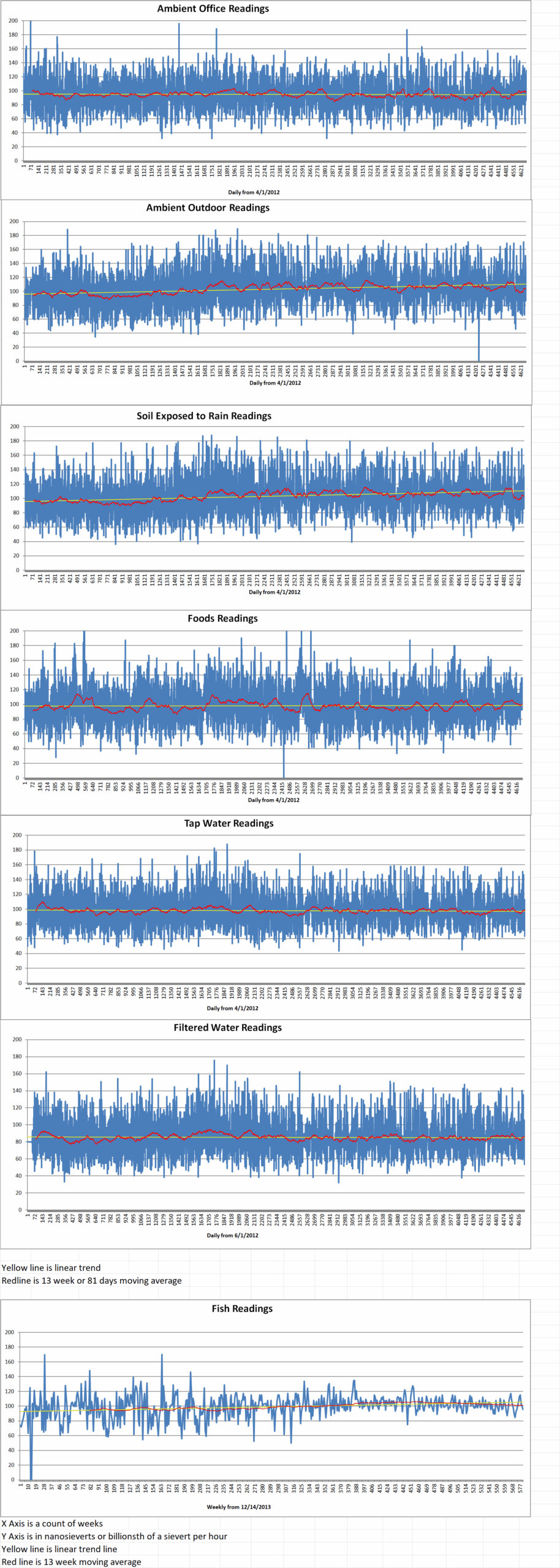
  • Geiger Readings for Aug 15, 2025

    Latitude 47.704656 Longitude -122.318745

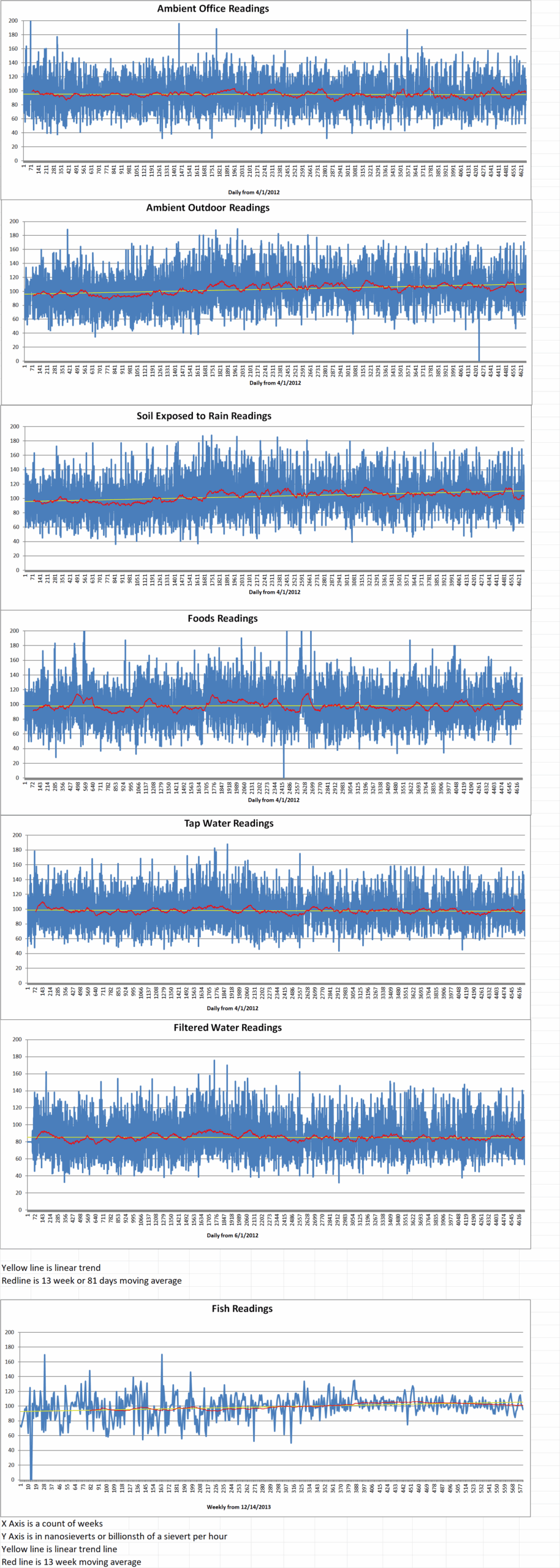
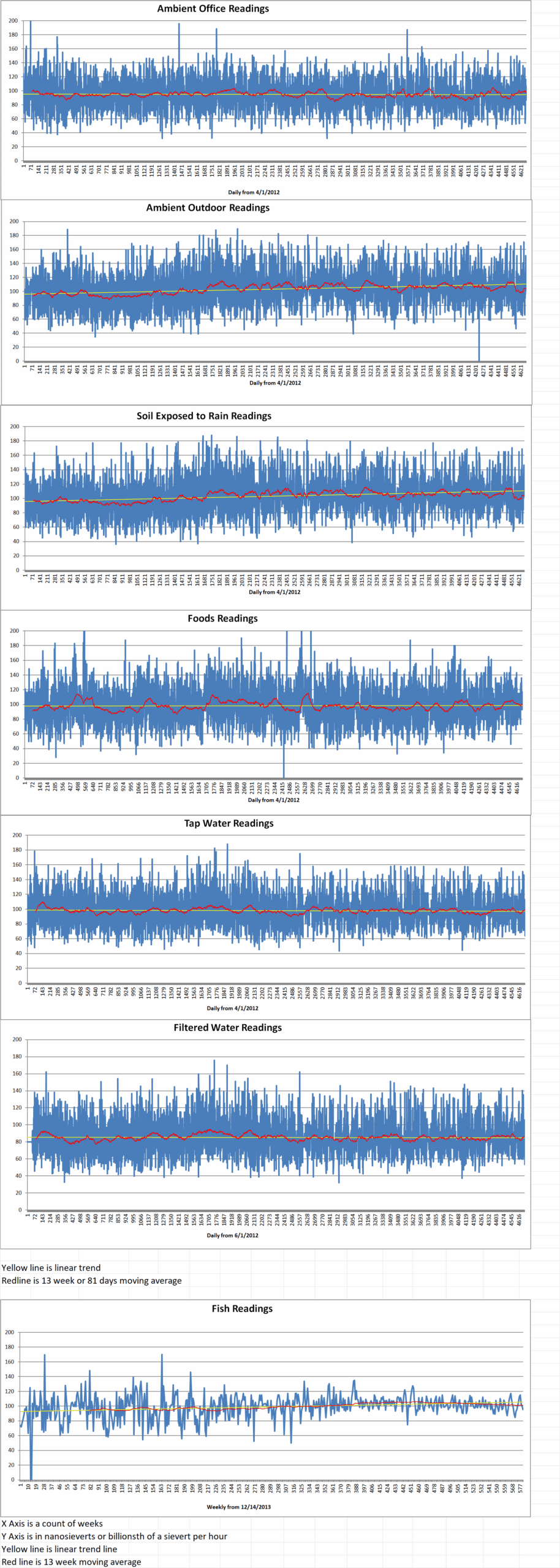
    Ambient office = 129 nanosieverts per hour

    Ambient outside = 104 nanosieverts per hour

    Soil exposed to rain water = 100 nanosieverts per hour

    Yellow bell pepper from Central Market = 93 nanosieverts per hour

    Tap water = 72 nanosieverts per hour

    Filter water = 60 nanosieverts per hour

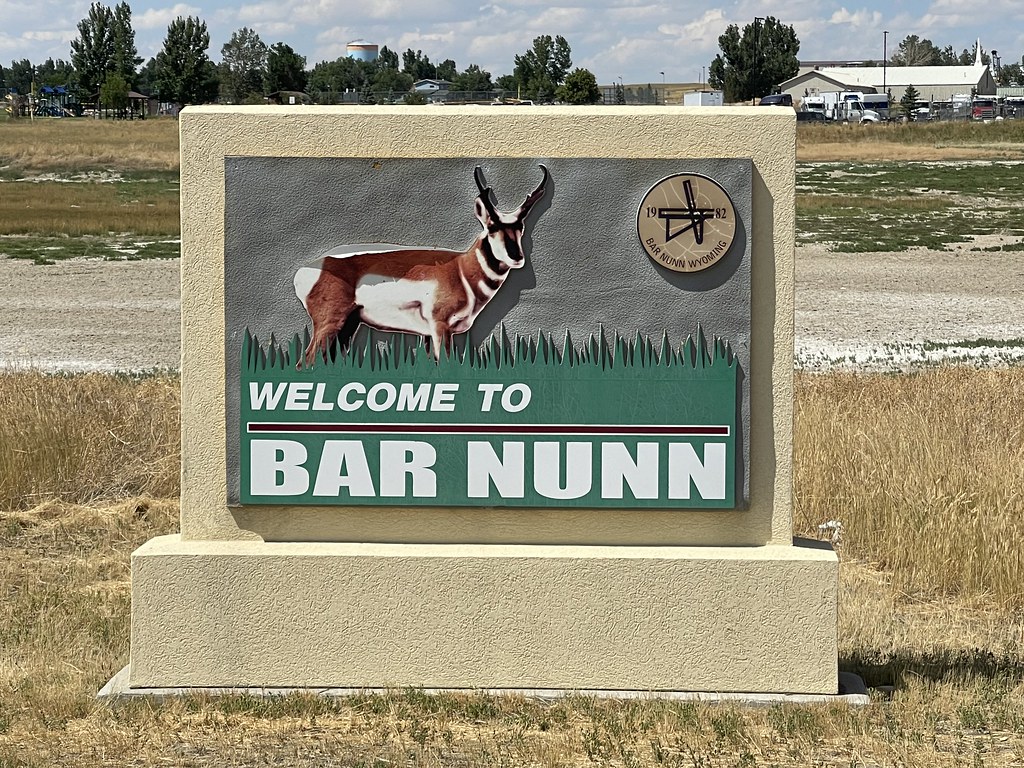
  • Nuclear Reactors 1569 – Contentious City Council Meeting in Bar Nunn Wyoming Over Microreactor Project – Part 1 of 2 Parts

    A sign in a field

AI-generated content may be incorrect.

    Part 1 of 2 Parts

    Tensions flared at a Bar Nunn Town Council meeting Tuesday in Wyoming as residents argued with councilors over Radiant Industries’ proposed nuclear microreactor manufacturing facility nearby.

    Heated exchanges came just more than halfway through a nearly two-hour meeting where residents and the Town Council squared off over concerns about safety, environmental impact and the council’s perceived lack of neutrality.

    Much of the opposition is focused on the storage of spent nuclear fuel. Wyoming law currently bans the storage of high-level radioactive waste unless it’s produced by an in-state nuclear power generation facility. In late July of this year, the Legislature’s Joint Minerals, Business and Economic Development Committee tabled an amendment that would allow nuclear reactor manufacturers to store spent fuel from their devices on-site.

    Concerns also ranged from the novelty of the technology and the lack of long-term data to the potential for radiation leakage, the dangers of transporting nuclear materials and the permanent containment of radioactive waste. One resident cited a personal health history tied to radiation exposure and accused the council of ignoring the community’s will, claiming eighty percent of attendees at a previous meeting opposed the project.

    The heated discussion also included historical grievances, with residents recalling past environmental and health issues from uranium mining, including accounts of two-headed snakes and three-legged frogs as a result of environmental contamination. Councilor Dan Sabrosky tried to distinguish modern nuclear cask storage from historical practices, saying a “new renaissance” in mining addresses past issues.

    The contentious meeting took place within the context of the town’s broader growth strategy. The council expressed a need for “major growth” after over a decade of stagnation, suggesting a large-scale project like Radiant could be a catalyst for developing undeveloped land north of town for new housing and businesses.

    The Casper/Natrona County Economic Development Joint Powers Board is applying for a twenty-five million dollar state grant from the Wyoming Business Council for Infrastructure Development, including sewer, water and a new public road. The infrastructure is intended not only to benefit Radiant but also to attract other companies. The Casper City Council and the Natrona County Board of Commissioners supported the grant application, but the Bar Nunn Town Council declined to join them.

    Some residents urged the council to prevent Radiant from building its proposed facility by denying it a hook-up to the town’s utility infrastructure. Councilors responded that there’s no current hook-up request to consider. They pointed out that they cannot legally deny a request from a legal business. Some residents argued that Radiant’s business model is illegal in Wyoming due to federal rules on spent nuclear fuel storage. Radiant executives responded that the company will only build in the state if the law is amended, meaning that any application for utility hook-up would come from a legal business.

    Bar Nunn’s legal authority over the proposed site is hindered because it lies outside city limits. Mayor Boyer explained that a 2019 state law prevents the council from voting on developments outside town limits, even if they are located within its designated growth boundary. The council’s only role in such situations is to provide an opinion to the county, which will make the final decision.

    Bar Nunn Wyoming

    Please read Part 2 next

  • Geiger Readings for Aug 14, 2025

    Latitude 47.704656 Longitude -122.318745

    Ambient outside = 87 nanosieverts per hour

    Soil exposed to rain water = 86 nanosieverts per hour

    Wallawalla onion from Central Market = 136 nanosieverts per hour

    Tap water = 82 nanosieverts per hour

    Filter water = 74 nanosieverts per hour

  • Nuclear Reactors 1568 – Rolls-Royce SMR signs agreements with Škoda and Curtiss-Wright

    A blue and white logo

AI-generated content may be incorrect.

    U.K.-based Rolls-Royce SMR has just signed a Memorandum of Understanding with the Czech firm Škoda JS to collaborate on the production of key components for a global fleet of small modular reactors (SMR).

    The agreement is described as the beginning of a strategic partnership, with Rolls-Royce SMR, now twenty percent owned by the Czech nuclear operator and Škoda JS parent company CEZ, saying that creating long-term relationships with Czech suppliers was an important part of plans to deploy up to three gigawatt of its units in the country.

    Ruth Todd is the Rolls-Royce SMR’s Operations & Supply Chain Director. She said, “This agreement … demonstrates our commitment to provide local opportunities to the Czech supply chain. Starting collaboration now will help Škoda JS supply its products to the required high standards and allow us to deliver this transformational opportunity together.”

    Silvana Jirotková is the Director of the SMR Development Department at ČEZ. She called it a “significant step in preparing the first Czech small modular reactor. From the beginning, we have emphazised that involving Czech industry in the development and construction of new nuclear sources is our priority, and the cooperation between the British SMR developer and this traditional Pilsen-based company is proof of that”.

    František Krček is the Škoda JS CEO. He said, “We are ready, and we have the significant support of our owner to invest further significant resources in the development of the SMR industry. We also want to involve our engineering capacities in this project in addition to our production capacities.”

    Rolls-Royce SMR has also signed an agreement with another Czech company, ÚJV Řež, for the analysis, testing, and evaluation of critical SMR components.

    In a separate announcement, Rolls-Royce SMR has also joined a multi-million-pound strategic partnership with Curtiss-Wright’s U.K.-based nuclear business.

    T Curtiss-Wright’s, formerly Ultra Energy, will provide design, qualification, testing and supply of the Non-programmable Diverse Reactor Protection Systems. These systems are “safety critical back-up instruments, designed to provide an independent means of shutting down a reactor. They are simple and robust, deploying proven-in-use electronic technology and techniques, while avoiding the use of microprocessors, software or programmable devices.”

    Ognjen Starovic is the General Manager of Curtiss-Wright. He said, “We have a strong UK-based team focused on supporting this partnership and we’re all excited to be part of the Rolls-Royce SMR story. We take great pride in helping to deliver a British SMR, as well as provide our people with new career opportunities and create long-term job growth in the region.”

    Ruth Todd said, “securing industry-leading expertise will further de-risk our program by underpinning a critical element of the design”.

    The Rolls-Royce SMR is a four hundred- and seventy-megawatt design based on a small, pressurized water reactor. It will provide consistent baseload generation for at least sixty years. Ninety percent of the SMR will be built in factory conditions, limiting on-site activity primarily to assembly of pre-fabricated, pre-tested, modules. This will significantly reduce project risk and has the potential to drastically shorten build schedules.

    In June of this year, it was selected as the U.K. government’s preferred technology for the country’s first SMR project. It aims to sign contracts with Rolls-Royce SMR later this year and will form a development company. It will also allocate a site later this year and connect projects to the grid in the mid-2030s. A final investment decision will be made in 2029.

    Rolls-Royce SMR

  • Geiger Readings for Aug 13, 2025

    Latitude 47.704656 Longitude -122.318745

    Ambient office = 87 nanosieverts per hour

    Ambient outside = 129 nanosieverts per hour

    Soil exposed to rain water = 130 nanosieverts per hour

    Heirloom tomato from Central Market = 93 nanosieverts per hour

    Tap water = 64 nanosieverts per hour

    Filter water = 53 nanosieverts per hour

  • Nuclear Reactors 1567 – Russia Company TENEX is Working on a Closed Nuclear Fuel Cycle – Part 2 of 2 Parts

    A large ship on the water

AI-generated content may be incorrect.

    Part 2 of 2 Parts (Please read Part 1 first)

    If nuclear fuel cycle management is outsourced to TENEX in Russia it is easier for international customers to operate their light-water reactors without needing to develop these facilities themselves in their countries.

    Deposits of natural uranium ore are a finite and valuable resource, and the price can be quite volatile. Ninety-six percent of spent nuclear fuel is uranium and about one percent is plutonium. Technology exists to extract and use both. In addition, there is the expertise to efficiently manage radioactive waste. This position allows companies to offer a new approach to the nuclear fuel cycle or a new type of nuclear fuel cycle offering. This refers to a complete system that includes fast reactors, containers, radiochemistry, and fuel fabrication from regenerated nuclear materials.

    Legally, the use of this system would not be classified as leasing. However, it functions in a similar way. The vendor would supply fresh nuclear fuel to the reactor, collect the spent nuclear fuel for reprocessing, and may supply fresh nuclear fuel made from regenerated materials.

    There are still challenges, but they are related to improving existing technologies and scaling the infrastructure.

    TENEX is committed to tuning their fuel cycle optimization solution to an off-the-shelf, yet fully complete offering. This means developing a set of standards that would apply not just for fresh fuel and spent fuel, but also for the radioactive waste produced from reprocessing spent fuel and the transmutation of minor actinides. TENEX has already developed reliable packaging and reference samples for this waste, and they have conceptualized facilities for its final isolation. However, since the disposal of radioactive waste is the responsibility of national nuclear facility operators, a significant amount of work remains to integrate these technical solutions into national laws and regulations. This is critical work, because nuclear technology clearly demonstrates a fully comprehensive and sustainable solution for every stage of the nuclear fuel cycle, from mining and enrichment to recycling and final waste disposal.

    The TENEX global reach is substantial. It may be too soon to claim global adoption of the TENEX system, but interest in their solutions continues to grow, and so does the number of potential customers of what is called the “Sustainable Nuclear Fuel Cycle”.

    The new technology enhances the sustainability of nuclear energy. A prime example may be the fast neutron reactors referenced above. These are Generation IV reactors, the most advanced commercial nuclear reactors currently available. The same applies to TENEX radiochemical processes, fabrication techniques, and containers. TENEX uses the best available technology at every stage.

    In the long term, there is no viable alternative to a closed nuclear fuel cycle. Without it, eventually the accessible uranium ore deposits will run out of natural resources, and the radioactive waste burden will become unsustainable. Unfortunately, the processes in the nuclear fuel cycle take decades to unfold, so it’s unlikely that the closed fuel cycle will be fully adopted globally within the next fifty years. But in one hundred years, it can be hoped that it will be implemented universally.

    TENEX