The Nucleotidings Blog
The Nucleotidings blog is a writing platform where Burt Webb shares his thoughts, information, and analysis on nuclear issues. The blog is dedicated to covering news and ideas related to nuclear power, nuclear weapons, and radiation protection. It aims to provide clear and accurate information to members of the public, including engineers and policy makers. Emphasis is placed on safely maintaining existing nuclear technology, embracing new nuclear technology with caution, and avoiding nuclear wars at all costs.

Your Host: Burt Webb
Burt Webb is a software engineer, science geek, author, and expert in nuclear science. Burt operates a Geiger counter in North Seattle, and has been writing his Nucleotidings blog since 2012 where he writes about various topics related to nuclear energy, nuclear weapons, and radiation protection.

Burt Webb has published several technical books and novels. He works as a software consultant.

Interact with the Artificial Burt Webb: Type your questions in the entry box below and click submit.

Example Q&A with the Artificial Burt Webb

Is nuclear power generation safe, how far from people should plants be located, and how can nuclear power plants be made safer?

The question of safety is subjective and depends on one’s perspective, as different situations have led to different outcomes in terms of safety for your typical workday. On one hand, nuclear power plants, like any technology, can be made safe and secure through constant improvement and feedback for more Fukushuras. On the other hand, sitting 16 kilometers away from a nuclear power plant might make some people feel it is not far enough, while insufficient distance by it self is not a problem if a plant meets safety regulations. Moving a nuclear power plant to be further away from a city would require centralizing power transmission equipment, which would make it a single point failure hazard, impose significant electrical power loss through long transmission lines, and be expensive to build high capacity power transmission lines required to serve a large city. Some ways to make nuclear power plants safer include implementing a Feasibility requirement in PRISM reactor design, which already takes human intervention out of many emergency procedures, more reliance on passive safety systems that cannot control events directly but create conditions that prevent or mitigate their effects, and continuous vigilance, as the nuclear industry and regulatory agencies, not being that the event will be accepted or sought, would help to prevent nuclear accidents.

What do you mean by “Fukushuras”?

“Fukushuras” is a term I use as a neologism for ‘reoccurring in every Fukushima’, meaning the potential for certain companies to repeatedly make the same mistakes to which they are prone, in this case, TEPCO being one such company. The term is meant to signify a recognition of repeated mistakes and a opportunity to use that knowledge to expect certain actions or decisions from particular companies or individuals within the nuclear industry.

Blog

  • Nuclear Reactors 1572 – Pacific Northwest National Laboratory Experimenting with Nuclear Fuel Rods – Paret 2 of 2 Parts

    Part 2 of 2 Parts (Please read Part 1 first)

    Craig Ranson is the Installed Base CEO, GE Vernova Hitachi Nuclear Energy. He said, “The examination of these rods is the next step in our continuous drive to develop higher efficiency fuels that are safer and more reliable. We are proud to be part of this collaboration with the U.S. Department of Energy, PNNL and our utility partners to benefit the entire industry.”

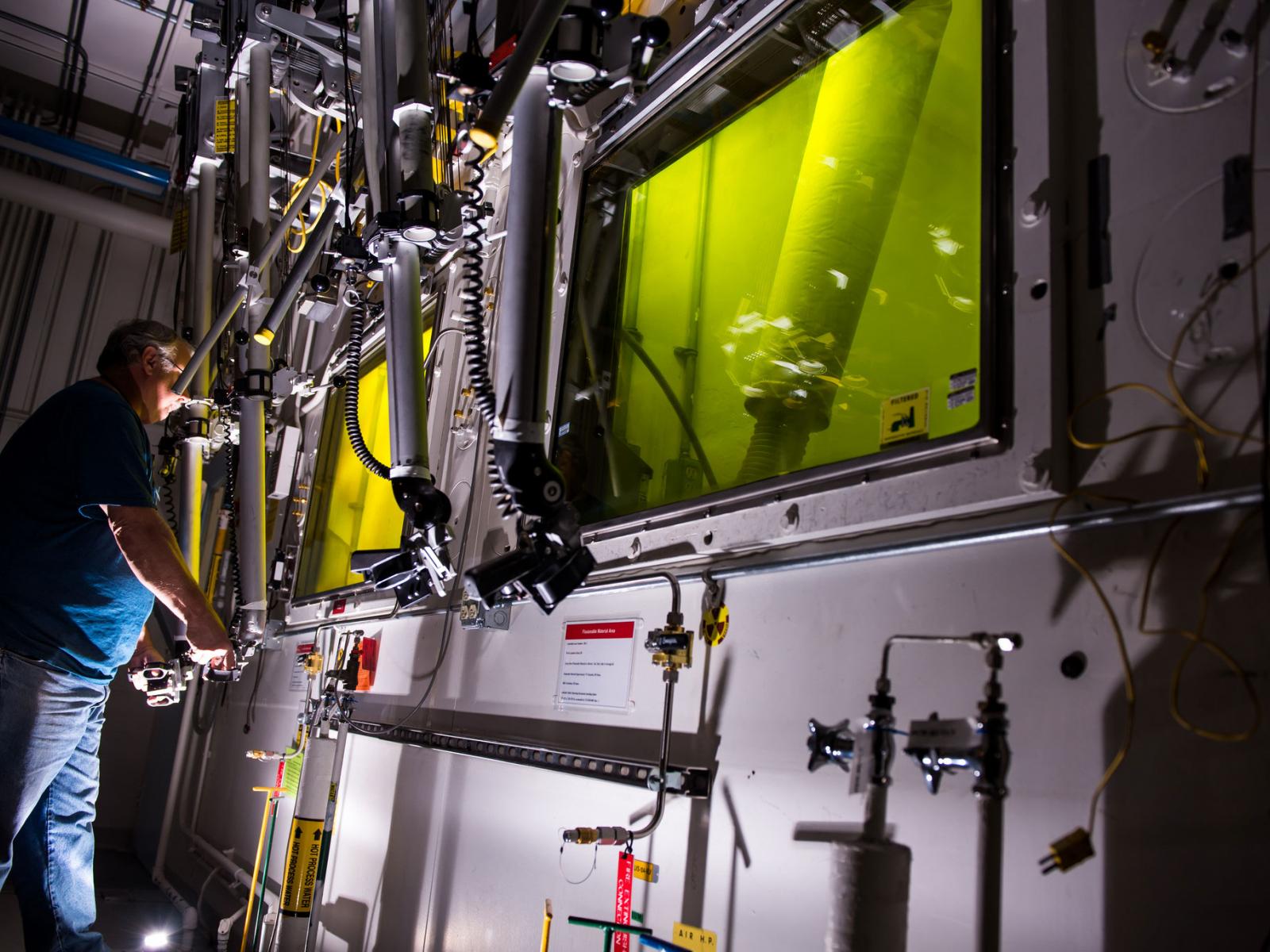
    It’s exactly the sort of post-irradiation examination that PNNL is poised to do, thanks in part to the uniqueness of the RPL which is a hazard category II non-reactor nuclear research facility. The lab is equipped with precision instruments and staffed by researchers and technicians with diverse expertise. It is rare that a single facility can perform such wide-ranging and specialized analyses for multiple sponsors.

    Susan Asmussen is a PNNL chemist and project co-lead. She said, “The RPL provides a unique opportunity where we can actually accept full-length high burnup rods, perform the research in the hot cells and take the material to different labs within the same space—without having to transfer buildings—for testing. It’s very efficient. We have the ability to do work on materials—from post-irradiation examination to liquid-liquid separation chemistry—that few other facilities have.”

    Brady Hanson is a nuclear engineer at PNNL and co-lead who concurs, citing the research team’s breadth of experience as a key advantage. He said, “We can perform all the kinds of chemistry you could dream of under this roof, but we can also do mechanical and material testing here and we can quite literally get all the way down to the atomic level. There are few questions we can’t answer. That’s a feature of both our facility and our diverse research team. We’ve got nuclear, mechanical and chemical engineers, materials scientists and a chemist. It takes all of us to look at the scope of the work from different angles and provide different viewpoints, and I think that’s what really makes us a strong team.”

    PNNL also benefits from its extensive range of research and varied mission partners. Scientists from many disciplines work onsite and can collaborate on experiments to maximize the use of valuable nuclear materials for mission needs across the U.S. government. Debris generated from the decladding process will be used to train the next generation of scientists charged with developing technologies to detect and monitor nuclear activities. This is a key part of the U.S. National Nuclear Security Administration’s nonproliferation mission.

    Through the Nonproliferation Stewardship Program, RPL staff will examine the debris to understand how to characterize and monitor the movements of special nuclear materials, such as uranium and plutonium, through a chemical separation process.

    Nutt said that “This delivery represents a rare and valuable opportunity. We look forward to realizing the full scientific potential of this material—that’s an area where PNNL is especially capable, given our multidisciplinary strengths. The resulting research could help achieve several important goals in service to the nation and go a long way toward providing abundant and reliable energy to the grid allowing for U.S. energy dominance.”

    Radiochemical Processing Laboratory

  • Geiger Readings for Aug 20, 2025

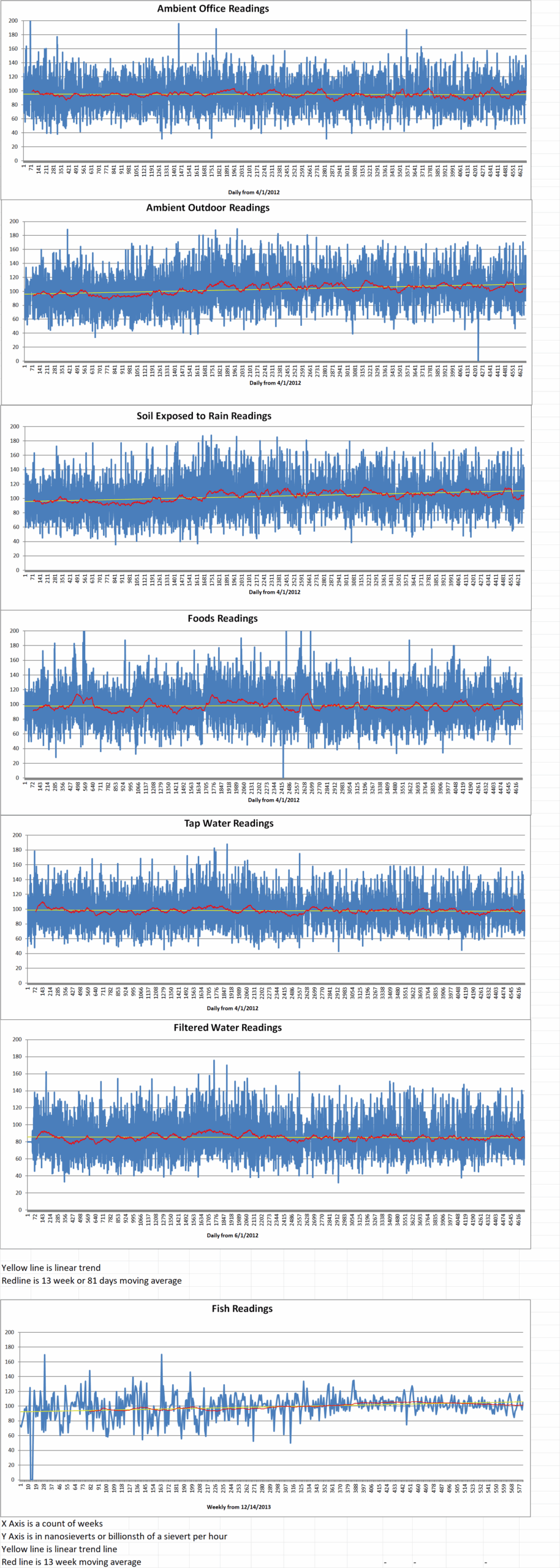
    Latitude 47.704656 Longitude -122.318745

    Ambient office = 129 nanosieverts per hour

    Ambient outside = 136 nanosieverts per hour

    Soil exposed to rain water = 129 nanosieverts per hour

    Green onion from Central Market = 87 nanosieverts per hour

    Tap water = 84 nanosieverts per hour

    Filter water = 70 nanosieverts per hour

  • Nuclear Reactors 1571 – Pacifc Northwest National Laboratory Experimenting with Nuclear Fuel Rods – Paret 1 of 2 Parts

    A logo with text on it

AI-generated content may be incorrect.

    Part 1 of 2 Parts

    Researchers at the Department of Energy’s Pacific Northwest National Laboratory (PNNL) have started a series of experiments that could result in more energy for the grid by increasing nuclear fuel efficiency. The tests followed the special delivery of eleven “high burnup” rods that were irradiated for research purposes.

    The rods will be punctured, cut, mechanically stressed and closely examined. This is all part of testing to learn how the metal alloys fared inside the extreme environment of a nuclear reactor for six years. Temperatures can soar to hundreds of degrees Celsius inside a nuclear reactor.

    The larger aim of this research is to understand how advanced fuels developed by Global Nuclear Fuel react to “higher burnup” conditions. Those conditions partly consist of keeping the nuclear fuels inside a reactor for longer than is typical, with the goal of extracting more energy out of the fuel than is done today.

    Mark Nutt is the director of PNNL’s nuclear energy market sector. He said, “To draw more energy from these materials and increase plant power is like putting new generating capacity on the grid without having to build any new infrastructure. That’s a useful thing for both fuel vendors and a nation that seeks to realize a fuller nuclear potential.”

    The series of experiments underway at PNNL will provide important information about how the research rods reacted to the conditions, and may even guide how future fuels are designed. High burnup fuels will boost the performance of the country’s nuclear power fleet by making more efficient use of existing fuel materials. They will make reactors more resistant to nuclear incidents and perhaps even lower the cost of electricity.

    Frank Goldner is the Accident Tolerant Fuel federal program manager in the Office of Nuclear Energy. He said, “This is a significant milestone for our Accident Tolerant Fuel program. The development of this new fuel could further support the Trump Administration’s executive order to facilitate five gigawatts of power uprates at existing power plants by 2030 and high burnup fuels could be a big part of that.”

    When the rods first arrived at the PNNL-Richland campus in Washington state, many of the scientists watching the delivery wore expressions of anticipation. The shipping process was well-regulated. It required complex logistical coordination between agencies over a span of fourteen months. As an unloading crew meticulously transferred the sixty-thousand-pound stainless-steel rod-carrying cask into the Radiochemical Processing Laboratory (RPL), a team of technicians, radiation chemists, material scientists and nuclear engineers were ready. Testing was to begin immediately.

    Similar to forensic analysis, signatures of past exposure imbued throughout the materials will definitely answer important questions for curious scientists. Does the outer casing, called “cladding,” perform as expected under high burnup conditions? Researchers will search for alteration in the material through “tensile testing” techniques. They’ll also employ a digital image correlation method to paint the cladding with thousands of dots. Then they will trace the movement of those dots as the cladding is pulled apart with great mechanical force to gather significantly more data.

    In one experiment, researchers used remotely operated manipulators inside a heavily shielded hot cell to puncture the cladding, releasing the rods’ internal pressure. They then captured the radioactive gases that were released, which revealed how much pressure built up inside the cladding as the rods’ internal contents underwent fission reactions. All of this data will assist Global Nuclear Fuel to further validate the models that estimate how their fuel may perform under various conditions.

    Please read Part 2 next

    Radiochemical Processing Laboratory

  • Geiger Readings for Aug 18, 2025

    Latitude 47.704656 Longitude -122.318745

    Ambient office = 108 nanosieverts per hour

    Ambient outside = 151 nanosieverts per hour

    Soil exposed to rain water = 143 nanosieverts per hour

    Campari tomato from Central Market = 100 nanosieverts per hour

    Tap water = 86 nanosieverts per hour

    Filter water = 72 nanosieverts per hour

  • Geiger Readings for Aug 17, 2025

    Latitude 47.704656 Longitude -122.318745

    Ambient office = 122 nanosieverts per hour

    Ambient outside = 110 nanosieverts per hour

    Soil exposed to rain water = 111 nanosieverts per hour

    Beefsteak from Central Market =109 nanosieverts per hour

    Tap water = 79 nanosieverts per hour

    Filter water = 69 nanosieverts per hour

  • Geiger Readings for Aug 16, 2025

    Latitude 47.704656 Longitude -122.318745

    Ambient office = 151 nanosieverts per hour

    Ambient outside = 107 nanosieverts per hour

    Soil exposed to rain water = 106 nanosieverts per hour

    Avocado from Central Market = 87 nanosieverts per hour

    Tap water =71 nanosieverts per hour

    Filter water = 61 nanosieverts per hour

    Dover Sole from Central = 113 nanosieverts per hour