
Part 2 of 2 Parts (Please read Part 1 first)
Craig Ranson is the Installed Base CEO, GE Vernova Hitachi Nuclear Energy. He said, “The examination of these rods is the next step in our continuous drive to develop higher efficiency fuels that are safer and more reliable. We are proud to be part of this collaboration with the U.S. Department of Energy, PNNL and our utility partners to benefit the entire industry.”
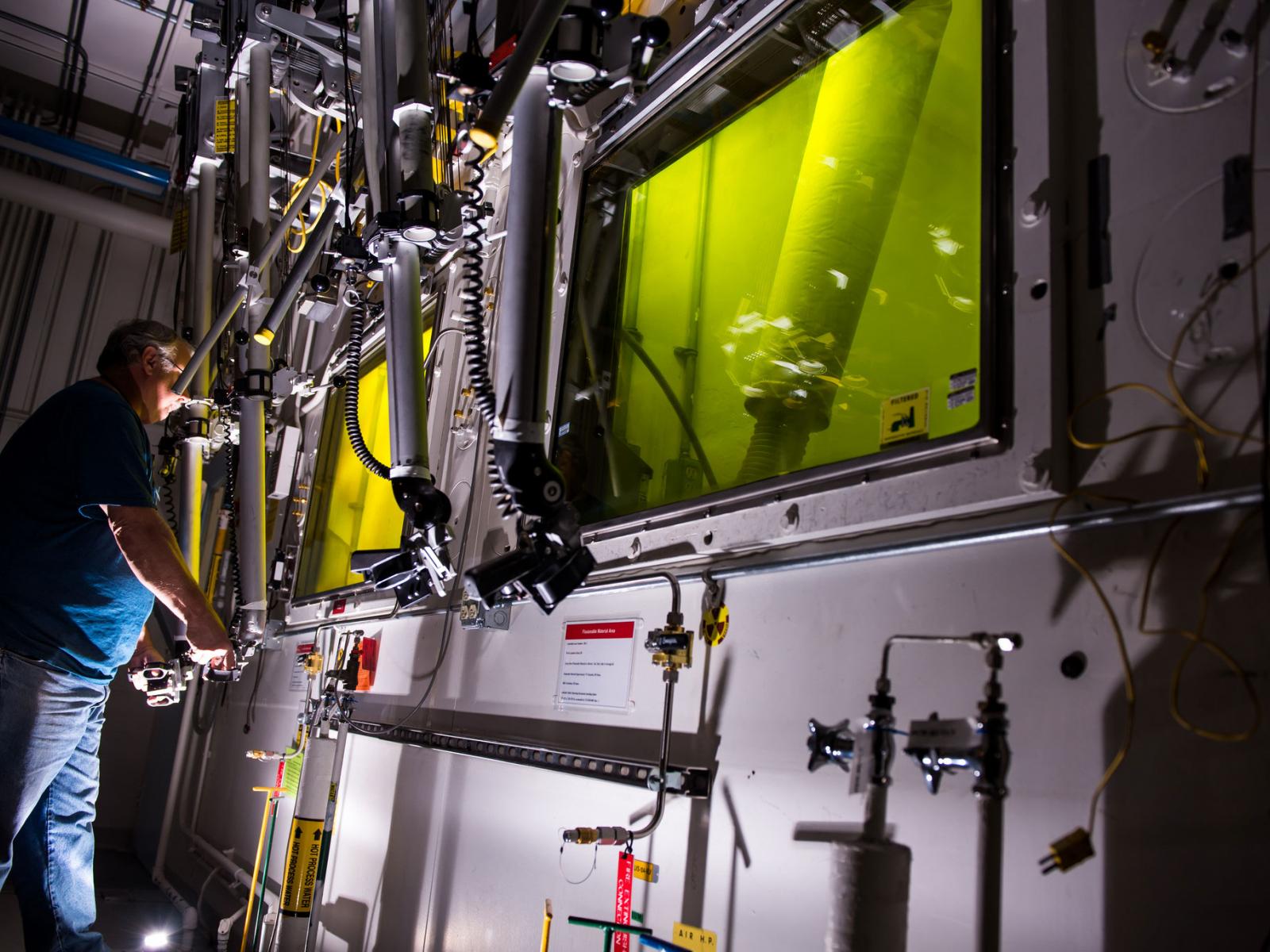
It’s exactly the sort of post-irradiation examination that PNNL is poised to do, thanks in part to the uniqueness of the RPL which is a hazard category II non-reactor nuclear research facility. The lab is equipped with precision instruments and staffed by researchers and technicians with diverse expertise. It is rare that a single facility can perform such wide-ranging and specialized analyses for multiple sponsors.
Susan Asmussen is a PNNL chemist and project co-lead. She said, “The RPL provides a unique opportunity where we can actually accept full-length high burnup rods, perform the research in the hot cells and take the material to different labs within the same space—without having to transfer buildings—for testing. It’s very efficient. We have the ability to do work on materials—from post-irradiation examination to liquid-liquid separation chemistry—that few other facilities have.”
Brady Hanson is a nuclear engineer at PNNL and co-lead who concurs, citing the research team’s breadth of experience as a key advantage. He said, “We can perform all the kinds of chemistry you could dream of under this roof, but we can also do mechanical and material testing here and we can quite literally get all the way down to the atomic level. There are few questions we can’t answer. That’s a feature of both our facility and our diverse research team. We’ve got nuclear, mechanical and chemical engineers, materials scientists and a chemist. It takes all of us to look at the scope of the work from different angles and provide different viewpoints, and I think that’s what really makes us a strong team.”
PNNL also benefits from its extensive range of research and varied mission partners. Scientists from many disciplines work onsite and can collaborate on experiments to maximize the use of valuable nuclear materials for mission needs across the U.S. government. Debris generated from the decladding process will be used to train the next generation of scientists charged with developing technologies to detect and monitor nuclear activities. This is a key part of the U.S. National Nuclear Security Administration’s nonproliferation mission.
Through the Nonproliferation Stewardship Program, RPL staff will examine the debris to understand how to characterize and monitor the movements of special nuclear materials, such as uranium and plutonium, through a chemical separation process.
Nutt said that “This delivery represents a rare and valuable opportunity. We look forward to realizing the full scientific potential of this material—that’s an area where PNNL is especially capable, given our multidisciplinary strengths. The resulting research could help achieve several important goals in service to the nation and go a long way toward providing abundant and reliable energy to the grid allowing for U.S. energy dominance.”