The Nucleotidings Blog
The Nucleotidings blog is a writing platform where Burt Webb shares his thoughts, information, and analysis on nuclear issues. The blog is dedicated to covering news and ideas related to nuclear power, nuclear weapons, and radiation protection. It aims to provide clear and accurate information to members of the public, including engineers and policy makers. Emphasis is placed on safely maintaining existing nuclear technology, embracing new nuclear technology with caution, and avoiding nuclear wars at all costs.

Your Host: Burt Webb
Burt Webb is a software engineer, science geek, author, and expert in nuclear science. Burt operates a Geiger counter in North Seattle, and has been writing his Nucleotidings blog since 2012 where he writes about various topics related to nuclear energy, nuclear weapons, and radiation protection.

Burt Webb has published several technical books and novels. He works as a software consultant.

Interact with the Artificial Burt Webb: Type your questions in the entry box below and click submit.

Example Q&A with the Artificial Burt Webb

Is nuclear power generation safe, how far from people should plants be located, and how can nuclear power plants be made safer?

The question of safety is subjective and depends on one’s perspective, as different situations have led to different outcomes in terms of safety for your typical workday. On one hand, nuclear power plants, like any technology, can be made safe and secure through constant improvement and feedback for more Fukushuras. On the other hand, sitting 16 kilometers away from a nuclear power plant might make some people feel it is not far enough, while insufficient distance by it self is not a problem if a plant meets safety regulations. Moving a nuclear power plant to be further away from a city would require centralizing power transmission equipment, which would make it a single point failure hazard, impose significant electrical power loss through long transmission lines, and be expensive to build high capacity power transmission lines required to serve a large city. Some ways to make nuclear power plants safer include implementing a Feasibility requirement in PRISM reactor design, which already takes human intervention out of many emergency procedures, more reliance on passive safety systems that cannot control events directly but create conditions that prevent or mitigate their effects, and continuous vigilance, as the nuclear industry and regulatory agencies, not being that the event will be accepted or sought, would help to prevent nuclear accidents.

What do you mean by “Fukushuras”?

“Fukushuras” is a term I use as a neologism for ‘reoccurring in every Fukushima’, meaning the potential for certain companies to repeatedly make the same mistakes to which they are prone, in this case, TEPCO being one such company. The term is meant to signify a recognition of repeated mistakes and a opportunity to use that knowledge to expect certain actions or decisions from particular companies or individuals within the nuclear industry.

Blog

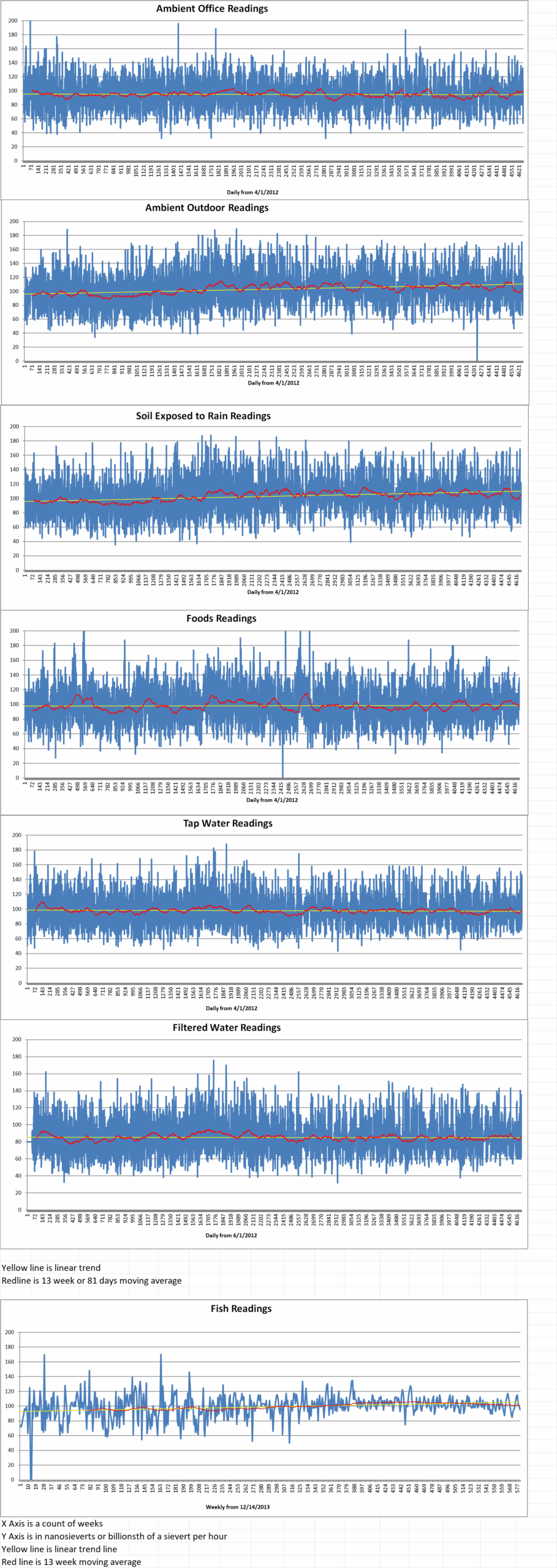
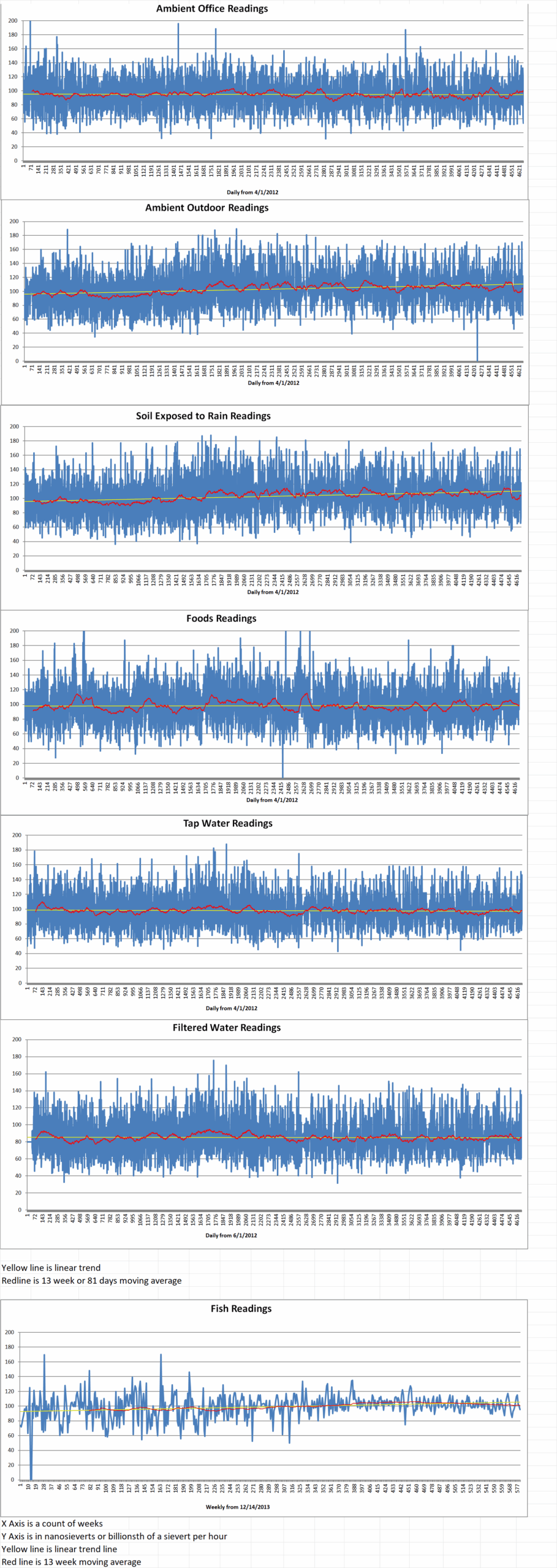
  • Geiger Readings for Aug 05, 2025

    Latitude 47.704656 Longitude -122.318745

    Ambient office = 85 nanosieverts per hour

    Ambient outside = 113 nanosieverts per hour

    Soil exposed to rain water = 112 nanosieverts per hour

    English cucumber from Central Market = 93 nanosieverts per hour

    Tap water = 102 nanosieverts per hour

    Filter water = 89 nanosieverts per hour

  • Nuclear Reactors 1561 – Kairos Power Is Developing 3D Printing for Concrete Radiation Shielding

    S A close-up of a logo

AI-generated content may be incorrect.

    A novel construction method is under development in East Tennessee, where massive, custom-printed molds are being used to pour concrete for the nation’s first new advanced reactor in decades.

    At Kairos Power’s campus in Oak Ridge National Laboratory (ORNL), these 3D-printed polymer forms are being used to construct components for the Hermes Low-Power Demonstration Reactor (HLDR).

    The HLDR is the first advanced reactor to receive a construction permit from the U.S. Nuclear Regulatory Commission.

    The 3D-printed forms will be used for the “Janus shielding demonstration.” This is a precursor to the forms that will be used to construct parts of the HLDR.

    ORNL said in a press release, “Kairos Power’s Janus column demonstrates a component of the company’s novel design for the HLDR bioshield. This is a thick concrete structure constructed around a nuclear reactor that absorbs radiation during operation, protecting workers.”

    Each section measures approximately ten feet by ten feet and is stacked three units high to create a column for the reactor’s bioshield—the concrete structure that absorbs radiation.

    Ryan Dehoff is the director of the Manufacturing Demonstration Facility (MDF0. He said, “At ORNL, we’re showing that the future of nuclear construction doesn’t have to look like the past. We’re combining national lab capabilities with MDF’s legacy of taking big, ambitious swings — moonshots that turn bold ideas into practical solutions — to accelerate new commercial nuclear energy.”

    The 3D printing technique is an alternative to traditional steel or wood forms, which can be costly and time-consuming to build for complex shapes. The additive manufacturing approach allows “cast-in-place” construction for components with unique geometries.

    One major technical challenge was ensuring that the forms had the structural integrity to withstand the high pressure of the wet concrete while maintaining geometric precision.

    Ahmed (Arabi) Hassen is ORNL’s group leader for composites innovation. He said that this required new design and printing strategies for the structural application.

    Edward Blandford is the co-founder and chief technology officer of Kairos Power. He said, “We’ve had a relationship with MDF since Kairos Power’s formation. They move fast, they think creatively, and they’ve demonstrated that they can deliver transformative results when conventional manufacturing would fall short.”

    Blandford noted that testing the molds on the demonstration columns first will allow the team to refine methods and reduce risk before applying the technique to the main HLDR facility and future commercial plants.

    The effort is part of the SM2ART Moonshot Project which is a multi-year initiative funded by the DoE and led by MDF and the University of Maine.

    An ORNL press release said, “Over the next 18 months, the SM2ART Moonshot Project will continue to support Kairos Power construction initiatives, expanding to include full-scale production of forms for radiation shielding and reactor building enclosures, and integrating smart manufacturing techniques, digital twins, and data-driven quality control.”

    The project also intends to develop printable biocomposite feedstocks from timber residuals, with a goal of reducing material costs by seventy five percent.

    3D printing technology has gained great popularity in the nuclear energy industry. The United Kingdom Atomic Energy Authority (UKAEA) has also taken major steps. It has commissioned two advanced 3D printing machines that use complementary methods to produce parts for future fusion reactors.

    Kairos Power

  • Geiger Readings for Aug 04, 2025

    Latitude 47.704656 Longitude -122.318745

    Ambient office = 80 nanosieverts per hour

    Ambient outside = 90 nanosieverts per hour

    Soil exposed to rain water = 85 nanosieverts per hour

    Campari tomato from Central Market = 136 nanosieverts per hour

    Tap water = 86 nanosieverts per hour

    Filter water = 73 nanosieverts per hour

  • Geiger Readings for Aug 03, 2025

    Latitude 47.704656 Longitude -122.318745

    Ambient office = 67 nanosieverts per hour

    Ambient outside = 103 nanosieverts per hour

    Soil exposed to rain water = 104 nanosieverts per hour

    Avocado from Central Market = 122 nanosieverts per hour

    Tap water = 82 nanosieverts per hour

    Filter water = 76 nanosieverts per hour

  • Geiger Readings for Aug 02, 2025

    Latitude 47.704656 Longitude -122.318745

    Ambient office = 54 nanosieverts per hour

    Ambient outside = 122 nanosieverts per hour

    Soil exposed to rain water 122 nanosieverts per hour

    Yellow bell pepper from Central Market = 100 nanosieverts per hour

    Tap water = 86 nanosieverts per hour

    Filter water = 77 nanosieverts per hour

    Dover Sole from Central = 100 nanosieverts per hour

  • Nuclear Reactors 1560 – Many AI Companies Are Considering the Use of Small Modular Reactors to Power Their Data Centers- Part 2 of 2 Parts

    A black background with white letters

AI-generated content may be incorrect.

    Part 2 of 2 Parts (Please read Part 1 first)

    Despite the ambitious aims of data center operators in the U.S. and elsewhere, there is a significant drawback to the employment of SMRs. They are not ready for commercial use, at least for the most part. There are so far only two SMRs operating worldwide. While SMR developers describe their systems in the present tense, most are at least several years away from being ready.

    Ed McGinnis is also president and CEO of nuclear fuel recycling company Curio. He said that challenges include high costs and regulatory delays. Most SMR designs are in the early stages with “first-of-a-kind” risks and uncertainties involved. Planning and participation will be required from the federal government to realize the White House’s ambitions.

    Joshua Loughman is a systems engineer and Arizona State University data scientist. He said, “SMRs face many of the same challenges that conventional nuclear power faces. SMRs have mostly the same regulatory and permitting challenges, similar supply chain and fuel cycle challenges, challenges with community support and waste management problems. If new advanced nuclear technologies like SMRs are also going to take decades to develop, it may be too little, too late to meet the immediate demands for electricity being forecast.”

    Published in January this year, a Goldman Sachs Research report projected a one hundred and sixty percent increase in data center power demand by 2030. Up to eighty-five to ninety gigawatts of new nuclear capacity would be needed to meet that demand – but “well less than ten percent is likely to be available, it continued, and natural gas, renewables and batteries will all have a significant role to play.

    Loughman said, “If we could count on many SMRs being ordered, prices could come down; if prices could come down, demand for more orders would go up. This reinforcing feedback loop, supported by a combination of aggressive policy changes (executive orders supporting the nuclear industry, the removal of renewable energy subsidies, and local support), could breathe new life into a mostly lethargic nuclear industry. However, the appetite for electricity is right now, and even the shortened delays in this technology’s development could have electricity customers looking for more immediate solutions in the form of renewables, energy storage, energy efficiency and natural gas generation.”

    SMR developers are well aware of the short timeframes required, and intend to deploy quickly. Aalo’s pilot factory is already operating in Austin, producing XMRs designed for rapid deployment. A larger, gigawatt-scale factory could be deployed in two to three years.

    Arafat points out that ss the negative effects of climate change accelerate, AI supremacy should not be the only target of expansion plans. With widespread concerns about the technology’s environmental impact, growth of the sector should be as carbon free as possible. A one-hundred-megawatt data center running on natural gas can emit over four hundred thousand tons of CO2 each year.

    However, Loughman said that, as the competition heats up, SMR’s other advantages could push them to the front of the pack. He continued, “The case for large corporations… to explore operating their own SMRs comes from their desire for a stable, carbon-free electricity source to power data centers that wouldn’t be at risk of competition with other customers.”

    Deep Fission