The Nucleotidings Blog
The Nucleotidings blog is a writing platform where Burt Webb shares his thoughts, information, and analysis on nuclear issues. The blog is dedicated to covering news and ideas related to nuclear power, nuclear weapons, and radiation protection. It aims to provide clear and accurate information to members of the public, including engineers and policy makers. Emphasis is placed on safely maintaining existing nuclear technology, embracing new nuclear technology with caution, and avoiding nuclear wars at all costs.

Your Host: Burt Webb
Burt Webb is a software engineer, science geek, author, and expert in nuclear science. Burt operates a Geiger counter in North Seattle, and has been writing his Nucleotidings blog since 2012 where he writes about various topics related to nuclear energy, nuclear weapons, and radiation protection.

Burt Webb has published several technical books and novels. He works as a software consultant.

Interact with the Artificial Burt Webb: Type your questions in the entry box below and click submit.

Example Q&A with the Artificial Burt Webb

Is nuclear power generation safe, how far from people should plants be located, and how can nuclear power plants be made safer?

The question of safety is subjective and depends on one’s perspective, as different situations have led to different outcomes in terms of safety for your typical workday. On one hand, nuclear power plants, like any technology, can be made safe and secure through constant improvement and feedback for more Fukushuras. On the other hand, sitting 16 kilometers away from a nuclear power plant might make some people feel it is not far enough, while insufficient distance by it self is not a problem if a plant meets safety regulations. Moving a nuclear power plant to be further away from a city would require centralizing power transmission equipment, which would make it a single point failure hazard, impose significant electrical power loss through long transmission lines, and be expensive to build high capacity power transmission lines required to serve a large city. Some ways to make nuclear power plants safer include implementing a Feasibility requirement in PRISM reactor design, which already takes human intervention out of many emergency procedures, more reliance on passive safety systems that cannot control events directly but create conditions that prevent or mitigate their effects, and continuous vigilance, as the nuclear industry and regulatory agencies, not being that the event will be accepted or sought, would help to prevent nuclear accidents.

What do you mean by “Fukushuras”?

“Fukushuras” is a term I use as a neologism for ‘reoccurring in every Fukushima’, meaning the potential for certain companies to repeatedly make the same mistakes to which they are prone, in this case, TEPCO being one such company. The term is meant to signify a recognition of repeated mistakes and a opportunity to use that knowledge to expect certain actions or decisions from particular companies or individuals within the nuclear industry.

Blog

  • Geiger Readings for Aug 01, 2025

    Latitude 47.704656 Longitude -122.318745

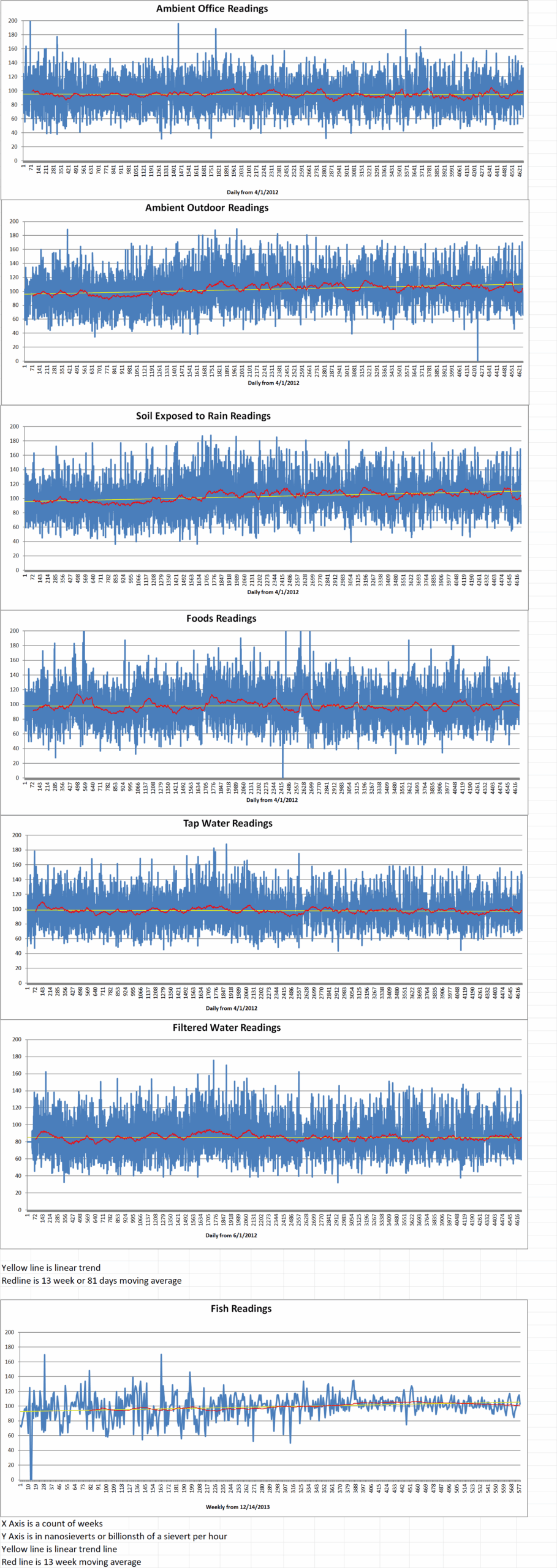
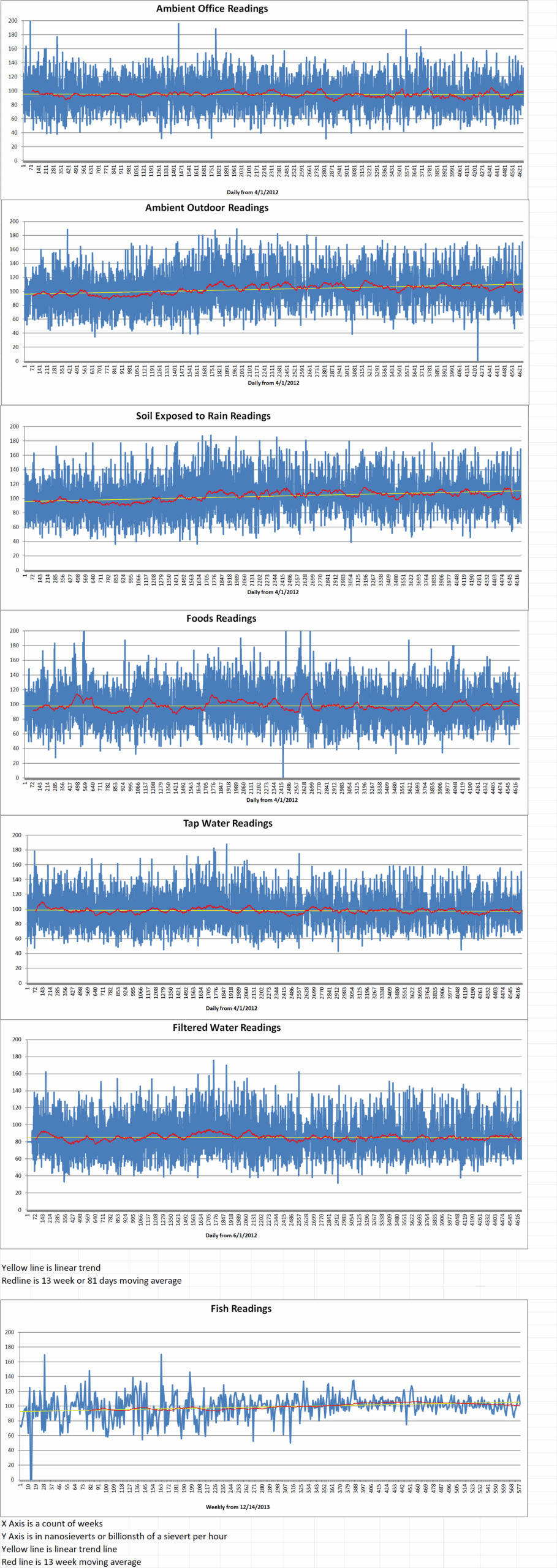
    Ambient office = 63 nanosieverts per hour

    Ambient outside = 91 nanosieverts per hour

    Soil exposed to rain water = 90 nanosieverts per hour

    Heirloom tomato from Central Market = 122 nanosieverts per hour

    Tap water = 146 nanosieverts per hour

    Filter water = 135 nanosieverts per hour

  • Geiger Readings for Jul 31, 2025

    Latitude 47.704656 Longitude -122.318745

    Ambient office = 93 nanosieverts per hour

    Ambient outside = 77 nanosieverts per hour

    Soil exposed to rain water = 75 nanosieverts per hour

    Green onions from Central Market = 108 nanosieverts per hour

    Tap water = 81 nanosieverts per hour

    Filter water = 71 nanosieverts per hour

  • Nuclear Reactors 1559 – Many AI Companies Are Considering the Use of Small Modular Reactors to Power Their Data Centers- Part 1 of 2 Parts

    A black background with white letters

AI-generated content may be incorrect.

    Part 2 of 2 Parts (Please read Part 1 first)

    Despite the ambitious aims of data center operators in the U.S. and elsewhere, there is a significant drawback to the employment of SMRs. They are not ready for commercial use, at least for the most part. There are so far only two SMRs operating worldwide. While SMR developers describe their systems in the present tense, most are at least several years away from being ready.

    Ed McGinnis is also president and CEO of nuclear fuel recycling company Curio. He said that challenges include high costs and regulatory delays. Most SMR designs are in the early stages with “first-of-a-kind” risks and uncertainties involved. Planning and participation will be required from the federal government to realize the White House’s ambitions.

    Joshua Loughman is a systems engineer and Arizona State University data scientist. He said, “SMRs face many of the same challenges that conventional nuclear power faces. SMRs have mostly the same regulatory and permitting challenges, similar supply chain and fuel cycle challenges, challenges with community support and waste management problems. If new advanced nuclear technologies like SMRs are also going to take decades to develop, it may be too little, too late to meet the immediate demands for electricity being forecast.”

    Published in January this year, a Goldman Sachs Research report projected a one hundred and sixty percent increase in data center power demand by 2030. Up to eighty-five to ninety gigawatts of new nuclear capacity would be needed to meet that demand – but “well less than ten percent is likely to be available, it continued, and natural gas, renewables and batteries will all have a significant role to play.

    Loughman said, “If we could count on many SMRs being ordered, prices could come down; if prices could come down, demand for more orders would go up. This reinforcing feedback loop, supported by a combination of aggressive policy changes (executive orders supporting the nuclear industry, the removal of renewable energy subsidies, and local support), could breathe new life into a mostly lethargic nuclear industry. However, the appetite for electricity is right now, and even the shortened delays in this technology’s development could have electricity customers looking for more immediate solutions in the form of renewables, energy storage, energy efficiency and natural gas generation.”

    SMR developers are well aware of the short timeframes required, and intend to deploy quickly. Aalo’s pilot factory is already operating in Austin, producing XMRs designed for rapid deployment. A larger, gigawatt-scale factory could be deployed in two to three years.

    Arafat points out that ss the negative effects of climate change accelerate, AI supremacy should not be the only target of expansion plans. With widespread concerns about the technology’s environmental impact, growth of the sector should be as carbon free as possible. A one-hundred-megawatt data center running on natural gas can emit over four hundred thousand tons of CO2 each year.

    However, Loughman said that, as the competition heats up, SMR’s other advantages could push them to the front of the pack. He continued, “The case for large corporations… to explore operating their own SMRs comes from their desire for a stable, carbon-free electricity source to power data centers that wouldn’t be at risk of competition with other customers.”

    Deep Fission

  • Geiger Readings for Jul 30, 2025

    Latitude 47.704656 Longitude -122.318745

    Ambient office =121 nanosieverts per hour

    Ambient outside = 66 nanosieverts per hour

    Soil exposed to rain water = 65 nanosieverts per hour

    English cucumber from Central Market = 93 nanosieverts per hour

    Tap water = 76 nanosieverts per hour

    Filter water = 63 nanosieverts per hour

  • Nuclear Reactors 1558 – Emirates Nuclear Energy Company and Samsung C&T Corporation Sign a Memorandum of Understanding to Collaborate on Nuclear Projects

    A logo with red and green lines

AI-generated content may be incorrect.

    The Emirates Nuclear Energy Company (ENEC) and Samsung C&T Corporation have signed a memorandum of understanding (MoU) to collaborate on projects ranging from reactor restarts in the U.S., to small modular reactors (SMR) in the UAE, to potential nuclear-powered hydrogen production in South Korea.

    The MoU states that the two companies will review potential investment in a full range of global and advanced nuclear projects and technologies. These projects include “investment in US-based nuclear service and equipment companies; and the joint assessment of the development and financing of a nuclear power plant in Romania”.

    Mohamed Al Hammadi is the CEO of ENEC. He said, “Nuclear energy has a pivotal role in delivering clean electricity at scale to meet rapidly growing global demand. ENEC has demonstrated that with the right strategy and partnerships, nuclear projects can be delivered safely on time, and to the highest national and international standards. Through this MoU with Samsung C&T, we are expanding our global collaboration efforts to enable new nuclear deployment, investment, and innovation. Together, we will explore projects that deliver real impact for countries seeking energy security, decarbonization, and long-term economic growth.”

    Oh Se-cheol is the CEO of Samsung C&T. He said, “To ensure the stable supply of clean energy, nuclear power plays an essential role as a reliable baseload source. By combining the advanced technologies and global networks that both companies have built in the large-scale nuclear and SMR sectors, I look forward to creating synergies through close collaboration.”

    The companies issued a joint statement that said that their MoU “brings together ENEC’s global nuclear leadership and Samsung C&T’s deep engineering and infrastructure expertise to support the deployment of clean, dispatchable electricity worldwide”.

    The MoU follows one signed by ENEC with another South Korean company, Hyundai Engineering & Construction on Monda. This MoU provides a comprehensive framework for knowledge sharing, collaborative evaluation of project participation, and assessment of strategic investment opportunities. It also calls for the formation of a joint working group to identify areas of mutual interest and support the development of future nuclear energy projects.

    That MoU followed another MoU signed by ENEC with Westinghouse last week to explore collaboration opportunities for the deployment of advanced nuclear energy solutions in the U.S.

    ENEC is the developer and operator of the four-unit Barakah nuclear power plant which first nuclear power plant in the United Arab Emirates, the first nuclear power plant in the Arabian Peninsula and the first commercial nuclear power plant in the Arab World. ENEC says it is “now leveraging this expertise through global partnerships to invest, partner and cooperate with other nations and companies to realize the benefits of civil nuclear energy”.

    Samsung C&T won a contract in April of this year to upgrade the first reactor of Romania’s Cernavoda nuclear power plant, and is involved in the front-end engineering design (FEED) for a small modular reactor project in Romania. In March it signed an agreement with Korea Hydro & Nuclear Power to establish a strategic partnership for the co-development of overseas nuclear power plant projects.

    Emirates Nuclear Energy Company

  • Geiger Readings for Jul 29, 2025

    Latitude 47.704656 Longitude -122.318745

    Ambient office = 133 nanosieverts per hour

    Ambient outside = 69 nanosieverts per hour

    Soil exposed to rain water = 66 nanosieverts per hour

    Cabbage from Central Market = 115 nanosieverts per hour

    Tap water = 72 nanosieverts per hour

    Filter water = 61 nanosieverts per hour

  • Nuclear Reactors 1557 – New Presidential Executive Order Mandates Major Changes to Nuclear Regulatory Commission

    c A logo of a nuclear power plant

AI-generated content may be incorrect.

    On May 23, 2025, President Trump signed an executive order titled “Ordering the Reform of the Nuclear Regulatory Commission” (EO) intended to accelerating and expanding the nuclear energy industry in the U.S. The EO directs a comprehensive structural reorganization of the Nuclear Regulatory Commission (NRC) as well as an overhaul of its regulatory framework related to the licensing and deployment of advanced nuclear reactors.

    Seeking to increase U.S. nuclear energy capacity from approximately one hundred gigawatts in 2024 to four hundred gigawatts by 2050, a key objective of the EO is to ensure the NRC operates in line with its revised mission which was established under the Accelerating Deployment of Versatile, Advanced Nuclear for Clean Energy Act of 2024 (ADVANCE Act). This is to be accomplished by avoiding unnecessary barriers to energy deployment while continuing to uphold its safety mandate.

    The EO mandates a broad restructuring of the NRC to align the agency’s focus and resources primarily to facilitating reactor licensing. The EO also requires the NRC to collaborate with the Department of Government Efficiency (DOGE) to implement a reorganization plan to “promote the expeditious processing of license applications and the adoption of innovative technology.” This reorganization plan involves undertaking reductions in staff across the agency while recognizing that functions dedicated to new reactor licensing may expand.

    In further support of regulatory reform, the EO instructs the NRC to form a regulatory drafting team of at least twenty officials charged with developing new licensing rules, as detailed further below. In addition, the EO calls for a reduction in the personnel and responsibilities of the Advisory Committee on Reactor Safeguards (ACRS) to the minimum necessary to fulfill its statutory obligations. Established under the Atomic Energy Act, the ACRS is mandated with reviewing safety studies and facility license applications and advising the NRC on reactor hazards and the adequacy of safety standards.

    Beyond structural changes, the EO mandates the NRC to initiate a “wholesale revision of its regulations and guidance documents” within nine months and to finalize the revised regulations within eighteen months. These changes must adhere to the procedural requirements of the Administrative Procedure Act (APA), and all resulting rules and licensing decisions must remain consistent with existing statutory authority.

    Among the most important directives is the requirement to establish fixed timelines for reactor licensing decisions. Specifically, the NRC must,

    • issue a final decision within eighteen months for applications to construct and operate a new reactor of any type; and
    • issue a final decision within twelve months for applications to continue operating an existing reactor.

    Delay of these deadlines is permitted only in cases involving applicant failure. In order to facilitate compliance, the EO also instructs the NRC to streamline its hearing process and revise its National Environmental Policy Act implementing regulations to reflect the 2023 amendments enacted through the Fiscal Responsibility Act and the “Unleashing American Energy” executive order of January 20, 2025.

    To further support its objectives, the EO also directs the NRC to carry out the following actions:

    • Revising nuclear reactor safety assessments and the Reactor Oversight Process to focus on credible, realistic risks, including a reduction in problems related to reactor security rules.
    • Establishing fixed maximums on hourly fees charged by the NRC for reactor application and licensing-related reviews.
    • Reconsidering dependence on the linear no-threshold model for radiation exposure and instead adopting determinate radiation limits.
    • Creating an expedited approval pathway for reactor designs previously approved by the Department of Energy or Department of Defense. NRC reviews would be limited to new or previously unevaluated risks.
    • Developing a streamlined licensing process for high-volume deployment of microreactors and small modular reactors, including evaluation of whether certain designs or components can be authorized under general licenses.
    • Setting strict thresholds for post-construction changes, which would limit the NRC’s ability to require design or licensing modifications once construction is underway.
    • Reevaluating licensing duration policy, including reconsideration of how long a renewed license can remain valid.

    President Trump’s May 23, 2025, EO directs comprehensive structural and regulatory changes at the NRC. The goal is the prioritization of new nuclear reactor licensing and the expediting of the deployment of advanced nuclear technologies.

    Nuclear Regulatory Commission