There is concern that rogue nations might be able to remove nuclear fuel from a nuclear submarine in order to develop nuclear weapons. Neutrinos might be able to reveal attempts to carry out such a project.
Neutrinos are lightweight subatomic particles that are released from the reactors that power nuclear submarines. These particles could expose the alteration or removal of nuclear fuels for nefarious purpose. This possibility was recently reported in Physical Review Letters. This monitoring of neutrinos could be done remotely while a submarine is in a port with its reactor shut down.
In order to ensure that nations that are currently without nuclear weapons don’t develop them, international inspectors monitor the use of many types of nuclear technology across the globe. Nuclear submarines are a major concern. Many of them use highly enriched uranium. This is a potent type of fuel that could be weaponized fairly easily. However, submarines are protected from monitoring because of a loophole. Unlike nuclear power plants, nuclear submarines are used for secret military purposes. This means that physical inspections could infringe on the national security of the nation that owns a particular nuclear submarine.
Igor Jovanovic is a nuclear scientist at the University of Michigan in Ann Arbor. He said, “Neutrino-based methods can considerably reduce the intrusiveness by making measurements at a distance, without having to physically access the vessel.” He was not a member of the research team that published the report.
The antimatter variety of neutrinos, known as antineutrinos, are produced in great quantities from operating nuclear reactors. Neutrinos interact very weakly with other matter. This allows them to pass easily through solid material such as a submarine hull. A neutrino detector positioned near a submarine could reveal what is happening inside according to neutrino physicists Bernadette Cogswell and Patrick Huber of the Center for Neutrino Physics at Virginia Tech in Blacksburg who published the new report.
Submarines are often at sea, and they are hard to monitor with stationary instruments. In order to deal with this problem, the researchers found a solution. They decided to examine neutrinos produced by the decays of a variety of isotopes of chemical elements that remain after a reactor is shut down. A neutrino detector located in the water about sixteen feet below a submarine’s reactor could measure neutrinos produced by the decay of certain cerium and ruthenium isotopes. Those measurements could reveal whether nuclear materials had been removed from the reactor or swapped out.
This method of monitoring a reactor that has been shut off is “very clever” according to physicist Ferenc Dalnoki-Veress of the Middlebury Institute of International Studies at Monterey in California. However, the idea would still require acceptance from every country for detectors in submarine berths. Physicist Giorgio Gratta of Stanford University said that “Something like this would be so much better if it wouldn’t require cooperation.”
The monitoring of nuclear submarines may be more pressing in the near future. At this point in time all nations with nuclear submarines already have nuclear weapons. So, that means that currently, the issue is hypothetical. However, that will change soon. The U.S. and the U.K. are two nuclear weapons states. Last September, they entered into a cooperative security agreement with Australia to assist that country in obtaining nuclear submarines. Australia has no nuclear weapons.
There is very little suspicion that Australia would use these submarines as a cover for a nuclear weapons program. Cogswell said that “you still have to worry about the precedent that that sets.” As monitoring nuclear submarines becomes more important, she said “The question was how the heck to do that.”
Blog
-

Nuclear Weapons 781 – Neutrinos May Be Used To Monitory The Nuclear Fuel In Nuclear Submarines
-
Nuclear News Roundup May 14, 2022
Rep. Mike Rogers concerned about U.S. response if Russia uses nuclear weapons yellowhammernews.com
SMR company NuScale pivots from development to delivery world-nuclear-news.org
Russia’s Medvedev Suggests U.S. Should Beg for Nuclear Arms Talks usnews.com
Experts Assess Implementation of International Conventions on Nuclear Emergency Response iaea.org
-
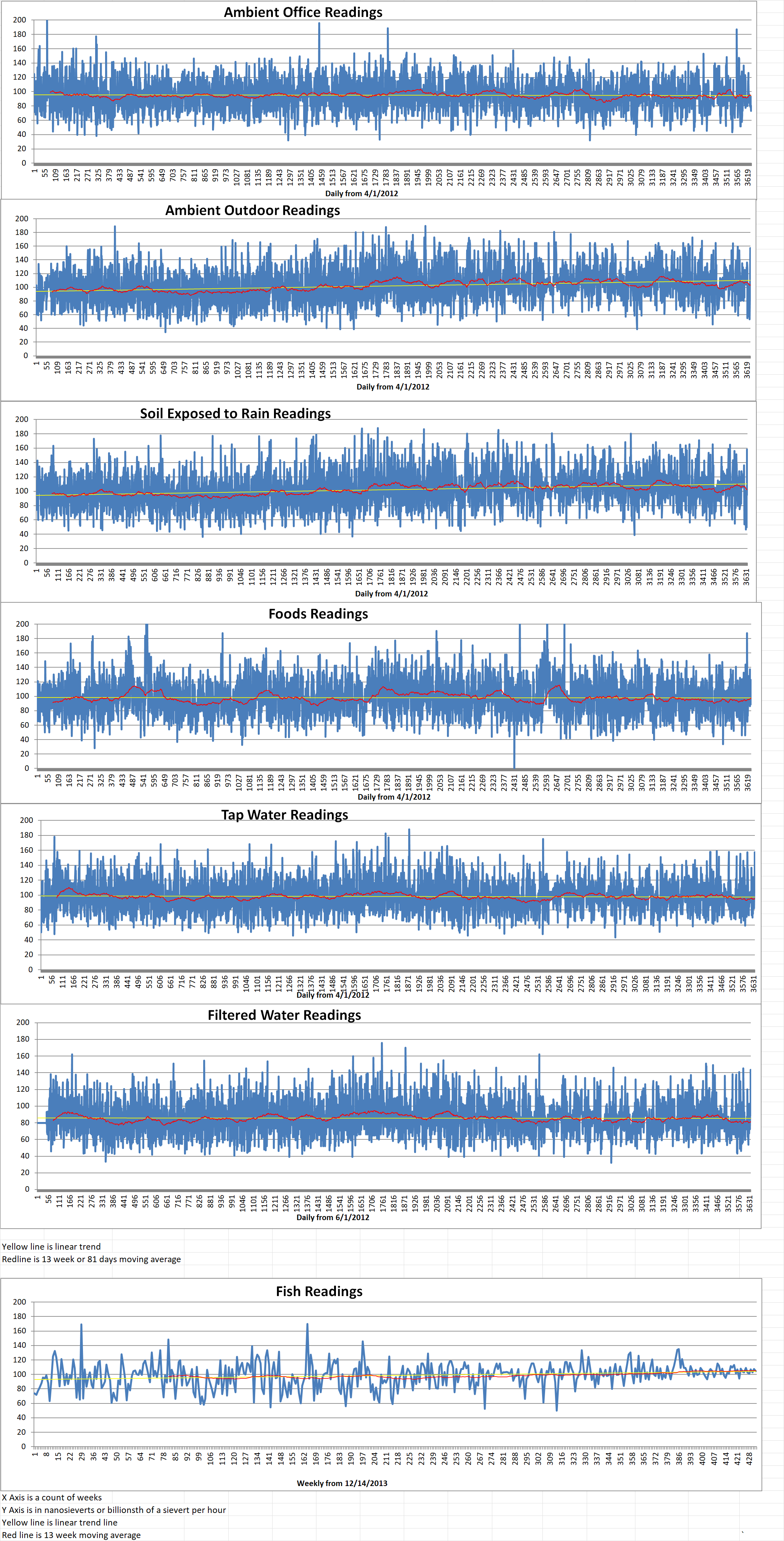
Geiger Readings for June 14, 2022
Ambient office = 80 nanosieverts per hour
Ambient outside = 144 nanosieverts per hour
Soil exposed to rain water = 151 nanosieverts per hour
English cucumber from Central Market = 123 nanosieverts per hour
Tap water = 157 nanosieverts per hour
Filter water = 143 nanosieverts per hour
-

Nuclear Reactors 1038 – New Reuters-Ipsos Poll Assesses U.S. Attitudes About Nuclear Power
About half of the citizens of the U.S. support the use of nuclear power to generate electricity. The nuclear industry in the U.S. has been in decline for decades. The Biden administration has been pouring billions of dollars of tax-payers money into nuclear power as a way to cut greenhouse emissions in the U.S.
A new Reuters/Ipsos poll was conducted last week to assess public opinion on the use of nuclear power. Forty five percent of U.S. citizens support nuclear power. Thirty three percent oppose it and twenty two percent are not sure what they think about it. Of those who support it, forty eight percent cited energy reliability, forty three percent citied a reduction in overall pollution. Only thirty nine percent said they favor it as a low-carbon energy source. Of those who oppose nuclear power, sixty nine percent worried about the danger of nuclear meltdowns and sixty four percent were concerned about the disposal of spent nuclear fuel.
The Biden administration believes that nuclear power is essential in fight climate change as well as boosting the reliability of the U.S. power grid. While the operation of a nuclear power plant emits little carbon dioxide, the construction of the plant and the mining and refining of nuclear fuel do emit a great deal of carbon dioxide.
The Biden administration is also working to expand solar and wind power to help decarbonize the grid. The Reuters/Ipsos poll showed that seventy six percent of U.S. citizens support solar power, seventy four percent supported wind power, and sixty eight percent backed hydro-electric power. Nature gas plants had forty one percent support while coal fired power plants got thirty six percent.
The Biden administration is going to fund a six-billion-dollar project with money coming from the bipartisan infrastructure bill. The money will be spent to save existing U.S. reactors which are being threatened by high security and safety costs as well as competition from natural gas and renewable power.
The initial phase of the program aimed to prevent the closure of two nuclear power plants that had announced plans to cease operations. Entergy Corporations Palisades facility in Michigan was one of the two plants and it shut down last month. It is not clear whether the second plant, PG&E’s Diablo Canyon plant in California, which plans to shut down in 2025 will be able to tap funds from the federal program to avoid having to close. Even among those citizens who oppose nuclear power, fifty six percent support keeping currently operating plants open while not building new ones.
The U.S. currently has more than ninety operating nuclear power reactors that generate about twenty percent of U.S. power. The newest U.S. reactor was put into operation in 2016. This was the first new U.S. reactor in about twenty years.
A series of high-profile nuclear disasters over the past several decades has undermined public support of the nuclear industry while high costs for building nuclear power reactors has slowed investment.
The Reuters/Ipsos poll was conducted online in English across the U.S. It collected responses from a total of one thousand adults. The poll included four hundred and thirty-one Democrats and three hundred and fifty five Republicans. It has a credibility interval of about four percentage points. -
Nuclear News Roundup June 13, 2022
Video does not show Russia moving nuclear-capable Iskander weapons systems to Finnish border dunyanews.tv
Fuel loading begins at UAE plant world-nuclear-news.org
Newcleo raises USD316 million, talks with Orano world-nuclear-news.org
ČEZ buys Škoda JS from Russian owners world-nuclear-news.org
-
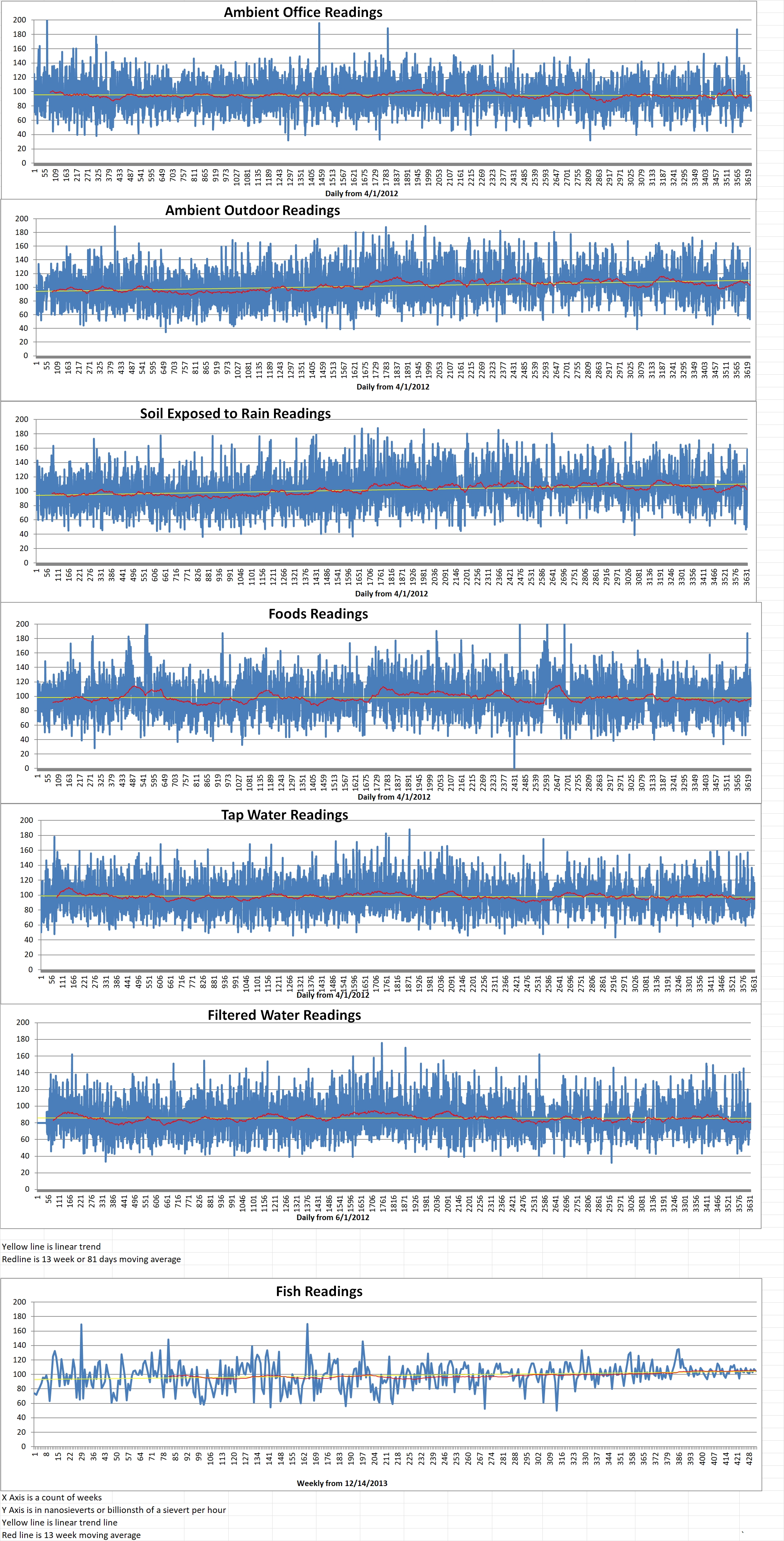
Geiger Readings for June 13, 2022
Ambient office = 80 nanosieverts per hour
Ambient outside = 157 nanosieverts per hour
Soil exposed to rain water = 158 nanosieverts per hour
Blueberry from Central Market = 101 nanosieverts per hour
Tap water = 116 nanosieverts per hour
Filter water = 102 nanosieverts per hour
-
Nuclear News Roundup June 12, 2022
UT, CNS Sign $9.5 Million Agreement news.utk.edu
Non-binding nuclear waste agreement signed in South Bruce London.ctvnews.ca
PM Kishida cautious about Japan acquiring nuclear-powered submarine English.kyodonews.net
Georgia Cooperatives Move to Freeze Nuclear Costs at $8.1B usnews.com
-

Geiger Readings for June 12, 2022
Ambient office = 73 nanosieverts per hour
Ambient outside = 95 nanosieverts per hour
Soil exposed to rain water = 95 nanosieverts per hour
Baby Bella mushroom from Central Market = 95 nanosieverts per hour
Tap water = 108 nanosieverts per hour
Filter water = 89 nanosieverts per hour
-
Nuclear News Roundup June 11, 2022
Nuclear technique to control Mexico’s recent Medfly outbreak freshfruitportal.com
World War 3 alert: China to follow Putin’s lead and launch invasion in face of EU weakness express.co.uk
World War 3 warning as water supply CUT-OFF could trigger nuclear doomsday express.co.uk
‘Megatonne’ CO2 capture plant plan for Sizewell C world-nuclear-news.org
-
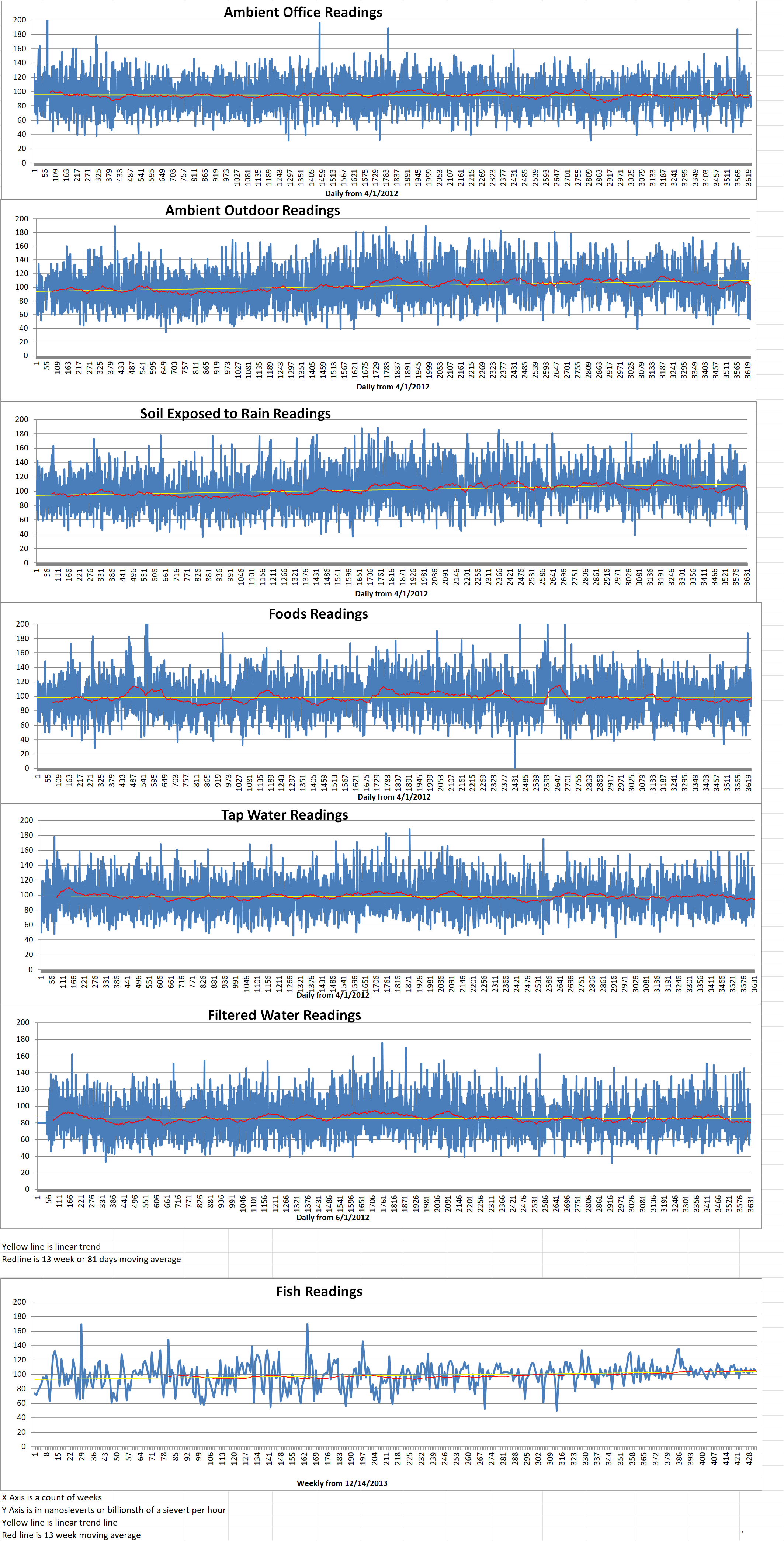
Geiger Readings for June 11, 2022
Ambient office = 81 nanosieverts per hour
Ambient outside = 95 nanosieverts per hour
Soil exposed to rain water = 95 nanosieverts per hour
Avocado from Central Market = 89 nanosieverts per hour
Tap water = 114 nanosieverts per hour
Filter water = 103 nanosieverts per hour
Dover Sole from Central Market = 104 nanosieverts per hour