Part 2 of 3 Parts (Please read Part 1 first)
The Poseidon is thought to have a top speed of over fifty-seven miles per hour. This would make it about twice as fast as a conventional submarine and much harder to track. Kaushal said, “It’s more difficult to intercept because, you know, while missile defenses exist, very few countries are prepared to defend against a nuclear torpedo, particularly one that moves very fast.” He also said that as a practical matter, it is not that different from any other nuclear weapon. He added, “In truth, intercepting a nuclear strike, whether it’s a torpedo at sea or an ICBM (intercontinental ballistic missile), is an inherently difficult task against any sophisticated attacking body. I don’t know if this particular capability changes much in that respect.”
Defense experts say that based on what is currently known about the nuclear torpedo and its dimensions, the yield of a nuclear warhead carried by Poseidon could be as high as two megatons. This estimate of yield has also been repeatedly mentioned by the Russian TASS news agency in recent years. That is a big warhead. It is more than one hundred times the destructive force of the bomb dropped on Hiroshima which was fifteen kilotons. It is more than ten times the force of the latest B61 nuclear bomb developed by the U.S.
Hambling said “Atomic torpedoes have existed way, way back, certainly since about the 1950s. And your normal torpedo is about a foot and a half in diameter and weighs a few tons. This thing is at least 1.5 m in diameter and weighs tens of tons, so it’s carrying a very big warhead”.
Kaushal, Hambling and Podvig said that they doubted the claim made by Russian TV anchor that Poseiden packed a yield of a hundred megatons. Hambling said that that claim was “simply insane – that would be the biggest warhead ever deployed. I mean, with the current Russian regime, who knows? It’s possible that they might have the hubris to build something like that, but it certainly is grotesquely gigantic.” (The biggest nuclear warhead ever detonated was called the Tsar. It was created by the Soviet Union and had a yield of fifty megatons.)
Kiselyov warned that “The explosion of this torpedo near the British coast will cause a giant tsunami wave up to sixteen hundred feet high,” in his May 1st primetime show. He added that “the wave would also carry extreme doses of radiation and after its passage over Great Britain leave a radioactive desert, unfit for anything for a long time”. Kiselyov report was illustrated by an animation of the giant torpedo, a massive wave, and the U.K. and Ireland being completely destroyed. The experts said that his treat was totally unrealistic.
Hambling said, “We know that from quite a lot of work which was actually done again back in the crazy days of the Cold War about doing this very thing and creating tsunamis with nuclear warheads. It turns out you need a vast amount of energy to do that – even more than you can get out of a nuclear blast,” he explained, noting that earthquakes fared much better at causing tsunamis. If it’s moved into a harbor and detonated very close offshore, it would certainly be able to destroy a city. But it probably wouldn’t damage much beyond that, and it certainly wouldn’t do as much damage as a large nuclear airburst.”
Please read Part 3 next
Blog
-

Nuclear Weapons 779 – Is The Russian Poseidon Underwater Nuclear Drone Real – Part 2 of 3 Parts
-
Nuclear News Roundup May 05, 2022
Sen. Markey, federal nuke official battle over Plymouth nuclear plant closing, safety patriotledger.com
Hungary and Rosatom push ahead on Paks II nuclear project world-nuclear-news.org
South Korea to ‘reasonably utilize’ nuclear energy world-nuclear-news.org
Rosatom seeks compensation for cancelled Finland project world-nuclear-news.org
-
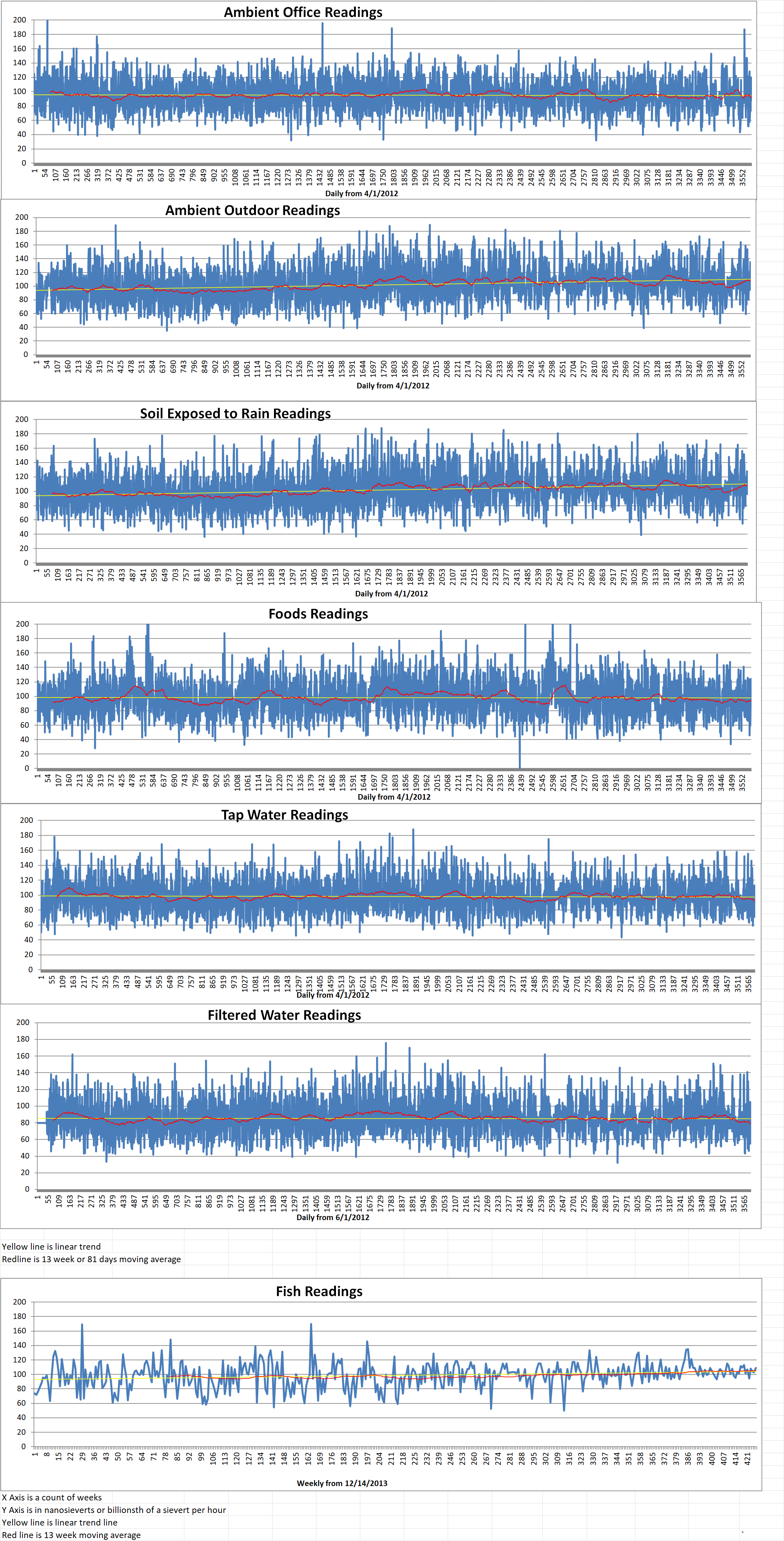
Geiger Readings for May 05, 2022
Ambient office = 120 nanosieverts per hour
Ambient outside = 95 nanosieverts per hour
Soil exposed to rain water = 96 nanosieverts per hour
English cucumber from Central Market = 88 nanosieverts per hour
Tap water = 76 nanosieverts per hour
Filter water = 57 nanosieverts per hour
-
Nuclear Weapons 778 – Is The Russian Poseidon Underwater Nuclear Drone Real – Part 1 of 3 Parts
Part 1 of 2 Parts
A popular Russian State TV anchor has warned the U.K. that Russia could totally destroy them with a nuclear tsunami as retaliation for the aid that the U.K. has provided Ukraine. Dmitry Kiselyov has a Sunday prime time show on Channel One in Russia. It is one of the most watched shows in Russia. He claimed on the 1st of May that an attack by Russia’s Poseidon nuclear underwater drone could drown the U.K. under a sixteen-hundred foot tidal wave of radioactive seawater.
The veracity of Kiselyov’s claim was checked with three experts on nuclear weapons, submarines and drones. Here is the information that they found about the Poseidon drone and the damage it could cause.
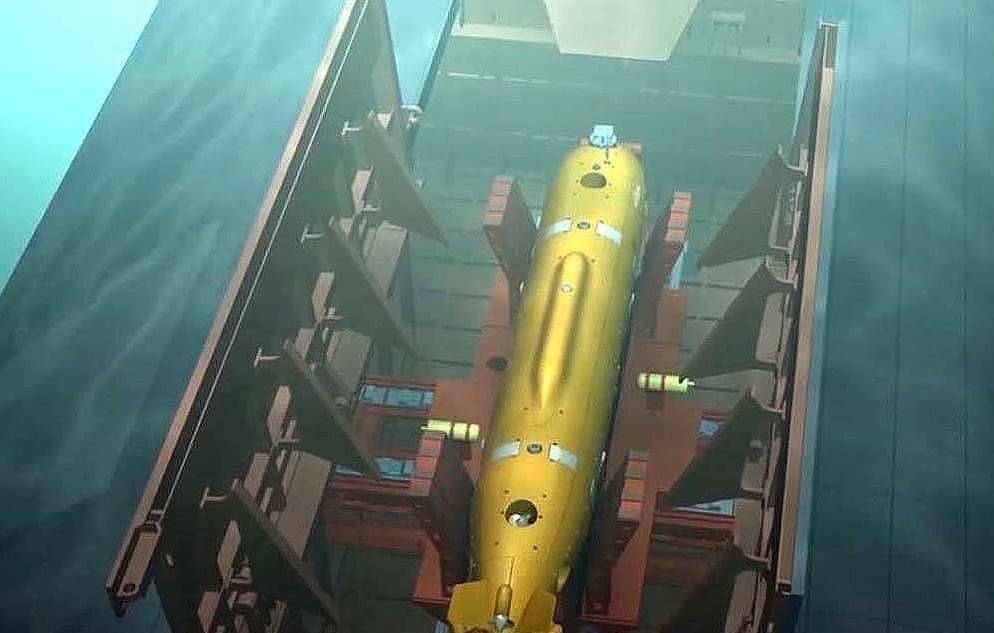
The Poseidon underwater drone is also called “Status-6” in Russia and it is called “Kanyon” in the U.S. It is basically a very large nuclear powered autonomous torpedo armed with a nuclear warhead. Most of what is known about the Poseidon comes from a leak on Russian TV in 2015 about a government project to develop an underwater nuclear drone. According to a mission statement for the Poseidon, the project is focused on “damaging the important components of the adversary’s economy in a coastal area and inflicting unacceptable damage to a country’s territory by creating areas of wide radioactive contamination that would be unsuitable for military, economic, or other activity for long periods of time.”
In 2018, a draft of the Pentagon’s Nuclear Posture Review stated that Russia was developing a “new intercontinental, nuclear-armed, nuclear-powered, undersea autonomous torpedo”. The Poseidon torpedo is about sixty-six feet long, can dive to three thousand three hundred feet, and has a range of at least six thousand miles.
This information was provided by Sidharth Kaushal who is a research fellow for sea power and missile defense at the U.K. defense and security think tank RUSI. Much of its actual capabilities remain unknown. Its key strengths are said to be its ability to operate very deep and very fast under water. This makes it very hard to intercept.
David Hambling is a technology journalist specializing in defense. He has authored a book about drones. He said, “It’s a torpedo which has an extremely long-range, can travel at high speed and then packs that nuclear punch.”
Pavel Podvig is an expert on Russian nuclear forces and a senior researcher at the U.N. Institute for Disarmament Research (UNDIR). He said that the development of Poseidon was motivated by Russian ambitions to display a range of weapons that can evade the U.S. missile defense system according to
Poseidon is called a drone because it can navigate autonomously. It may even have the ability to be remotely redirected or to have its mission aborted after it is launched. It is believed to have a titanium hull which permits it to withstand pressure at extreme depths. It could potentially be used as a seabed weapon. This means that a large, expensive and noisy submarine does not have to be risked to launch it. The idea would be to pre-position the torpedo on the seabed and activated it from there rather than launching it from a submarine which would make it an obvious target for preemptive strikes.
Please read Part 2 next -
Nuclear News Roundup May 04, 2022
UK nuclear warning: Britain ‘can’t intercept and destroy’ Russian missiles ‘No defence’ express.co.uk
Ukraine LIVE: Putin terror as Kremlin launches nuclear-capable weapons in the Baltic express.co.uk
Barrow: Contracts of £2bn to build nuclear submarines vvc.com
Iran Says EU Nuclear Coordinator to Visit This Week voanews.com
-
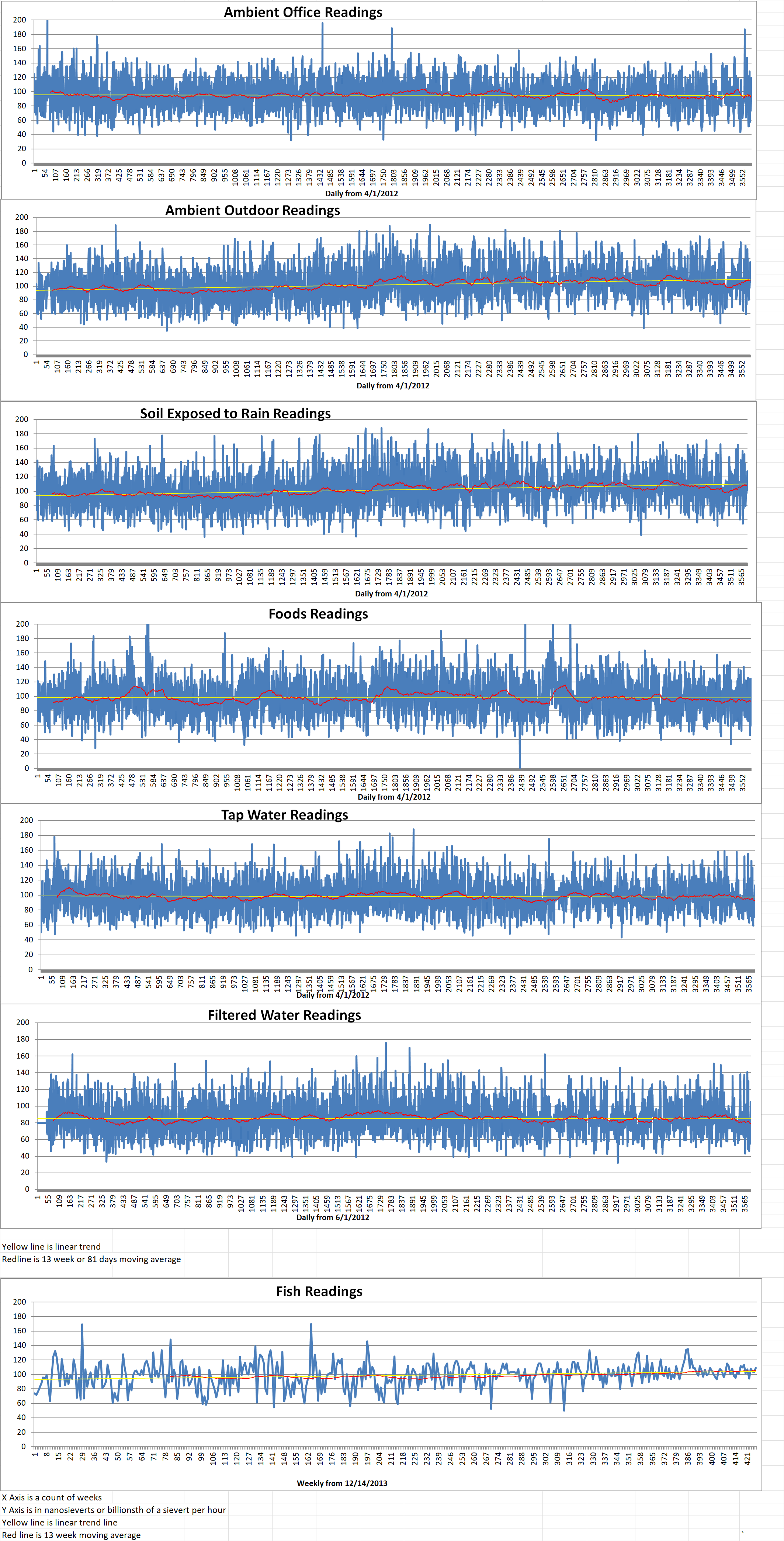
Geiger Readings for May 04, 2022
Ambient office = 119 nanosieverts per hour
Ambient outside = 135 nanosieverts per hour
Soil exposed to rain water = 128 nanosieverts per hour
Blueberry from Central Market = 124 nanosieverts per hour
Tap water = 71 nanosieverts per hour
Filter water = 57 nanosieverts per hour
-
Nuclear Reactors 1021 – Ulstein Working On Design For Molten Salt Reactors Powered Multiuse Ship
Norwegian shipbuilder Ulstein has announced the design concept for a replenishment, research and rescue vessel called Thor. It will feature a thorium salt reactor and could be used as a mobile power/charging station for a new type of battery driver cruise ships. The four hundred- and sixty-foot-long vessel features helicopter pads, firefighting equipment, rescue booms, workboats, autonomous surface vehicles and airborne drones, cranes, laboratories and a lecture lounge.
Molten salt reactors (MSR) use radioactive fuel that has been dissolved in a molten fluoride or chloride salt. The molten salt functions both as the fuel which produces the heat and the coolant which transports the heat to the turbines which produce electricity. There are a variety of different MSR design concepts and a number of difficult challenges in the commercialization of MSRs. This is especially true of thorium reactors.
To demonstrate the feasibility of Thor, Ulstein has also developed the Sif concept. This is a three-hundred-and-thirty-foot zero-emission expedition cruise ship. Sif can carry eighty passengers and eighty crew. Sif will provide silent, zero-emission expedition cruises to remote areas, including Arctic and Antarctic waters. The vessel will use next-generation batteries and can be recharged by Thor while at sea.
Ulstein said that Thor’s charging capacity has been scaled to satisfy the power needs four expedition cruise ships simultaneously. Thor would never need to refuel. It is intended to provide a blueprint for entirely self-sufficient vessels of the future.
Øyvind Kamsvåg is Chief Designer at Ulstein. He said, “Here we have two concepts in one to showcase a cleaner, safer and more sustainable way ahead for cruise ship owners and operators, not to mention maritime in general. Thor and Sif demonstrate what is possible when we approach challenges from a new direction.”
Ulstein claims that the Thor concept is “capable of making the vision of zero-emission cruise operations a reality” and may be “the missing piece of the zero-emissions puzzle for a broad range of maritime and ocean industry applications.”
Cathrine Kristiseter Marti is the CEO of Ulstein. She said, “We have the goals, ambition and environmental imperative to switch to zero-emission operations, but, until now, we haven’t had the solution. We believe Thor might be the answer we’ve been looking for. Thor is essentially a floating, multi-purpose ‘power station’ that will enable a new battery revolution.”
“Expedition cruise ships operate in increasingly remote, and environmentally fragile, areas. At the same time, the industry faces growing pressure from diverse stakeholders to preserve nature as it is and ban the environmental impact of cruising. Thor enables replenishment of energy and supplies on site, while also boasting the technology to facilitate rescue operations, as well as conducting research tasks. It is, in effect, a crucial piece of infrastructure to support sustainable and safer operations.”
Lars Ståle Skoge is the Commercial Director at Ulstein Design & Solutions AS. He said, “We have huge confidence in this solution and want to engage further in conversations about how we can enable the necessary changes the world demands.”
In November of 2020, a multinational team including Core Power (UK) Ltd, Southern Company, TerraPower and Orano USA filed application to take part in cost-share risk reduction awards under the US Department of Energy’s Advanced Reactor Demonstration Program to produce a proof of concept for a medium-scale commercial-grade marine reactor based on MSR technology.
Earth 300, in March 2021, launched the concept for a nine hundred and eighty foot, MSR-powered research ship equipped with twenty-two cutting-edge laboratories with one hundred and sixty of the world’s leading scientists, working in collaboration to bring rapid, far-reaching solutions to market.
The United Nations International Maritime Organization has mandated that all international shipping must reduce emissions by fifty percent of the 2008, before 2050. -
Nuclear News Roundup May 03, 2022
Cameco promises patience as uranium market realigns world-nuclear-news.org
IAEA to create roadmap for nuclear hydrogen deployment world-nuclear-news.org
Putin set to “double down” in second, risky phase of war: CIA director cbs.com
Strategic Command chief details Chinese space-based nuclear missile washingtontimes.com
-
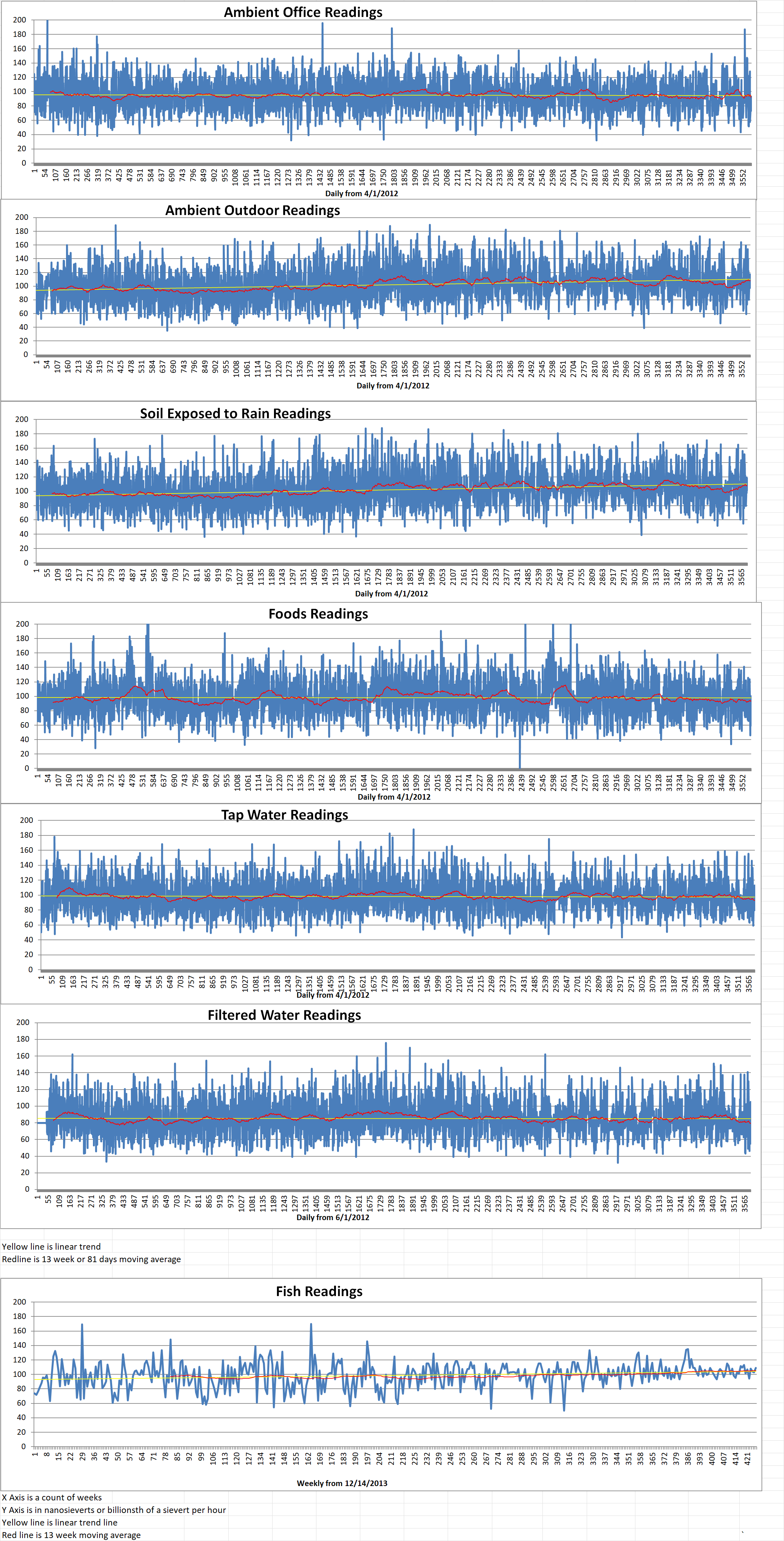
Geiger Readings for May 03, 2022
Ambient office = 87 nanosieverts per hour
Ambient outside = 108 nanosieverts per hour
Soil exposed to rain water = 109 nanosieverts per hour
Avocado from Central Market = 100 nanosieverts per hour
Tap water = 113 nanosieverts per hour
Filter water = 105 nanosieverts per hour
-
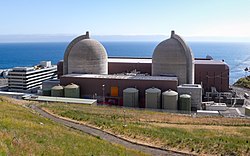
Nuclear Reactors 1020 – Inspector General Criticizes The Nuclear Regulatory Commission Inspections At Diablo Canyon Nuclear Power Plant
The U.S Inspector General (IG) issued a report this week with respect to the way that the Nuclear Regulatory Commission (NRC) handled the failure of an auxiliary feedwater system that required one of the nuclear reactors at the Diablo Canyon Nuclear Power Plant near San Luis Obispo on the coast of California to be shut down for eight days. The report stated that the IG found that the NRC had not properly inspected the feedwater system prior the shutdown.
Dan Dorman is the NRC Executive Director for Operations. He said, “After reviewing the Inspector General’s event inquiry, our technical staff determined that the Reactor Oversight Program and its associated inspection program continue to provide reasonable assurance of adequate protection of public health and safety. Resident inspectors are vital to the NRC safety mission. I have full confidence in the qualification, abilities, and professionalism of the inspectors involved in this event inquiry as well as all of our inspectors.”
The response of the NRC to the IG report highlights multiple “factual errors and takes issue with several portions” in the IG report according to the NRC Office of Public Affairs. The NRC states that the leak in the auxiliary feedwater system did not cause the nuclear plant to shut down or compromise the plant’s safety as claimed by the NRC. The NRC also said that the staff at Diablo Canyon found no evidence that auxiliary feedwater system pipe corrosion hidden under the metal jacketed insulation should have been located by NRC inspectors before the leak occurred.
The NRC response states that “The resident inspectors then assigned to Diablo Canyon followed appropriate guidance during their inspection of the system and regional and headquarters management appropriately determined that the leak had very low safety significance. Corrosion under insulation, which caused this leak, is known to the industry and the NRC.”
A spokesperson for Pacific Gas & Electric (PG&E) who operates Diablo Canyon claims that it identified the issue while the Unit 2 reactor was shut down for maintenance in 2020. Jim Jennings is a PG&E spokesman. He said, “PG&E made the repairs and conducted thorough inspections before the unit was returned to service. Additionally, we performed similar inspections on Unit 1 and identified no further conditions requiring repair. Safety is and always will be our most important responsibility at PG&E and Diablo Canyon, and the plant has an excellent safe operating record.”
The NRC said that it is confident in the effectiveness of its inspection programs. This is one of the many ways that it verifies nuclear power plant safety. It went on to say that other methods include the Reactor Oversight Program performance indicators, robust design margins for every plant, and operator and training requirements to enable plant operators to respond to equipment malfunctions, among other methods.
Salud Carbajal is a Central Coast Congressman for California. He is reviewing the NRC response and a spokesperson for Carbajal said that the congressman intends to have further conversation with the NRC to learn more about the differences in conclusions between the two agencies. The spokesperson said, “The congressman believes it is of the utmost importance to understand why there are conflicting conclusions in these documents and what can be done to communicate those reasons clearly to Central Coast communities.”