
Part 2 of 2 Parts (Please read Part 1 first)
Another area of concern to the N.M. officials and members of Congress is the fact that the DoE EM has been seeking to expand the scope of waste streams that can be sent to the WIPP. Kenny wrote in his letter that “The DOE revised its interpretation of the definition of ‘high level waste’ and developed a ‘dilute and dispose’ program to ship surplus plutonium from South Carolina to WIPP in a potential manipulation of NMED’s waste acceptance criteria as found in its state operating permit. “DOE failed to make progress in the clean-up of contamination as required by a 2016 Compliance Order on Consent. This failure continues despite the DOE EM’s congressionally approved budget for clean-up at this site.” NMED has permitting authority over both the LANL and the WIPP.
The DoE responded to Kenney’s letter with the following statement. “The Department of Energy (DOE) takes seriously its responsibility for safely cleaning up transuranic (TRU) waste generator sites in support of our country’s national defense mission. Shipments are prioritized according to the availability of certified TRU waste that meets the WIPP Waste Acceptance Criteria (WAC). In accordance with the Land Withdrawal Act, TRU waste cannot be disposed of at the WIPP unless it meets strict characterization and certification guidelines established under the WAC with regulatory oversight by the New Mexico Environment Department (NMED).” The DoE said that it will continue its transparency efforts. It also strongly encourages community engagement at all public meetings, including those that are hosted at the DoE’s Carlsbad Field Office.
Kenney’s letter was a response to a December 2nd, 2021 letter from the U.S. House Committee on Energy and Commerce calling for the GAO to carry out a program-wide review of “extreme management challenges” at the DoE EM. The DoE EM was added to the GAO’s High Risk List in 2017. It was still on that list at the time Kenney sent his letter.
The Committee response letter said, “In an effort to assist us with our oversight of EM’s cleanup efforts, the Committee would like GAO to examine the major management challenges at EM that affect its ability to reduce its environmental liabilities and make progress on long standing high-risk areas.”
The LANL has been a source of high concern in the past. They have been charged with sloppy handling of radioactive materials and inadequate documentation of radioactive waste shipped to the WIPP. A few years ago, they changed an absorbent without proper review of chemical reactions and shipped a barrel of treated waste to the WIPP. The barrel exploded in one of the underground chambers of the WIPP and radioactive materials leaked into the environment.
The WIPP had to be shut down for several years while the damage to the underground chamber was repaired. No radioactive materials would have leaked from the WIPP if they had properly sealed the chamber and if their ventilation system had worked properly. The WIPP is operating again but problems at the WIPP are still being studied.
Blog
-
Radioactive Waste 838 – New Mexican Officials Are Challenging U.S. Department Of Energy Cleanup And Waste Disposal In Their State – Part 2 of 2 Parts
-
Nuclear News Roundup Jan 14, 2022
Prototype machine demonstrates plasma compression world-nuclear-news.org
France expects new nuclear reactors to begin operation in 2035-37 neimagazine.com
Latest Kudankulam components in preparation world-nuclear-news.org
Many unresolved issues remain in Iran nuclear talks -source nationalpost.com
-
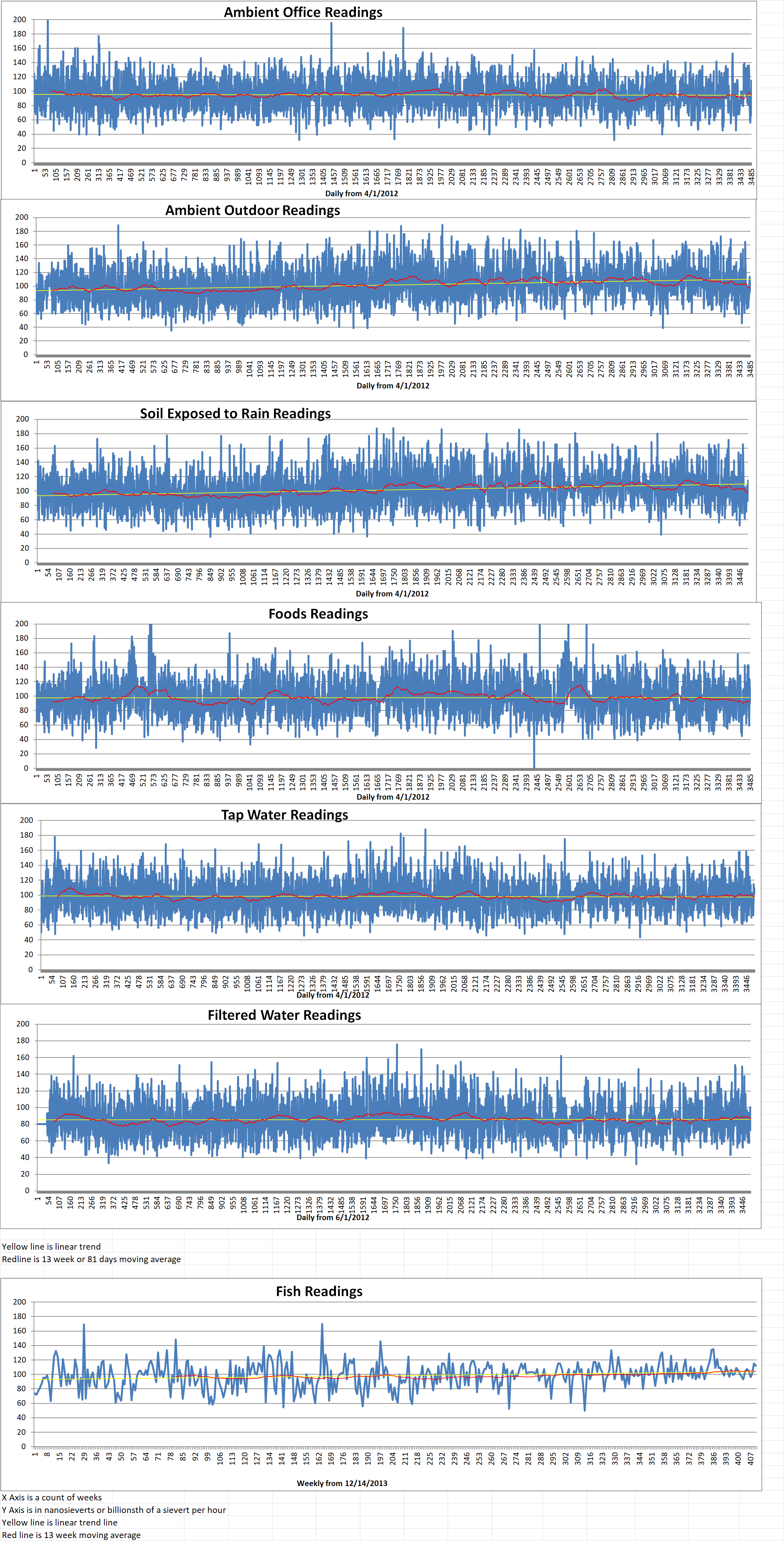
Geiger Readings for Jan 14, 2022
Ambient office = 115 nanosieverts per hour
Ambient outside = 111 nanosieverts per hour
Soil exposed to rain water = 115 nanosieverts per hour
Roma tomato from Central Market =112 nanosieverts per hour
Tap water = 103 nanosieverts per hour
Filter water = 73 nanosieverts per hour
-

Radioactive Waste 837 – New Mexican Officials Are Challenging U.S. Department Of Energy Cleanup And Waste Disposal In Their State – Part 1 of 2 Parts
Part 1 of 2 Parts
According to an annual survey by United Van Lines, people from around the U.S. are moving to New Mexico. U-Haul is currently constructing a three-story ninety thousand square-foot facility in Los Lunas in anticipation of the movement of many more people into N.M. Amazon and Netflix have big plans for growth in the state. Colorado is an example of the effect that legalization of recreational and medicinal cannabis can have on migration, transplants from around the U.S. may be moving in large numbers to N.M. drawn by cannabis laws.
Unfortunately, people and businesses are not the only things moving into N.M. in greater quantities. N.M. could be the destination for a lot of nuclear waste from out of state. N.M. officials are not pleased by this prospect.
N.M. officials and members of Congress are seeking stronger oversight of the Waste Isolation Pilot Plant (WIPP). They have called on federal officials to review alleged problems with the U.S. Department of Energy (DoE) environmental cleanup operations.
James Kenney is New Mexico’s Secretary of the Environment. He sent a letter to the federal Government Accountability Office (GAO) expressing his concerns about operations at the WIPP. He is calling for the federal office to increase its oversight of the nuclear waste repository near Carlsbad.
The House of Representatives Committee on Energy and Commerce (Committee) has requested the Government Accountability Office (GAO) examine management challenges and other issues at the Department of Energy’s (DOE) Office of Environmental Management (EM). They have requested that the GAO review four areas specific to the EM mission. These include (1) DoE Program Management, (2) Minimum safety requirements, (3) Soil and groundwater contamination and (4) Coordination with stakeholders.
Kenny wrote that “The New Mexico Environment Department (NMED) strongly supports such a review (requested by the above Committee) and would like to directly share our experiences regarding DOE EM with GAO staff regarding delays in legacy waste clean-up at LANL and the lack of transparency related to the prioritization of shipments to WIPP.”
Low-level transuranic (TRU) waste from around the U.S. is disposed of at the WIPP via burial in an abandoned salt mine about two thousand feed underground. The TRU elements are all unstable and they decay into other elements. The DoE and its EM owns and operates the WIPP but is permitted and regulated by NMED which is headed by Kenny.
Kenney’s letter to the DoE asked them to review nuclear programs in New Mexico. This includes the prioritization of nuclear waste shipments to the WIPP from facilities outside of N.M. Kenny stated that the first priority should be given to waste from the Los Alamos National Laboratory (LANL) in northern N.M. as the DoE has announced plans to increase the production of plutonium pits there.
Kenney alleges that DoE EM has entered into legally binding settlement agreements with states to prioritize waste shipments to the WIPP at the expense of shipments from other states, including N.M. He said, “The practice of DOE EM solely managing waste shipments to WIPP from around the U.S. without first discussing with New Mexico stakeholders – including NMED as its regulator – now merits immediate congressional oversight.”
Please read Part 2 next -
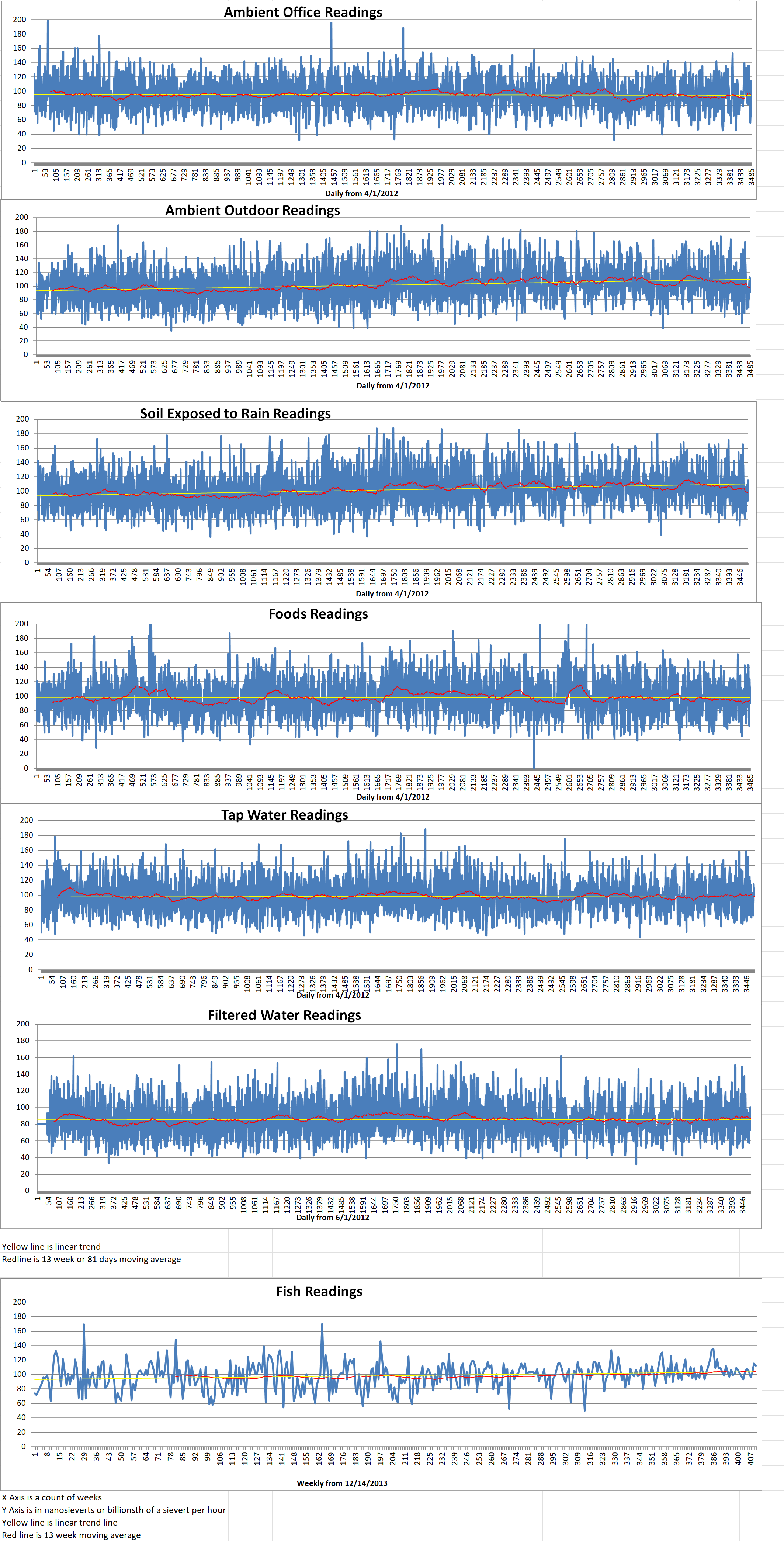
Geiger Readings for Jan 13, 2022
Ambient office = 66 nanosieverts per hour
Ambient outside = 103 nanosieverts per hour
Soil exposed to rain water = 97 nanosieverts per hour
Romaine lettuce from Central Market = 105 nanosieverts per hour
Tap water = 109 nanosieverts per hour
Filter water = 93 nanosieverts per hour
-
Nuclear News Roundup Jan 13, 2022
Archbishop’s pastoral letter invites dialogue toward nuclear disarmament catholicnews.com
White House slams Trump’s Iran pullout as prospects to save nuclear deal dim politico.com
Iran, US Lock Horns Over Sanctions Relief, Nuclear Curbs in Vienna Talks voanews.com
Fresh delay to Flamanville 3 blamed on pandemic world-nuclear-news.org
-
Radioactive Waste 836 – Supreme Court To Review Decision Of Ninth Circuit Court With Respect To Washington State Workers Compensation
The U.S. Supreme Court has announced that it will consider the federal government’s challenge to a Washington state worker’s compensation law in a case that could have costly consequence for U.S. government contracts involving hazardous work on federal property.
The justices agreed last Monday to review a U.S. Court of Appeals for the Ninth Circuit decision which upholds a Washington state law that presumes that certain worker health conditions linked to cleanup work at the Hanford Nuclear Reservation are occupational diseases that can trigger workers’ compensation. The Reservation is a decommissioned federal nuclear production complex.
Since 1989, the Department of Energy (DoE) has overseen the cleanup at the Hanford site. Weapons-grade plutonium for use in the U.S. nuclear program was produced at Hanford during World War II and the Cold War. The cleanup project at Hanford is expected to continue over the next sixty years and will involve about four hundred department employees and ten thousand contractors and subcontractors.
In 2018, Washington state legislators passed HB 1723 that amended the state’s workers’ compensation law exclusive to the Reservation. The amended law covers at least one hundred thousand current and former federal contract workers who performed services at the Reservation over the past eighty years. The law states that presumed occupational diseases stemming from work at the Reservation should trigger benefits eligibility, including cancers and other respiratory diseases.
The federal government argued in court that the law exposes government contractors, and by extension, the U.S. government to “massive new costs” that similarly situated state and private employers do not incur.
The U.S. Justice Department requested that the Supreme Court take up the case. They argued that the 2018 law discriminated against the U.S. federal government and that the state law should not apply to federal contract workers at the Reservation. The U.S. government warned that the logic applied by a panel of Ninth Circuit judges opened the door to other states passing legislation targeting work at federal facilities.
The Justice Department argued that “Congress did not permit States to adopt laws that impose unique burdens on the United States and the firms that it engages to carry out federal functions. The practical consequences of the panel’s mistake are far-reaching. Even if the Hanford site is considered in isolation, the decision is likely to cost the United States tens of millions of dollars annually for the remainder of the 21st century.”
Attorneys for Washington state responded that the courts have allowed states to regulate workers’ compensation for injuries or illnesses suffered during work on federal land. They argued that “Washington state has “long tailored its workers’ compensation laws to the dangers faced by particular employees.” They noted statutes that protect firefighters and other workers facing special hazards.
Washington state attorneys argued that “Hanford is a uniquely dangerous workplace, filled with radioactive and toxic chemicals, and private contractors operating there have routinely failed to provide employees with protective equipment and to monitor their exposures to toxic substances.”
Justice Department attorneys also argued that the Ninth Circuit ruling clashed with a Supreme Court precedent in a 1988 decision, Goodyear Atomic Corp. v. Miller. This case described a similar situation of a state worker’s compensation award for an employee injured at a federally owned facility.
The full Ninth Circuit previously declined to take up the Washington state case. They said that the Washington law fell properly within a part of federal law that authorizes states to apply their workers’ compensation laws to federal projects. -
Nuclear News Roundup Jan 12, 2022
US tests new railcar for used fuel and radwaste transport neimagazine.com
US says only ‘a few weeks left’ to save Iran nuclear deal yahoo.com
Manchin Wants Nuclear Tax Credit Extended In Biden’s Build Back Better Bill oilprice.com
Exelon and Constellation prepare for separation world-nuclear-news.org
-
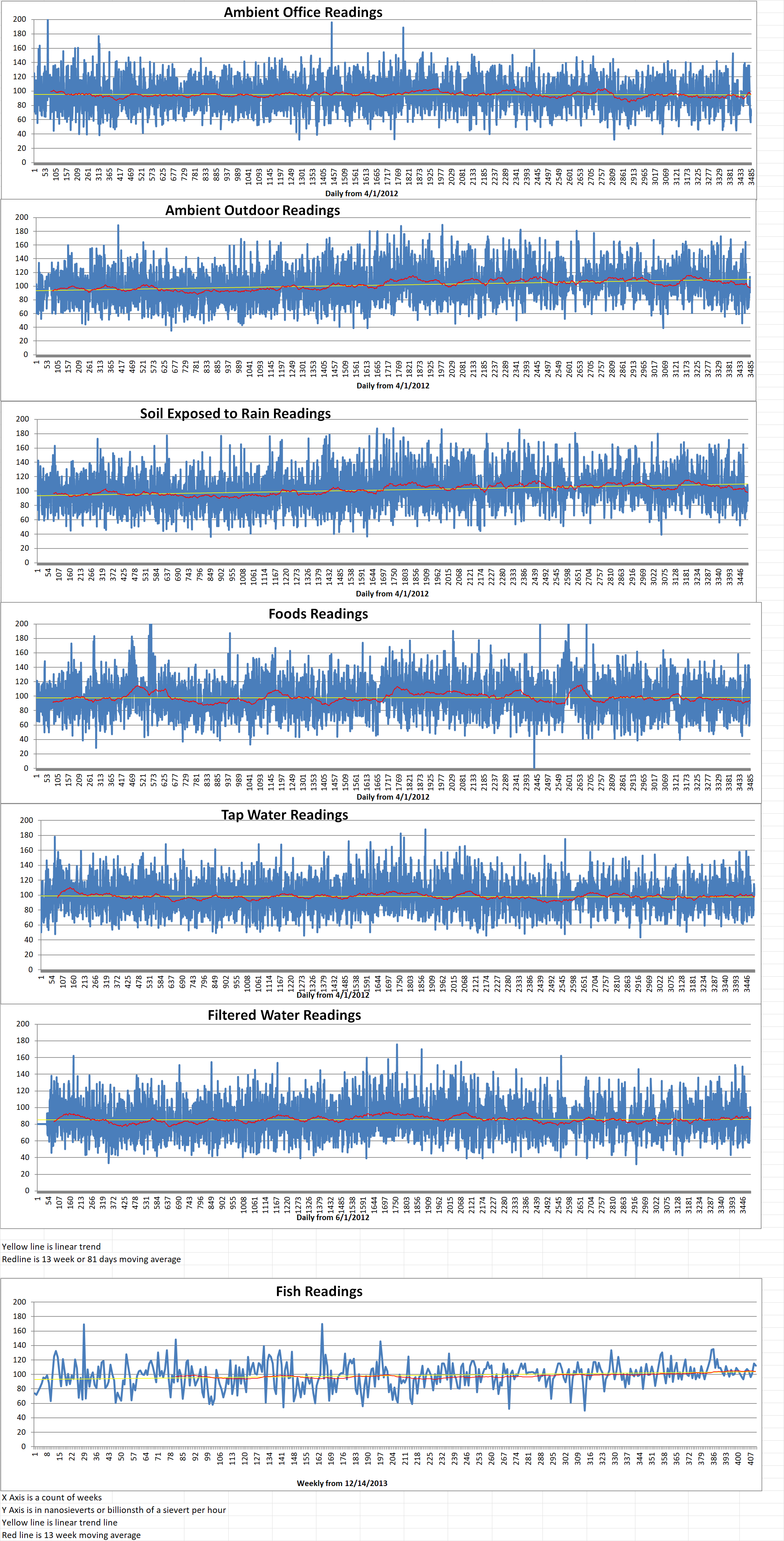
Geiger Readings for Jan 12, 2022
Ambient office = 67 nanosieverts per hour
Ambient outside = 91 nanosieverts per hour
Soil exposed to rain water = 87 nanosieverts per hour
Red onion from Central Market = 90 nanosieverts per hour
Tap water = 107 nanosieverts per hour
Filter water = 91 nanosieverts per hour
-

Radioactive Waste 835 – New Mexico is Challenging The Los Alamos National Laboratory About Cleanup
Officials at the Los Alamos National Laboratory are reiterating their promise to focus on cleaning up Cold War-era contamination left by decades of research and bomb-making. However, New Mexico environmental officials and watchdog groups remain concerned about the pace and the likelihood that the U.S. government has significantly understated its environmental liability at the Laboratory.
Michael Mikolanis is the head of the DOE’s Office of Environmental Management at Los Alamos. He addressed questions about a 2021 independent audit that discovered that the agencies liability for environmental cleanup topped more than a half a trillion dollars for the last fiscal year and is growing. That includes an understated liability at the Laboratory by more than eight hundred and eighty million dollars. Mikolanis confirmed that a recently conducted review turned up new information that increased the liabilities for cleanup beyond what officials previously understood.
Mikolanis said “Certainly can’t say yes or tell you no that the date is being changed but obviously with increased scope … either we would need additional funding to do that or stretch out the dates. We are currently evaluating that. We have made no decision.”
The U.S. Department of Energy (DoE) is facing a legal challenge by the state of New Mexico over setting and meeting the milestones of its current cleanup agreement with the state which was signed in 2016. New Mexico officials found that the federal government’s plan for the previous fiscal year to be deficient.
Nuclear watchdog groups said it wasn’t until the state sued the federal government in February 2021 that the DoE proposed boosting the cleanup budget at the lab by about one-third. Before that, budgets were flat. The watchdogs argued that the DoE has no incentive to seek more funding.
Jay Coghlan is executive director of Nuclear Watch New Mexico. He said, “The conclusion I draw from it is the New Mexico Environment Department gets a lot more from the stick than it does from the carrot with respect to making the laboratory and DOE truly committed to comprehensive cleanup.”
Chris Catechis is the director of the New Mexico Environment Department’s resource protection division. He said during the meeting that in spite of the pending litigation, the state wants to continue working with federal officials on moving the needle when it comes to addressing plumes of chromium contamination, the removal of tons of contaminated soil and other projects at the Laboratory. Catechis said, “We agree that we don’t feel the cleanup is moving as quickly as we’d like to see it but with that said, we don’t want to walk away from the process.”
Some elected officials and other critics also raised concerns about how the federal government plan to boost production at the Laboratory of the plutonium cores used in the U.S. nuclear arsenal will result in additional waste that will add to disposal liabilities.
Officials indicated during the meeting that the National Nuclear Security Administration has funding for a facility-wide environmental review of operations. While they declined to provide more details, advocates have argued for years that the environmental consequences and cost-effectiveness of operations at the Laboratory deserve more scrutiny.