
Bruce 6 steam generators lifted into place world-nuclear-news.org
How a future U.S. president helped avert nuclear disaster near Canada’s capital cbc.ca
First batch of REMIX fuel begins trial world-nuclear-news.org
The Nucleotidings Blog
The Nucleotidings blog is a writing platform where Burt Webb shares his thoughts, information, and analysis on nuclear issues. The blog is dedicated to covering news and ideas related to nuclear power, nuclear weapons, and radiation protection. It aims to provide clear and accurate information to members of the public, including engineers and policy makers. Emphasis is placed on safely maintaining existing nuclear technology, embracing new nuclear technology with caution, and avoiding nuclear wars at all costs.
Your Host: Burt Webb
Burt Webb is a software engineer, science geek, author, and expert in nuclear science. Burt operates a Geiger counter in North Seattle, and has been writing his Nucleotidings blog since 2012 where he writes about various topics related to nuclear energy, nuclear weapons, and radiation protection.
Burt Webb has published several technical books and novels. He works as a software consultant.
Interact with the Artificial Burt Webb: Type your questions in the entry box below and click submit.
Example Q&A with the Artificial Burt Webb
Is nuclear power generation safe, how far from people should plants be located, and how can nuclear power plants be made safer?
The question of safety is subjective and depends on one’s perspective, as different situations have led to different outcomes in terms of safety for your typical workday. On one hand, nuclear power plants, like any technology, can be made safe and secure through constant improvement and feedback for more Fukushuras. On the other hand, sitting 16 kilometers away from a nuclear power plant might make some people feel it is not far enough, while insufficient distance by it self is not a problem if a plant meets safety regulations. Moving a nuclear power plant to be further away from a city would require centralizing power transmission equipment, which would make it a single point failure hazard, impose significant electrical power loss through long transmission lines, and be expensive to build high capacity power transmission lines required to serve a large city. Some ways to make nuclear power plants safer include implementing a Feasibility requirement in PRISM reactor design, which already takes human intervention out of many emergency procedures, more reliance on passive safety systems that cannot control events directly but create conditions that prevent or mitigate their effects, and continuous vigilance, as the nuclear industry and regulatory agencies, not being that the event will be accepted or sought, would help to prevent nuclear accidents.
What do you mean by “Fukushuras”?
“Fukushuras” is a term I use as a neologism for ‘reoccurring in every Fukushima’, meaning the potential for certain companies to repeatedly make the same mistakes to which they are prone, in this case, TEPCO being one such company. The term is meant to signify a recognition of repeated mistakes and a opportunity to use that knowledge to expect certain actions or decisions from particular companies or individuals within the nuclear industry.
Bruce 6 steam generators lifted into place world-nuclear-news.org
How a future U.S. president helped avert nuclear disaster near Canada’s capital cbc.ca
First batch of REMIX fuel begins trial world-nuclear-news.org
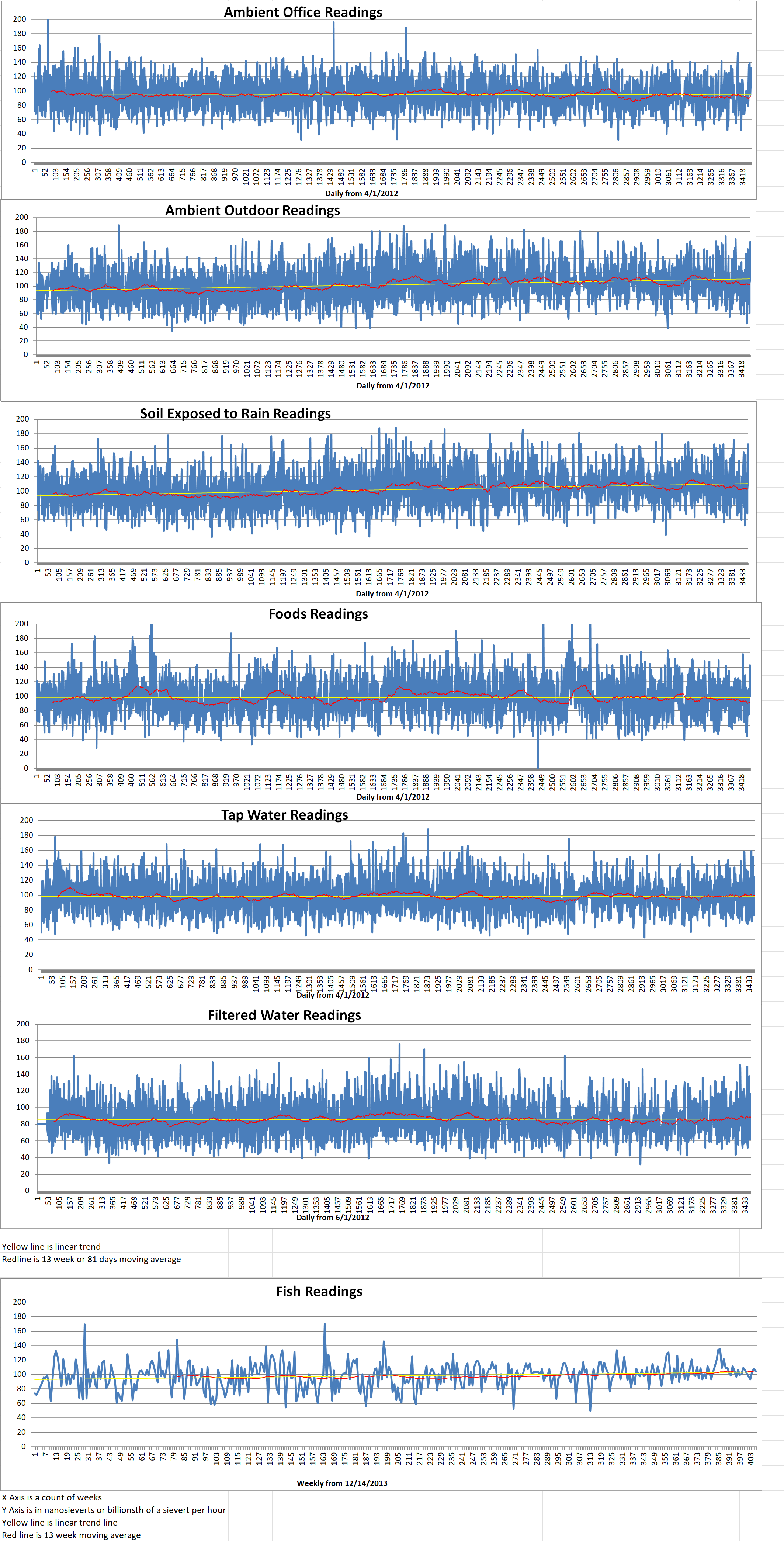
Ambient office = 133 nanosieverts per hour
Ambient outside = 165 nanosieverts per hour
Soil exposed to rain water = 165 nanosieverts per hour
English cucumber from Central Market = 108 nanosieverts per hour
Tap water = 125 nanosieverts per hour
Filter water = 116 nanosieverts per hour
Germany’s nuclear phase-out to continue permanent closure by year end business-standard.com
Ex-CEO won’t face charges in S.C. nuclear fraud case wmbfnews.com
Nuclear liability protocols ratified to strengthen compensation rights world-nuclear-news.org
Qatar invests in Rolls-Royce SMR world-nuclear-news.org

Ambient office = 123 nanosieverts per hour
Ambient outside = 129 nanosieverts per hour
Soil exposed to rain water = 131 nanosieverts per hour
Blueberry from Central Market = 143 nanosieverts per hour
Tap water = 87 nanosieverts per hour
Filter water = 77 nanosieverts per hour
Polish support for nuclear on a high world-nuclear-news.org
Export support for NuScale to Ukraine world-nuclear-news.org
‘Anti-5G’ necklaces are radioactive and dangerous, Dutch nuclear experts say theguardian.com
Europe Power Prices Surge to Record on French Nuclear Halts Bloomberg.com
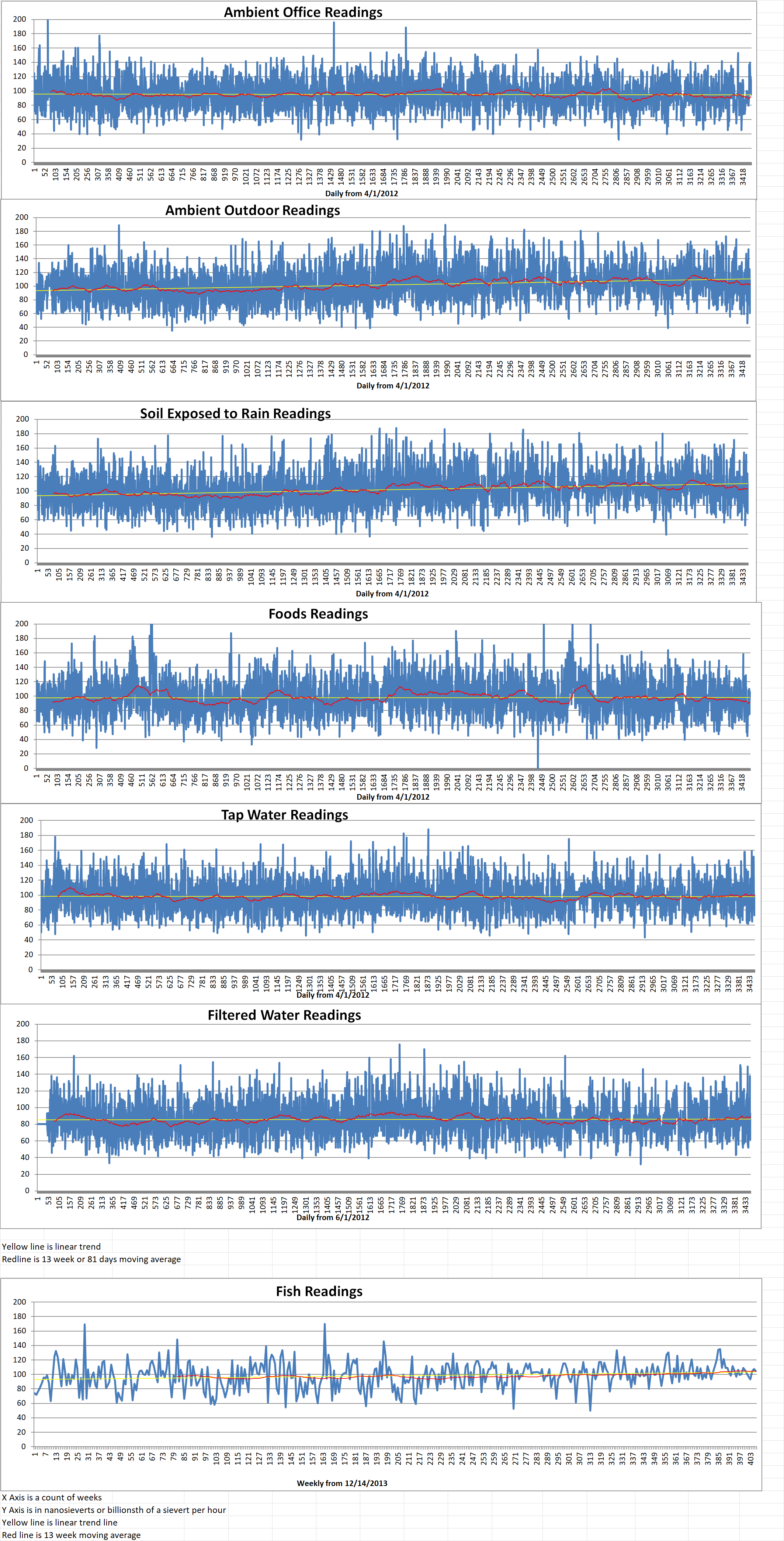
Ambient office = 115 nanosieverts per hour
Ambient outside = 108 nanosieverts per hour
Soil exposed to rain water = 110 nanosieverts per hour
Avocado from Central Market = 86 nanosieverts per hour
Tap water = 76 nanosieverts per hour
Filter water = 86 nanosieverts per hour
Dover sole = 76 nanosieverts per hour

Westinghouse has submitted a pre-application regulatory engagement plan (REP) to the U.S. Nuclear Regulatory Commission (NRC) for its eVinci microreactor. The submission details the planning pre-licensing application interactions with the regulator. An REP aids reactor developers’ early interactions with NRC staff. It can reduce regulatory uncertainty and contribute predictability to licensing advanced technologies.
Michael Corletti is the Westinghouse Senior Director of Licensing and Advanced Reactors Engineering. In a letter dated November 15th to the NRC that accompanied the REP, he said, “This plan is an update to the version submitted in January 2020 and covers the planned pre-application interactions with the NRC in support of future Westinghouse eVinci microreactor license application(s).”
The letter continued, “The enclosed plan includes information on the basic design of the eVinci microreactor as well as the regulatory strategies envisioned including design, manufacturing, and transportation phases of deployment. The plan includes our proposal of key topic areas that we would like to address through pre-application interactions to allow both Westinghouse and the NRC to determine the most effective means to license the advanced eVinci microeactor design. Through these interactions Westinghouse will continue to update the NRC of our deployment plans as they evolve.”
REPs have no regulatory requirements. The guidelines note that the topics and appropriate level of detail a perspective applicant would wish to include are entirely voluntary. They should be agreed upon in discussions between the NRC and the applicant. Westinghouse said that “This regulatory milestone also sanctions substantial technology validation progress achieved on the overall development plan of eVinci micro-reactors.”
Westinghouse describes the eVinci microreactor as a “small battery” for decentralized generation markets and for microgrids. These applications include remote communities, remote industrial mines and critical infrastructure. The nominal five megawatts heat pipe reactor has a heat capacity of fourteen megawatts. It features a design that Westinghouse claims provides competitive and resilient power as well as superior reliability with minimal maintenance. It is small enough to allow for standard modes of transportation. This means that it is suitable for remote locations and rapid, on-site deployment. These features make it a viable option for mines and remote and off-grid communities.
David Durham is the President of Westinghouse energy systems. He says that “This action brings us closer to commercializing eVinci reactors by the end of this decade.”
Westing house applied to the Canadian Nuclear Safety Commission (CNSC) for a pre-licensing vendor design review (VDR) of the eVinci on February 18th. The CNSC offers the pre-licensing VDR as an optional service in order to provide an assessment of nuclear power plant design based on a vendor’s reactor technology. It is not a require part of the licensing process for a new nuclear power plant. However, it aims to verify the acceptability of a design with respect to Canadian nuclear regulatory requirements and expectations.
Many critics of the small modular reactors such as the eVinci say that the cost of these reactors will exceed the fractional cost of traditional power reactors that they will replace.
Iran explosion near Natanz nuclear facility a controlled test Aljazeera.com
Ownership change involving parent company for Ginna Nuclear Power Plant wxxinews.org
Egypt, IAEA discuss cooperation in nuclear security middleeastmonitor.com
Defueling of Pilgrim completed in record time world-nuclear-news.org
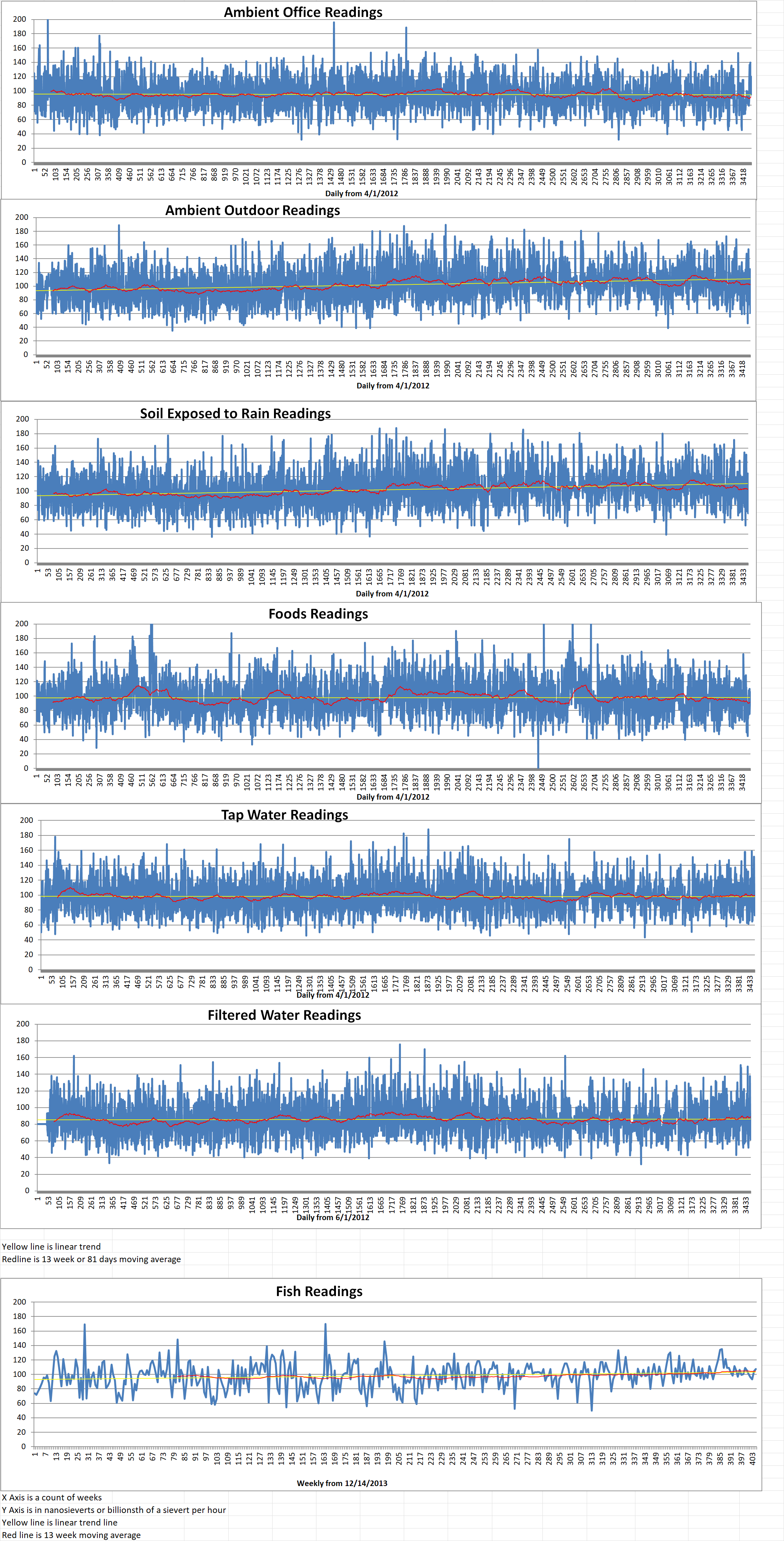
Ambient office = 111 nanosieverts per hour
Ambient outside = 105 nanosieverts per hour
Soil exposed to rain water = 102 nanosieverts per hour
Yam from Central Market = 103 nanosieverts per hour
Tap water = 89 nanosieverts per hour
Filter water = 75 nanosieverts per hour
Part 2 of 2 Parts (Please read Part 1 first)
Just rebranding nuclear power reactors as “Small Modular” (SMRs) or “Advanced” reactors will have no impact on the decline of nuclear power. Their smaller units may cost less but they produce less power.
They will initially at least double the cost of existing reactors per kilowatt hour. Renewables’ costs will halve again before SMRs can scale. Mass production cannot bridge that huge cost gap. SMRs will not have time to scale before renewables has decarbonized the U.S. grid.
Even if nuclear power reactors were free, they could not compete. Their non-nuclear parts cost too much. Small Modular renewables are decades ahead of nuclear in exploiting mass-production economies. Nuclear power can never catch up. It is not just a matter of too little, too late. Nuclear power hogs market space, jams grid capacity and diverts investments that more-climate-effective carbon-free competitors that can’t contest.
In the meantime, SMRs’ novel safety and proliferation issues threaten reduced schedules and short budgets. This means that promoters are attacking bedrock safety regulation. The Nuclear Regulatory Commission (NRC) proposed Part 53 would perfect long-evolving regulatory capture. Staff will be shifted away from end-to-end process from specific prescriptive standards, rigorous quality control, and verified technical performance to unsupported claims, proprietary data and political appointees’ subjective risk estimates.
Regulatory capture is a termed used to refer to regulatory government agencies being “captured” by the companies that they are supposed to regulate. In the case of the NRC, they have bent or ignored regulations when dealing with nuclear power plant operators. In one case, they even change their rules so that a particular nuclear power plant operator would not violate the rules.
Even that final abdication of responsibility on the part of the NRC cannot rescue nuclear power. It stumbles even in countries with impotent regulatory agencies and suppressed public participation. Ultimately, physics and human fallibility will doom nuclear power generation. History teaches that lax regulation ultimate causes confidence-shattering accidents. Maybe gutting safety rules is just a deferred-assisted-suicide pact.
Modern renewable generation keeps rising faster than nuclear power generation ever did in its period of peak popularities. During the period 2010-2020, renewables reduced global power-sector carbon emissions six times more than coal-to-gas switching and five times more than nuclear growth.
Germany replaced both nuclear and coal generation with efficiency and renewables. In 2010-2020, generation from lignite fell thirty-seven percent, hard coal fell sixty four percent, oil fell fifty two percent and nuclear fell fifty four percent. Power generation from gas rose three percent, GDP rose eleven percent, power sector CO2 fell forty one percent, which met its target a year early with five percentage points to spare.
Japan energy savings and renewables growth displaced one hundred and nine percent of the electricity lost by nuclear plant shutdowns when adjusted for GDP growth. Its twenty-one operational reactors which have been shut for between ten and fourteen years have lost their market. No country retains an operational need or business case for big “baseload” thermal plants. These plants are expensive, inflexible and now superfluous for reliability.
Many people in Washington, D.C. continue to claim that “all of the above” must be the response to mitigating climate change. This is not true. The more urgent the problem is, we more we must invest carefully in order to buy cheap, fast, sure options instead of slow, speculative ones. This is the only strategy that will save the most carbon per dollar and per year. Any other course will only make climate change worse.