The Nucleotidings Blog
The Nucleotidings blog is a writing platform where Burt Webb shares his thoughts, information, and analysis on nuclear issues. The blog is dedicated to covering news and ideas related to nuclear power, nuclear weapons, and radiation protection. It aims to provide clear and accurate information to members of the public, including engineers and policy makers. Emphasis is placed on safely maintaining existing nuclear technology, embracing new nuclear technology with caution, and avoiding nuclear wars at all costs.

Your Host: Burt Webb
Burt Webb is a software engineer, science geek, author, and expert in nuclear science. Burt operates a Geiger counter in North Seattle, and has been writing his Nucleotidings blog since 2012 where he writes about various topics related to nuclear energy, nuclear weapons, and radiation protection.

Burt Webb has published several technical books and novels. He works as a software consultant.

Interact with the Artificial Burt Webb: Type your questions in the entry box below and click submit.

Example Q&A with the Artificial Burt Webb

Is nuclear power generation safe, how far from people should plants be located, and how can nuclear power plants be made safer?

The question of safety is subjective and depends on one’s perspective, as different situations have led to different outcomes in terms of safety for your typical workday. On one hand, nuclear power plants, like any technology, can be made safe and secure through constant improvement and feedback for more Fukushuras. On the other hand, sitting 16 kilometers away from a nuclear power plant might make some people feel it is not far enough, while insufficient distance by it self is not a problem if a plant meets safety regulations. Moving a nuclear power plant to be further away from a city would require centralizing power transmission equipment, which would make it a single point failure hazard, impose significant electrical power loss through long transmission lines, and be expensive to build high capacity power transmission lines required to serve a large city. Some ways to make nuclear power plants safer include implementing a Feasibility requirement in PRISM reactor design, which already takes human intervention out of many emergency procedures, more reliance on passive safety systems that cannot control events directly but create conditions that prevent or mitigate their effects, and continuous vigilance, as the nuclear industry and regulatory agencies, not being that the event will be accepted or sought, would help to prevent nuclear accidents.

What do you mean by “Fukushuras”?

“Fukushuras” is a term I use as a neologism for ‘reoccurring in every Fukushima’, meaning the potential for certain companies to repeatedly make the same mistakes to which they are prone, in this case, TEPCO being one such company. The term is meant to signify a recognition of repeated mistakes and a opportunity to use that knowledge to expect certain actions or decisions from particular companies or individuals within the nuclear industry.

Blog

  • Geiger Readings for Nov 24, 2021

    Geiger Readings for Nov 24, 2021

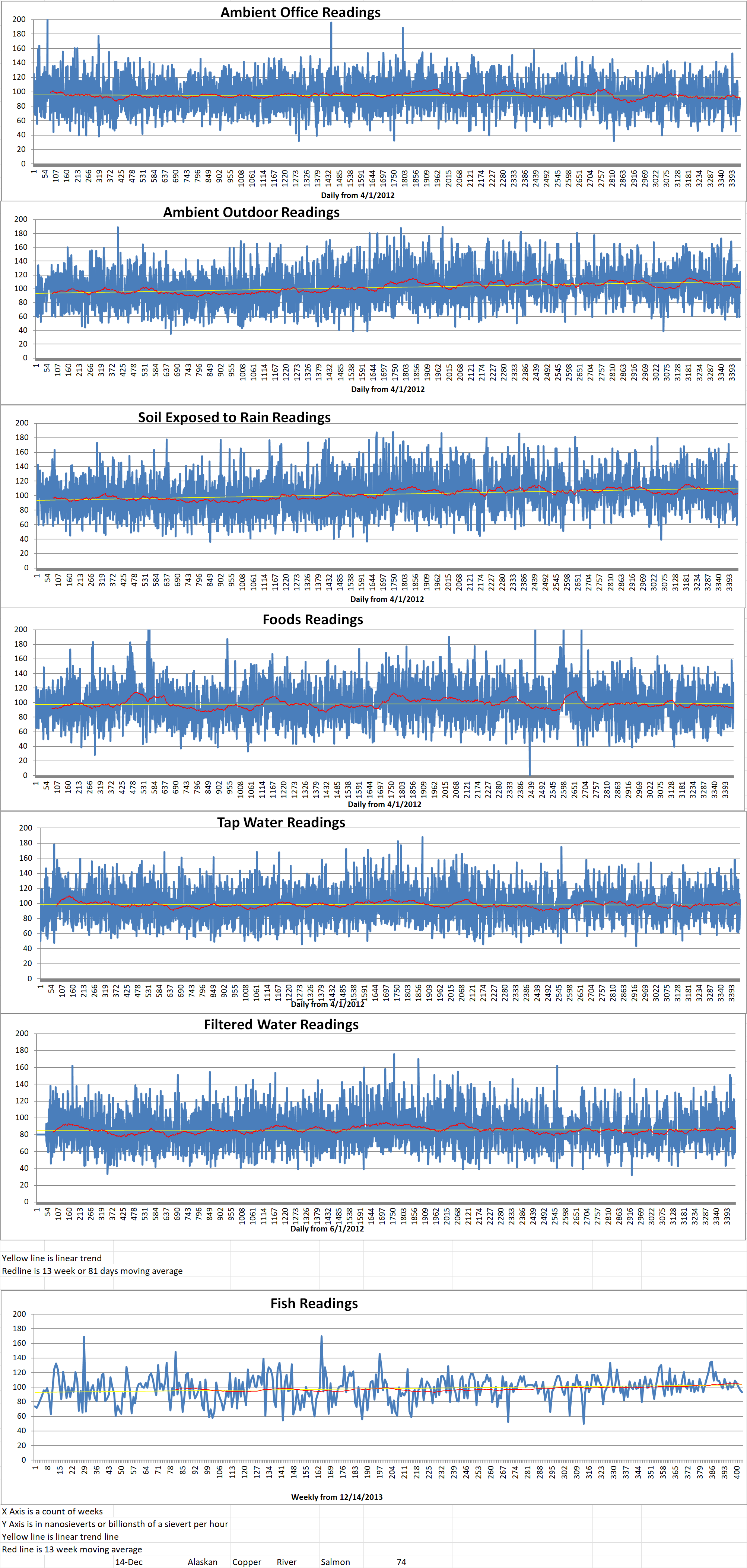
    Ambient office = 83 nanosieverts per hour

    Ambient outside = 124 nanosieverts per hour

    Soil exposed to rain water = 119 nanosieverts per hour

    Tomato from Central Market = 73 nanosieverts per hour

    Tap water = 105 nanosieverts per hour

    Filter water = 87 nanosieverts per hour

  • Nuclear Weapons 756 – Threat Of Israeli Attack On Iranian Nuclear Program Growing – Part 1 of 3 Parts

    Nuclear Weapons 756 – Threat Of Israeli Attack On Iranian Nuclear Program Growing – Part 1 of 3 Parts

    Part 1 of 3 Parts
         Last week, Israeli, Emirati and Bahraini naval vessels joined a U.S. warship for the first time in rehearsed joint security operations in the Red Sea. Last month, a war-game was held at a desert airbase north of the Israeli. Fighter planes from Israeli and seven other countries participated. These and other drills are being held to send a strong message to Iran which as been holding its own big military exercises. They are also meant to stress regional strategic alliances.
         These military exercises are being held at a time when many Israelis worry that Israel may soon feel the need to act alone to attack Iran’s nuclear program. The Israeli government has allocated one and a half billion dollars to prepare Israeli armed forces for a possible strike against Iranian nuclear sites. There are nearly daily warnings from political and military leaders that such action may be necessary.
         An Israeli security official said, “Israel has no interest in a war with Iran, but we will not allow Iran to acquire nuclear weapons. In light of Iranian progress of their nuclear program, we are preparing for all options and scenarios, including military capabilities.”
         This saber-rattling comes as negotiation between Iran and five world powers are proceeding on reviving the 2015 nuclear deal known as the Joint Comprehensive Plan of Action (JCPOA). The negotiations will resume in the Austrian capital of Vienna on the 29th of November. The JCPOA restricted Iran’s nuclear activities and opened Iranian facility up to enhanced inspections in return for the partial lifting of international sanctions. The original JCPOA was abandoned by U.S. President Donald Trump in 2018. Israel approved of the unilateral action by Trump.
         As the date for a new round of negotiations was set, Iran announced that it had produced about fifty-five pounds of uranium to sixty percent purity. This is just below the level of purity that would be needed to construct a nuclear bomb. Four hundred and sixty pounds of uranium has been enriched to twenty percent.
         Iran has continued to claim that its intentions with respect to nuclear activities are entirely peaceful. However, Iranian experts admit that such quantities of highly enriched uranium were previously only held by nuclear armed states. The Israeli security official said, “The Iranians today are closer to creating fissile material for nuclear weapons than they ever were in the past. This fact has significant security implications for the State of Israel.”
         The Israeli defense establishment estimates that if Iran chose to do so, it could now produce enough weapons-grade uranium for one nuclear weapon within a single month. The manufacture of such a nuclear weapon would also require construction of a warhead that could be mounted on a ballistic missile. The timeframe for that is more difficult to calculate. Some experts say it could take from eighteen to twenty-four months.
          Sima Shine is a former head of research for the Mossad intelligence agency. She says, “I hope that the diplomatic channel will succeed, but I don’t give it a high chance right now.”
    Please read Part 2 next
  • Geiger Readings for Nov 23, 2021

    Geiger Readings for Nov 23, 2021

    Ambient office = 89 nanosieverts per hour

    Ambient outside = 124 nanosieverts per hour

    Soil exposed to rain water = 119 nanosieverts per hour

    Red bell pepper from Central Market = 100 nanosieverts per hour

    Tap water = 96 nanosieverts per hour

    Filter water = 83 nanosieverts per hour

  • Nuclear Fusion 160 – Korea Institute of Fusion Energy Sets Record For Plasma Confinement.

    Nuclear Fusion 160 – Korea Institute of Fusion Energy Sets Record For Plasma Confinement.

         I have been posting a lot of articles about advances in nuclear fusion. If a commercial nuclear fusion reactor can be developed, it should solve a lot of problems by supplying cheap, zero-carbon, non-polluting energy to the world.
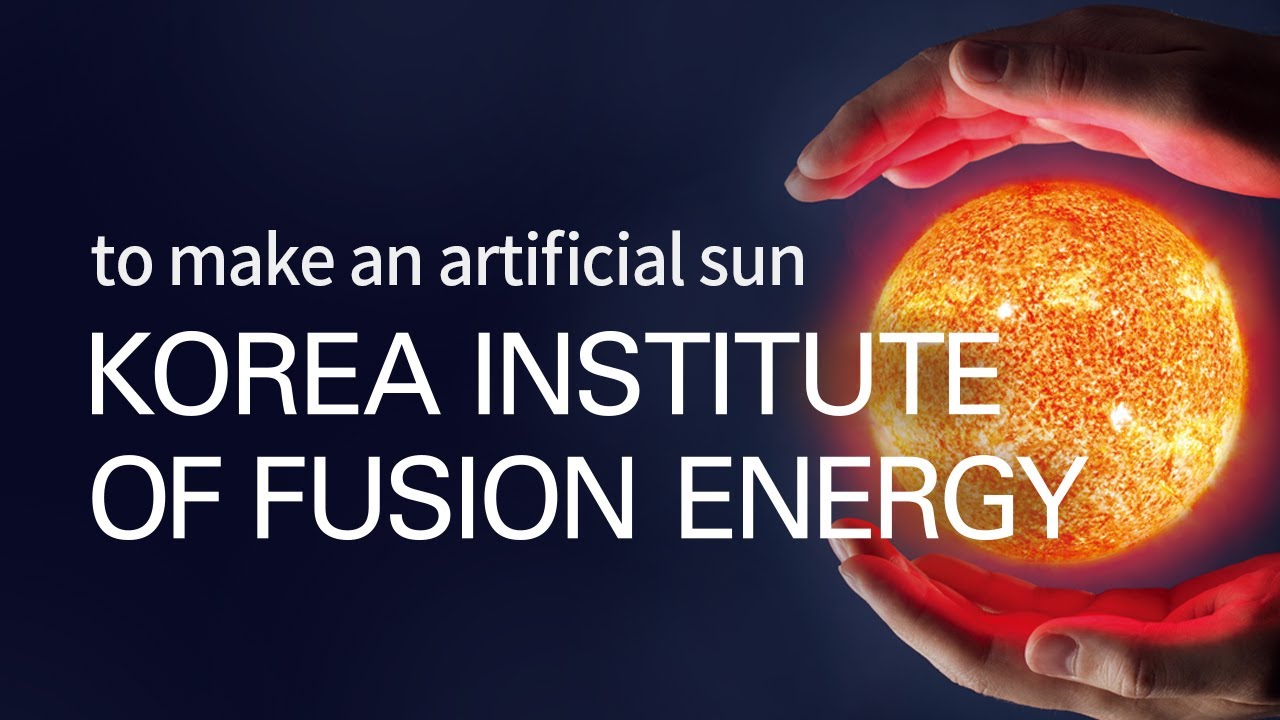
         The Korea Institute of Fusion Energy (KIFE) has just set a new record in their fusion research by operating at one million degrees and maintaining super-hot plasma for thirty seconds. This beats their previous record by ten seconds. The tokamak reactor utilized for the record setting run is the Korea Superconducting Tokamak Advanced Research (KSTAR). This reactor is known informally as Korea’s artificial sun.
          Nuclear fusion uses the same reaction that the Sun and other stars use to produce their limitless amounts of energy. Scientists are exploiting that same process via nuclear fusion reactors called tokamaks. These reactors use powerful magnets to control and stabilize the plasma that is burning at millions of degrees. This allows atoms to collide and form a heavier nucleus. According to theory, this will ultimately produce huge amounts of sustainable energy. The world will be able to reduce its reliance on fossil fuels and reverse some of the worse effects of climate change.
         The Koreans completed construction on the KSTAR in 2007 and it has made important steps towards providing net fusion energy. Last December, the KSTAR set a world record by maintaining plasma at about one hundred and eight million degrees Fahrenheit. Now the KIFE has extended that time and beat its world record by ten seconds for a total of thirty seconds.
         The Korean team at the Institute said that the record was achieved thanks to optimizations to the tokamak’s heating system as well as the magnetic field conditions in the machine. The next phase of research at the KIFE will be to beat its own record by 2026 by maintaining plasma for three hundred seconds. It will be necessary to upgrade the KSTAR to permit control of these enormous temperatures for longer periods.
           Many companies around the world are racing to develop a commercial nuclear fusion reactor prototype. Last May, the U.K. Atomic Authority announced that it had developed the world’s first tokamak exhaust system. It will help to greatly reduce temperatures in the tokamaks which will allow them to run for longer periods. Bill Gates has backed a startup at MIT called Commonwealth Fusion Systems which recently revealed the results of experiments with an incredibly powerful and power-efficient magnet for its fusion tokamak called SPARC.
         Although fusion research is rapidly advancing, the path to commercial nuclear fusion is a long and hard one. Several of the companies research nuclear fusion for power generation have announced that they expect to have a working prototype of a fusion reactor within the next ten years. Currently, experimental fusion reactors require much more energy to operate than they generate. Net fusion energy will be achieved when the electricity produced by nuclear fusion exceeds the energy fed into these artificial suns. Here’s hoping that net energy is achieved soon.

  • Geiger Readings for Nov 22, 2021

    Geiger Readings for Nov 22, 2021

    Ambient office = 86 nanosieverts per hour

    Ambient outside = 110 nanosieverts per hour

    Soil exposed to rain water = 116 nanosieverts per hour

    English cucumber from Central Market = 112 nanosieverts per hour

    Tap water = 66 nanosieverts per hour

    Filter water = 59 nanosieverts per hour

  • Geiger Readings for Nov 21, 2021

    Geiger Readings for Nov 21, 2021

    Ambient office = 91 nanosieverts per hour

    Ambient outside = 93 nanosieverts per hour

    Soil exposed to rain water = 96 nanosieverts per hour

    Fuji apple from Central Market = 128 nanosieverts per hour

    Tap water = 113 nanosieverts per hour

    Filter water = 97 nanosieverts per hour