
Part 4 of 4 Parts (Please read Parts 1, 2 and 3 first)
Urenco has investigated the possibility of building a facility that could produce HALEU that would be located at the site of Urenco’s existing uranium enrichment facility in New Mexico. The project could be constructed for between four hundred million and six hundred million dollars and would save on costs by sharing personnel and infrastructure with the existing facility. It would take about six or seven years from the start of the license approval process to the production of the first batch of HALEU.
However, those steps are not going to be put in motion before there is a clear, identifiable commercial market for HALEU. Schnoebelen said, “It would be a significant business risk to invest the money to make HALEU if there weren’t customers to take it in the long-term.”
Advanced reactors need to have a stable supply of HALEU in order for the commercialization of their technology to be possible. However, there needs to be a commercial market demand for HALEU fuel in place before the HALEU supply can get off the ground. Matthew Corradini is a professor emeritus at the University of Wisconsin. He said, “It’s a chicken and egg situation.”
One solution that has been proposed by the NEI is for the federal government to create the HALEU market by offering to sign long-term purchase contracts for HALEU with uranium enrichment companies. The contracts would give the fuel suppliers the certainty that if they invested in new equipment and spent the time and money acquiring new licenses and building separate facilities, they would have the federal government as a buyer at the end of the process. This approach was discussed by Everett Redmond who is an NEI Senior Technical Advisor.
Another policy that might help would be to make more spent nuclear fuel available to enrichment facilities so it can be recycled into HALEU. One way to get more spent nuclear fuel would be to remove it from the U.S. Navy reactors used in nuclear submarines, said DeWitte.
So far, despite the pro-nuclear pressure in Washington, the DoE has only taken “small stems” to make domestic HALEU market a reality according to Redmond. For its fiscal year 2022 budget, the DoE is requesting thirty-three million dollars for the creation of HALEU. Supporters of HALEU fuel production say that the thirty three million dollars is far from enough to help develop the HALEU infrastructure in the U.S. to meet the expected growth in demand from advanced reactors.
Redmond said, “We recommended $200 million; $33 million is a good start, but we don’t think it is enough to get a strong program.”
The DoE is aware that the situation for HALEU supply is urgent, said a DoE spokesperson. The agency is working to determine the steps needed to create a sustainable HALEU supply by requesting information from stakeholders and preparing a report to submit to Congress.
Most federal private investment into advanced nuclear has gone into determining how the reactors can operate safely and efficiently. For example, the DoE has an ongoing project to build what is called a Versatile Test Reactor (VTR). This will be a fast neutron spectrum testing facility that is intended to determine how the additional neutron irradiation in non-light-water designs could damage instruments and components inside a reactor.
Those research efforts are expected to take years. The VTR is not expected to be complete until 2026 at the earliest. Even if the VTR is successful in demonstrating the operational safety of new reactors, it does not address the fuel supply issue.
DeWitte said, “We can talk about how great it would be to have advanced reactors, but you have to have fuel for them.”
Blog
-
Nuclear Reactors 944 – A New Nuclear Fuel Needed For Next Generation Nuclear Reactors Has No Supply Chain – Part 4 of 4 Parts.
-
Nuclear News Roundup Sep 03, 2021
NATO chief urges China to join nuclear arms control talks kvia.com
IAEA and ISO reaffirm cooperation on standards world-nucleawr-news.org
Iran Says It Will ‘Definitely’ Continue Nuclear Talks rferl.org
IAEA launches review of Fukushima water release world-nuclear-news.org
-
Geiger Readings for Sep 03, 2021
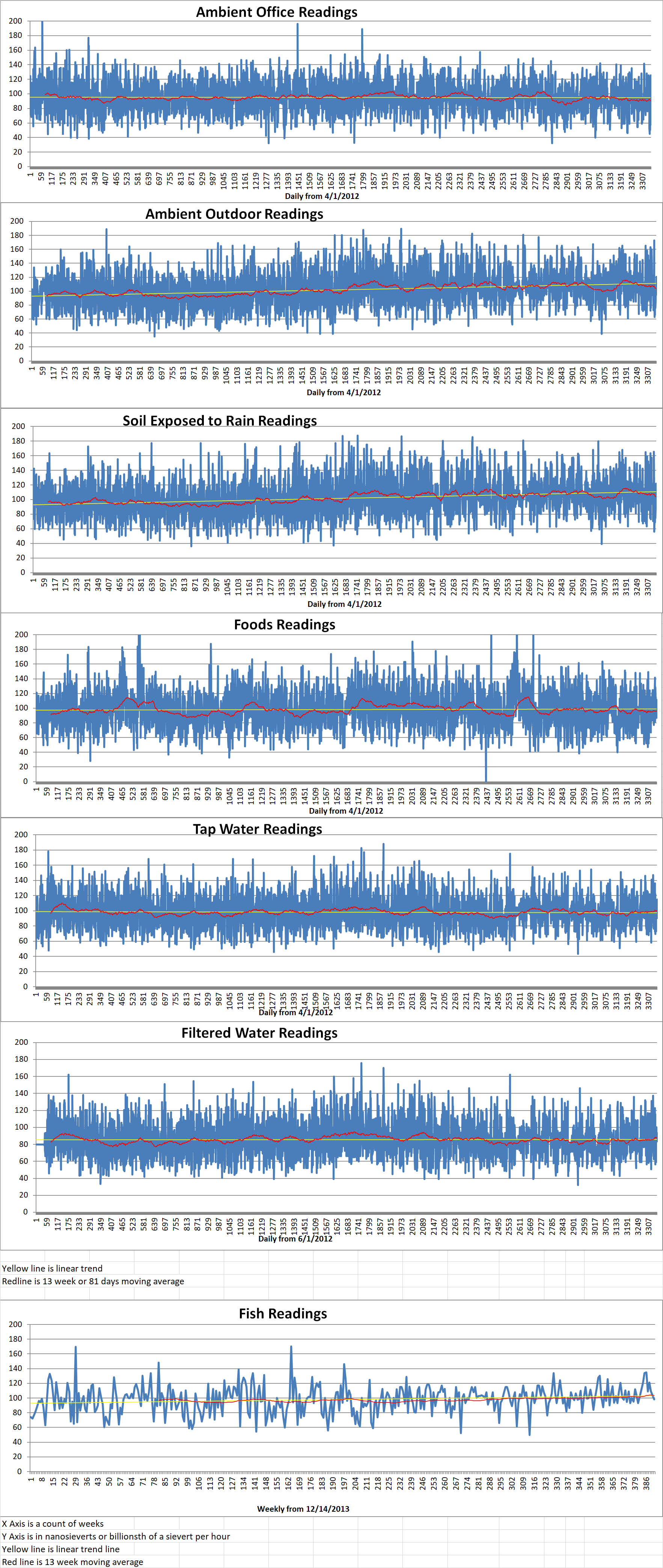
Ambient office = 126 nanosieverts per hour
Ambient outside = 121 nanosieverts per hour
Soil exposed to rain water = 122 nanosieverts per hour
White onion from Central Market = 93 nanosieverts per hour
Tap water = 115 nanosieverts per hour
Filter water = 93 nanosieverts per hour
-
Nuclear Reactors 943 – A New Nuclear Fuel Needed For Next Generation Nuclear Reactors Has No Supply Chain – Part 3 of 4 Parts
Part 3 of 4 Parts (Please read Part 1 and Part 2 first)
Many advanced reactor developers have decided to move forward in the hope that access to HALEU fuel will materialize because the use of that fuel is critical to the concept and value propositions of their designs. The higher enrichment level means that a reactor can achieve more nuclear fission and, thus, more energy out of HALEU fuel than from conventional uranium reactor fuel. Jacob DeWhitte is the CEO and co-founder of Oklo. He explained that “It’s like a really good, high-content firewood that is really dry compared to one that is damp.”
In general, more neutrons cause fission out of those absorbed in the fuel when HALEU is burned. This means that the reactor can run more efficiently. This also means that HALEU reactors can operate longer, be smaller and be simpler than current commercial power reactors which burn a uranium mixture which is five percent U-235. All these supposed benefits of HALEU are what would theoretically allow advanced reactor designs to be commercially competitive in the current competitive energy market.
The advantages of HALEU fuel for reactor performance are such that, if a domestic supply of HALEU did become widely available, Terrestrial Energy would consider switching to HALEU according to Irish who said, “Over the long term we are interested (in using HALEU).”
TerraPower, which is developing the Natrium sodium fast reactor with GE Hitachi Nuclear Energy, is also betting on HALEU as the nuclear fuel of the future. At three hundred and forty-five megawatts, the Natrium reactor is much bigger than Oklo’s micor-reactor. The Natrium reactor relies on the high U-235 content of HALEU to allow the reactor to run efficiently, especially when ramping up or down to follow changes in load driven by renewable energy. Load following is a major advantage of many new advanced reactor designs. TerraPower and Centrus have said that they intend to work together to expand HALEU fuel production after Centrus’ DoE pilot contract runs out in 2022.
It requires the same technology to enrich uranium to five percent U-235 as it does to enrich it to the ten to twenty percent U-235 for HALEU. The only difference is that more centrifuges are required to produce the same amount of HALEU fuel, said Kurt Schnoebelen of Urenco.
With respect to the adoption of these new HALEU burning, the much greater challenge is regulatory in nature. As part of the safeguards in place to prevent the proliferation of nuclear weapons, the International Atomic Energy Agency classifies HALEU as a Category II nuclear material because its level of enrichment creates a much greater risk of it being used in weapons. A uranium enrichment facility that handles HALEU fuel must adhere to many additional security measures that do not apply to current commercial facilities. As a result, a company such as Urenco cannot just add more centrifuges to an existing facility. It must construct a separate facility to enrich uranium to HALEU according to Schnoebelen.
Please read Part 4 -
Nuclear News Roundup Sep 02, 2021
Taiwan says 19 Chinese warplanes entered air defense zone bbc.com
New Satellite Images Hint How Russian Navy Could Use Massive Nuclear Torpedoes news.usni.org
BHEL receives orders for turbine islands world-nuclear-news.org
More equipment being readied for Akkuyu nuclear plant neimagazine.com
-
Geiger Readings for Sep 02, 2021
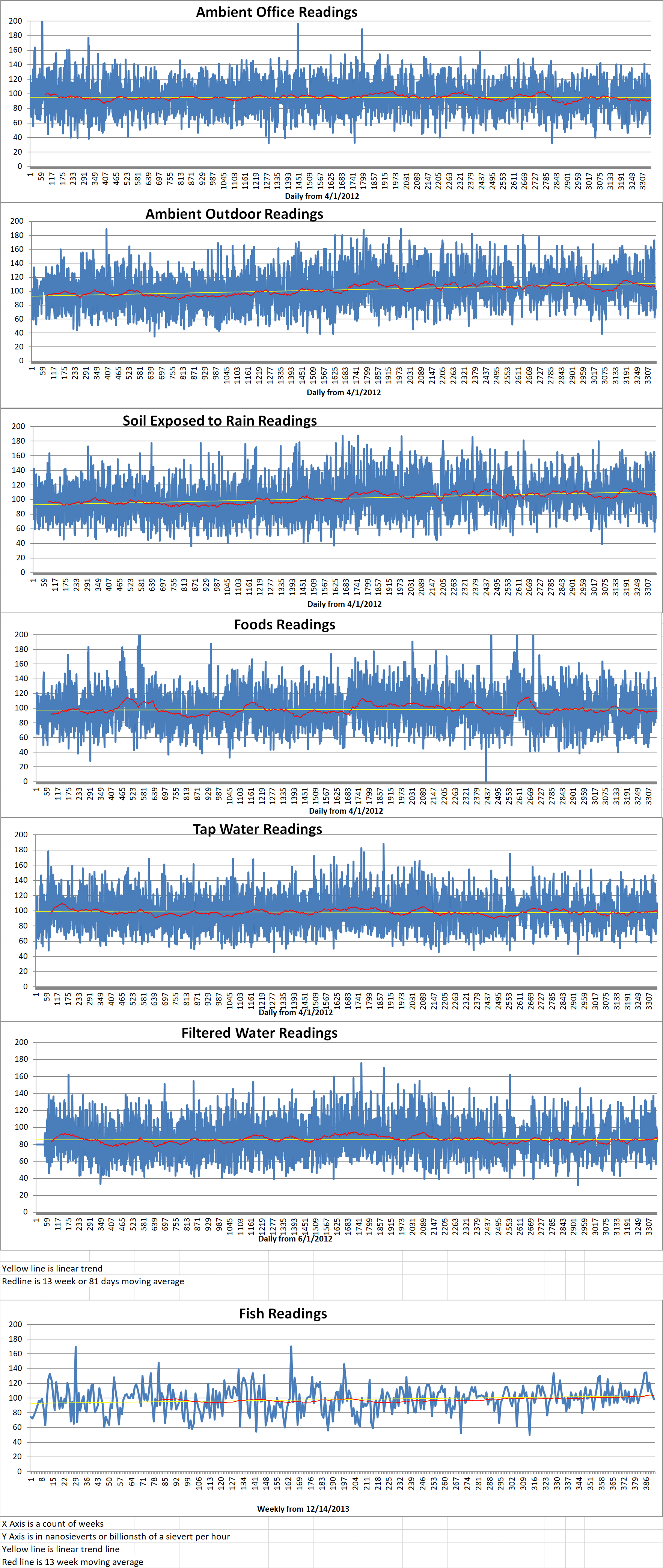
Ambient office = 58 nanosieverts per hour
Ambient outside = 95 nanosieverts per hour
Soil exposed to rain water = 97 nanosieverts per hour
English cucumber from Central Market = 87 nanosieverts per hour
Tap water = 90 nanosieverts per hour
Filter water = 84 nanosieverts per hour
-
Nuclear Reactors 942 – A New Nuclear Fuel Needed For Next Generation Nuclear Reactors Has No Supply Chain – Part 2 of 4 Parts
Part 2 of 4 Parts (Please read Part 1 first)
What most of the advanced reactor designers and developers who are seeking Nuclear Regulatory approval share is that they would not burn the form of uranium that is used to fuel most of the commercial nuclear power plants in operation today. Instead, they would use a type of uranium that is more highly enriched. This blend of uranium isotopes is made more fissionable by the use of technology such as centrifuges that increase the ratio of fissionable U-235.
This fuel is commonly known as high-assay low-enriched uranium or “HALEU”. Creating a steady supply of this fuel will take time to develop. Individual states have created their own carbon emission reduction goals and corporations and utility companies typically have milestones that they hope to achieve in the 2030 to 2050 timeframe. There is a concern among nuclear advocates that the promised next generation reactors could miss opportunities to meet that growing demand for emissions-free energy.
The NEI letter to the DoE estimated that the cumulative demand for HALEU from the next generation reactors will ramp up from 2.8 metric tons in 2021 to over 400 metric tons by 2030. Korsnick wrote in the letter, “Without a HALEU supply chain or fuel supply certainty, many advanced reactor designs and advanced fuels will simply not be commercialized.”
Unfortunately for the nuclear industry, HALEU is only produced for commercial purposes in Russia. Building new facilities capable of producing HALEU can take about seven years according to Kirk Schnoebelen who is the head of sales at Urenco, one of the few companies that operates uranium enrichment facilities in the U.S. Centrus Energy is another nuclear fuel supplier. They just signed a new three-year agreement with the DoE to produce HALEU on a pilot project level. The company says that when they receive a federal license, it will begin HALEU production in 2022. That pilot project will only produce about six hundred kilograms of HALEU which is under twenty percent of the amount needed by reactor developers in 2022. This projection is based on NEI’s figures.
Seven advanced reactor designs are currently engaged in “pre-application” activities with the NRC. All but one of these designs would use the HALEU fuel. Okla is a startup that became the first advanced reactor design to formally apply to the NRC for a license for its 1.5 megawatt “micro-reactor” design that also plans on using HALEU fuel.
The one out of the seven designs mentioned above that is not going to use HALEU fuel is Terrestrial Energy’s Integral Molten Salt reactor which would use a molten-salt-cooled rather than water-cooled core. It would still run on the same uranium mixture that conventional water-cooled reactors burn.
Simon Irish is the CEO of Terrestrial Energy. He said that it was important for his company to move forward with a design that utilizes a common reactor fuel that is currently available instead of choosing a fuel that would be available at some undetermined future date. Irish added, “There’s no point in building the perfect reactor if it takes 50 years to get to market.”
Please read Part 3 next -
Nuclear News Roundup Sep 01, 2021
Exec Charged in Failed SC Nuclear Project Pleads Not Guilty usnews.com
Illinois could vote Tuesday on bill that aims to save nuclear plants reuters.com
US-Ukrainian energy partnership foresees five new reactors world-nuclear-news.org
Idaho simulator facility supports SMR initiative world-nuclear-news.org
-
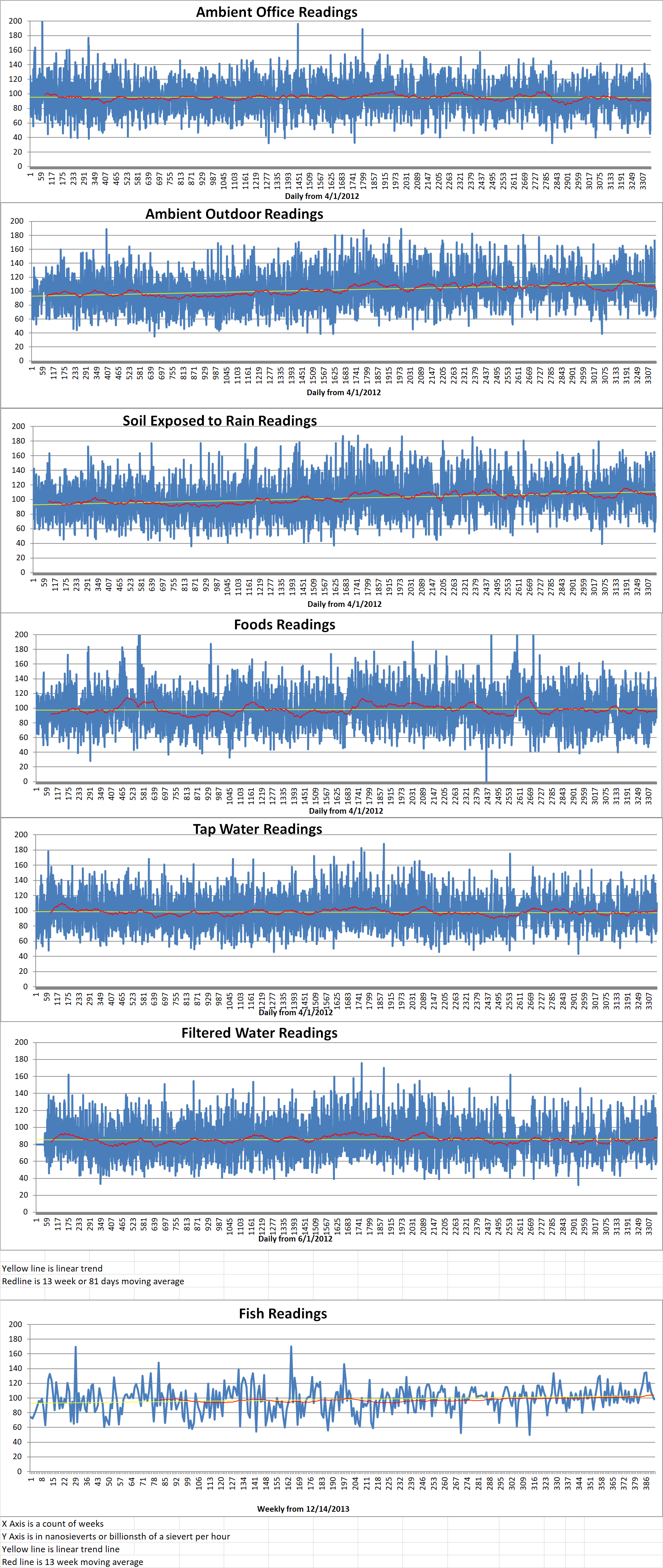
Geiger Readings for Sep 01, 2021
Ambient office = 114 nanosieverts per hour
Ambient outside = 100 nanosieverts per hour
Soil exposed to rain water = 103 nanosieverts per hour
Red bell pepper from Central Market = 111 nanosieverts per hour
Tap water = 102 nanosieverts per hour
Filter water = 89 nanosieverts per hour
-

Nuclear Reactors 941 – A New Nuclear Fuel Needed For Next Generation Nuclear Reactors Has No Supply Chain – Part 1 of 4 Parts
Part 1 of 4 Parts
President Joe Biden strongly supports nuclear power. Some say he is the most pro-nuclear-energy president to ever hold the office. During his campaign, Biden spoke about the need for nuclear energy as a carbon-free energy source to help fight climate change. After taking office, Biden proposed a budget with a record one hundred eighty-five billion dollars for the U.S. Department of Energy’s (DoE) Office of Nuclear Energy (ONE). However, many members of the nuclear industry believe that even though Biden’s proposal exceeds any previous allocation for the ONE, it may not be enough to keep the U.S. fleet of commercial power reactors afloat. Their concerns would still be a problem even if progress in new technologies manage to make nuclear energy both cheaper and safer.
Some of the most prominent new reactor designs require a fuel which currently has no commercial supply chain. Building such a supply chain could take years and enormous political will according to both reactor developers and nuclear fuel supply companies.
The nuclear industry has seen massive cost overruns in the construction of the current generation of reactors as well as long construction delays. This has had a massive negative impact on the construction of and investment in current reactor models to the point where there is currently only one new nuclear power plant under construction in the U.S.
The nuclear industry hopes that salvation lies in a new generation of advanced reactor designs which includes everything from smaller versions of conventional light water reactors to designs that do not use water at all for cooling. These include using such things as helium or molten salts for cooling the reactor cores. This new generation of reactors has the potential to help achieve decarbonization goals by supplanting fossil fuel plants. These new plants could generation clean hydrogen for fuel and provide base load power to support intermittent renewable power. There are a few companies which are developing reactor designs and targeting their deployment of first commercial demonstration projects during the next decade.
Both the Trump and Biden administrations have supported research and development of advanced reactors. Congress has passed legislation that is intended to streamline the regulatory path for advanced reactors. The Nuclear Energy Institute (NEI) is the primary trade association for the nuclear industry. They argue that if advanced reactors have any hope of succeeding, the federal government needs to do a great deal more to create a domestic market for this advanced reactor fuel.
Maria Korsnick is the NEI President and CEO. She said in a 2020 letter that she sent to the U.S. Secretary of Energy at the time. In the letter, she said that “The commercialization of many advanced nuclear technologies is in jeopardy.” The biggest policy change advocated by the NEI is for the federal government to sign a contract with a nuclear fuel supplier to essentially create a whole new market which will not be a simple proposition. A lot of pieces will have to be put in place to make this possible.
Please read Part 2 next