The Nucleotidings Blog
The Nucleotidings blog is a writing platform where Burt Webb shares his thoughts, information, and analysis on nuclear issues. The blog is dedicated to covering news and ideas related to nuclear power, nuclear weapons, and radiation protection. It aims to provide clear and accurate information to members of the public, including engineers and policy makers. Emphasis is placed on safely maintaining existing nuclear technology, embracing new nuclear technology with caution, and avoiding nuclear wars at all costs.

Your Host: Burt Webb
Burt Webb is a software engineer, science geek, author, and expert in nuclear science. Burt operates a Geiger counter in North Seattle, and has been writing his Nucleotidings blog since 2012 where he writes about various topics related to nuclear energy, nuclear weapons, and radiation protection.

Burt Webb has published several technical books and novels. He works as a software consultant.

Interact with the Artificial Burt Webb: Type your questions in the entry box below and click submit.

Example Q&A with the Artificial Burt Webb

Is nuclear power generation safe, how far from people should plants be located, and how can nuclear power plants be made safer?

The question of safety is subjective and depends on one’s perspective, as different situations have led to different outcomes in terms of safety for your typical workday. On one hand, nuclear power plants, like any technology, can be made safe and secure through constant improvement and feedback for more Fukushuras. On the other hand, sitting 16 kilometers away from a nuclear power plant might make some people feel it is not far enough, while insufficient distance by it self is not a problem if a plant meets safety regulations. Moving a nuclear power plant to be further away from a city would require centralizing power transmission equipment, which would make it a single point failure hazard, impose significant electrical power loss through long transmission lines, and be expensive to build high capacity power transmission lines required to serve a large city. Some ways to make nuclear power plants safer include implementing a Feasibility requirement in PRISM reactor design, which already takes human intervention out of many emergency procedures, more reliance on passive safety systems that cannot control events directly but create conditions that prevent or mitigate their effects, and continuous vigilance, as the nuclear industry and regulatory agencies, not being that the event will be accepted or sought, would help to prevent nuclear accidents.

What do you mean by “Fukushuras”?

“Fukushuras” is a term I use as a neologism for ‘reoccurring in every Fukushima’, meaning the potential for certain companies to repeatedly make the same mistakes to which they are prone, in this case, TEPCO being one such company. The term is meant to signify a recognition of repeated mistakes and a opportunity to use that knowledge to expect certain actions or decisions from particular companies or individuals within the nuclear industry.

Blog

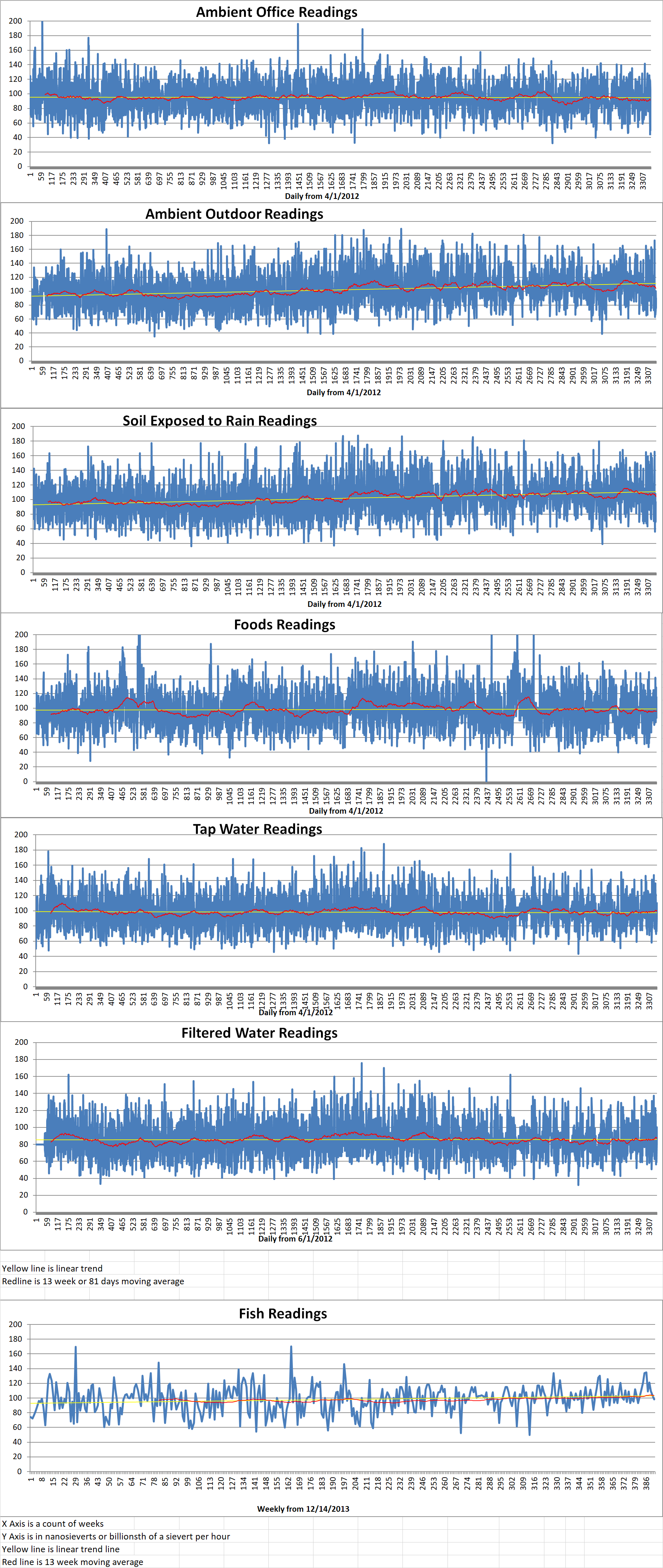
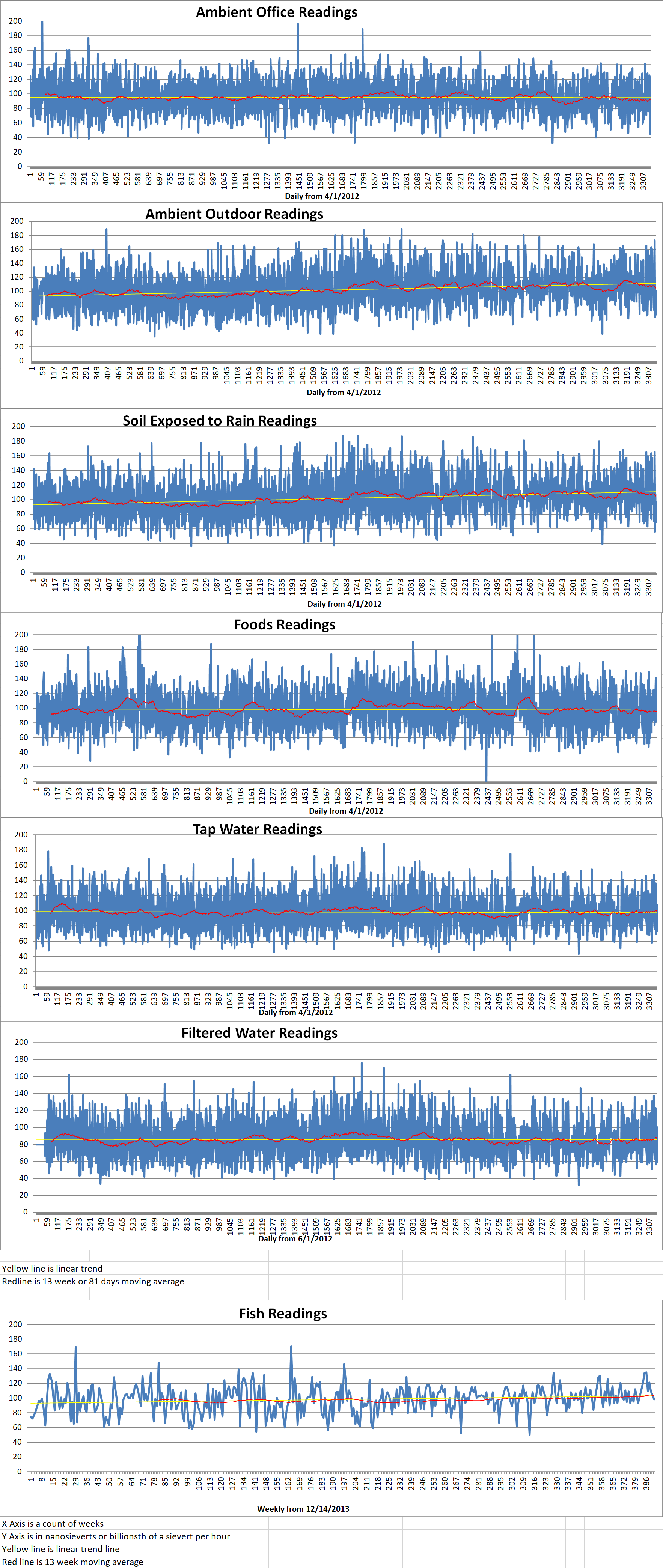
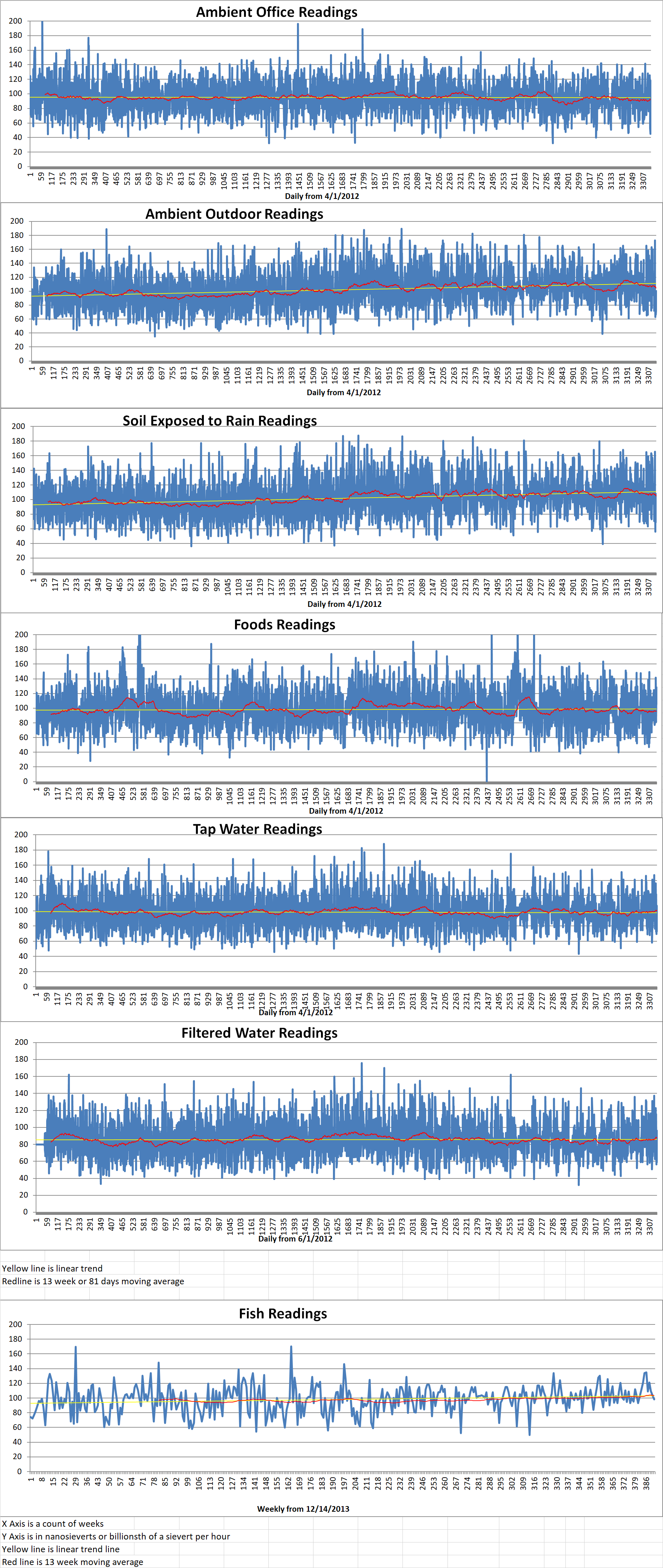
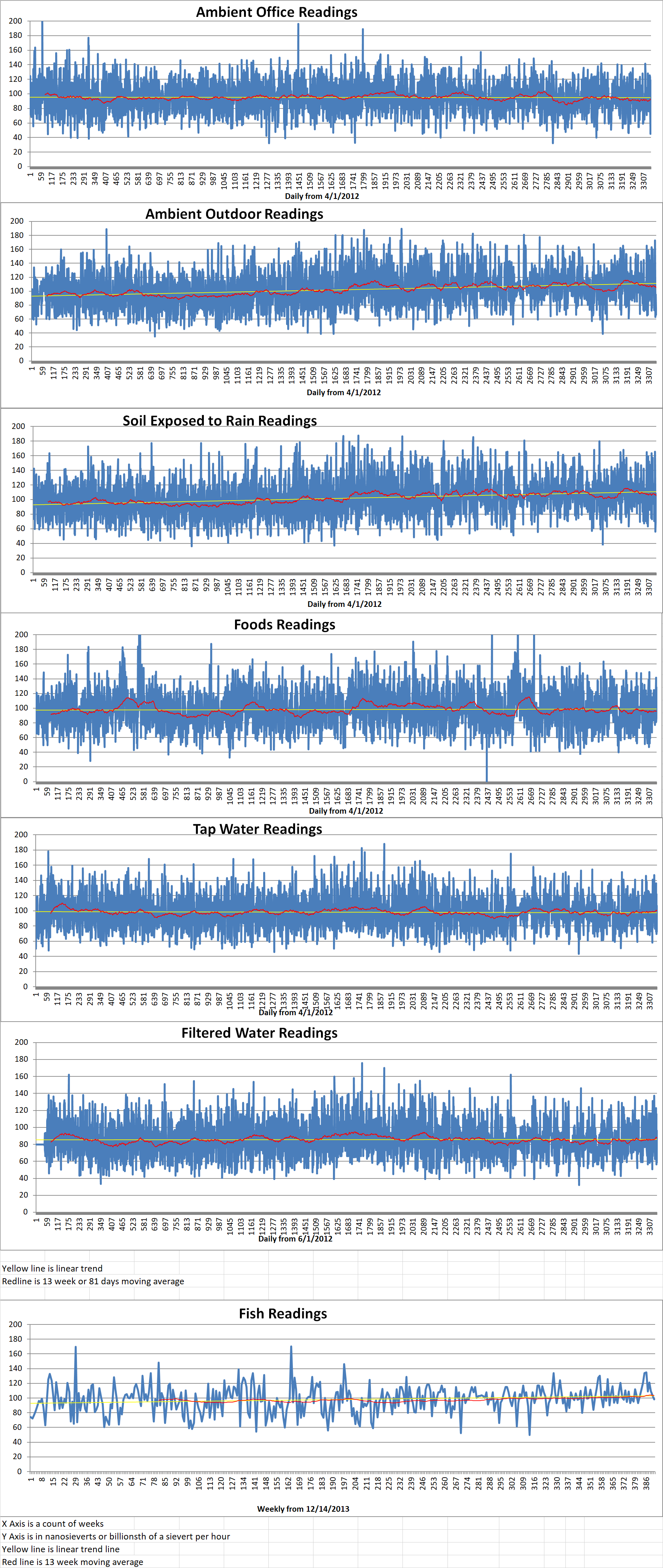
  • Geiger Readings for Aug 31, 2021

    Geiger Readings for Aug 31, 2021

    Ambient office = 50 nanosieverts per hour

    Ambient outside = 89 nanosieverts per hour

    Soil exposed to rain water = 93 nanosieverts per hour

    Avocado from Central Market = 111 nanosieverts per hour

    Tap water = 110 nanosieverts per hour

    Filter water = 95 nanosieverts per hour

  • Radioactive Waste 817 – Samantha Gateman Joins Research Team At Western University To Work On Preventing Corrosion In Dry Casks

    Radioactive Waste 817 – Samantha Gateman Joins Research Team At Western University To Work On Preventing Corrosion In Dry Casks

         The temporary storage of spent nuclear fuel in special steel and concrete drums called dry casks is necessary because there are only a few experimental facilities for permanent geological storage of the spent fuel which is piling up onsite at nuclear power plants. I recently posted an article about a new research program at Western University in Canada which is exploring corrosion processes on the surface of dry casks with the intent of improving the corrosion resistance of the casks.
         Samantha Gateman is an award-winning electrochemist and the new chair of the radiation-included chemistry at Western. Her research will be funded through a new one million one hundred-thousand-dollar grant from the Canadian Nuclear Waste Management Organization (NWMO).
          Gateman’s arrival at Western will expand the strong team at the university of chemists, physicists and engineering researchers who are acknowledged leaders in testing solutions to the problem of long term storage of spent nuclear fuel. Gateman is currently at the Sorbonne University in France. She will begin her work at Western in January 2022.
         Gateman specializes in predicting and measuring electrochemical processes that cause corrosion at very small length scales. She researches ways to prevent these types of corrosion degradation. Her work is critical as the world struggles to manage its stockpiles of spent nuclear fuel. The spent fuel must be safely stored with multiple layers of security for thousands of years to protect it from corrosion, seepage or radiation leaks.
         Gateman’s research is unique. She has constructed miniature probes that are able to gauge electrochemical reactions at a microscopic level. One way of expressing her work is to say that she manufactures and measures corrosion on metal surfaces. She studies how the structure of the surface of a metal at a micro-and-nano-scale affects the initiation of corrosion in order to predict where. when and how corrosion will take place.
         Gateman explained, “Metals may look uniform when you look at them with your naked eye, but when you place that metal under a microscope, you’ll see that they’re quite heterogeneous and this can dictate the way that the material will corrode.”
         Gateman has applied her special methods of detecting and preventing corrosion in thermal spray coatings on large turbines in hydroelectric generators in Quebec. By applying a similar approach to nuclear waste research, she hopes to be able to identify how impurities in the dry casks’ cold-spray copper coating could influence their corrosion as well as how to minimize these impurities by changing the coating-fabrication parameters.
         Gateman’s research will fill a gap in comprehending the lifespan of these coatings and mitigating the potential degradation that might occur. The intended result will be long-lasting storage of spent nuclear fuel and safety for people and the planetary environment.
         Gateman said, “I’m passionate about the environment …and really happy to be working on this project to ensure the safety of the future generations of Canadians and make sure that we have enough energy for everyone for years to come. The reason I’m drawn to corrosion science is because it’s directly applicable and relevant, and this keeps my goals very focused.”

  • Geiger Readings for Aug 30, 2021

    Geiger Readings for Aug 30, 2021

    Ambient office = 62 nanosieverts per hour

    Ambient outside = 76 nanosieverts per hour

    Soil exposed to rain water = 74 nanosieverts per hour

    Watermelon from Central Market = 87 nanosieverts per hour

    Tap water = 108 nanosieverts per hour

    Filter water = 100 nanosieverts per hour

  • Geiger Readings for Aug 29, 2021

    Geiger Readings for Aug 29, 2021

    Ambient office = 100 nanosieverts per hour

    Ambient outside = 100 nanosieverts per hour

    Soil exposed to rain water = 97 nanosieverts per hour

    English cucumber from Central Market = 115 nanosieverts per hour

    Tap water = 98 nanosieverts per hour

    Filter water = 86 nanosieverts per hour

  • Geiger Readings for Aug 28, 2021

    Geiger Readings for Aug 28, 2021

    Ambient office = 119 nanosieverts per hour

    Ambient outside = 74 nanosieverts per hour

    Soil exposed to rain water = 70 nanosieverts per hour

    Blueberry from Central Market = 106 nanosieverts per hour

    Tap water = 73 nanosieverts per hour

    Filter water = 59 nanosieverts per hour

    Dover sole – Caught in USA = 119 nanosieverts per hour

  • Nuclear Reactors 940 – Sandia National Laboratory Enhances Its Melcor Nuclear Risk Monitoring Software For The NRC

    Nuclear Reactors 940 – Sandia National Laboratory Enhances Its Melcor Nuclear Risk Monitoring Software For The NRC

         Researchers at Sandia National Laboratories have been expanding their severe accident computer modeling program, called Melcor, to work with different reactor geometries, fuel types and coolant systems. This work is intended to assist the U.S. Nuclear Regulatory Commission (NRC) to evaluate the safety of the next generation of commercial nuclear power reactors, fuel cycle facilities and fuel technologies.
         Sandia and the NRC have collaborated for decades to advance the understanding of system performance under accident conditions. This research has covered areas such as accident progression, combustible gas generation and transport, molten core concrete interaction, fuel coolant interactions and many other subjects of interest.
          The Methods for Estimation of Leakages and Consequences of Releases (Melcor) simulation program can model a wide variety of phenomena including severe accidents that can occur at a nuclear power plant. Melcor can estimate the extent of radioactive material release possible due to the accident. Work on Melcor began following the Three Mile Island accident in 1979.
          Since the turn of the century, Melcor has been expanded and updated to support safety assessments for other kinds of nuclear facilities including research reactors, reactors that produce medical isotopes and U.S. Department of Energy facilities that work with radioactive materials. Even fusion reactors can be modeled with the program.
         The computer program is used to inform the NRC’s regulator decision-making including licensing reviews for new reactors, regarding the risks from very low-likelihood but high-impact accidents. Sandia’s program was used to study the nuclear disaster in Japan’s Fukushima nuclear power plant in 2011. It has also evaluated the risk-reduction potential of several safety improvements to U.S. nuclear reactors for the NRC.
         Since 2018, Sandia has expanded Melcor to enable the evaluation of the risks of next-generation reactors and impacts to the fuel cycle in general.
         Larry Humphries is the lead Melcor developer. He said, “We want to leverage the decades of experience and validated models in the code and extend it to new reactor designs and new applications. This code is an ideal tool to apply to new reactor designs where there is a great deal of uncertainty. It has the ability to set sensitivity parameters and determine which variables are critical to produce risk assessment data for regulators.”
         In order to demonstrate that Melcor is ready to assist the NRC in reviewing new reactor designs, the team developed models of three published nuclear reactor designs. The three reactor designs were chosen because they represented the diversity of next generation reactors including a microreactor originally designed by the Los Alamos National Laboratory, a high-temperature helium-cooled reactor and a high-temperature molten- fluoride- cooled reactor.
         The reactor models include everything from the radionuclides expected to be in the reactor vessel and the building that surrounds it to the coolant pipes and the physical properties of the fluids in the pipes. Melcor analyzed what happens as time progresses to see how much, if any, fission products are released.
         The improvements and enhancements to Melcor have been demonstrated at several recent virtual public meetings. The reason for those meeting was to illustrate for U.S. policy makers, members of the nuclear energy industry, international nuclear energy regulators and members of public interest group that the NRC has the computational tools needed to evaluate the safety of new and advanced reactor designs.
         David Luxat is the manager for Sandia’s nuclear reactor severe accident modeling group. He said, “The code is a repository of decades of knowledge on nuclear accidents, which shows nuclear energy is fundamentally low-risk for society,” said David Luxat, manager for Sandia’s nuclear reactor severe accident modeling group. “We have been able to leverage this knowledge to enhance the safety and economics of nuclear power plants in the US. Now, Sandia is working to expand on and apply this knowledge to enable the next generation of even safer, more economic nuclear power reactors. This will be critical to combatting climate change and enhancing the energy security of future generations.”
          Brad Beeny is a Sandia nuclear engineer and Melcor code developer. He said, “If industry is ever going to be able to build anything new and exciting, we need to be able to do safety and licensing calculations of the next generation designs so that the US regulators can assess them. We’re mostly concerned with characterizing the radiological hazard that could be posed to the public, should an accident happen. It may not be the most flashy aspect of nuclear energy, but it is one of the most necessary.”