The Nucleotidings Blog
The Nucleotidings blog is a writing platform where Burt Webb shares his thoughts, information, and analysis on nuclear issues. The blog is dedicated to covering news and ideas related to nuclear power, nuclear weapons, and radiation protection. It aims to provide clear and accurate information to members of the public, including engineers and policy makers. Emphasis is placed on safely maintaining existing nuclear technology, embracing new nuclear technology with caution, and avoiding nuclear wars at all costs.

Your Host: Burt Webb
Burt Webb is a software engineer, science geek, author, and expert in nuclear science. Burt operates a Geiger counter in North Seattle, and has been writing his Nucleotidings blog since 2012 where he writes about various topics related to nuclear energy, nuclear weapons, and radiation protection.

Burt Webb has published several technical books and novels. He works as a software consultant.

Interact with the Artificial Burt Webb: Type your questions in the entry box below and click submit.

Example Q&A with the Artificial Burt Webb

Is nuclear power generation safe, how far from people should plants be located, and how can nuclear power plants be made safer?

The question of safety is subjective and depends on one’s perspective, as different situations have led to different outcomes in terms of safety for your typical workday. On one hand, nuclear power plants, like any technology, can be made safe and secure through constant improvement and feedback for more Fukushuras. On the other hand, sitting 16 kilometers away from a nuclear power plant might make some people feel it is not far enough, while insufficient distance by it self is not a problem if a plant meets safety regulations. Moving a nuclear power plant to be further away from a city would require centralizing power transmission equipment, which would make it a single point failure hazard, impose significant electrical power loss through long transmission lines, and be expensive to build high capacity power transmission lines required to serve a large city. Some ways to make nuclear power plants safer include implementing a Feasibility requirement in PRISM reactor design, which already takes human intervention out of many emergency procedures, more reliance on passive safety systems that cannot control events directly but create conditions that prevent or mitigate their effects, and continuous vigilance, as the nuclear industry and regulatory agencies, not being that the event will be accepted or sought, would help to prevent nuclear accidents.

What do you mean by “Fukushuras”?

“Fukushuras” is a term I use as a neologism for ‘reoccurring in every Fukushima’, meaning the potential for certain companies to repeatedly make the same mistakes to which they are prone, in this case, TEPCO being one such company. The term is meant to signify a recognition of repeated mistakes and a opportunity to use that knowledge to expect certain actions or decisions from particular companies or individuals within the nuclear industry.

Blog

  • Geiger Readings for Feb 28, 2021

    Geiger Readings for Feb 28, 2021

    Ambient office = 141 nanosieverts per hour

    Ambient outside = 148 nanosieverts per hour

    Soil exposed to rain water = 149 nanosieverts per hour

    Garlic bulb from Central Market = 89 nanosieverts per hour

    Tap water = 141 nanosieverts per hour

    Filter water = 124 nanosieverts per hour

  • Nuclear News Roundup Feb 27, 2021

    Ambient office = 84 nanosieverts per hour
     
    Ambient outside = 97 nanosieverts per hour
     
    Soil exposed to rain water = 96 nanosieverts per hour
     
    Avocado from Central Market = 130 nanosieverts per hour
     
    Tap water = 112 nanosieverts per hour
     
    Filter water = 106 nanosieverts per hour
     
    Dover sole – Caught in USA = 94 nanosieverts per hour
  • Geiger Readings for Feb 27, 2021

    Geiger Readings for Feb 27, 2021

    Ambient office = 84 nanosieverts per hour

    Ambient outside = 97 nanosieverts per hour

    Soil exposed to rain water = 96 nanosieverts per hour

    Avocado from Central Market = 130 nanosieverts per hour

    Tap water = 112 nanosieverts per hour

    Filter water = 106 nanosieverts per hour

    Dover sole – Caught in USA = 94 nanosieverts per hour

  • Nuclear Weapons 747 – Israeli Carrying Out New Construct At It Nuclear Facility Near Dimona – Part 2 of 2 Parts

    Nuclear Weapons 747 – Israeli Carrying Out New Construct At It Nuclear Facility Near Dimona – Part 2 of 2 Parts

    Part 2 of 2 Parts (please read Part 1 first)
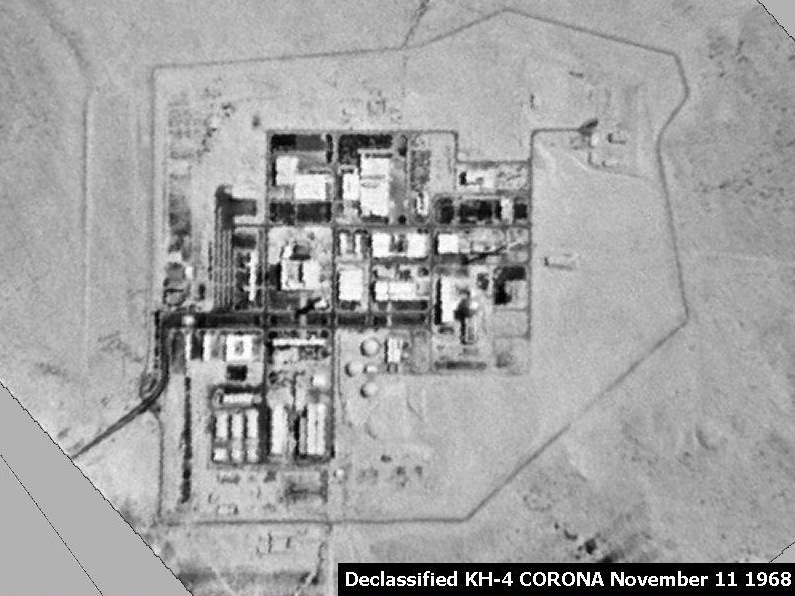
          About one and a quarter mile west of the reactor at Dimona, there are boxes stacked in two rectangular holes that appear to have bases made of concrete. The boxes on the concrete bases are similar to storage casks for nuclear waste at nuclear power plants.
         Older satellite images of the site suggest that the excavations began in early 2019 and have progress slowly ever since then. It is possible that the excavations are related to efforts to either update or replace the old reactor. Avner Cohen is a professor of nonproliferation studies at the Middlebury Institute of International Studies at Monterey, California, who has written extensively on Dimona. He said, “I believe that the Israeli government is concerned to preserve and maintain the nation’s current nuclear capabilities. If indeed the Dimona reactor is getting closer to decommissioned, as I believe it is, one would expect Israel to make sure that certain functions of the reactor, which are still indispensable, will be fully replaced.”
         Daryl G. Kimball is the executive director of the Washington-based Arms Control Association. He said that whatever “the Israeli government is doing at this secret nuclear weapons plant is something for the Israeli government to come clean about.” He also suggested that Israel might want to produce more tritium, a radioactive isotope of hydrogen, which is a relative faster-decaying radioactive byproduct that can be used to boost the explosive yield of some nuclear warheads. It is also possible that Israel wants fresh plutonium recovered from the spent reactor fuel “to replace or extend the life of warheads already in the Israeli nuclear arsenal.”
         It is assumed that Israel constructed the Dimona facility to build nuclear weapons as it has faced several wars with it Arab neighbors since Israel was founded in 1948 following the Holocaust in World War II. Israel understood that an atomic weapons program would provide a way to deter enemies from attacking.
          Opponents criticize Israel’s strategy of opacity with respected to its possession of nuclear weapons.  Iranian Foreign Minister Mohammad Javad Zarif focused on the work at Dimona this week as Iran prepared to restrict access by inspectors from the U.N.’s International Atomic Energy Agency amid tensions with the West over its collapsing 2015 nuclear treaty with Western powers. Zarif told Iran’s state television’s English-language department, Press TV, “Any talk about concern about Iran’s nuclear program is absolute nonsense. Let’s be clear on that: It’s hypocrisy.”
         In the 1960s, Israel utilized claims about Egypt’s missile and nuclear weapons program as a way to divert attentions from the Dimona facility. Now they may do the same thing to shift attention to the Iranian nuclear program and the possibility that Iran will develop nuclear weapons. Jeffery Lewis is a professor also teaching nonproliferation issues at Middlebury. He said, “If you’re Israel and you are going to have to undertake a major construction project at Dimona that will draw attention, that’s probably the time that you would scream the most about the Iranians.”

  • Geiger Readings for Feb 26, 2021

    Geiger Readings for Feb 26, 2021

    Ambient office = 92 nanosieverts per hour

    Ambient outside = 103 nanosieverts per hour

    Soil exposed to rain water = 106 nanosieverts per hour

    Red bell pepper from Central Market = 115 nanosieverts per hour

    Tap water = 116 nanosieverts per hour

    Filter water = 93 nanosieverts per hour

  • Nuclear Weapons 746 – Israeli Carrying Out New Construct At It Nuclear Facility Near Dimona – Part 1 of 2 Parts

    Nuclear Weapons 746 – Israeli Carrying Out New Construct At It Nuclear Facility Near Dimona – Part 1 of 2 Parts

    Part 1 of 2 Parts
         Israel has a secretive nuclear facility called the Shimon Peres Negev Nuclear Research Center near the city of Dimona. France assisted Israel when they began constructing the nuclear site in the late 1950s in an area of empty desert near Dimona which is a city about fifty-five miles south of Jerusalem. For years, Israel claimed that the site was a textile factory, hiding its true nature even from the U.S., one of Israel’s staunchest allies.
          Although Israel has maintained their policy of ambiguity about whether they have a nuclear weapons program for decades, it is assumed that the Research Center near Dimona is, in fact, a facility for the research and development of nuclear weapons. The facility is the location of decades old underground laboratories which probably reprocessed spent fuel from the aging nuclear reactor at the Center in order to produce plutonium for nuclear bombs.
          There is a heavy-water reactor at the Dimona site that has been operating since the 1960s. This raises questions of effectiveness and safety. In 2004, Israeli soldiers began distributing iodine pills in the Dimona area just in case there were any leaks of radioactive materials from the old reactor. Non-radioactive iodine can help prevent the human body from absorbing a radioactive iodine isotope which can cause cancer and other radiation related illnesses.
          With plutonium reprocessed from the nuclear reactor at Dimona, Israel is believed by global intelligence agencies to be one of the nine countries in the world that possess nuclear weapons. Because of the secrecy about the site and its purpose, it is not known how many nuclear weapons Israel may possess. Analysts estimate that Israel should have enough nuclear material to construct at least eighty atomic bombs. It is well known that Israel has land based ballistic missiles, fighter/bomber jets and submarines which are capable of delivering nuclear bombs to distant targets.  Israel is one of four nations which are presumed to have nuclear weapons but which have not signed the international Non-Proliferation Treaty which is an accord to stop the spread of nuclear weapons.
         For decades, the layout of the Dimona facility has remained the same. However, last week, the International Panel on Fissile Materials at Princeton University announced that it had seen “significant new construction” at the Dimona facility. This statement was based on satellite photos of the site although the resolution of the pictures is not sufficient to provide details on the new construction.
         The Associated Press obtained satellite photos from Planet Labs on Monday of this week which provide the clearest view of the site that has been made public. To the southwest of the nuclear reactor, workers have excavated a hole that is about one hundred and sixty-five yards long and sixty five yards wide. Tailings from the excavation can been clearly seen next to the hole. A trench runs about three hundred and sixty yards near the hole.
    Please read Part 2 next

  • Geiger Readings for Feb 25, 2021

    Geiger Readings for Feb 25, 2021

    Ambient office = 90 nanosieverts per hour

    Ambient outside = 115 nanosieverts per hour

    Soil exposed to rain water = 116 nanosieverts per hour

    English cucumber from Central Market = 75 nanosieverts per hour

    Tap water = 86 nanosieverts per hour

    Filter water = 43 nanosieverts per hour

  • Nuclear Reactors 872 – The Federal Energy Regulatory Commission Will Review Ability Of Energy Generators To Withstand Extreme Weather Events – Part 2 of 2 Part

    Nuclear Reactors 872 – The Federal Energy Regulatory Commission Will Review Ability Of Energy Generators To Withstand Extreme Weather Events – Part 2 of 2 Part

    Part 1 of 2 Parts (Please read Part 1 first)
         Severe cold weather is many parts of the U.S. last week caused power outages affecting millions of electricity customers across Texas, Louisiana and Oklahoma. The resources of power plants were strained because cold weather tripped units, natural gas supplies were curtailed and there were outages of wind power generation. Independent systems operators the Electric Reliability Council of Texas (ERCOT), Southwest Power Pool and the Midcontinent Independent System Operator were all forced to implement controlled power outages across parts of their systems in order to manage the increased load caused by the extreme cold weather.
          Excursions of the Polar Vortex into the U.S. resulted in Texas experiencing its heaviest snowfall in seventy two years. Three of the four nuclear reactors in Texas continued to operate at full power during the extreme weather. The two-unit South Texas Project plant is located ninety miles south-west of Houston. Unit One at the plant automatically tripped on the 15th of February following a cold weather-induced failure of a feedwater pressure sensing line in the non-nuclear area of the plant. Unit One was subsequently restarted and was reconnected to the Texas grid on the 17th of February.
          U.S. nuclear reactors have previously demonstrated heir reliability during extreme weather such as the polar vortex events that occurred during 2014 and 2019. Exelon Generation said that all six of its Illinois nuclear power plants were able to continue to maintain almost one hundred percent output during the latest cold snap. Exelon said, “Winter resiliency and reliability requires year-long planning and maintenance. Exelon Generation workers spend months ensuring that backup generators and supplemental equipment are ready for inclement weather.”
          FERC and the North American Electric Reliability Corporation announced last week that they would conduct a joint inquiry into the operation of the U.S. bulk-power system during extreme winter weather conditions. Yesterday, the regulator said that it’s Office of Enforcement is reviewing wholesale natural gas and electricity market activity during the extreme weather last week to determine whether any market participants engaged in market manipulation or other violations. FERC said, “If the Office of Enforcement finds any potential wrongdoing that can be addressed under FERC’s statutory authority, it will pursue those matters as non-public investigations.”
         The examination will take place as part of an ongoing surveillance of the behavior of market participants in the wholesale natural gas and electricity markets. The investigation will be carried out by FERC’s Division of Analytics and Surveillance. Market participant-lvel trading data and data from the financial markets is used to screen daily and monthly trading at U.S. physical and financial natural gas trading hubs and wholesale electricity markets. The FERC Division works to identify and scrutinize any potentially anticompetitive or manipulative behavior to determine if further investigation is warranted.
         I have already posted articles about the affect of high temperatures, water supplies and hurricanes on the operation of nuclear power plants. With predictions of more extreme weather events in the U.S., the review of resilience and reliability of U.S. nuclear power plants is welcome.