
Part 3 of 3 Parts (Please read Part 1 and Part 2 first)
One of the leading companies that manufactures dry casks for the storage of spent nuclear fuel is Orano. They have been researching, developing and constructing dry casks for four decades. Orano is the first manufacturer of dry casks to work with the U.S. Nuclear Regulatory Commission.
The company has designed and certified both metal storage casks and canister-based storage systems. They have recently developed their NUHOMS system of individually stored and welded canisters. These are horizontally positioned inside heavily shielded square concrete modules on spent fuel storage pads onsite at nuclear power plants.
Orano’s most advanced high-capacity extended optimization storage canisters are now licensed to store spent nuclear fuel with high burnup characteristics of up to fifty kilowatts high heat load. The highest heat load that the canister industry could handle before the latest Orano canisters was thirty-four kilowatts. Interim dry storage of spent fuel at reactor sites has been extended beyond the initial twenty-year license period. Now Orano has managed to extend the licensing period for their NUHOMS onsite dry storage system to sixty years. Orano has also reduced the space required by their onsite dry storage pads by forty five percent for the same amount of fuel. In order to accomplish this, they developed the two-tiered MATRIX dry storage modules, which allow utility customers to not have to expand their dry storage facilities. This, of course, reduces costs.
Dry canister storage availability does not remove the need for storing spent fuel in cooling pools at operating commercial nuclear power plants. However, the inclusion of dry storage does provide a further intermediate storage stage prior to permanent disposal which could be much cheaper.
Wet storage is known to require a significant amount of energy. Comparative research has been published in the journal Annals of Nuclear Energy with the title “Cost comparisons of wet and dry interim storage facilities for PWR spent nuclear fuel in Korea”. The research report stated that wet storage was the most expensive solution for decommissioning spent fuel from a pressurized water reactor when compared to three different dry storage systems. This indicated that if the additional stage of dry storage was added to the decommissioning process, companies could benefit from substantially reduced maintenance costs.
Prakas Narayanan is the chief technical officer for Orano. He pointed out another significant advantage of dry storage is the fact that it is expandable. He said, “Wet storage capacity at nuclear power plants is limited and cannot be significantly increased. Dry storage offers an important advantage with modular, expandable storage to support the continued, long-term operation of the nuclear energy facility. Transferring quantities of spent fuel assemblies from wet storage in the reactor building pool into large capacity, sealed dry storage canisters and then placing the canisters into dry storage modules in a separate dry storage facility provides many benefits to the energy company and surrounding community.”
Opponents of dry storage have shared concerns about the dangers of transporting volatile nuclear waste for dry storage. They are also concerned about the level of radioactivity that nuclear plant workers may be exposed to. They point out that wet storage does not require that the spent nuclear fuel be moved because it stays in the cooling pool long term. This means that workers have easier access to the spent fuel that allows them to detect problems quickly.
Proponents of dry storage reply to opponents concerns by insisting that the spent fuel is not very volatile, the canisters are welded shut, and advanced ageing management tools are being developed for the safe inspection of the canisters in dry storage.
Narayanan says that “For greater economic efficiencies, fuel assembly designs are becoming more robust and less prone to fuel failure, [in order to] to provide increased operating power with increased initial enrichment and higher burnups.” Although this could create new challenges for those managing spent fuel assemblies, he is confident that the new dry storage systems are already capable of dealing with this future need of the nuclear industry.
Whether or not dry storage will gain enough recognition to become as popular as wet storage around the globe remains to be seen. In either case, handling the spent fuel disposal problem is already one of the most important steps toward the desired clear energy future and it will require substantial effort, regulation and financing.
Blog
-

Radioactive Waste 789 – Wet Storage Of Spent Nuclear Fuel Versus Dry Storage – Part 3 of 3 Parts
-
Nuclear News Roundup Dec 30, 2020
Krško nuclear plant rejoins grid world-nuclear-news.com
Energoatom accepts need for fixed power prices world-nuclear-news.org
The Ninth Circuit upheld the dismissal of Public Watchdogs’ complaint against the U.S. Nuclear Regulatory Commission. Courthousenews.com
Israel unequivocally opposed to ‘flawed’ Iran nuclear deal: Report middleeasteye.net
-

Geiger Readings for Dec 30, 2020
Ambient office = 119 nanosieverts per hour
Ambient outside = 145 nanosieverts per hour
Soil exposed to rain water = 145 nanosieverts per hour
Yukon Gold potato from Central Market = 8 nanosieverts per hour
Tap water = 100 nanosieverts per hour
Filter water = 93 nanosieverts per hour
-

Radioactive Waste 788 – Wet Storage Of Spent Nuclear Fuel Versus Dry Storage – Part 2 of 3 Parts
Part 2 of 3 Parts (Please read Part 1 first)
Rebecca Weston is the chief operating officer of the Sellafield nuclear facility the U.K. She addressed the 2020 International Atomic Energy Agency Scientific Forum recently. She said, “One of the advantages of wet storage within the pond is that there is easier access to the fuel as opposed to within dry storage casks or within new facilities. It allows for easy access for detection of issues. And it’s certainly an area where the UK has significant experience and knowledge in storage of that wet fuel to date”.
She pointed out that the flexibility of wet storage is very important. “It’s also important that the wet approach, and utilizing existing facilities, allows us to be flexible for future strategies, whether that’s a changing stance around the fuel cycle or being open to future innovations around either drying or long-term storage of nuclear fuel.” She mentioned that her team at Sellafield had changed the pH of the water in the cooing pools to make it more alkaline which aids in preventing corrosion.
In her speech, Weston said that the irradiation conditions vary between the different types of reactors deployed in the U.K. For example, light water reactor fuels produce different conditions than advanced gas cooled reactors fuels. This has important implications for storage, but it also needs to be considered for monitoring and sampling procedures that are used for different types of fuel.
In spite of existing technical challenges, the benefits of dry storage have become more attractive over the past few years. The U.S. Nuclear Regulatory Commission has concluded that spent nuclear fuel storage in both cooling pools and in dry storage casks is safe and reliable. Much of the over seventy thousand tons of spent nuclear fuel is stored onsite at nuclear power plants both in cooling pools and dry casks. Dry cask storage was first used over four decades ago and it is currently rising in popularity.
It is critical for the U.S. to rapidly expand the use of dry casks storage both on site at nuclear power plants and at temporary storage facilities. It has been estimated that if the U.S. does not move a great deal of spent nuclear fuel from reactor cooling ponds to dry casks in the next few years, within five years, some U.S. nuclear power plants will have to be closed because there will be no room in the cooling pools for spent fuel that needs to be removed in order to refuel the reactors.
Spent nuclear fuel is moved to dry casks after it has been in a cooling pool for at least one years and it often stays in cooling pools for as much as ten years. This complementary use of both wet and dry spent nuclear fuel has been utilized in the safe decommissioning of several U.S. nuclear power plants from 2000 on.
Some of the countries that have made use of some form of dry cask storage of spent nuclear fuel include US, Canada, Germany, Switzerland, Spain, Belgium, Sweden, Japan, Armenia, Argentina, Bulgaria, Czech Republic, Hungary, South Korea, and Lithuania.
Please read Part 3 next -
Nuclear News Roundup Dec 29, 2020
-
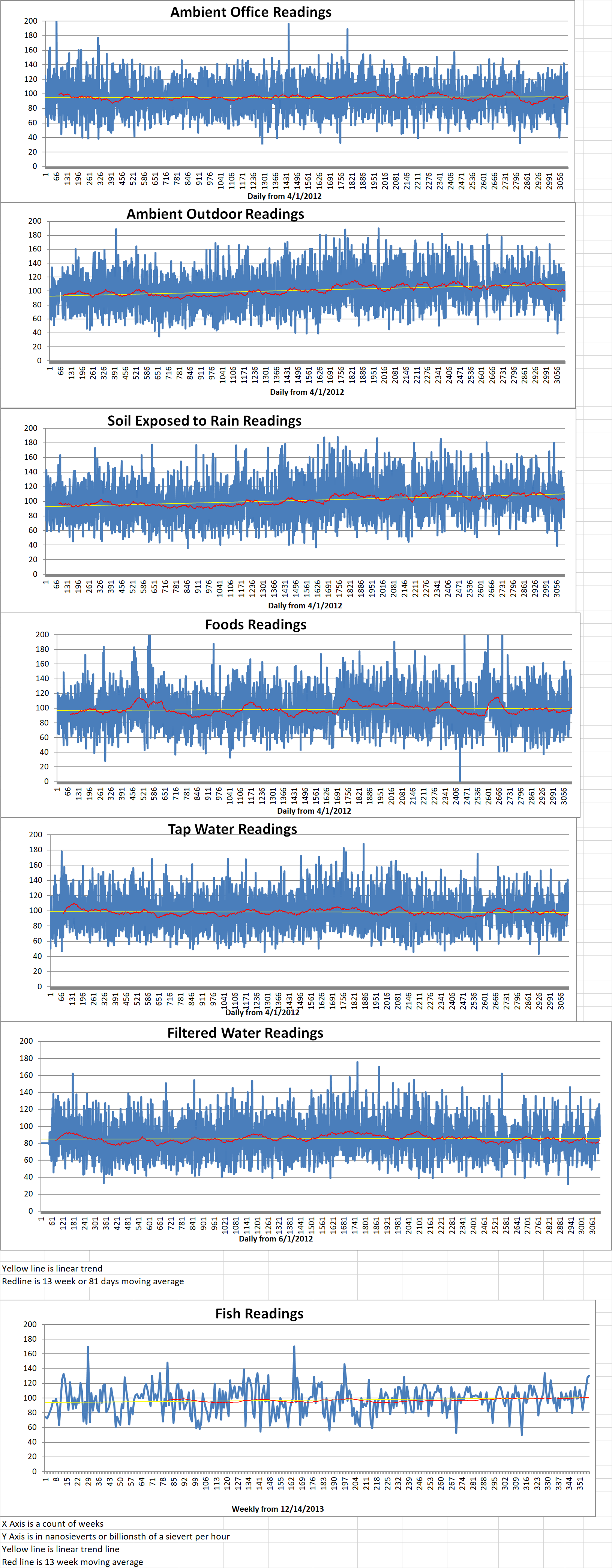
Geiger Readings for Dec 29, 2020
Ambient office = 93 nanosieverts per hour
Ambient outside = 109 nanosieverts per hour
Soil exposed to rain water = 113 nanosieverts per hour
Iceberg lettuce from Central Market = 96 nanosieverts per hour
Tap water = 108 nanosieverts per hour
Filter water = 94 nanosieverts per hour
-

Radioactive Waste 787 – Wet Storage Of Spent Nuclear Fuel Versus Dry Storage – Part 1 of 3 Parts
Part 1 of 3 Parts
One of the main arguments against nuclear power is the continued accumulation of highly radioactive spent nuclear fuel. Until there is a permanent disposal solution, much spent nuclear fuel will have to be stored temporarily. Many commercial nuclear power reactors around the world are approaching the end of their operational lives and temporary storage of spent nuclear fuel is becoming critical.
When the useful nuclear fuel in a fuel rod has been consumed, the fuel rods have to be removed from the reactor. They are hot and radioactive which requires that they spend a few years in a cooling pool to allow cool them to cool the point where they can be handled. They can then be left in the cooling pools for temporary storage or they can be removed from the pool and placed in dry casks made of steel and concrete.
Leaving spent nuclear fuel in cooling pools is widely practiced. This has the benefit of not having to remove the spent fuel for external storage. It has the drawback of taking up space in the cooling pools. There is so much spent nuclear fuel stored in cooling pools around the world that some nuclear reactors may have to be shut down because there is no room left in the cooling pools.
Some countries are working on a closed fuel cycle in which spent fuel is reprocessed and recycled in a wet environment. Some countries store all their spent nuclear fuel in wet conditions until it is cool enough for final disposal. Some countries remove the fuel from the cooling pools as soon as it is cool enough to be handled and place it in dry casks on site or at external temporary storage facilities. Wet storage has been used for decades and obviously works but external dry storage is becoming more popular. It still needs to prove that it is safe and reliable.
Wet storage is an interim storage method where spent nuclear fuel remains in cooling pools at least long enough to dissipate some of its heat and shorter-lived radioactivity which would permit its temporary storage or permanent disposal in dedicated facilities.
Rebecca Weston is the chief operating officer of the Sellafield nuclear facility the U.K. Sellafield is a large multi-function nuclear site close to Seascale on the coast of Cumbria, England. Activities at the site include nuclear fuel reprocessing, nuclear waste storage and nuclear decommissioning, and it is a former nuclear power generating site.
Weston told the 2020 International Atomic Energy Agency Scientific Forum that the U.K. is currently constructing Advanced Gas Reactors (AGR). These are the second generation of gas-cooled reactors developed in Britain following the earlier I Magnox gas-cooled reactors.
As part of the Nuclear Decommissioning Authority (NDA) in the U.K., Sellafield has been involved in the development and construction of thermal oxide reprocessing plants receipt and storage ponds. They have been reconfigured to be an interim storage solution for keeping spent nuclear fuel in the U.K. The AGR fuel will be stored there for the next eighty years. Wet storage supports the U.K, spend nuclear fuel storage strategy that their NDA has developed.
Please read Part 2 next -
Nuclear News Roundup Dec 28, 2020
Earthquake strikes central Croatia, killing five and damaging buildings reuters.com
Washington’s new nuclear waste lead takes on Hanford’s aging tanks opb.org
US Department of Energy backs five advanced nuclear reactor concepts newatlas.com
UK and Euratom sign Nuclear Cooperation Agreement world-nuclear-news.org
-
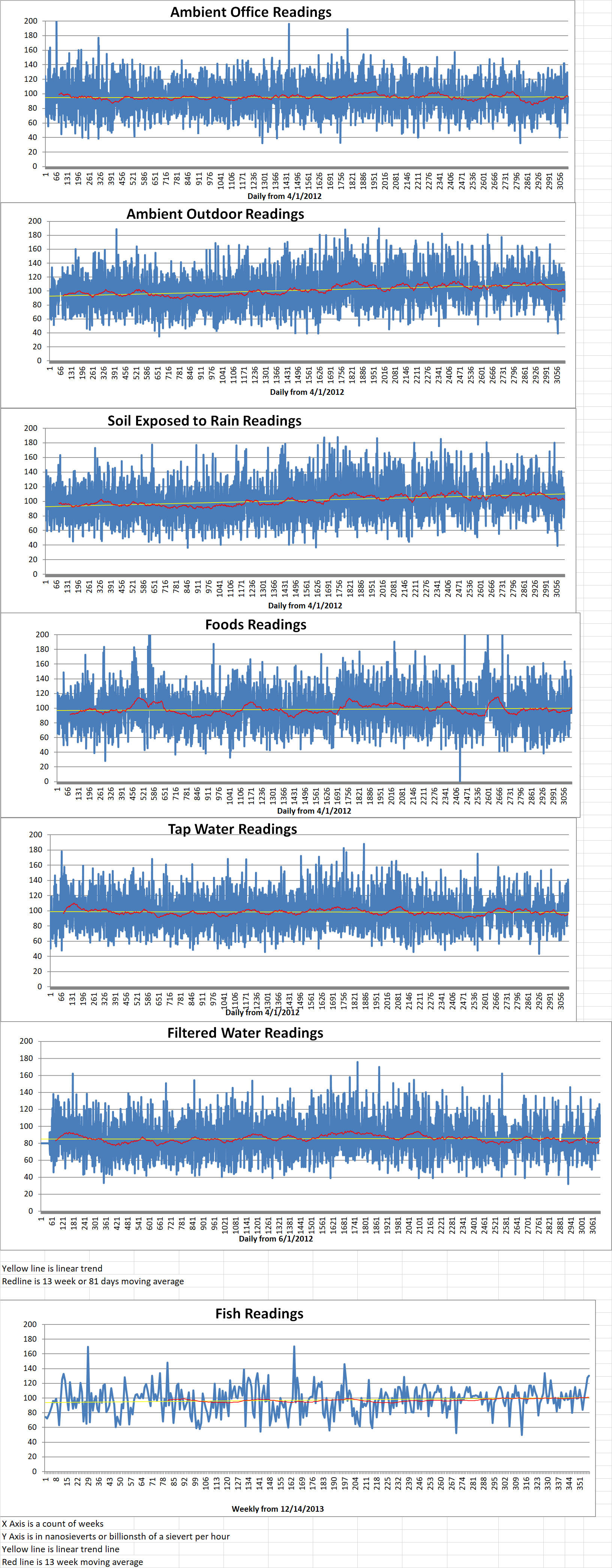
Geiger Readings for Dec 28, 2020
Ambient office = 91 nanosieverts per hour
Ambient outside = 88 nanosieverts per hour
Soil exposed to rain water = 90 nanosieverts per hour
Shallot from Central Market = 94 nanosieverts per hour
Tap water = 109 nanosieverts per hour
Filter water = 95 nanosieverts per hour
-
Nuclear News Roundup Dec 27, 2020
Longtime Anti-Nuclear Activists Face Prison, Again, After Breaking Into Naval Base npr.org
Is nuclear fusion the answer to the climate crisis? Theguardian.com
Oyster Creek Nuclear Waste: Interim Storage Could Change Sites tapinto.net
Ohio Supreme Court stops collection of nuclear plant subsidy tulsaworld.com