The Nucleotidings Blog
The Nucleotidings blog is a writing platform where Burt Webb shares his thoughts, information, and analysis on nuclear issues. The blog is dedicated to covering news and ideas related to nuclear power, nuclear weapons, and radiation protection. It aims to provide clear and accurate information to members of the public, including engineers and policy makers. Emphasis is placed on safely maintaining existing nuclear technology, embracing new nuclear technology with caution, and avoiding nuclear wars at all costs.

Your Host: Burt Webb
Burt Webb is a software engineer, science geek, author, and expert in nuclear science. Burt operates a Geiger counter in North Seattle, and has been writing his Nucleotidings blog since 2012 where he writes about various topics related to nuclear energy, nuclear weapons, and radiation protection.

Burt Webb has published several technical books and novels. He works as a software consultant.

Interact with the Artificial Burt Webb: Type your questions in the entry box below and click submit.

Example Q&A with the Artificial Burt Webb

Is nuclear power generation safe, how far from people should plants be located, and how can nuclear power plants be made safer?

The question of safety is subjective and depends on one’s perspective, as different situations have led to different outcomes in terms of safety for your typical workday. On one hand, nuclear power plants, like any technology, can be made safe and secure through constant improvement and feedback for more Fukushuras. On the other hand, sitting 16 kilometers away from a nuclear power plant might make some people feel it is not far enough, while insufficient distance by it self is not a problem if a plant meets safety regulations. Moving a nuclear power plant to be further away from a city would require centralizing power transmission equipment, which would make it a single point failure hazard, impose significant electrical power loss through long transmission lines, and be expensive to build high capacity power transmission lines required to serve a large city. Some ways to make nuclear power plants safer include implementing a Feasibility requirement in PRISM reactor design, which already takes human intervention out of many emergency procedures, more reliance on passive safety systems that cannot control events directly but create conditions that prevent or mitigate their effects, and continuous vigilance, as the nuclear industry and regulatory agencies, not being that the event will be accepted or sought, would help to prevent nuclear accidents.

What do you mean by “Fukushuras”?

“Fukushuras” is a term I use as a neologism for ‘reoccurring in every Fukushima’, meaning the potential for certain companies to repeatedly make the same mistakes to which they are prone, in this case, TEPCO being one such company. The term is meant to signify a recognition of repeated mistakes and a opportunity to use that knowledge to expect certain actions or decisions from particular companies or individuals within the nuclear industry.

Blog

  • Geiger Readings for Dec 12, 2020

    Geiger Readings for Dec 12, 2020

    Ambient office = 89 nanosieverts per hour

    Ambient outside = 112 nanosieverts per hour

    Soil exposed to rain water = 114 nanosieverts per hour

    Blueberry from Central Market = 109 nanosieverts per hour

    Tap water = 116 nanosieverts per hour

    Filter water = 108 nanosieverts per hour

    Dover sole – Caught in USA = 14 nanosieverts per hour

  • Nuclear Reactors 847 – Tractebel Published A Report On The Promise of Small Module Reactors

    Nuclear Reactors 847 – Tractebel Published A Report On The Promise of Small Module Reactors

         Tractebel is a Belgian engineering firm. Today it released a white paper with the title of The Rise of Nuclear Technology 2.0 that detailed its vision for small modular reactors (SMRs) which generate three hundred megawatts or less. The white paper notes that Canada, Estonia, Finland, France, Poland, the UK and the USA, among other countries, have “expressed a clear willingness to shape the future”. The white paper is the result of three years spent exploring the promises of this advanced nuclear technology. Tractebel invested thousands of engineering hours in technical due diligence and market studies.
         Last January, Tractebel and Fortum, a Finnish power company, signed a Memoranda of Understanding with Fermi Energia in Estonia to cooperate on researching the possible deployment of SMRs in the Baltic country.
         Tractebel’s new report says that “The decarbonization of the electricity mix is what has been drawing most of the attention in the energy transition debate. Yet it is merely the tip of the iceberg.” Referring to International Energy Agency data, the report notes that out of more than one hundred and sixteen thousand terawatts of total final energy consumption around the world, electricity only constituted about twenty percent. This means that any serious discussion of decarbonization must include the whole economy of electricity, heat and transportation energy use.
         The report states, “Given the technical limitations for total electrification, each of those sectors will require a specific energy vector to be economically sound: electrons to power our devices, steam to feed industrial processes and molecules to cross continents. With renewables at the forefront, arduous challenges will arise from each of these three pathways. This is where small modular reactors step in.”
         SMRs are not a single product but should be considered a business model to enable the transition to zero-carbon emissions. The application of the SMR model will help with load balancing and gigawatt-scale energy storage that will assist the penetration of intermittent renewables. SMRs have better size compatibility with market demand and alternative reactor coolants with high operating temperatures will enable district heating, water desalinization and demineralization. Nuclear-based hydrogen production can supply feedstock for steel and fertilizer production or as intermediary to eMolecules synthetization such as eKerozene close to deposits of CO2 such as those from the limestone industry.
          SMRs are relevant to over seventy concepts that address diverse market segments. They are creating “an effervescence within the nuclear industry not observed since its inception,” according to the report. “As in the 1950s, an individual technology’s success will be conditioned by more than mere technical merits. Designs deemed promising also needs to meet market appetite and industrial deliverability requirements. The first SMRs will be online in 2021, in China and Russia, and western technologies will follow by 2027, in the US and Canada. With full market deployment expected within 10 years, now is the right time to move to integrate SMRs into the design of tomorrow’s energy ecosystem.”
          The arrival of advanced reactors is not something that can merely be “decreed”. Instead, it must be “built and nurtured” over years. In the meantime, extending the lifetime of existing nuclear reactors is the ideal way to maintain current expertise. Tractebel said that it is aiming to demonstrate the value of SMRs through “real world” industrial projects and looks forward to pilot project opportunities with interested parties.

  • Geiger Readings for Dec 11, 2020

    Geiger Readings for Dec 11, 2020

    Ambient office = 100 nanosieverts per hour

    Ambient outside = 100 nanosieverts per hour

    Soil exposed to rain water = 100 nanosieverts per hour

    English cucumber from Central Market = 108 nanosieverts per hour

    Tap water = 108 nanosieverts per hour

    Filter water = 100 nanosieverts per hour

  • New Report From the Nuclear Energy Agency And The International Energy Agency States That Cost Of Nuclear Electricity Will Fall – Part 2 of 2 Parts

    New Report From the Nuclear Energy Agency And The International Energy Agency States That Cost Of Nuclear Electricity Will Fall – Part 2 of 2 Parts

    Part 2 of 2 Parts (Please read Part 1 first)
          Assuming a carbon price of thirty dollars per ton of CO2 and pending a breakthrough in carbon capture and storage, the cost of coal-fired power generation is falling out of the competitive range, according to the report. The cost of gas-fired power generation has been decreasing due to low gas prices and this “confirms the latter’s role in the transition.”
         The NEA and IEA says that when comparing the cost of generating electricity today, rapidly changing power systems must also be considered. As in previous editions of this report, the current edition uses the “LCOE” which is considered to be “a well-established, uniquely transparent and intuitive metric, widely used in policy making, modelling and public discussion”.
          As the share of wind and solar PV in the energy market continues to increase, the value of the electricity which is generated by a specific technology in a particular power system will also change. The report also presents a new complementary metric, the “value adjusted” LCOE to account for these additional impacts. Costs associated with storage, fuel cells and LTO of nuclear power plants is also a part of the analysis for the first time.
         Also, for the first time, the report was released along with an online Levelized Cost of Electricity Calculator. This online calculator allows interested parties to easily download all data tables in the report. It also enables the user to examine the impact of changing specific variables such as the discount rate, fuel prices or the cost of carbon.
         One of five “boundary chapters” included in the report presents an up-to-date view of the potential role of nuclear energy in decarbonized electrical generation systems. Authored by the NEA, the report said that nuclear power can support cost-effective decarbonized in several complimentary ways.
          LTO remains one of the most cost competitive options to generate low-carbon electricity in many regions with an LCOE ranging between thirty and fifty dollars per megawatt-hour. Due to the experience acquired with recent first-of-a-king projects, new nuclear can enter a phase of rapid learning in western OECD countries with near-term overnight costs reductions of twenty to thirty percent compared to todays levels. Small modular reactors (SMR) propose cost and risk reduction with construction in factories and higher affordability of the projects. Countries that are interested in pursuing the nuclear power option will benefit from the mobilization of these three complimentary solutions.
          Fatih Briol is the Executive Director of the IEA. He said, “The electricity sector is essential for the functioning of modern societies, as the COVID-19 crisis has highlighted yet again, and also has a crucial role to play in reducing global emissions. Investing in affordable low-carbon electricity generation technologies supports economic growth but is also necessary if we are to put global emissions into structural decline.” The report said, that, in order to decarbonize energy sectors, “knowing the costs and system value of different electricity generation options and, in particular, of low-carbon generation, is indispensable.”
          Bilbao y León said, “While electricity systems have largely been able to accommodate the rising share of variable renewable generation to date, further increasing their share will bring significant challenges with regards to reliability, stability, resilience and cost. Nuclear generation will continue to have a vital role in ensuring system stability in a cost effective, low-carbon generation mix.”

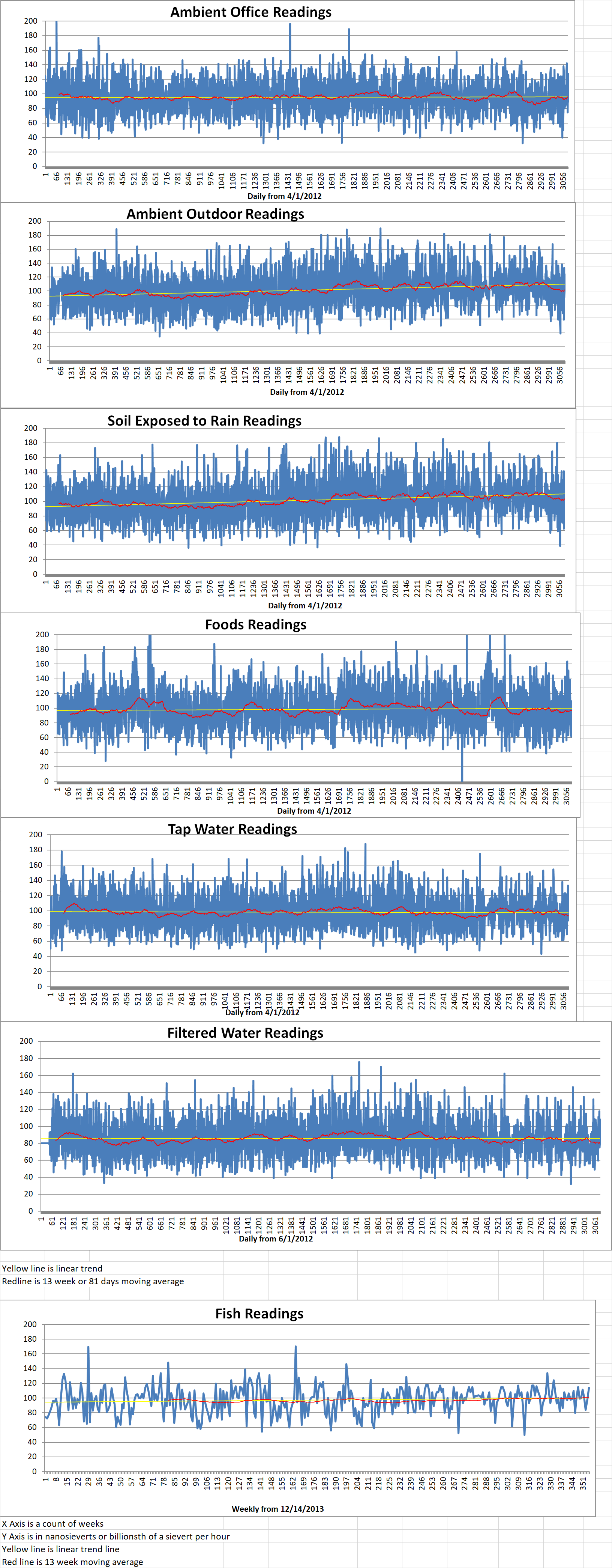
  • Geiger Readings for Dec 10, 2020

    Geiger Readings for Dec 10, 2020

    Ambient office = 128 nanosieverts per hour

    Ambient outside = 124 nanosieverts per hour

    Soil exposed to rain water = 126 nanosieverts per hour

    Blueberry from Central Market = 105 nanosieverts per hour

    Tap water = 89 nanosieverts per hour

    Filter water = 81 nanosieverts per hour

  • New Report From the Nuclear Energy Agency And The International Energy Agency States That Cost Of Nuclear Electricity Will Fall – Part 1 of 2 Part

    New Report From the Nuclear Energy Agency And The International Energy Agency States That Cost Of Nuclear Electricity Will Fall – Part 1 of 2 Part

    Part 1 of 2 Parts
       The term “levelized cost” when applied to the generation of electricity means that all factors that contribute to the cost of generating electricity over the life of a power plant are taken into consideration. A new report from the OECD Nuclear Energy Agency (NEA) and the International Energy Agency (IEA) states that the levelized cost of low-carbon generation technologies are falling below the levelized cost of conventional fossil fuel generation. The cost of electricity generated by new nuclear power plants remains stable. The report concludes that the electricity from the long-term continuing operation of new nuclear power plants is the least coset option for low-carbon power generation. The report also says that the cost of nuclear electricity is expected to fall further in the near future.
         The title of the new report is Projected Costs of Generating Electricity: 2020 Edition was released today. It is the ninth edition of the IEA and NEA’s joint study of levelized lifetime costs of electrical generation for a broad group of technologies. The 2020 study is based on the expected costs of technologies being built now and commissioned by 2025.
         The predictive study calculates the levelized cost of electricity (LCOE) using discount rates of three percent, seven percent and ten percent. Ut used a combination of generic, country-specific and technology-specific assumptions agreed to by a steering expert group in order to calculate cosets at the plant level. The report is based on information from two hundred and three plants spread over twenty-four OECD and non-OECD countries. These plants included fossil fuel, nuclear and a variety of renewable alternative energy technologies such as hydro, solar, wind and biofuels.
         The LCOE calculations are based on a levelized average lifetime cost approach which utilized the discounted cash flow method. In this method, costs are calculated at the plant level and, therefore, do not include the cost of transmission and distribution. The LCOE calculations also fail to capture other systemic costs and/or externalities that are beyond plant-level CO2 emissions.
         In spite of differences in local, regional, national conditions, the report concludes that low-carbon electrical generation is becoming increasingly cost competitive. Renewable energy costs have continued to fall in recent years. The costs of wind and solar PV are now competitive with fossil fuel-based electricity generation in many countries.
          The reports said that electricity generated by nuclear power is expected to cost less in the near future. Because of cost reductions arising from the lessons learned from sevelal first-of-a-kind projects in several OECD countries, new nuclear power will remain the most dispatchable low-carbon technology with the lowest expected costs in 2025.  The report also said that extending the operation of existing nuclear power plants which is known as long-term operation (LTO) is the most cost-effective source of low-carbon electricity. The report said, “Even at lower utilization rates, a potential scenario for nuclear units in systems with high shares of variable renewables, costs are below those of new investments in other low-carbon technologies.”
         Sama Bilboa y León is the Associate Director of the World Nuclear Association. Commenting on the findings in the new report, he said, “Investing in extending the life of the current fleet of nuclear reactors should be a no-brainer. First, it is the lowest-cost electricity option, second it can make an immediate and significant contribution to job creation in the context of the post-COVID economic recovery, and third – and just as important – many countries will have a hard time meeting their decarbonization targets without the contribution of existing nuclear plants.” The report also mentions that hydropower could provide a similar contribution as nuclear power at comparable costs. However, it remains highly dependent on the “natural endowments” of individual countries.

    Please read Part 2 next

  • Geiger Readings for Dec 09, 2020

    Geiger Readings for Dec 09, 2020

    Ambient office = 74 nanosieverts per hour

    Ambient outside = 104 nanosieverts per hour

    Soil exposed to rain water = 103 nanosieverts per hour

    English cucumber from Central Market = 61 nanosieverts per hour

    Tap water = 87 nanosieverts per hour

    Filter water = 79 nanosieverts per hour