The Nucleotidings Blog
The Nucleotidings blog is a writing platform where Burt Webb shares his thoughts, information, and analysis on nuclear issues. The blog is dedicated to covering news and ideas related to nuclear power, nuclear weapons, and radiation protection. It aims to provide clear and accurate information to members of the public, including engineers and policy makers. Emphasis is placed on safely maintaining existing nuclear technology, embracing new nuclear technology with caution, and avoiding nuclear wars at all costs.

Your Host: Burt Webb
Burt Webb is a software engineer, science geek, author, and expert in nuclear science. Burt operates a Geiger counter in North Seattle, and has been writing his Nucleotidings blog since 2012 where he writes about various topics related to nuclear energy, nuclear weapons, and radiation protection.

Burt Webb has published several technical books and novels. He works as a software consultant.

Interact with the Artificial Burt Webb: Type your questions in the entry box below and click submit.

Example Q&A with the Artificial Burt Webb

Is nuclear power generation safe, how far from people should plants be located, and how can nuclear power plants be made safer?

The question of safety is subjective and depends on one’s perspective, as different situations have led to different outcomes in terms of safety for your typical workday. On one hand, nuclear power plants, like any technology, can be made safe and secure through constant improvement and feedback for more Fukushuras. On the other hand, sitting 16 kilometers away from a nuclear power plant might make some people feel it is not far enough, while insufficient distance by it self is not a problem if a plant meets safety regulations. Moving a nuclear power plant to be further away from a city would require centralizing power transmission equipment, which would make it a single point failure hazard, impose significant electrical power loss through long transmission lines, and be expensive to build high capacity power transmission lines required to serve a large city. Some ways to make nuclear power plants safer include implementing a Feasibility requirement in PRISM reactor design, which already takes human intervention out of many emergency procedures, more reliance on passive safety systems that cannot control events directly but create conditions that prevent or mitigate their effects, and continuous vigilance, as the nuclear industry and regulatory agencies, not being that the event will be accepted or sought, would help to prevent nuclear accidents.

What do you mean by “Fukushuras”?

“Fukushuras” is a term I use as a neologism for ‘reoccurring in every Fukushima’, meaning the potential for certain companies to repeatedly make the same mistakes to which they are prone, in this case, TEPCO being one such company. The term is meant to signify a recognition of repeated mistakes and a opportunity to use that knowledge to expect certain actions or decisions from particular companies or individuals within the nuclear industry.

Blog

  • Geiger Readings for Nov 07, 2020

    Geiger Readings for Nov 07, 2020

    Ambient office = 40 nanosieverts per hour

    Ambient outside = 108 nanosieverts per hour

    Soil exposed to rain water = 108 nanosieverts per hour

    Asparagus from Central Market = 79 nanosieverts per hour

    Tap water = 100 nanosieverts per hour

    Filtered water = 83 nanosieverts per hour

    Dover sole – Caught in USA = 100 nanosieverts per hour

  • Nuclear Reactors 832 – New Book Attacks Reprocessing Spent Nuclear Fuel To Produce Plutonium – Part 2 of 2 Part

    Nuclear Reactors 832 – New Book Attacks Reprocessing Spent Nuclear Fuel To Produce Plutonium – Part 2 of 2 Part

    Part 2 of 2 Parts (Please read Part 1 first)
        Each country has the right to waste their own money as they see fit. However, the subject of spent nuclear fuel reprocessing has a significance beyond any single country’s choice of worthwhile projects. The continued production of plutonium poses serious problems for the entire world in terms of the environment and global security.
         Although they may be committed to closing the nuclear fuel cycle, at some point Japan and South Korea must face reality and make some hard decisions about how to permanently dispose of their spent nuclear fuel. The U.S. has also been having trouble make a commitment to construct a geological repository for the permanent disposal of spent nuclear fuel. The earliest the U.S. could have such a repository is 2050.
          The spent nuclear fuel cooling pools around the world are rapidly filling up with spent fuel assemblies. Without permanent repositories, some of these assemblies will have to be moved to temporary storage in concrete and steel casks or their reactors will have to be shut down, The book describes for the first time that the world came close to a much worse nuclear disaster at Fukushima in 2011 that actually occurred. The crowded cooling pools there could have produced a lot more radioactive materials to contaminate the ecosystem than they ultimately did.
         However, the greatest concern is that a tiny amount of the world’s stockpile of plutonium could be obtained by terrorists who could construct what is called a dirty bomb. This is a conventional explosive surrounded by radioactive materials that could be used to contaminate an area. Terrorists could also develop devices to disperse radioactive materials in urban centers triggering panic and evacuation.
         Plutonium was first produced eighty years ago. Since then over five hundred tons have been produced. The International Atomic Energy Agency states that it would only take about eighteen pounds of purified plutonium to make a nuclear bomb. Doing the math, the three hundred tons of plutonium supposedly dedicated to civilian power production could be used to construct more than thirty-five thousand nuclear warheads.
         Continuing to accumulate plutonium is not only a risk because of the possibility of terrorists obtaining it. It also leads to tension between countries. China is worried because Japan has more plutonium than China does. On the other hand, South Korea has no plutonium stockpile. The authors of the book point out that a seldom mentioned concern is that the production and stockpiling of plutonium ostensibly for use in civilian energy production could also be a source of weapons grade plutonium for a possible nuclear weapons program.
       The authors of the book make a serious case for the international community to come together to end the reprocessing of spent nuclear fuel and the production of plutonium, There have been negotiations at the Conference on Disarmament for a fissile material cutoff treaty which would ban the production of plutonium for weapons manufacture but it has been frozen for years. There is also a definite need for a ban on production of plutonium purportedly for civilian energy production.
         This book is detailed but accessible. It provides a clear picture of idea whose claimed benefits are illusions but whose danger is all too real.

  • Geiger Readings for Nov 06, 2020

    Geiger Readings for Nov 06, 2020

    Ambient office = 70 nanosieverts per hour

    Ambient outside = 97 nanosieverts per hour

    Soil exposed to rain water = 98 nanosieverts per hour

    Blueberry from Central Market = 101 nanosieverts per hour

    Tap water = 123 nanosieverts per hour

    Filtered water = 109 nanosieverts per hour

  • Nuclear Reactors 831 – New Book Attacks Reprocessing Spent Nuclear Fuel To Produce Plutonium – Part 1 of 2 Parts

    Nuclear Reactors 831 – New Book Attacks Reprocessing Spent Nuclear Fuel To Produce Plutonium – Part 1 of 2 Parts

    Part 1 of 2 Parts
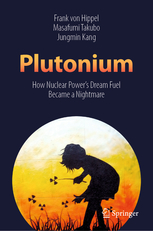
           A new book has recently been published with the title Plutonium: How Nuclear’s Dream Fuel Became a Nightmare. The book was written by Frank von Hippel, Masafumi Takubo and Jungmin Kang. The three authors briefly cover the history of plutonium production, explain the physical realities of the element and its processing and carefully dismantle the arguments supporting the reprocessing of spent nuclear fuel into a new fuel based on plutonium. The book will be translated into Korean and Japanese in the near future. It is hoped that this will help inform the citizens of these two countries about this important topic which is so relevant because the governments of both countries are currently involved in plutonium reprocessing projects.
         Spent nuclear fuel contains far more fissile material than is consumed in the reactor to produce electricity. The fuel is poisoned by the fission reactions with decay products which reduce the ability of the fuel to continue to fission. Early in the atomic age, it was believed that deposits of naturally occurring uranium were rare. Therefore, it was important to find a way to wring as much energy out of nuclear fuel as possible. Reprocessing spent nuclear fuel could produce plutonium which could be used to make new fuel. This made sense in terms of engineering, logic and economics.
          As the years have passed, the discovery of many deposits of natural uranium began to undermine the economic argument for reprocessing to recover plutonium. The cost of mining and refining uranium fell below the cost of reprocessing spent nuclear fuel.  Fuel is not a major factor in the cost of nuclear power today. The great complexity of advanced reactors which could burn plutonium fuel, new safety regulation which applied to all operating power reactors and the continuing drop in cost of renewable energy all combine to negatively impact economic arguments for plutonium reprocessing.
         Currently, only France operates a full plutonium recovery process to produce plutonium from which new fuel can be made. However, they do so at a serious economic loss. Russia does reprocess some spent nuclear fuel and is now testing plutonium fuel in a fast breeder reactor. Japan has a plutonium reprocessing plant at Rokkasho which it has been claiming for the past ten years will soon be in operation. South Korea has announced that it will bring its nuclear power industry to an end soon but some government officials and experts still cling to the hope that South Korea can have spent nuclear fuel reprocessing.
         No other countries that utilize nuclear power are actively working on ‘closing’ the nuclear fuel cycle by reprocessing spent nuclear fuel for plutonium to be used to make new fuel. Germany, Belgium, Switzerland, the U.K. and the U.S. have all abandoned reprocessing efforts due to technical and economic difficulties.
         The authors of the new book systematically tear apart political and technical arguments that support reprocessing. Japan and South Korea have claimed that reprocessing spent nuclear fuel has the benefit of reducing the volume and danger of nuclear waste that must be stored in permanent geological nuclear repositories, but the book demolishes these arguments. It has also been claimed by supporters of reprocessing that plutonium fuel could not be used to make a nuclear weapon, but the authors of the book also destroy this argument.
    Please read Part 2 Next

  • Geiger Readings for Nov 05, 2020

    Geiger Readings for Nov 05, 2020

    Ambient office = 124 nanosieverts per hour

    Ambient outside = 85 nanosieverts per hour

    Soil exposed to rain water = 87 nanosieverts per hour

    Avocado from Central Market = 87nanosieverts per hour

    Tap water = 87 nanosieverts per hour

    Filtered water = 80 nanosieverts per hour

  • Nuclear Reactors 830 – China Seeking Advanced Nuclear Power Reactor Technology From France

    Nuclear Reactors 830 – China Seeking Advanced Nuclear Power Reactor Technology From France

         China has been expanding a lobbying campaign aimed at important French politicians in an attempt to acquire billions of dollars worth of French nuclear technology. Critics of the effort say that Beijing will use such technology to expand its global influence and undermine global security with its “debt-trap diplomacy”. Analysts say that China is working hard on getting a visit from the French President.
        China is trying to restart negotiations for a twelve-billion dollar deal between China and the nuclear energy giant Orano which is controlled by the French Government. The negotiations stalled in late 2018 partly due to serious security concerns raised by the French national security agency, Secretariat General for Defense and National Security (SGDSN).
            The Chinese government was trying to exploit the recent change in French Prime Ministers. Jean Castex replaced Edouard Philipe as the French Prime Minister on July 3rd of 2018. The China National Nuclear Corporation is a state-owned organization which oversees all of China’s military and civilian nuclear program. They had been seeking French nuclear technology for more than ten years.
        When Philipe visited China in 2018, he signed a preliminary deal between Orano and the China National Nuclear Corporation. However, that deal was only for “preparatory work” and it expired at the end of 2018. A senior intelligence source said “With the change in the French leadership, the Chinese are currently lobbying hard to arrange a visit of Macron to China….so that negotiations on restoration of the nuclear project could begin among other agreements that could be reached between the two countries.”
          Beijing hopes that the departure of Philipe who was seen to be strongly connected to China would improve public relations with France and help it to get the deal which would allow it to access the “sensitive” French nuclear technology. China has a long running nuclear program and a few hundred nuclear warheads. What it is seeking from France is state-of-the-art nuclear power plant technology which is used for power generation.
          French and U.S. intelligence agencies are worried that Beijing would exploit such technology by using it as a tool for its expansionistic ‘debt-trap diplomacy’ operations. One senior intelligence source said that “The project has been stuck because of serious concerns expressed by the Secretariat General for Defense and National Security. The agency raised concerns mainly on China’s possible sharing of the sensitive technology to countries in order to gain future nuclear energy projects using its tactics of using predatory loans and debt trap to nations seeking nuclear power.”
         France and China have been negotiating the deal between China National Nuclear Corporation and Orano for more than ten years. The project was discussed by Macro when he visited China in January of 2018. His Prime Minister, Philipe, signed the “preparatory work” agreements five months after the Macro visit.
        Intelligence analysts suggest that if France signed the deal, it would give China powerful state-of-the-art technology that it could use as a lure to financially entrap smaller and poor countries seeks nuclear power.