Part 1 of 2 Parts
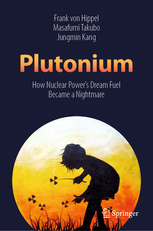
A new book has recently been published with the title Plutonium: How Nuclear’s Dream Fuel Became a Nightmare. The book was written by Frank von Hippel, Masafumi Takubo and Jungmin Kang. The three authors briefly cover the history of plutonium production, explain the physical realities of the element and its processing and carefully dismantle the arguments supporting the reprocessing of spent nuclear fuel into a new fuel based on plutonium. The book will be translated into Korean and Japanese in the near future. It is hoped that this will help inform the citizens of these two countries about this important topic which is so relevant because the governments of both countries are currently involved in plutonium reprocessing projects.
Spent nuclear fuel contains far more fissile material than is consumed in the reactor to produce electricity. The fuel is poisoned by the fission reactions with decay products which reduce the ability of the fuel to continue to fission. Early in the atomic age, it was believed that deposits of naturally occurring uranium were rare. Therefore, it was important to find a way to wring as much energy out of nuclear fuel as possible. Reprocessing spent nuclear fuel could produce plutonium which could be used to make new fuel. This made sense in terms of engineering, logic and economics.
As the years have passed, the discovery of many deposits of natural uranium began to undermine the economic argument for reprocessing to recover plutonium. The cost of mining and refining uranium fell below the cost of reprocessing spent nuclear fuel. Fuel is not a major factor in the cost of nuclear power today. The great complexity of advanced reactors which could burn plutonium fuel, new safety regulation which applied to all operating power reactors and the continuing drop in cost of renewable energy all combine to negatively impact economic arguments for plutonium reprocessing.
Currently, only France operates a full plutonium recovery process to produce plutonium from which new fuel can be made. However, they do so at a serious economic loss. Russia does reprocess some spent nuclear fuel and is now testing plutonium fuel in a fast breeder reactor. Japan has a plutonium reprocessing plant at Rokkasho which it has been claiming for the past ten years will soon be in operation. South Korea has announced that it will bring its nuclear power industry to an end soon but some government officials and experts still cling to the hope that South Korea can have spent nuclear fuel reprocessing.
No other countries that utilize nuclear power are actively working on ‘closing’ the nuclear fuel cycle by reprocessing spent nuclear fuel for plutonium to be used to make new fuel. Germany, Belgium, Switzerland, the U.K. and the U.S. have all abandoned reprocessing efforts due to technical and economic difficulties.
The authors of the new book systematically tear apart political and technical arguments that support reprocessing. Japan and South Korea have claimed that reprocessing spent nuclear fuel has the benefit of reducing the volume and danger of nuclear waste that must be stored in permanent geological nuclear repositories, but the book demolishes these arguments. It has also been claimed by supporters of reprocessing that plutonium fuel could not be used to make a nuclear weapon, but the authors of the book also destroy this argument.
Please read Part 2 Next
Nuclear Reactors 831 – New Book Attacks Reprocessing Spent Nuclear Fuel To Produce Plutonium – Part 1 of 2 Parts