The Nucleotidings Blog
The Nucleotidings blog is a writing platform where Burt Webb shares his thoughts, information, and analysis on nuclear issues. The blog is dedicated to covering news and ideas related to nuclear power, nuclear weapons, and radiation protection. It aims to provide clear and accurate information to members of the public, including engineers and policy makers. Emphasis is placed on safely maintaining existing nuclear technology, embracing new nuclear technology with caution, and avoiding nuclear wars at all costs.

Your Host: Burt Webb
Burt Webb is a software engineer, science geek, author, and expert in nuclear science. Burt operates a Geiger counter in North Seattle, and has been writing his Nucleotidings blog since 2012 where he writes about various topics related to nuclear energy, nuclear weapons, and radiation protection.

Burt Webb has published several technical books and novels. He works as a software consultant.

Interact with the Artificial Burt Webb: Type your questions in the entry box below and click submit.

Example Q&A with the Artificial Burt Webb

Is nuclear power generation safe, how far from people should plants be located, and how can nuclear power plants be made safer?

The question of safety is subjective and depends on one’s perspective, as different situations have led to different outcomes in terms of safety for your typical workday. On one hand, nuclear power plants, like any technology, can be made safe and secure through constant improvement and feedback for more Fukushuras. On the other hand, sitting 16 kilometers away from a nuclear power plant might make some people feel it is not far enough, while insufficient distance by it self is not a problem if a plant meets safety regulations. Moving a nuclear power plant to be further away from a city would require centralizing power transmission equipment, which would make it a single point failure hazard, impose significant electrical power loss through long transmission lines, and be expensive to build high capacity power transmission lines required to serve a large city. Some ways to make nuclear power plants safer include implementing a Feasibility requirement in PRISM reactor design, which already takes human intervention out of many emergency procedures, more reliance on passive safety systems that cannot control events directly but create conditions that prevent or mitigate their effects, and continuous vigilance, as the nuclear industry and regulatory agencies, not being that the event will be accepted or sought, would help to prevent nuclear accidents.

What do you mean by “Fukushuras”?

“Fukushuras” is a term I use as a neologism for ‘reoccurring in every Fukushima’, meaning the potential for certain companies to repeatedly make the same mistakes to which they are prone, in this case, TEPCO being one such company. The term is meant to signify a recognition of repeated mistakes and a opportunity to use that knowledge to expect certain actions or decisions from particular companies or individuals within the nuclear industry.

Blog

  • Geiger Readings for Sep 12, 2020

    Geiger Readings for Sep 12, 2020

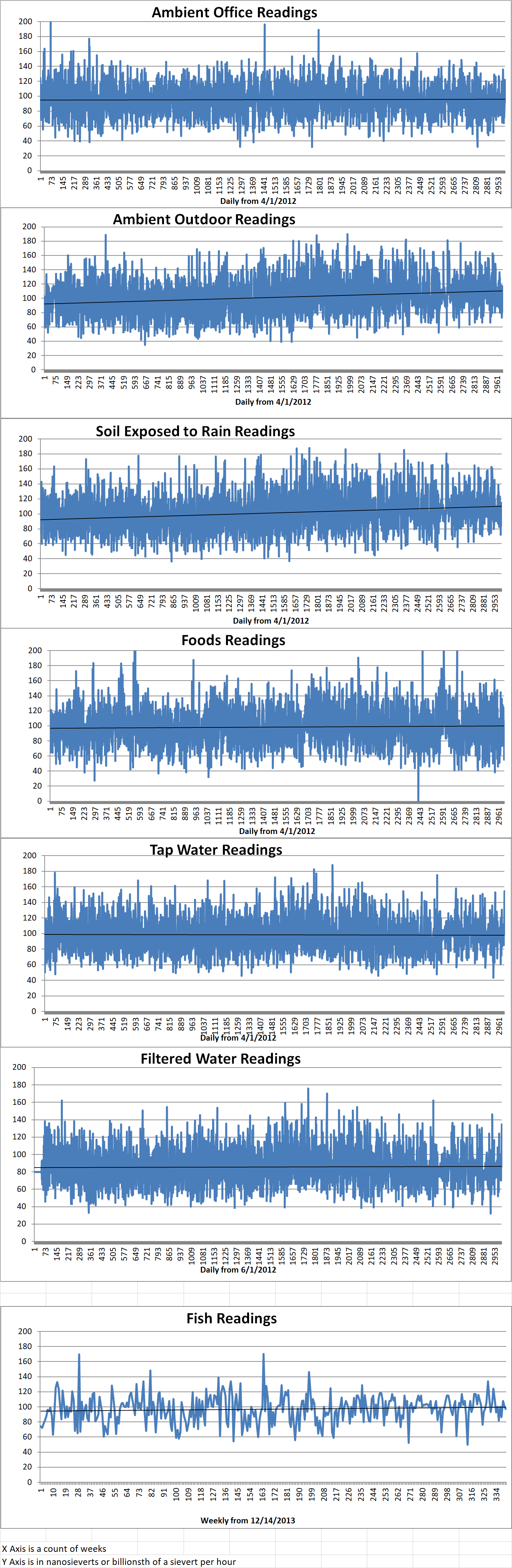
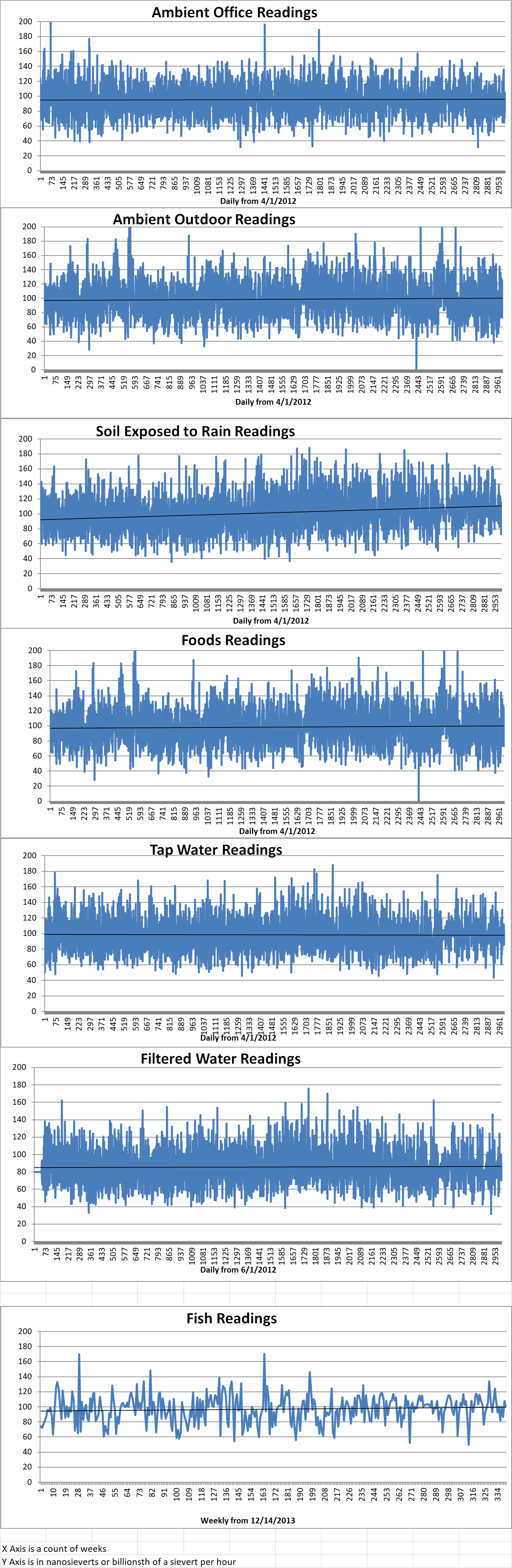
    Ambient office  = 193 nanosieverts per hour

    Ambient outside = 88 nanosieverts per hour

    Soil exposed to rain water = 95 nanosieverts per hour

    English from Central Market = 55 nanosieverts per hour

    Tap water = 155 nanosieverts per hour

    Filtered water = 135 nanosieverts per hour

    Dover sole – Caught in USA = 107 nanosieverts per hour

  • Nuclear Reactors 809 – TerraPower and GE Hitachi Nuclear Are Working On A Combination Reactor and Energy Storage System – Part 5 of 5 parts

    Nuclear Reactors 809 – TerraPower and GE Hitachi Nuclear Are Working On A Combination Reactor and Energy Storage System – Part 5 of 5 parts

    Part 5 of 5 Parts (Please read Part 1, 2, 3 and 4 first)
         GEH was established in 2007 as an alliance between the U.S. conglomerate GE and the Japanese technology company Hitachi. They have an aggressive timeline for the commercialization of their BWRX-300 which is a three hundred megawatt boiling water reactor that they claim could be competitive with natural gas power stations.
    According to a status report issued last June from the International Atomic Energy Agency’s Advanced Reactor Information System database, GEH expects that their first BWRX-300 could begin construction in 2024 and enter commercial operation in 2028.
         Part of the optimism of GEH is based on its evolutionary technology framework. The BWRX-300 is the tenth version of GE’s boiling water reactor (BWRX). GEH says that it represents “the simplest, yet most innovative BWR design since GE began developing nuclear reactors in 1955.” The GEH website notes that the design is based on the Generation III+ one thousand five hundred and twenty megawatt ESBWR which was certified by the Nuclear Regulatory Commission (NRC) in 2014.
         GEH is also leveraging the BWRX-300 evolutionary characteristics to accelerate the licensing process. They are using the NRC’s Part 50 approach to licensing based on the fact that the ESBWR design has been certified. GEH said, “We are generating license topical reports (LTRs) that document the key differences between the ESBWR and BWRX-300 design and safety bases. The first three LTRs have been submitted and will help form the licensing package for a future construction permit application.”
         In February of this year, GEH signed a memorandum of understanding (MOU) to study the economic and technical feasibility of constructing a BWRX-300 in the Czech Republic. GEH has signed similar MOUs with Estonia and Poland. Also in February, GEH started a vendor design review with the Canadian Nuclear Safety Commission. Last month, the company revealed that GE Research has created a “highly detailed virtual model” of the BWRX-300. It plans to begin a three-year study on how artificial intelligence and computer simulations can help monitor and maintain nuclear reactors. They hope to be able to cut operations and maintenance costs by ten times. This is part of the Generating Electricity Managed by Intelligent Nuclear Assets, or “GEMINA” initiative.
          Nuclear industry observers also suggest that the BWRX-300 may be under consideration by the Tennessee Authority (TVA) for its Clinch River Nuclear site in Tennessee. The TVA received the NRC’s approval for an early site permit for two or more small modular reactors at the site last December. The TVA says that it has applied for the DoE’s ADRP FOA. However, they have declined to provide any details. “At this time, details of the proposal are business sensitive and proprietary in nature,” according to GEH.
        With respect to the question of whether or not GEH anticipates that there will be any conflicts marketing Natrium as a competitor to the BWRX-300, they note that the two technologies “can be optimized for different applications.”
         The BWRX-300 “is focused on achieving a cost-competitive design that is ready for rapid deployment. BWRX-300 combines new innovation with proven technology and a certified fuel design, making it ideally suited for the near-term market and solving one of the biggest challenges facing the industry — cost,” GEH explained. Because “Natrium operates at higher temperatures, it is ideally suited for applications such as hydrogen production, industrial heat applications and energy storage.” Natrium is also able to consume spent nuclear fuel because it operates in the fast neutron spectrum. “We see important applications for each technology,” GEH said.

  • Geiger Readings for Sep 11, 2020

    Geiger Readings for Sep 11, 2020

    Ambient office  = 122 nanosieverts per hour

    Ambient outside = 109 nanosieverts per hour

    Soil exposed to rain water = 111 nanosieverts per hour

    Lemon from Central Market = 106 nanosieverts per hour

    Tap water = 98 nanosieverts per hour

    Filtered water = 89 nanosieverts per hour

  • Nuclear Reactors 808 – TerraPower and GE Hitachi Nuclear Are Working On A Combination Reactor and Energy Storage System – Part 4 of 5 parts

    Nuclear Reactors 808 – TerraPower and GE Hitachi Nuclear Are Working On A Combination Reactor and Energy Storage System – Part 4 of 5 parts

    Part 4 of 5 Parts (Please read Part 1, 2 and 3 first)
         TerraPower confirmed earlier this week that it had submitted a proposal based on the Natrium system to the ARDP FOA as part of a consortium that includes GEH and Bechtel. They said, “Both TerraPower and GE Hitachi have extensive sodium fast reactor design, analysis, licensing, and testing experience spanning decades. For the ARDP proposal, Bechtel adds current and unmatched experience managing and executing large nuclear projects and the team’s utility partners bring operating capabilities alongside a market demand for utility-scale advanced nuclear technologies.” TerraPower also said that it did not specifically submit an application for its traveling wave reactor (TWR) because the “Natrium system combines the best of the [TWR] and GE Hitachi’s PRISM technology.”
         TerraPower was asked whether they will continue development of the TWR, a liquid sodium-cooled reactor that garnered substantial industry interest because it uses depleted uranium as a fuel. TerraPower did not reply to that specific question but a fact sheet on the TerraPower website updated on August 4th of this year suggested that a TWR could be operational by the mid-2020s. They pointed out that this is, “years earlier than projections for other Generation IV technologies.”
         TerraPower says that the TWR conceptual design is almost complete and that they are now moving on to engineering which will involve the “testing fuels and materials, building a database of experience, fabricating metallic fuel, obtaining required licenses and permits and continuing the development of a supply chain of companies that will be able to fabricate the necessary equipment and components for the TWR plant.” The company also says that it has been working for a decade to create the necessary supply chain for TWR materials, components and fuel. They say that their company “continues to utilize American companies to provide best-in-class products and services.”     
         TerraPower is also exploring a one thousand two hundred megawatt molten chloride fast reactor (MDCFR) design that uses molten chloride salt both as a fuel and a coolant. They said that the concept presents “a low-cost reactor that can operate safely in high-temperature regimes.” It will also offer potential in alternative industrial markets such as processing heat and thermal storage. Development of the MCFR has proceeded with a five-year forty million dollar cost-sharing award from the DoE obtained in 2016. The project also has solid nuclear industry backing, including a public-private partnership that includes Southern Co., Oak Ridge National Laboratory, Idaho National Laboratory (INL), the Electric Power Research Institute (EPRI), and Vanderbilt University.
         At the end of June of this year, the DoE stated that it had invested over twenty-eight million dollars in cost-shared funds to further identify and test materials used in the reactor. To date, Southern Company and TerraPower are in the final states of the design phase for an “integrated effects test” in support of the MCFR program. The project partners, which expect to being testing in the twenty million dollar test facility beginning in 2021, have so far “successfully scaled up their salt manufacturing process to enable this testing. Data generated from the test facility will be used to validate thermal hydraulics and safety analysis codes for licensing of the reactor,” according to the DoE.
    Please read Part 5 next

  • Geiger Readings for Sep 10, 2020

    Geiger Readings for Sep 10, 2020

    Ambient office  = 122 nanosieverts per hour

    Ambient outside = 91 nanosieverts per hour

    Soil exposed to rain water = 91 nanosieverts per hour

    Avocado from Central Market = 103 nanosieverts per hour

    Tap water = 103 nanosieverts per hour

    Filtered water = 86 nanosieverts per hour

  • Nuclear Reactors 807 – TerraPower and GE Hitachi Nuclear Are Working On A Combination Reactor and Energy Storage System – Part 3 of 5 parts

    Nuclear Reactors 807 – TerraPower and GE Hitachi Nuclear Are Working On A Combination Reactor and Energy Storage System – Part 3 of 5 parts

    Part 3 of 5 Parts (Please read Part 1 and 2 first)
         GEH and TerraPower are also part of a team led by Bechtel National Inc. that was recently selected by Battelle Energy Alliance (BEA) to lead the design and construction phase of the DoE’s Versatile Test Reactor (VTR), a one-of-a-kind research facility designed to give U.S. companies access to fast spectrum irradiation testing. Negotiations are continuing for that contract.
         GEH and TerraPower had previously collaborated to provide a conceptual design for the VTR project that incorporated GEH’s PRISM technology. Kemal Pasamehmetoglu is executive director of the VTR project. He said that the VTR is awaiting Critical Decision-1. It will probably be a 300-megawatt sodium-cooled pool-type fast reactor based on the PRISM design that will use fuels with metallic alloys, including high-assay low-enriched uranium fuel (HALEU).
        Pasamehmetoglu is confident that technical implementation of the test reactor does not poses a challenge. He did mention that although the DoE has pushed for a 2026 completion date to allow a wide range of advanced and existing nuclear technology developers to test their concepts, the project’s time completion hinges on Congressional appropriations.
         The two hundred and ninety-five million dollars requested by the DoE in fiscal year 2021 to kick off the project remains uncertain. Funding delays could push the project’s completion to 2031. That would constitute a significant hurdle for an array of advanced nuclear developers who are banking on the facility to commercialize their technologies in the late 2020s.
          Pasamehmetoglu mentioned that the only viability for testing fast spectrum irradiation currently accessible to U.S. companies is the BOR-60 reactor in the Russian Federation. The BOR-60 fast neutron reactor is one of the key experimental facilities in the world able to perform large-scale tests of fuel, absorbing, and structural materials for advanced reactors.  It was put into operation in December of 1969. Although it was supposed to be retired in 2014, a great deal of work has been done in the past few years to justify continuing operation. However, the use of the BOR-60 reactor does have some problem for U.S. companies including export control concerns for materials and fuels testing, intellectual property rights, quality assurance and transportation issues.
          Pasamehmetoglu went on to say, “Existing test reactors, like the Advanced Test Reactor at Idaho National Laboratory and the High Flux Isotope Reactor at Oak Ridge National Laboratory, are thermal neutron reactors and are not capable of sustaining neutrons at concentrations and speeds high enough to perform accelerated testing of innovative nuclear technologies under development.”
         The VTR urgency is highlighted by an Advanced Reactor Demonstration Program funding award opportunity (FOA) released by the DoE last May to provide one hundred and sixty million dollars to the U.S. nuclear industry in the first year of funding for the construction of two reactors that can be operational within the next five to seven years. The period to submit applications to the FOA closed on August 19th of this year. A selection of the demonstration pathway award (or awards) is likely in October of 2020.
    Please read Part 4 next

  • Geiger Readings for Sep 09, 2020

    Geiger Readings for Sep 09, 2020

    Ambient office  = 100 nanosieverts per hour

    Ambient outside = 81 nanosieverts per hour

    Soil exposed to rain water = 84 nanosieverts per hour

    Lemon from Central Market = 102 nanosieverts per hour

    Tap water = 104 nanosieverts per hour

    Filtered water = 85 nanosieverts per hour