
Part 15 of 18 Parts (Please read Parts 1 thru 14 first)
Heinrich Hora’s approach to nuclear fusion is just one of many designs in different stages of development. It is not necessarily the best but only time will tell. In the meantime, it is an excellent introduction to the exiting field of laser fusion research. Here are some key ideas.
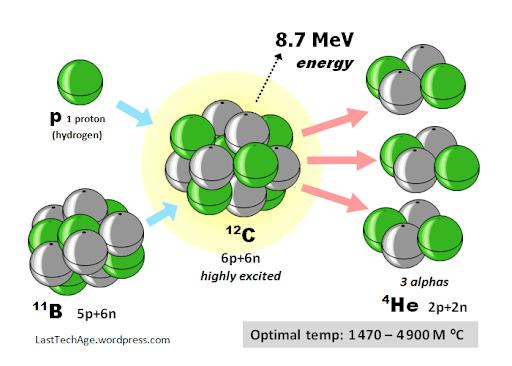
1. When a nucleus of hydrogen (a proton) and a boron nucleus fuse, three helium nuclei (alpha particles) are produced which fly away at high velocity. Because the alpha particles carry a positive electric charge, it may be possible to convert their energy of motion directly into electrical power.
2. It is extremely difficult to produce the conditions that allow hydrogen-boron fusion. If heat is used, the temperature that must be reached must be in the billions of degrees. Even at this temperature, the probability that there will be a reaction (which depends on the “cross section”) is small. The plasma must be kept at extremely high densities under huge pressures (extended confinement times) in order to ignite the hydrogen-boron reaction and achieve a significant degree of “burn-up” or consumption of fuel.
3. Lasers can be used to trigger “microexplosions” of tiny pellets of hydrogen-boron fuel. A laser based hydrogen-boron fusion reactor would have to work on the basis of ultra-short laser pulses which would be use to generate one microexplosion per second in a special chamber constructed to extract electric energy from the bursts of alpha particles generated by the fusion reaction.
4. Research into laser-based fusion in microexplosions have been carried out since the idea originated when the first hydrogen bomb was being developed. The early ideas for laser fusion were based on hitting a spherical pellet of fuel from all sides simultaneously with ultra-powerful laser pulses. This both heated and compressed the fuel pellet. However, instabilities tend to develop in plasma when rapidly heated and this interferes with the compression and ignition process.
5. One approach to laser fusion that avoids the problems of these early approached involved using laser pulses that were much shorter than the original pulses.
6. Theoretical predictions and experimental results support the idea of “ponderomotive” forces triggered in target fuel materials under the actions of intense pulses of laser light which operate differently than effects caused by heating alone. This manages to ignite fusion without time for instabilities to develop. The shorter and “cleaner” laser pulses for this approach rely on ponderomotive force rather than thermal effects to trigger fusion. Calculations predict that under the proper conditions, ultra-short, ultra-powerful laser pulse should accelerate macroscopic portions of a plasma to extreme velocities.
7. In 1985, laser chirped pulse amplification or (CPA) allowed laser pulses to be amplified to huge energy levels. Lasers were developed with power in the petawatt (or a million billion watts) range with pulse lengths of a picosecond (a trillionth of a second) or greater.
8. In 1996, experimental confirmation of plasma portion acceleration was obtained.
9. Calculations suggested that ignition of hydrogen-boron fusion could be reached more easily with a cylindrical shape container that used a single laser pulse focused on the end of a cylindrical fuel pellet. This should be far better than the results of hitting a spherical pellet from all sides simultaneously. The portion of the plasma that is accelerated slams into the rest of the plasma and acts like a “piston” to compress the rest of the fuel. Densities of current millions of time greater than any particle accelerator can be achieved.
10. Huge numbers of hydrogen-boron reactions have been recorded following the irradiation of a fuel pellet with a single high-power laser pulse.
Please read Part 16 next
Blog
-
Nuclear Fusion 98 – Powerful Lasers And A Mixture of Hydrogen and Boron Are Being Researched As The Basis For Nuclear Fusion Power Generation – Part 15 of 18 Parts
-
Nuclear News Roundup Aug 17, 2020
Despite U.S. Sanctions Bid, Iran Aims to Keep Nuclear Deal Alive Until U.S. Election usnews.com
Low water levels may further restrict output at France’s Chooz nuclear plant reuters.com
PSC approves Duke nuclear decommissioning plan floridapolitics.com
Hitachi seeks to resurrect Welsh nuclear plant plans ft.com
-
Geiger Readings for Aug 17, 2020
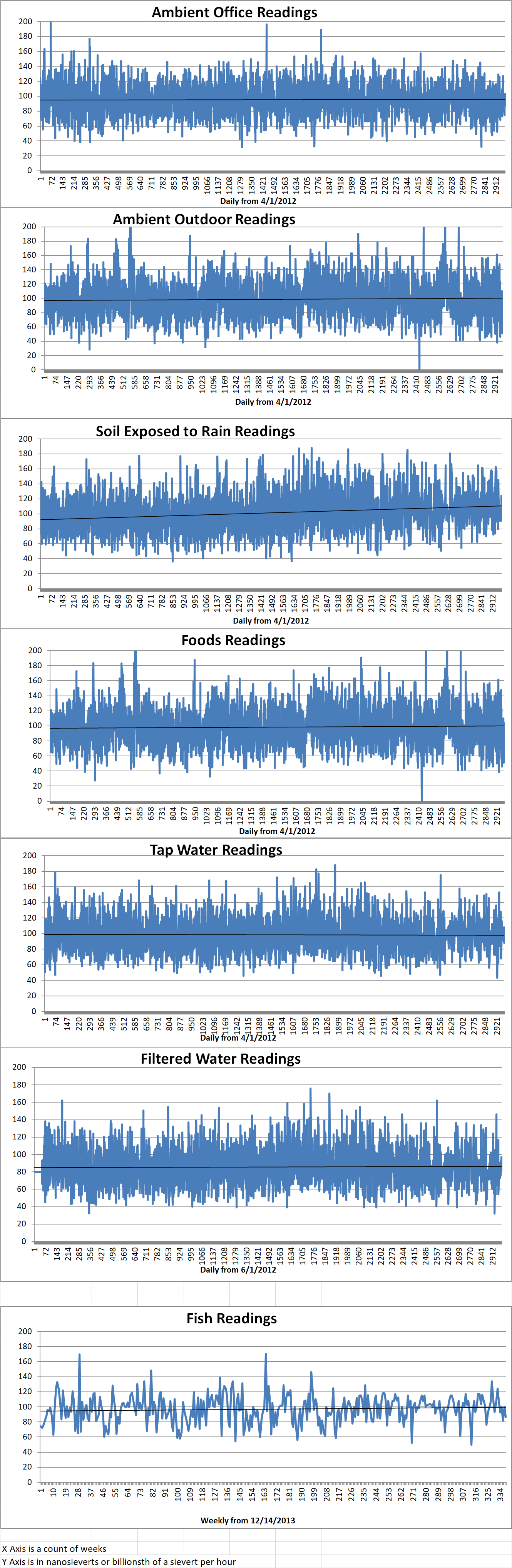
Ambient office = 103 nanosieverts per hour
Ambient outside = 125 nanosieverts per hour
Soil exposed to rain water = 124 nanosieverts per hour
Peach from Central Market = 104 nanosieverts per hour
Tap water = 94 nanosieverts per hour
Filtered water = 84 nanosieverts per hour
-
Nuclear News Roundup Aug 16, 2020
Energoatom disputes text of market rules world-nuclear-news.org
Work Ongoing at US Nuclear Repository Despite Virus Cases isnews.com
SMR developer and engineering firm to collaborate on helium technology world-nuclear-news.org
Jacobs to assist Moltex in development of SSR world-nuclear-news.org
-
Geiger Readings for Aug 16, 2020
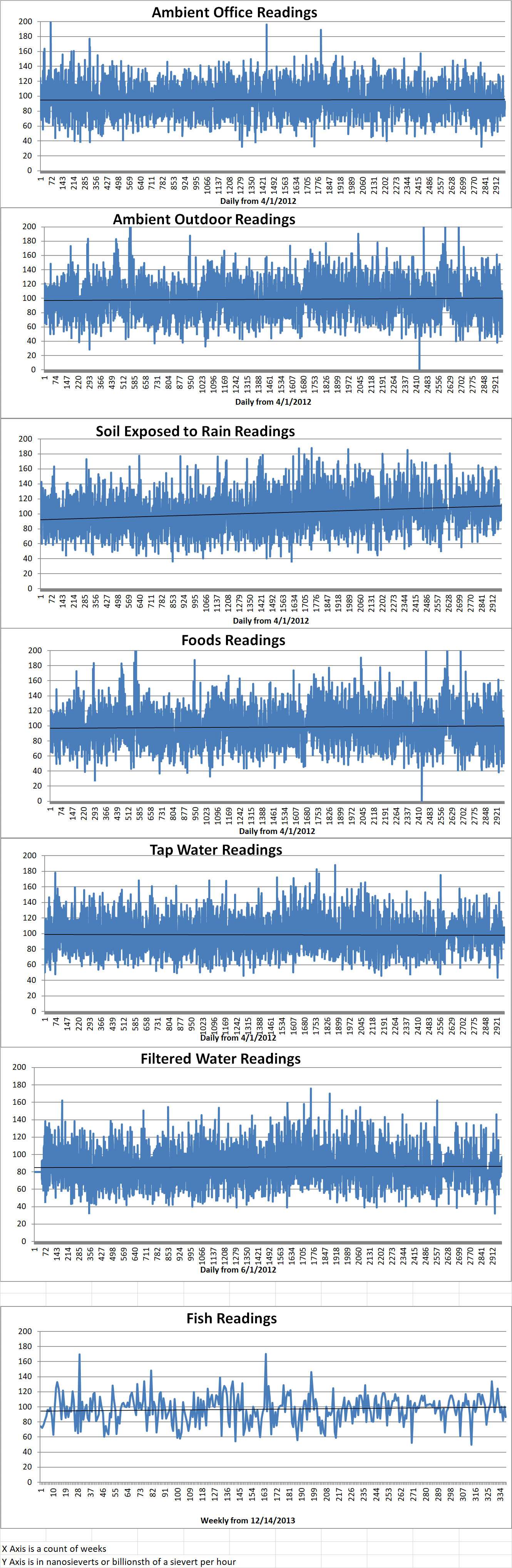
Ambient office = 92 nanosieverts per hour
Ambient outside = 109 nanosieverts per hour
Soil exposed to rain water = 112 nanosieverts per hour
Red bell pepper from Central Market = 96 nanosieverts per hour
Tap water = 89 nanosieverts per hour
Filtered water = 80 nanosieverts per hour
-
Geiger Readings for Aug 15, 2020
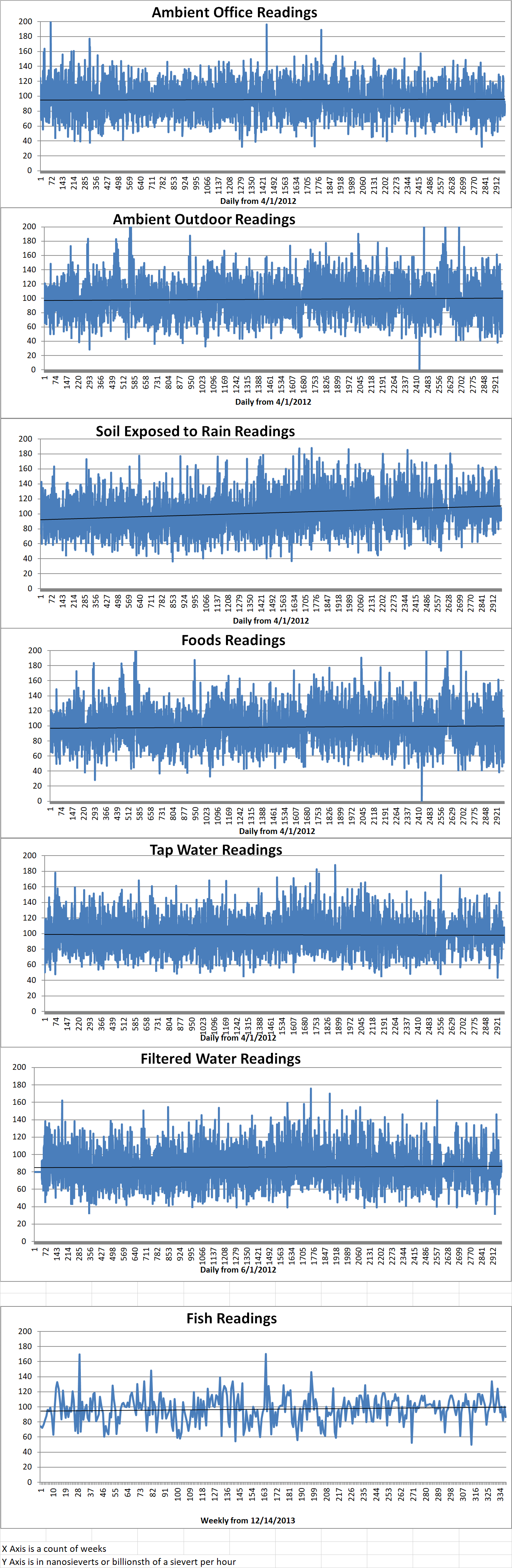
Ambient office = 89 nanosieverts per hour
Ambient outside = 91 nanosieverts per hour
Soil exposed to rain water = 96 nanosieverts per hour
Blueberry from Central Market = 97 nanosieverts per hour
Tap water = 89 nanosieverts per hour
Filtered water = 83 nanosieverts per hour
Dover sole – Caught in USA = 87 nanosieverts per hour
-
Nuclear News Roundup Aug 15, 2020
The Air Force put out a request for information regarding how to improve detection capabilities. Nextgov.com
Chinese fast reactor completes trial operating cycle world-nuclear-news.org
New £25million contracts support nuclear decommissioning www.gov.uk
Israel Condemns UN Security Council’s Vote on Iran Embargo google.com
-

Nuclear Fusion 97 – Powerful Lasers And A Mixture of Hydrogen and Boron Are Being Researched As The Basis For Nuclear Fusion Power Generation – Part 14 of 18 Parts
Part 14 of 18 Parts (Please read Parts 1 thru 13 first)
Every process in nature operates on a particular time scale. The instabilities that plague the laser ablation process require a certain amount of time to develop. If our new process operates on a much smaller time scale, then the instabilities will not have the time to develop. To be specific, the troublesome Rayleigh-Taylor instability requires a time scale of nanosecond or billionths of a second to appear. By contrast, the formation and accelerations of portions of plasma observed by Sauerbrey and others take place on a time scale of picoseconds or a trillionth of a second. This is over a thousand times shorter than the nanoseconds involved in Rayleigh-Taylor instability.
The ponderomotive force which is evoked by the laser pulse’s electric and magnetic fields has its impact long before the heating and resulting pressure have time to develop. Picosecond or femtoseconds are required to trigger the ponderomotive force. Nanosecond pulses were employed by the National Ignition Facility in experiments that attempted but failed to reach fusion ignition by the heat-driven process of ablative implosion were far too long.
Hora said, “It took dozens of years to realize the basic difference between the thermodynamic dominated laser fusion with nanosecond pulses in contrast to the entirely different non-thermal processes with the thousand times shorter picosecond laser-plasma interaction. For nanosecond interaction … the laser energy has to be thermalized to produce… the hydrodynamic and gas-dynamic pressures for ablation, compression, heating and thermonuclear reactions… These problems can be reduced if the processes are performed within very short times such that the problematic mechanisms don’t have sufficient time to develop… During the interaction, the dominating forces are not of thermodynamic nature but of the non-thermal electrodynamics of the laser fields with the plasma.”
Hora dropped the spherical implosion scenario in favor of something much simpler. He used a cylindrical shape instead of illuminating a spherical target by simultaneously hitting it from all sides with laser pulses. Hora’s design called for focusing a single ultra-high-power laser pulse on one end of the cylinder. Nuclear fusion ignition would be achieved by a single plasma portion “piston” propelled by the ponderomotive force into the bulk of the fuel.
In 2009 and 2010, extensive calculations indicated that the conditions for ignition of a hydrogen-boron fuel via laser pulse are much easier to reach with cylindrical geometry. Actually, this should not be much more difficult than triggering the popular deuterium-tritium reaction.
During that time, laboratory experiments demonstrated the generation of hydrogen-boron reactions triggered by ultra-short-pulse lasers. The quantity of the reactions observed grew rapidly as the laser intensities and laser pulse qualities were improved. Analysis of the experimental results proved that the reactions were triggered by nonthermal mechanisms, rather than heat.
In 2005, the group led by Belyaev in Moscow, Russia succeeded for the first time in triggering hydrogen-boron reactions by an intense picosecond laser pulse hitting a boron rich polymer target. One hundred thousand alpha particles were observed as products of the hydrogen-boron reaction.
In 2014, similar experiments carried out at the Prague Asterix Laser System (PALS) facility in the Czech Republic yielded several millions of alpha particles per shot. Following that experiment, there was a sustained effort by the PALS group to optimize the target and laser pulse profiles which pushed the number up to a billion alpha particles per shot. Finally, at the beginning of 2020, an international scientific team, from the Czech Republic and Poland released an announcement titled “Laser-driven proton-boron fusion: A way to radiation-free nuclear energy?” This paper said that they had achieved one hundred billion alphas and issued a call for action:
“Following a recent experiment at the Prague Asterix Laser System (PALS), Czech Republic, we report a record yield of 1011 alpha particles, achieved by focusing a sub-nanosecond, 600 J laser beam onto a boron nitride thick target. … We show that such a surprising figure is not of a thermonuclear nature. It is rather explicable in terms of a beam-driven fusion scheme… The reaction yield achieved this way is 100 times higher than that achieved at the same facility in 2014, and preludes to a further 10-time increase by straightforward optimization of the target. Our findings, recent theoretical predictions and the advent of dramatically enhanced laser capabilities call for an urgent, systematic investigation of possible ignition schemes in laser-driven proton-boron fusion.”
Please read Part 15 next -
Nuclear News Roundup Aug 14, 2020
‘Derecho’ storm causes Cargill plant closure, emergency shutdown of nuclear plant in Iowa startribune.com
Japan’s nuclear fuel imports almost zero in 2019 as industry stagnates japantimes.com
X-energy makes Canadian SMR review submission world-nuclear-news.org
Uzbek, Hungarian ministers discuss cooperation in nuclear energy world-nuclear-news.org
-
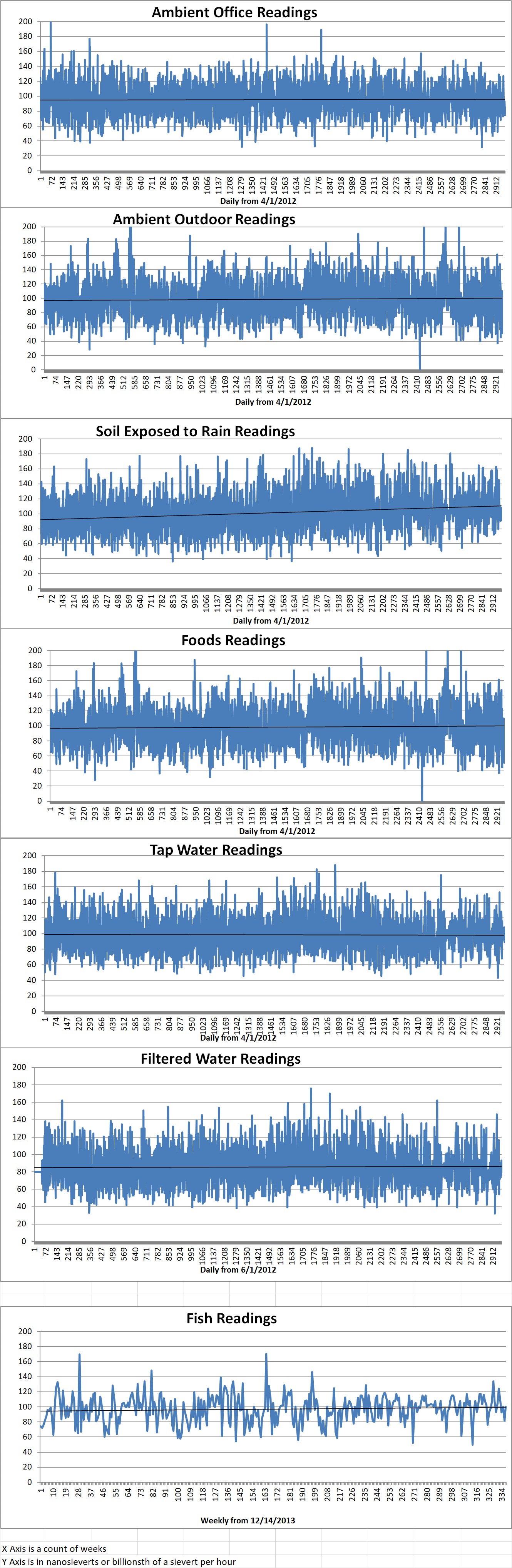
Geiger Readings for Aug 14, 2020
Ambient office = 85 nanosieverts per hour
Ambient outside = 108 nanosieverts per hour
Soil exposed to rain water = 104 nanosieverts per hour
Avocado from Central Market = 96 nanosieverts per hour
Tap water = 89 nanosieverts per hour
Filtered water = 80 nanosieverts per hour