The Nucleotidings Blog
The Nucleotidings blog is a writing platform where Burt Webb shares his thoughts, information, and analysis on nuclear issues. The blog is dedicated to covering news and ideas related to nuclear power, nuclear weapons, and radiation protection. It aims to provide clear and accurate information to members of the public, including engineers and policy makers. Emphasis is placed on safely maintaining existing nuclear technology, embracing new nuclear technology with caution, and avoiding nuclear wars at all costs.

Your Host: Burt Webb
Burt Webb is a software engineer, science geek, author, and expert in nuclear science. Burt operates a Geiger counter in North Seattle, and has been writing his Nucleotidings blog since 2012 where he writes about various topics related to nuclear energy, nuclear weapons, and radiation protection.

Burt Webb has published several technical books and novels. He works as a software consultant.

Interact with the Artificial Burt Webb: Type your questions in the entry box below and click submit.

Example Q&A with the Artificial Burt Webb

Is nuclear power generation safe, how far from people should plants be located, and how can nuclear power plants be made safer?

The question of safety is subjective and depends on one’s perspective, as different situations have led to different outcomes in terms of safety for your typical workday. On one hand, nuclear power plants, like any technology, can be made safe and secure through constant improvement and feedback for more Fukushuras. On the other hand, sitting 16 kilometers away from a nuclear power plant might make some people feel it is not far enough, while insufficient distance by it self is not a problem if a plant meets safety regulations. Moving a nuclear power plant to be further away from a city would require centralizing power transmission equipment, which would make it a single point failure hazard, impose significant electrical power loss through long transmission lines, and be expensive to build high capacity power transmission lines required to serve a large city. Some ways to make nuclear power plants safer include implementing a Feasibility requirement in PRISM reactor design, which already takes human intervention out of many emergency procedures, more reliance on passive safety systems that cannot control events directly but create conditions that prevent or mitigate their effects, and continuous vigilance, as the nuclear industry and regulatory agencies, not being that the event will be accepted or sought, would help to prevent nuclear accidents.

What do you mean by “Fukushuras”?

“Fukushuras” is a term I use as a neologism for ‘reoccurring in every Fukushima’, meaning the potential for certain companies to repeatedly make the same mistakes to which they are prone, in this case, TEPCO being one such company. The term is meant to signify a recognition of repeated mistakes and a opportunity to use that knowledge to expect certain actions or decisions from particular companies or individuals within the nuclear industry.

Blog

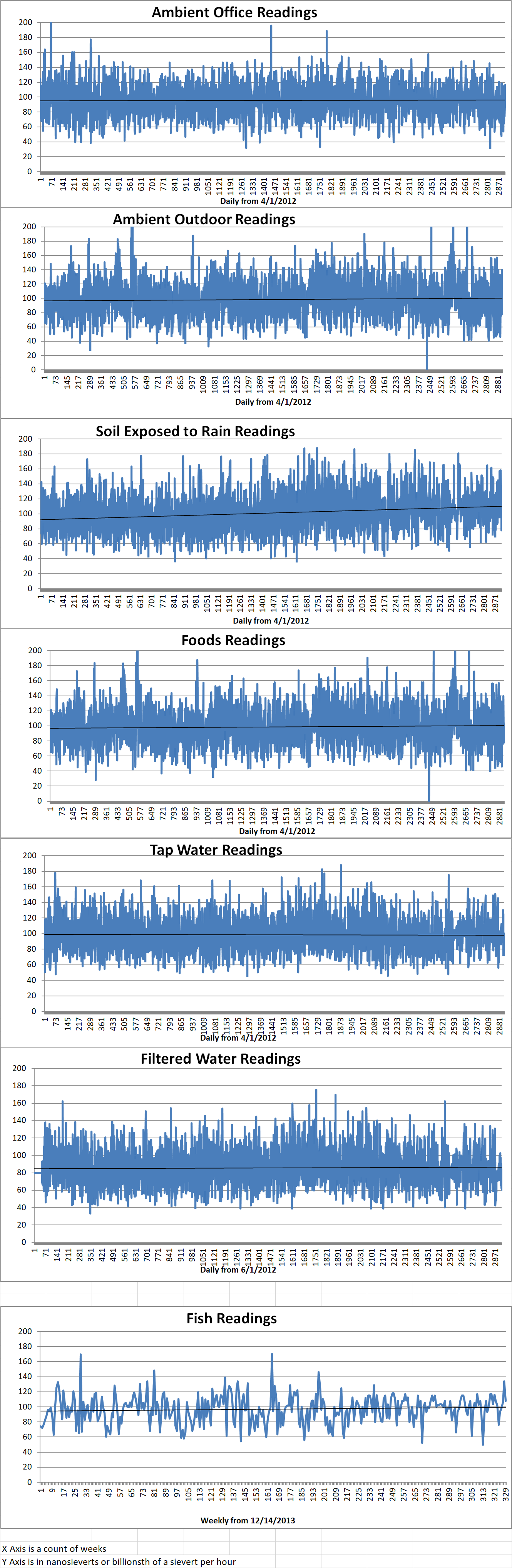
  • Geiger Readings for Jun 20, 2020

    Geiger Readings for Jun 20, 2020

    Ambient office  = 107 nanosieverts per hour

    Ambient outside = 97 nanosieverts per hour

    Soil exposed to rain water = 96 nanosieverts per hour

    English cucumber from Central Market = 74 nanosieverts per hour

    Tap water = 109 nanosieverts per hour

    Filtered water = 85 nanosieverts per hour

    Dover sole – Caught in USA = 93 nanosieverts per hour

  • Nuclear Reactors 798 – New U.K. Report Advises Additional 5.4 Gigawatts of Nuclear Capacity

    Nuclear Reactors 798 – New U.K. Report Advises Additional 5.4 Gigawatts of Nuclear Capacity

    In the U.K., Energy Systems Catapult just issued a report titled “Nuclear for Net Zero” that said that the U.K. should commit to another ten gigawatts of new nuclear capacity beyond the EDF Energy/CGN Hinkley Point C project. They said that it was a “low-regrets option,” but that the costs of construction needed to be significantly reduced if nuclear power was going to fulfil its long-term potential. The U.K. Nuclear Industry Association (NIA) and project developer Horizon Nuclear Power are enthusiastic about the ESC technical and economic assessment that delivering a clean energy system should include a major proportion of new nuclear capacity.
         Energy System Catapult is based in Birmingham, England. It is an independent, not-for-profit organization for industry, government, academia, and research. ESC also says that small modular light water reactors (SMR) that would be able to deliver cogeneration of heat and electricity are “worthy of particular attention”.
        The NSC report describes how nuclear power could play a significant role in driving the growth of a hydrogen fuel economy and provide district heating. This would place the U.K. nuclear industry at the heart of the push for deep carbonization across the U.K. Transportation, building construction and operation, and industrial processes have to reduce emissions from burning fossil fuel, mainly natural gas.
        Tom Greatrex is the CEO of the NIA. He said, “Reaching net zero by 2050 is a massive national endeavor – and this detailed, expert report demonstrates that all but removing polluting gas will need low-carbon sources of power to massively expand. Nuclear is a significant and integral part of that mix for the future. Costs can be reduced through repeat build and new construction techniques – but also, and most significantly, with a different approach to financing. It is imperative the government get on and conclude their review of this, so the ‘no regrets’ option highlighted by the Energy Systems Catapult can make progress. With thousands of jobs in construction, operation and the supply chain, getting the new fleet of nuclear power stations this report shows are needed underway can also boost the economy at a critical time, while also helping get closer to the net-zero ambition. There is no time to lose.”
         Horizon affirmed that is was confident it could supply the U.K. requirements for new nuclear power. Horizon is the U.K. subsidiary of Hitachi in Japan. Early last year, Horizon suspended its new-build projects in the U.K. even though progress had been made with its plans to construct at least five thousand and four hundred megawatts of new nuclear capacity in two sites which are Wylfa Newydd in north Wales and Oldbury-on-Severn in southwest England. The new construction would be Hitachi-GE U.K. advanced boiler reactors. Duncan Hawthorne is the CEO of Horizon. He said that the report from ESC showed once again how nuclear alongside other clear technologies can and must be a part of the U.K.’s low-carbon future.
         Hawthorne said, “It also goes to the heart of why we are determined to try and ensure that our development at Wylfa Newydd is restarted. An operational Wylfa Newydd will provide enough clean electricity to meet all of Wales’ power demand, domestic and industrial. This would, effectively, make Wales’ electricity supply Net Zero by the early 2030s, delivering on the UK government’s pledge decades early, and also helping to answer the Welsh government’s declaration of a Climate Change Emergency.”
        The report employed the Energy System Modelling Environment (ESME). The ESME has been utilized by the Committee on Climate Change, industry, academia and the UK government. The ESC says that ESME is independent of nuclear sector interests and it identifies cost-optimized decarbonization pathways across the whole economy.

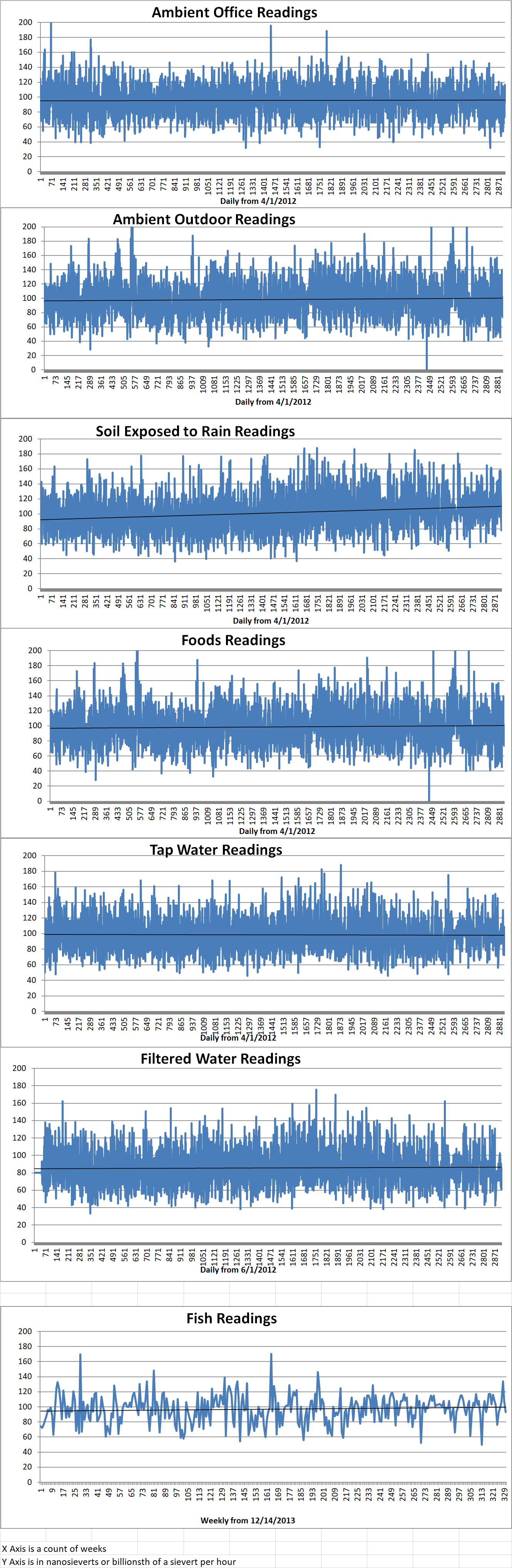
  • Geiger Readings for Jun 19, 2020

    Geiger Readings for Jun 19, 2020

    Ambient office  = 116 nanosieverts per hour

    Ambient outside = 90 nanosieverts per hour

    Soil exposed to rain water = 93 nanosieverts per hour

    Blueberry from Central Market = 81 nanosieverts per hour

    Tap water = 72 nanosieverts per hour

    Filtered water = 60 nanosieverts per hour

  • Nuclear Reactors 797 – The U.S. Department Of Energy Announces More Than 65 Million Dollars To Fund Nuclear Research Projects

    Nuclear Reactors 797 – The U.S. Department Of Energy Announces More Than 65 Million Dollars To Fund Nuclear Research Projects

        The U.S. federal government has been increasing its support for research into the next generations of nuclear power reactors. The Department of Energy (DoE) has just announced that it has awarded more than sixty-five million dollars for the nuclear energy research. They will fund ninety-three advanced nuclear projects in 28 states. The U.S. Secretary of Energy Dan Brouillette announced the new commitment during a visit to the Idaho National Laboratory in Idaho Falls Thursday. These new awards fall under the DoE Nuclear Energy University Program (NEUP) The Nuclear Energy Enabling Technologies (NEET) and the Nuclear Science User Facilities (NSUF).
        Brouillette said, “Advancing the next generation of nuclear energy is paramount to ensuring reliable, clean electricity for the American people. If we are serious about making substantial progress in reducing greenhouse gas emissions, then emissions-free nuclear energy must be a part of that conversation. The Trump Administration recognizes the importance of nuclear energy, and through these 93 projects spread across 28 different states, we remain wholly committed to revitalizing our most reliable form of energy.”
        Dr. Rita Baranwal is the Assistant Secretary for Nuclear Energy at the DoE. She said that the department is committed to making certain the nuclear researchers have cutting edge infrastructure and laboratory faciliites to develop advanced nuclear technologies. She also said, “Investments in programs like these help strengthen American leadership in nuclear innovation by supporting the development of the next generation of talent.”
        The DoE is providing more than thirty-eight million, six hundred thousand dollars through NEUP to support fifty seven projects in nuclear energy research and development at university laboratories. NEUP wants to maintain U.S. leadership in nuclear research across the U.S. by providing top science and engineering faculty and their students at U.S. universities with opportunities to develop innovative technologies and solutions for expanding civilian nuclear capability.
         In addition, twenty-one university-led projects will receive five million, seven hundred thousand dollars for research reactors and infrastructure improvements. These grants will provide important safety, performance and student education-related upgrades to some U.S. university research reactors as well as enhancing university research and training infrastructure.
         The DoE also awarded ten million, eight hundred thousand for three Integrated Research Projects (IRPs). These projects will address well-defined but highly complex technical issues impacting key Office of Nuclear Energy (ONE) mission objectives. They will be executed by university-led consortiums that usually include multiple universities, industrial and international research entities and the unique and extensive resources of the DoE National Laboratories. IRPs comprise a significant element of DoE’s innovative nuclear research objectives and illustrates ONE’s strategy to pursue R&D solutions most directly relevant to the near-term, significant needs of the ONE R&D programs.
         Five research and development projects led by DoE National Laboratories and U.S. universities will get five million dollars in funding for conducting research to address crosscutting nuclear energy challenges. This work will help improve advanced sensors and instrumentation and advanced manufacturing methods for multiple nuclear reactor plant and fuel applications.
         DoE has chosen one industry, three DoE National Laboratories and three university-led projects that will take advantage of NSUF capabilities to investigate important nuclear fuel and material applications. DoE will finance two of the projects with a total of one million dollars in funds. All seven of these projects will be supported with over two million, two hundred thousand dollars in facility access costs and expertise for experimental neutron and ion irradiation testing, post-irradiation examination facilities, synchrotron beamline capabilities and technical assistance for design and analysis of experiments through NSUF. In addition, one of the NEUP R&D projects mentioned above will receive one million, six hundred thousand dollars in NSUF access funds.
         Including these new awards, the DoE’s ONE has now granted more than eight hundred million dollars to support U.S. leadership in clean energy innovation and to train the next generation of nuclear engineers and scientists through its competitive opportunities since 2009.

  • Geiger Readings for Jun 18, 2020

    Geiger Readings for Jun 18, 2020

    Ambient office  = 94 nanosieverts per hour

    Ambient outside = 84 nanosieverts per hour

    Soil exposed to rain water = 78 nanosieverts per hour

    Hierloom tomato from Central Market = 102 nanosieverts per hour

    Tap water = 100 nanosieverts per hour

    Filtered water = 84 nanosieverts per hour

  • Nuclear Weapons 728 – NATO Defense Ministers Met Via Teleconference To Discuss Responses To Russian Nuclear Belligerence

    Nuclear Weapons 728 – NATO Defense Ministers Met Via Teleconference To Discuss Responses To Russian Nuclear Belligerence

        For years, Russia has been threatening its neighbors with nuclear weapons. It has often flown nuclear bombers near or actual in other countries airspaces without notice. It has sailed nuclear vessels through the coastal waters of other nations with no notification. Putin has recently bragged of “super” nuclear weapons that could avoid detection or deflection and detonate near or in enemy nations.
        On June 17th, NATO defense ministers gathered for a two-day meeting held via secure teleconference because of the conrona virus. NATO Secretary General Jens Stoltenberg presided over the teleconference.
          They discussed three measures aimed at Russia’s “extensive and growing arsenal of nuclear-capable missiles.” Their “balanced package of political and military elements” includes efforts to strengthen NATO’s integrated air and missile defense as well as its advanced capabilities and to adapt NATO’s intelligence and exercises.
         Stoltenberg said, “A number of allies have announced they are acquiring new air and missile defense systems, including Patriot and [Surface to Air Missile Platform/Terrain] batteries.” He added that some allies are also working on new platforms such as what are referred to as fifth-generation fighter aircraft.
        The NATO teleconference follows Russia’s decision last year to deploy their SSC-8 missiles. Stoltenberg said that the dual-capable, mobile Russian missiles are very ‘hard to detect” and they could reach many European cities with very little warning time. They also “lower the threshold for the use of nuclear weapons.” He remarked that the Russian deployment of the SSC-8 missiles led to the end of the Intermediate-Range Nuclear Forces treaty.
         Russia’s new hypersonic glide reentry vehicle is now operational, they have modernized their intercontinental ballistic missiles, tested their air-launched ballistic missile system and are working on a nuclear-powered cruise missile.
         Stoltenberg said, “We have also seen a pattern over many years of irresponsible Russian nuclear rhetoric, aimed at intimidating and threatening NATO allies. Russia’s behavior is destabilizing and dangerous.”
         These comments were made only a day after two USAF F-22s, supported by KC-135 tankers and an E-3 AWACS aircraft, intercepted eight nuclear-capable Russian bombers off the coast of Alaska. Less than a week ago, USAF Raptors intercepted eight more Russian nuclear-capable bombers off the Alaskan coast. Russian fighters intercepted USAF B-52Hs flying in international airspace above the Baltic sea on June 15th.
        NATO’s Nuclear Planning Group also met and decided that it will not deploy new land-based nuclear missiles in Europe. It will continue to maintain the Alliance’s deterrence and defense policies.
         Stoltenberg said, “NATO’s nuclear sharing arrangements have served us well for decades. Allowing us to forge common ground on nuclear issues. The NATO nuclear deterrent in Europe remains vital for peace and freedom in Europe.”
         The NATO defense ministers also invited China to participate in global arms control. They reiterated their commitment to step up efforts in Iraq to ensure that the Islamic State radical Islamic group does not return to power in the region. The group said that they will adjust their presence in Afghanistan to support the peace process although the defense ministers also emphasized the need for the Taliban to “live up to their commitments,” Stoltenberg said.

  • Geiger Readings for Jun 17, 2020

    Geiger Readings for Jun 17, 2020

    Ambient office  = 91 nanosieverts per hour

    Ambient outside = 99 nanosieverts per hour

    Soil exposed to rain water = 93 nanosieverts per hour

    English cucumber from Central Market = 96 nanosieverts per hour

    Tap water = 74 nanosieverts per hour

    Filtered water = 63 nanosieverts per hour