
Part 2 of 2 Parts (Please read Part 1 first)
Khaykovich says, “These are the fundamental issues we need to solve before commercializing molten salt reactors. How, at the basic level, will fuels and fission and corrosion products alter salt solutions? And how will changing salt compositions alter reactor behavior? We have to have answers to these questions as we design molten salt reactors.”
In order to answer these questions, Khaykovich is making use of the Nanoscale-Ordered Materials Diffractometer (NOMAD) at Oak Ridge National Laboratory’s (ORNL) Spallation Neutron Source (SNS). NOMAD features high-temperature sample environments that permit samples to be heated to over fifteen hundred degrees Fahrenheit which are then studied with neutron diffractometry. Neutrons are perfect for this type of research because they are particularly sensitive to chromium-52 and chromium-53 which prominent isotopes found in molten salt samples.
Through the use of NOMAD, Khaykovich was able to observe how each positively charged chromium ion attracted six negatively charged chlorine ions to create the octahedral network found in the molten salt solution under study. As a result of the attraction of chlorine by chromium, the chlorine atoms are closer together than they would be in a pure molten sodium chloride solution. The environment around the sodium in the solution containing chromium is unaffected by the chromium and looks about the same on average as it does in a pure molten sodium chloride solution.
He pointed out that chromium would not be deliberately added to the molten salt solution circulating in a molten salt reactor. It is an undesired impurity which would only be dissolved in the molten salt from corrosion in the system. This is one of the reasons that it is important to understand the effects of impurities in molten salts.
Khaykovich says, “Chromium-52 has a positive neutron scattering length, meaning neutrons are repulsed by the isotope. Chromium-53, on the other hand, has a negative neutron scattering length, which means it attracts neutrons. By including both isotopes in salt solutions, we can generate a comprehensive set of diffraction peaks that provide important insights into how chromium interacts with other constituencies in the melt, which can only be done with neutrons.”
Khaykovich’s research is only the most recent chapter in ORNL’s long record of supporting science related to molten salt reactors. ORNL built and operated the only molten salt reactors ever tested. The lab continues to provide critical resources for researcher who are interested in further developing this promising technology.
Lou Qualls serves as both the reactor technology integration lead in ORNL’s Nuclear Science and Engineering Directorate and the national technical director for DOE’s molten salt reactor research. He said, “Fundamental understanding of salt behavior in molten salt reactors is essential to the design and licensing process. Using our science tools to help build that understanding is much of what is ultimately going to make us successful.”
Khaykovich said “The models we want to generate with this data would be a great asset for engineers trying to design molten salt reactors. Neutrons have a big role to play in this new phase of nuclear energy.”
Blog
-

Nuclear Reactors 796 – MIT Scientist Researching Molten Salts For Use In Nuclear Power Reactors – Part 2 of 2 Parts
-
Nuclear News Roundup Jun 16, 2020
Copeland nuclear reactor site talks welcomed cumbriacrack.com
The Stealthy F-117 Nighthawk Could Have Executed Nuclear Strikes Against The Soviet Union
Europeans push for Iran rebuke at nuclear watchdog over inspections reuters.com
Senate panel approves $10M to prepare for nuclear test ‘if necessary’ thehill.com
-
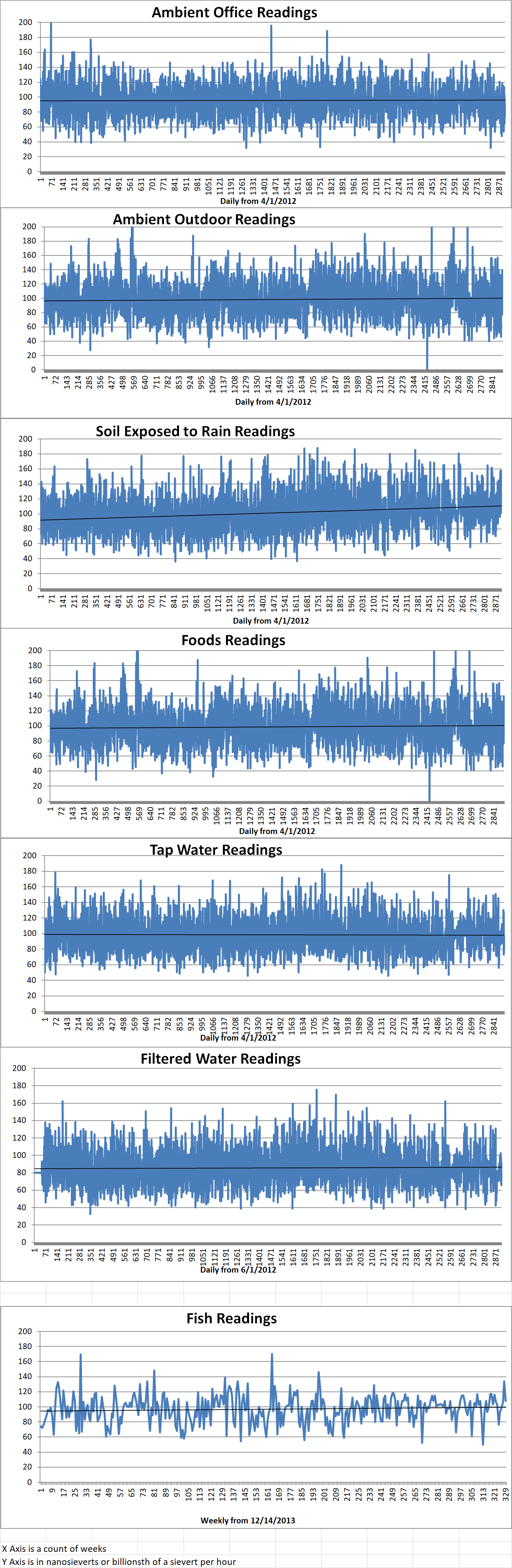
Geiger Readings for Jun 16, 2020
Ambient office = 74 nanosieverts per hour
Ambient outside = 116 nanosieverts per hour
Soil exposed to rain water = 116 nanosieverts per hour
Tomato from Central Market = 97 nanosieverts per hour
Tap water = 97 nanosieverts per hour
Filtered water = 91 nanosieverts per hour
-

Nuclear Reactors 795 – MIT Scientist Researching Molten Salts For Use In Nuclear Power Reactors – Part 1 of 2 Parts
Part 1 of 2 Parts
Molten salt reactors have been a subject of research since the Nuclear Age began more than seventy years ago. There have been a number of research reactors built that utilize molten salts for coolant and heat transfer but, as yet, there are no commercial power reactors that use molten salts. There is a growing interest in changing that.
Now proponents of molten say claim that such reactors could become the foundation of the future nuclear power -industry allowing utilities to generate low-carbon energy in a safe and efficient way. But before that could be possible, researchers really need to have a better understanding of how molten salt solution behave in nuclear environments.
Boris Khaykovich is an experimental physicist from the Massachusetts Institute of Technology (MIT). He is currently using neutron scattering at the Department of Energy’s (DoE) Oak Ridge National Laboratory (ORNL) to test molten salt solutions that could be of use to scientists and engineers working on molten salt reactors. He is exploring fundamental chemical and physical properties of molten salts at elevated temperatures. He is collecting data which should permit him to create high-fidelity models that will predict how molten salt solutions might perform in the intense irradiated environment inside a molten salt reactor.
Khaykovich has said that his models could prove critical to nuclear engineers working on the construction of commercial molten salt reactors for power generation. He hopes that the data generated by his experiments will allow him to assist colleagues in the design of salt solutions and also create diagnostic tools tailored for the operation of molten salt reactors.
He said, “Molten salt reactors could help us harness nuclear power in a better way. This research will provide engineers with new tools for designing and constructing these devices.”
The current generation of commercial nuclear power reactors operate by using the heat generated by nuclear fuel in the core to boil water. The steam is then used to drive a turbine which generates electricity. What are referred to as boiling water reactors boil water by circulating it through the core of the reactor. Pressurized boiling water reactors on the other hand have two circulating water loops. The primary loop circulates through the core and then is fed to a heat transfer system to boil high-temperature pressurized water in the secondary loop which then drives the turbine. Pressurized water reactors account for about sixty five percent of all the nuclear energy produced in the U.S.
It is here that molten salt solutions could be utilized. Instead of being dependent on ultra-hot water which has to be kept under high pressure constantly, reactors could rely on molten salts for heat transfer. Molten salts can be raised to extremely high temperatures without ever boiling. This means that they are capable of generating electricity more efficiently, utilizing low pressure components. This should result in the generation of electricity at lower cost than current pressurized boiling water reactors are not capable matching.
Please read Part 2 next -
Nuclear News Roundup Jun 15, 2020
Decommissioned nuclear reactor coming to Nevada roads reviewjournal.com
Holtec deploys robotic welder world-nuclear-news.org
New Mexico utility to allow nuclear leases to expire kallanishenergy.com
If the Donald Trump Resumes U.S. Nuclear Weapons Testing, India Will Follow news.yahoo.com
-
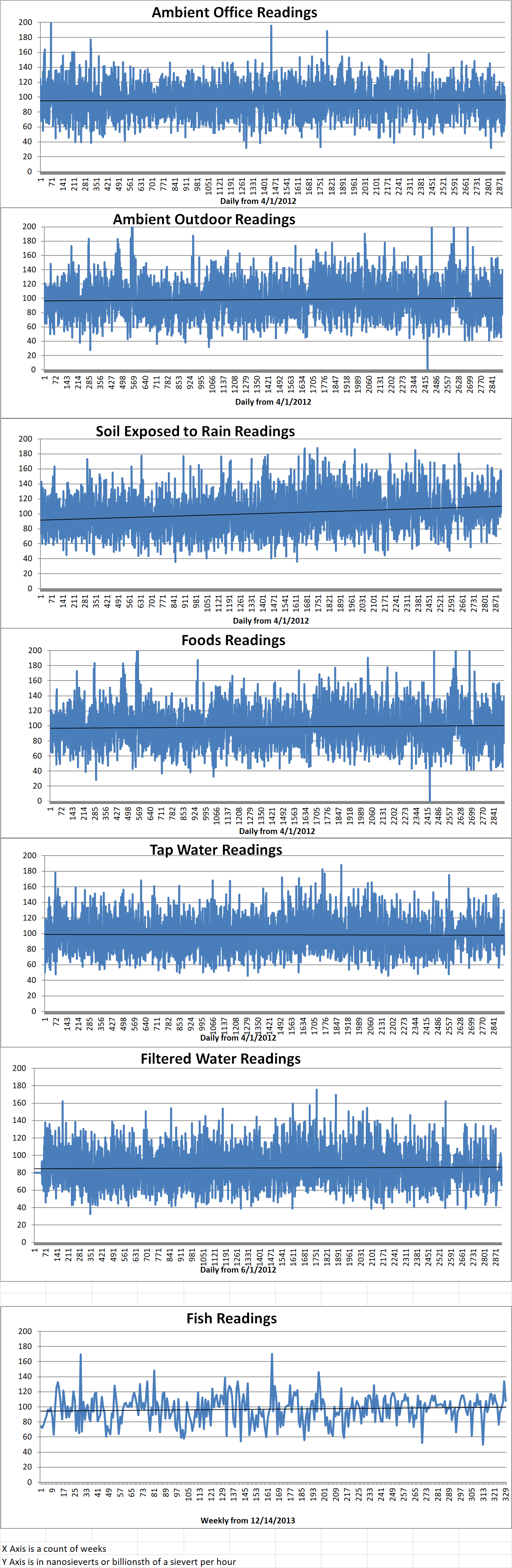
Geiger Readings for Jun 15, 2020
Ambient office = 89 nanosieverts per hour
Ambient outside = 138 nanosieverts per hour
Soil exposed to rain water = 130 nanosieverts per hour
Eggplant from Central Market = 78 nanosieverts per hour
Tap water = 92 nanosieverts per hour
Filtered water = 88 nanosieverts per hour
-

Geiger Readings for Jun 14, 2020
Ambient office = 85 nanosieverts per hour
Ambient outside = 155 nanosieverts per hour
Soil exposed to rain water = 156 nanosieverts per hour
Red bell pepper from Central Market = 140 nanosieverts per hour
Tap water = 84 nanosieverts per hour
Filtered water = 66 nanosieverts per hour
-
Nuclear News Roundup Jun 13, 2020
South African activists warn energy minister over nuclear plan af.reuters.com
TEPCO completes survey of Fukushima Daiichi 2 fuel pool world-nuclear-news.org
Legal battle continues against proposed nuclear waste site near Carlsbad currentargus.com
Imaging groups request regulatory relief from in-person nuclear training during the pandemic radiologybusiness.com
-

Geiger Readings for Jun 13, 2020
Ambient office = 103 nanosieverts per hour
Ambient outside = 154 nanosieverts per hour
Soil exposed to rain water = 158 nanosieverts per hour
Avocado from Central Market = 119 nanosieverts per hour
Tap water = 73 nanosieverts per hour
Filtered water = 69 nanosieverts per hour
Dover sole – Caught in USA = 108 nanosieverts per hour