
Part 2 of 2 Parts (Please read Part 1 first)
Sometimes the shape of resonances cannot be determined, and the cross section cannot be modeled accurately. However, much can still be learned about the resonances if a statistical analysis of their energies is conducted. Rodriguez has been attempting to take advantage of this approach with machine learning techniques and what is called random matrix theory.
He starts with the range of energy resonances from the isotope under examination, then he sorts them by assigning a combination of quantum numbers to each. This can be explained by comparison to sorting marbles in a bucket because these resonances fall into groups. Rodriguez said, “Let’s imagine there are red, blue, and green marbles in a bag. You have to sort the marbles into buckets by color, and you’re not allowed to look. All you can do is see what the average color of each bucket is when you put all the marbles in together. So, at first, you end up with three buckets that, from a distance, look brown because all the colors are mixed.” These mixtures are similar to the resonances being random or incorrect quantum number assignments.
Brown said, “But now we can take out one marble and put it in one of the other buckets, and then see if the average color of that bucket changed. Again, we’re only allowed to look at the average color of each bucket.” Rodriguez said, “Then we start reclassifying those marbles, or energy resonances, using the statistics provided by the theory. We keep repeating this until we get a blue bucket, a green bucket, and a red bucket – a clear separation of the resonances.”
Rodriguez has been studying uranium-238 due to the large amount of data that is available for this isotope. Researchers have been trying to understand this isotope for seventy years. In spite of the fact the nuclear reactors obviously work, assigning the correct quantum numbers to sequences of resonances is still somewhat slow.
Brown and Rodriguez are hoping that the use of random matrix theory to assign neutron resonances may improve the process. Brown said, “It’s kind of amazing that with the right statistical mindset, we can do this so quickly and so easily.” Rodriguez said, “From what David told me.no one has tried this stuff before—the path we’re taking, it is kind of new.” Brown added, “Having the fresh eyes on the problem brings a lot of energy and it brings new ideas. And honestly, Pedro’s poking around in ways that I didn’t think to poke around, and it has definitely helped dramatically.”
David Brown manages a library of nuclear data files at the NNDC. He is interested in finding ways to simplify the correct modeling of nuclear fission reactors.
Rodriguez decided that he wanted to study physics at a young age. He will graduate next spring with his bachelor’s degree in theoretical physics from the University of Puerto Rico Mayaguez Campus. After graduation, he wans to pursue a Ph.D. in experimental physics but has not yet chosen a particular university.
Blog
-
Nuclear Reactors 782 – Brookhaven National Laboratory Working On Computer Models Of Nuclear Fission – Part 2 of 2 Parts
-
Nuclear News Roundup May 21, 2020
Law on nuclear energy safety to allow Energoatom to attract EUR 200 mln loan ukrinform.net
France reaffirms support for nuclear deal tehrantimes.com
Rosatom eases employee coronavirus restrictions bellona.org
World War 3 fears: Russia attacks US plans to deploy nuclear weapons in Poland express.co.uk
-
Geiger Readings for May 21, 2020
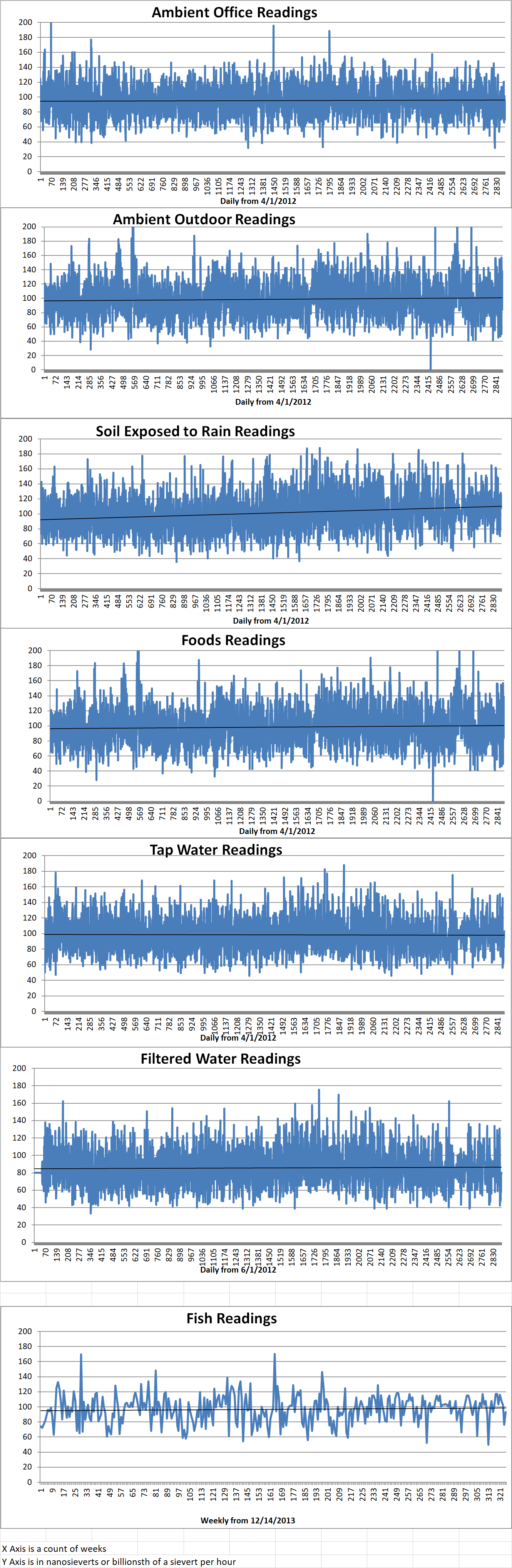
Ambient office = 70 nanosieverts per hour
Ambient outside = 106 nanosieverts per hour
Soil exposed to rain water = 108 nanosieverts per hour
Yam from Central Market = 122 nanosieverts per hour
Tap water = 103 nanosieverts per hour
Filtered water = 80 nanosieverts per hour
-

Nuclear Reactors 781 – Brookhaven National Laboratory Working On Computer Models Of Nuclear Fission – Part 1 of 2 Parts
Part 1 of 2 Parts
The U.S. maintains a huge archive of nuclear data at the National Nuclear Data Center (NNDC) at the U.S. Department of Energy’s (DoE) Brookhaven National Laboratory. An intern named Pedro Rodriguez and his mentor, David Brown, are working at the archive on solving a seventy-year old problem in nuclear physics. The project is made possible by the DoE Science Undergraduate Laboratory Internship program and administer by the Office of Educational Programs at Brookhaven.
Nuclear fission reactors are driven by the splitting of atoms. Neutron are subatomic particles that have no electrical charge. In a reactor, neutrons are fired at atoms of fissionable nuclear fuel such as uranium and/or plutonium. This causes the heavy nuclear fuel atoms to split apart into to smaller atoms and also generates some excess neutrons. Some of these extra neutrons then hit other atoms causing them to fission and release more neutrons to continue the fission process. This is known as a nuclear chain reaction.
In order for scientists to determine whether a chain reaction will occur under the normal operating conditions inside a reactor, they have to calculate the area of the neutron “cross section”. If an incoming neutron hits inside the circular area of the cross section centered on the target atom, then fission occurs and the nuclear chain reaction continues. If the neutron misses the cross section, then fission does not occur, and the nuclear chain reaction stops. In nuclear physics, the probability that neutron will hit a target atom and cause it to fission can be described by a mathematical representation of the cross section of the nucleus of the target atom.
These mathematical cross sections lie at the intersection of theory and experiment. The calculations are based on certain conditions. These conditions include the energy of incoming neutron and the angle of the scattered neutrons. These computer models can then be compared to the measurements which were made in the laboratory. This allows the researchers to verify the accuracy of the underlying theory.
The biggest reaction cross sections are usually found at distinctive neutron energies that result in states that have relatively long lifetimes when a neutron is first absorbed by a nuclear. The energies that lead to the formations such “compound nuclei” are referred to as nuclear resonances. Brown says that “When you hit one of these resonances, the effective target area of the nucleus jumps dramatically, and that increases the likelihood of starting a chain reaction. So, we want to know where these resonances are because knowing where the resonances are helps to more easily predict and control nuclear reactors.”
By using statistical behavior provided by nuclear theory to analyze these neutron resonance energies, Brown and Rodriguez can calculate neutron reaction cross sections more easily. Brown says, “If you don’t get those numbers correct, you don’t get the shape of the cross section right as a function of energy, and you can’t model your reactor right.”
Please read Part 2 next -
Nuclear News Roundup May 20, 2020
The Verkhovna Rada has adopted the Law “On Amendments to Certain Laws of Ukraine on the Safety of Nuclear Energy Use” ukrinform.net
US uranium output falls 89% in 2019 world-nuclear-news.org
Pandemic won’t halt construction on Egypt’s first nuclear power plant al-monitor.com
Air Force splits nuclear weapons directorate into two focused groups upi.com
-
Geiger Readings for May 20, 2020
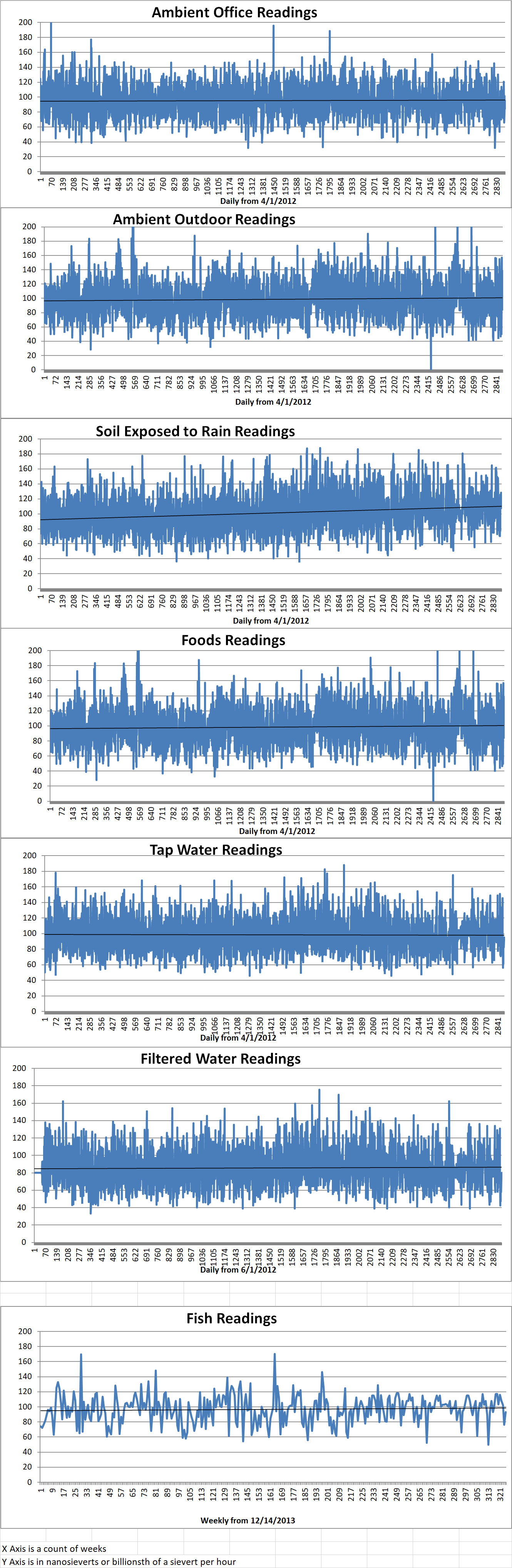
Ambient office = 85 nanosieverts per hour
Ambient outside = 108 nanosieverts per hour
Soil exposed to rain water = 108 nanosieverts per hour
Russet potato from Central Market = 84 nanosieverts per hour
Tap water = 94 nanosieverts per hour
Filtered water = 80 nanosieverts per hour
-

Radioactive Waste 771 – Nevada Officials Continue To Fight Against A Geological Repository For Spent Nuclear Fuel Under Yucca Mountain
Last week, a 6.5 magnitude earthquake shook Nevada. Nevada’s Congressional delegation and state officials are reiterating their fears about the safety of the proposed deep geological repository for spent nuclear fuel to be located under Yucca Mountain about a hundred miles northwest of Las Vegas. The earthquake last week was the third earthquake within one hundred and fifty miles of the Yucca mountain repository site in the last two years. There was a 6.4 and a 7.1 earthquake in Ridgecrest, California which is about one hundred miles southwest of Yucca Mountain. These seismicity problems could pose a threat not only to the repository itself, but also the necessary associated nuclear waste transportation.
Sen. Jacky Rosen (D-Nev.) said in a recent interview that “Last week’s 6.5 magnitude earthquake less than 150 miles from Yucca Mountain only solidifies what my colleagues and I in the Nevada delegation have argued in our opposition against designating Yucca as the nation’s sole nuclear waste repository site. We know that this site sits atop an aquifer and is seismically active and that the proposed transportation routes to Yucca Mountain — some of which would be less than a dozen miles from this earthquake’s epicenter — are close enough to communities to place them at severe risk.”
Although the Trump administration is working on abandoning the site because of state opposition, the Nevada lawmakers are still concerned. Some Republican Congressmen in Washington, D.C. are still supporting locating the repository under Yucca Mountain. At this point, the Yucca Mountain site is the only nuclear waste option that has been approved by Congress.
Last week’s earthquake was on the path of Walker Lane which is a geological trough that runs along the Nevada and California boarder. It expresses between fifteen and thirty percent of the seismic motion between the Pacific and North American tectonic plates.
Belinda Evenden is Nevada Technical Division Administrator, who is managing a new Yucca Mountain seismic hazard scoping study for the state said in an interview that, “The Tonopah earthquake, in combination with the California earthquakes and their thousands of continuing aftershocks, unequivocally validate the State’s seismic hazard concerns at Yucca Mountain.” She went on to say that the U.S. Department of Energy (DoE) and the Nuclear Regulatory Commission (NRC) “must perform a thorough reassessment of seismic hazards before any further consideration of Yucca Mountain for a high-level nuclear waste repository.”
Nevada Governor Steve Sisolak (D) and the Nevada Congressional delegation expressed their concern shortly after the 2019 Ridgecrest earthquake in a letter they sent to the DoE. Rick Perry, the Energy Secretary at the time, reassured the Nevada lawmakers that the DoE would conduct such an analysis if Congress provided money to work on questions related to the Yucca Mountain site. No such funds have been provided by Congress in the last decade.
The DoE did conduct a seismic review of the Yucca Mountain site and the area around it. That study concluded that there was no threat level that was high enough to disrupt the facility. It stated that the geological characteristics of the Yucca Mountain site should help dissipate any earthquake vibrations. The NRC agreed with the conclusions of the study in a safety evaluation report that was issued in 2015. Secretary Perry wrote that the Probabilistic Seismic Hazard Assessment “used the best information that was available at the time. Your letter raised an excellent point that if new data are available, a seismic reevaluation would be appropriate and useful. I share this view.” He added that the previous earthquake activity in the area did not cause any damage at the Yucca Mountain site.
The Nevada officials have insisted that the existing seismic analyses that have been carried out do not fully portray the actual damage that an earthquake could have on the Yucca Mountain facility and the region. Nevada is planning on questioning two hundred contentions in the NRC licensing proceedings including the 2015 review.
Representative Dina Titus (D-Nev.) said in an interview that “The ugly truth is that if an earthquake were to hit a nuclear waste repository, not only would the people in the surrounding area be in danger but the economic impact on all Nevada would be devastating. I’ll continue to lead the fight to prevent Nevada from becoming a dumping ground for the nation’s nuclear waste.” -
Nuclear News Roundup May 19, 2020
Two Orano Nuclear Installations Officially Delicensed finance.yahoo.com
Time to set a course away from Japan’s troubled nuclear fuel cycle mainichi.jp
IAEA Illuminates Morocco as Model in Nuclear Research Monitoring moroccoworldnews.com
US nukes in Poland are a truly bad idea brooks.edu
-

Geiger Readings for May 19, 2020
Ambient office = 5 nanosieverts per hour
Ambient outside = 106 nanosieverts per hour
Soil exposed to rain water = 108 nanosieverts per hour
Tomato from Central Market = 95 nanosieverts per hour
Tap water = 95 nanosieverts per hour
Filtered water = 79 nanosieverts per hour
-

Nuclear Fusion 73 – Brown University Physicists Are Studying Topological Waves In Plasma
Topology is the mathematical study of how objects can be deformed by stretching or twisting but not tearing or breaking. Almost fifty years ago, Brown University physicist Michael Kosterlitz and his team employed topology to elucidate puzzling phase changes in particular types of matter. That work won a share of the Nobel Prize in Physics for Kosterlitz in 2016. Topological phenomena have been discovered in many different kinds of systems extending from thin films that conduct electricity only around their edges to strange waves that propagate in oceans and the atmosphere at the Earth’s equator.
Now a new team of researchers including another Brown physicist has developed a theory of a new topological phenomenon to add to that huge list. In their research, the team has shown that electromagnetic waves of topological origin should be found on the surfaces of plasmas. If their theory is true, such waves could provide a new way for scientists to explore the properties of plasmas which are found in many things from fluorescent lightbulbs to stars including our own sun.
Jeffrey Parke is a research scientist at Lawrence Livermore National Laboratory. He led the research in collaboration with Brad Marston, a professor of physics at Brown, and others. They have published a report on their findings in Physical Review Letters.
These new theorized waves are called gaseous plasmon polaritons. It is thought that they propagate along the interface of a plasma and its surroundings when the system is enclosed in a strong magnetic field. Marston says that one of the most interesting things about these waves is that they are “topologically protected”. This means that they are inherently present in the plasma and cannot be scattered by impurities in the plasma.
Marston said, “Any time you have a wave that’s protected against scattering, it means they can stay intact over a long distance. As a practical matter, we’re hoping that these can be used to diagnose plasma states. One of the big problems in plasma physics is to figure out the state of a plasma without disturbing it. If you stick in a probe, you’re going to disrupt the system. We might be able to use these waves to discern the state of a plasma without disturbing it.”
Marston says that one way to consider topological protection is something referred to as the hairy ball theorem. If you had a ball covered with long hair, you could try to comb those hairs lie flat on the surface but there would always be at least one spot where the hair would not lie flat. Marston said, “This spot will always be there. You can move it around, but the only way to get rid of it is to tear some hair out. But barring something violent like that, if you’re just manipulating it continuously without tearing anything, there’s always going to be a vortex.” The vortex on the surface of the hairy ball is mathematically analogous to the waves on the surface of the plasma. He said, “In this case, there’s always a vortex but it’s in the wave-number space, wavelengths of the different waves. It’s a little more abstract than in real space, but the math is largely similar.”
Now that there is a theoretical basis for these waves, the next step will be to carry out experiments to confirm that they really do exist. Recently, Marston and his collaborators obtained a seed grant from Brown University which will permit them to perform the needed experiments in collaboration with the Basic Plasma Physics Facility at UCLA.
Marston is optimistic that the experimental confirmation of the waves could be very useful for plasma physics research. They could aid scientists in better understanding and control of plasma systems such as fusion reactors. He said, “If we can use these waves to discern the states of plasmas, it might help in designing a fusion reactor that’s stable and able to produce energy. If we can demonstrate these things experimentally, people in the plasma community will hopefully start paying closer attention to this idea.”