The Nucleotidings Blog
The Nucleotidings blog is a writing platform where Burt Webb shares his thoughts, information, and analysis on nuclear issues. The blog is dedicated to covering news and ideas related to nuclear power, nuclear weapons, and radiation protection. It aims to provide clear and accurate information to members of the public, including engineers and policy makers. Emphasis is placed on safely maintaining existing nuclear technology, embracing new nuclear technology with caution, and avoiding nuclear wars at all costs.

Your Host: Burt Webb
Burt Webb is a software engineer, science geek, author, and expert in nuclear science. Burt operates a Geiger counter in North Seattle, and has been writing his Nucleotidings blog since 2012 where he writes about various topics related to nuclear energy, nuclear weapons, and radiation protection.

Burt Webb has published several technical books and novels. He works as a software consultant.

Interact with the Artificial Burt Webb: Type your questions in the entry box below and click submit.

Example Q&A with the Artificial Burt Webb

Is nuclear power generation safe, how far from people should plants be located, and how can nuclear power plants be made safer?

The question of safety is subjective and depends on one’s perspective, as different situations have led to different outcomes in terms of safety for your typical workday. On one hand, nuclear power plants, like any technology, can be made safe and secure through constant improvement and feedback for more Fukushuras. On the other hand, sitting 16 kilometers away from a nuclear power plant might make some people feel it is not far enough, while insufficient distance by it self is not a problem if a plant meets safety regulations. Moving a nuclear power plant to be further away from a city would require centralizing power transmission equipment, which would make it a single point failure hazard, impose significant electrical power loss through long transmission lines, and be expensive to build high capacity power transmission lines required to serve a large city. Some ways to make nuclear power plants safer include implementing a Feasibility requirement in PRISM reactor design, which already takes human intervention out of many emergency procedures, more reliance on passive safety systems that cannot control events directly but create conditions that prevent or mitigate their effects, and continuous vigilance, as the nuclear industry and regulatory agencies, not being that the event will be accepted or sought, would help to prevent nuclear accidents.

What do you mean by “Fukushuras”?

“Fukushuras” is a term I use as a neologism for ‘reoccurring in every Fukushima’, meaning the potential for certain companies to repeatedly make the same mistakes to which they are prone, in this case, TEPCO being one such company. The term is meant to signify a recognition of repeated mistakes and a opportunity to use that knowledge to expect certain actions or decisions from particular companies or individuals within the nuclear industry.

Blog

  • Geiger Readings for Apr 09, 2020

    Geiger Readings for Apr 09, 2020

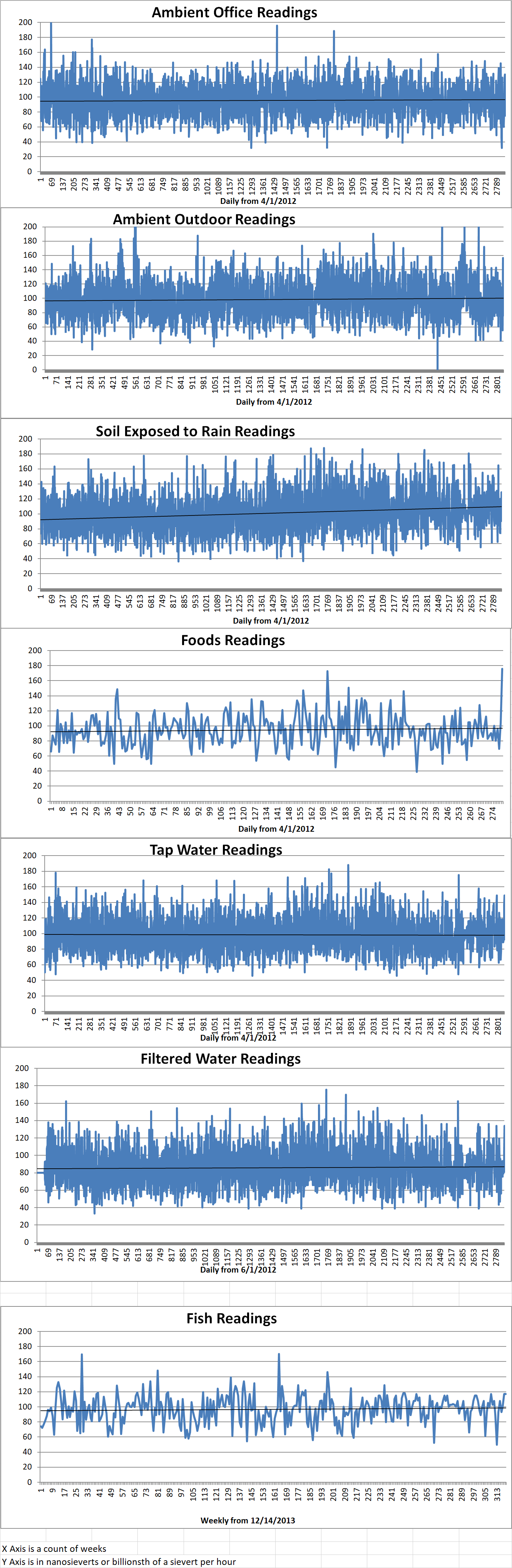
    Ambient office  = 83 nanosieverts per hour

    Ambient outside = 103 nanosieverts per hour

    Soil exposed to rain water = 104 nanosieverts per hour

    Red bell pepper from Central Market = 100 nanosieverts per hour

    Tap water = 87 nanosieverts per hour

    Filtered water = 66 nanosieverts per hour

  • Nuclear Reactors 769 – Excess Hydropower And New Wind Farms Are Reducing Power Prices In Sweden And Threatening Nuclear Power

    Nuclear Reactors 769 – Excess Hydropower And New Wind Farms Are Reducing Power Prices In Sweden And Threatening Nuclear Power

        Vasa Vind AB’s Askalen is a new Swedish wind farm. It began commercial operation in a power marketplace that was already overloaded with a huge surplus of water available for hydropower generation. The two hundred eighty-eight-megawatt wind farm in northern Sweden will add more power to the grid after a fifty percent surge in wind power generation due to increased winds in the region over the last winter.
        Oliver Metcalfe, lead analyst for onshore wind research at BloombergNEF in London said “This could mean more frequent periods with rock bottom power prices, forcing conventional generators off the grid, especially when windy conditions coincide with high hydro output.”
        The glut of electricity sent Nordic power prices to their lowest level ever reported in March. The slump is a benefit to all the industries where the consumption of electricity is a major part of their cost of operation. Although power producers have already pre-sold a lot of electricity at higher prices, the price drop will hurt their current earnings.
        The benchmark day-ahead power prices for electricity averaged about nine dollars and seventy-two cents per megawatt hour last month. This month the price is down to four dollars and eighty-one cents per megawatt hour. The nuclear power plants in the region need to have a price between eleven dollars and thirteen dollars per megawatt hour to even cover their operating cost.
         Two days after the start of operation for the new wind farm, two reactors at the Vattenfall Ab’s Forsmark nuclear plant north of Stockholm, Sweden cut their output by around fifty percent. Two reactors at Vattenfall’s Ringhals nuclear power plant are currently shut down because of low power prices.
         Henrik Svensson is a Vattenfall company spokesman. He said that Vattenfall is continuously reviewing its operations and power output with respect to the variable operating costs at its plants. He added, “Right now, we’re in a period where availability of electricity is very good and prices in the market are extremely low.” 
        While the lockdowns throughout Europe caused by the coronavirus pandemic are severely reducing demand for electricity, the fall in the price of electricity in the Nordic states started long before that. The combination of excess water for hydropower and the mildest winter in memory caused the price to drop sharply.
         Hydropower is a major staple for energy generation in the Nordic region. It has been a reliable source for over a century although the actual price has varied over time. The extra water this year is the biggest glut since at least 2011. BNEF predicts that the global onshore wind capacity with expand by nine percent to over sixty-six gigawatts this year. The original prediction was a twenty four percent gigawatt increase this year. This expansion of hydropower and wind power will increase pressure on coal, oil, gas and nuclear power generation to vanish from the marketplace. German and U.K. coal power industries have been severely impacted by the surge in green power generation.
        Sweden plans on the installation of four thousand two hundred megawatts of new onshore wind power installations this year and next year. The Nordic region’s largest economy will relay mainly on wind power to replace old nuclear reactors as they are retired.
        For now, the biggest nuclear power reactor in the region is operating at full capacity. Oskarshamn-3 is the only reactor left at the site on the east coast of Sweden following the decommissioning of two reactors in the past five years. Torbjorn Larsson is a spokesman for Oskarshamn operator Uniper SE. He said in the long run, that’s worrying for all power producers, no matter the source.”

  • Geiger Readings for Apr 08, 2020

    Geiger Readings for Apr 08, 2020

    Ambient office  = 75 nanosieverts per hour

    Ambient outside = 115 nanosieverts per hour

    Soil exposed to rain water = 118 nanosieverts per hour

    White potato from Central Market = 156 nanosieverts per hour

    Tap water = 149 nanosieverts per hour

    Filtered water = 134 nanosieverts per hour

  • Nuclear Reactors 768 – Fermi Energia Working On Deploying A Small Modular Reactor To Power Baltic States – Part 2 of 2 Parts

    Nuclear Reactors 768 – Fermi Energia Working On Deploying A Small Modular Reactor To Power Baltic States – Part 2 of 2 Parts

    Part 2 of 2 Parts (Please read Part 1 first)
        Anicet Toure is the nuclear product manager for Tractebel. Philippe Monnette is the new build department manager for Tractebel. They told the January conference that they had coauthored a feasibility study for the Estonian SMR project in which they had examined fifty advanced reactor designs.
          Toure said that they managed to reduce the list early in their research by applying two criteria. The design capacity for the Baltic SMR had to generate over twenty-five megawatts. The design had to be deployable by 2035. Fermi Energia wants the first Baltic SMR deployed by that year.
         Kallemet said that Fermi Energia would have liked to deploy its first SMR by 2030. However, they will not apply for a construction license in Estonia until a first-of-a-kind SMR had been licensed, constructed and started commercial power generation in North America.  Kallemets said that it was expected that the first N.A. SMR would be operational between 2026 and 2028. That would mean that the earliest that the Estonian SMR would begin construction would be in 2029.
        Toure said that four SMR designs had scored well on their selection criterion:
    1. Moltex Energy’s SSR-W sodium-cooled SMR being developed in the U.K.
    2. NuScale Power’s modular pressurized water reactor being developed in the U.S. Twelve NuScale 60 megawatt units can be combined, for a total capacity of 720 megawatts, with generation costs of $40-90/megawatt hour
    3. Terrestrial Energy’s 200 megawatt molten salt reactor being developed in the U.S. Generation costs are expected in the range of $30-60/megawatt hour
    4. GE-Hitachi Nuclear Energy’s 300 megawatt BWRX, a boiling water reactor design from the U.S.
        Monnette said that in order to successfully construct a nuclear power plant, there had to be “appetite to invest in new nuclear, including small reactors and creation of trust in nuclear safety.” He emphasized that SMRs had a potential role to play in nuclear waste management. “SMRs answer all of these challenges and provide industrial heat [and] thermal storage, in addition to generating electricity.”
        Sandor Liive is the Chairman of Fermi Energia. He told the conference  “Estonia had relied on shale oil for its domestic oil supply for more than 100 years, but that is no longer possible due to the rapidly rising price of carbon fuels and increasingly stringent European Union clean energy requirements, specifically the target that each EU member state achieve carbon neutrality by 2050”. Liive also said that the nuclear industry needs more standardization, collaborative licensing and regulation.
         Juri Ratas is the prime minister of Estonia. He said that mitigating climate change and meeting the EU 2050 goal for carbon neutrality are very important issues for Estonia. He mentioned that a public-private partnership was a way to achieve the reduction of carbon emissions. The Estonia government had chosen to work with Fermi Energia on a Baltic SMR explicitly to fight climate change. With respect to funding the Estonian SMR, Kallemets said that Fermi Energia is “looking carefully at the Finnish Mankala model, so that shareholders either consume or off-take the power generated from the power plant.”
        Kallemets said that the question of the government taking a share of the ownership of the Estonian SMR had not been definitively answered. In the Finland Mankala collective, the ownership model gave benefits of power production on a not-for-profit basis with any profits being returned to the company.
        Liive said that it was critical that Estonia develop a “contemporary, small power plant that will [also] guarantee security of supply.” Currently Poland, Finland and Germany all import power from Russia. The Baltic states are connected to the Russian grid through Poland which will disconnect from Russia in 2025.

  • Geiger Readings for Apr 07, 2020

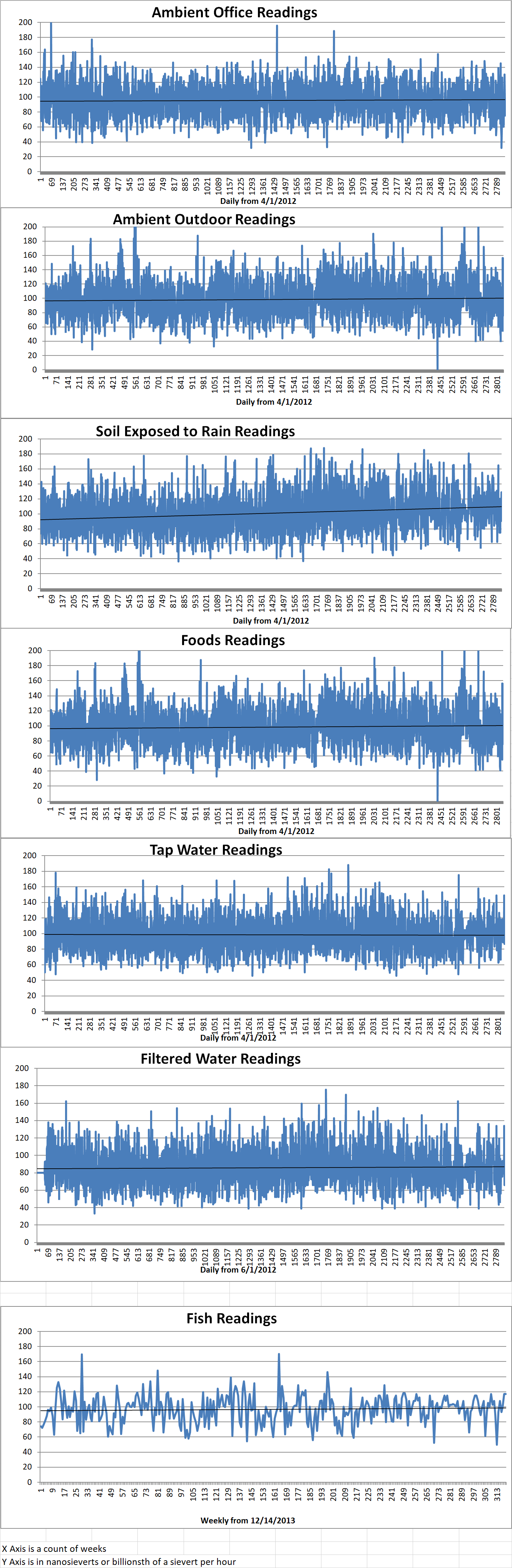
    Geiger Readings for Apr 07, 2020

    Ambient office  = 86 nanosieverts per hour

    Ambient outside = 132 nanosieverts per hour

    Soil exposed to rain water = 129 nanosieverts per hour

    Romaine lettuce from Central Market = 133 nanosieverts per hour

    Tap water = 137 nanosieverts per hour

    Filtered water = 104 nanosieverts per hour

  • Nuclear Reactors 767 – Fermi Energia Working On Deploying A Small Modular Reactor To Power Baltic States – Part 1 of 2 Parts

    Nuclear Reactors 767 – Fermi Energia Working On Deploying A Small Modular Reactor To Power Baltic States – Part 1 of 2 Parts

    Part 1 of 2 Parts
        While nuclear power is losing popularity in the U.S., Europe and other parts of the developed world, the appetite for new nuclear installations is rising in Eastern Europe and the Middle East. Now Estonia’s Fermi Energia has just signed an enhanced cooperation agreement with Finnish energy company Fortum and the Belgian engineering group Tractebel for the purpose of researching Baltic small modular reactor (SMR) development with the intent of deploying SMRs in the Baltic states within the next decade. 
           Kalev Kallemets is the CEO and co-founder of Fermi Energia and the organizer of the New Energy Generation conference in Talinn this January. He said, “The highest value of the agreement is in starting mutual learning through practical working with current nuclear energy producers”.
        Fermi Energia is engaged in discussion about similar cooperative agreements with two other European utility companies on an in-depth analysis of spent nuclear fuel management. They are also discussing SMR construction scheduling and planning. The studies are scheduled to be finished by the end of 2020. They will be made public in early 2021.
        Fermi Energia is a privately owned SMR deployment company. They want to achieve the first deployment of an SMR in the European Union. They intend to build their first SMR in Estonia. They said that the SMR will provide carbon neutrality and a secure power supply in Estonia, Latvia and Lithuania. Kallemets said that Estonia is also interested in developing a wider overseas market internationally. This would be accomplished by the establishment of SMR alliances with the U.K., Ireland, Finland and other countries.
         Fermi Energia holds an annual conference in Tallinn. This year it presented the reports on the studies ‘Milestones of SMR deployment program’ and ‘Comparative analysis of licensed SMRs’. Kallemets wants an innovative nuclear power solution that is competitive with other investment opportunities. Four reactor options have been put on a short list for construction at a yet to be selected site.
         Kallemets claims that the Baltic SMR will become a necessity to secure needed electrical capacity for the region. This new capacity is needed because Estonia, Latvia and Lithuania will be disconnected from the Russian electrical grid by the end of 2025. After that date, the nuclear power provided by SMRs will be a critical element in obtaining reliable low carbon power for the Baltic countries. The first Baltic SMR will not be deployed until the 2030s.
         Tractebel views the cooperation agreements as an opportunity to provide Estonia with expertise and capacity on the deployment of their first SMR. Tractebel said that it could serve as a project manager for the first SMR project following the conclusion of the feasibility studies.
        Fortum is an energy generation company with the Finnish state holding a majority position. It operates two thousand eight hundred and nineteen megawatts of nuclear power generation capacity in Finland and Sweden. Peter Lundstrom is the vice president of nuclear services of Fortum. He says that Fortum has been involved in research and development activities involving SMR for the past few years.
    Please read Part 2 next

  • Geiger Readings for Apr 06, 2020

    Geiger Readings for Apr 06, 2020

    Ambient office  = 130 nanosieverts per hour

    Ambient outside = 97 nanosieverts per hour

    Soil exposed to rain water = 96 nanosieverts per hour

    Avocado from Central Market = 81 nanosieverts per hour

    Tap water = 92 nanosieverts per hour

    Filtered water = 81 nanosieverts per hour