
Part 2 of 2 Parts (Please read Part 1 first)
Challenges of microreactors
Currently, there is limited access to the HALEU fuel suggested for some microreactor designs. HALEU is not currently available in the U.S. commercial nuclear fuel marketplace. The U.S. Department of Energy (DoE) has plans to support research into the development of microreactor fuel and a demonstration of microreactor technology at the DoE Idaho National Laboratory. Some microreactor designs may have to be altered to use alternative fuels, may not be candidates for NRC certification until HALEU fuels are actually available commercially or may be ultimately found not to be viable.
There is a greater security and proliferation risk with microreactors. If microreactors do use HALEU fuels, there are risks that would grow if microreactors are exported to many oversea locations. This transportation would increase the opportunities for theft of nuclear materials. The higher enrichment levels of HALEU fuel would certainly require greater security than conventional low enriched nuclear fuels at all facilities in the entire fuel cycle. The presence of HALEU or even higher enriched fuels would make microreactors a much more attractive target for theft or diversion into a nuclear weapons program. It would take much less work to further enrich HALEU to weapons-grade uranium.
There are open questions with respect to the waste that might be generated by microreactors. Novel fuels might raise serious problems for the treatment and disposal of waste from microreactors as compared to the already critical problems with waste disposal for conventional reactors. Some advanced reactor designs utilize custom fuels that contain reprocessed nuclear materials that may force adjustments to waste handling employed by conventional nuclear power reactors.
The Nuclear Regulatory Commission will face challenges with respect to the certification and monitoring of microreactors. Some microreactor designs may not be covered by current regulations. It may be necessary to modify existing regulations or draft entirely new ones. Existing regulations for conventional nuclear power reactors require that control rooms be staffed on-site with the reactor. If a microreactor designer wants to have staffing off-site for control of the reactor, they would have to request a change in regulations. Also, extended design certification lead times could delay certification and deployment of microreactors.
Policy context and questions.
Interest in microreactors is increasing in the defense and energy industries. Key microreactor technologies are not yet mature and there are some important questions that need to be considered.
• Is there sufficient demand for microreactors that would support their development and commercialization?
• What actions should the federal government initiate to regulate or improve operations of a microreactor supply chain?
• What federal government investments or regulatory changes could be made to accelerate the development and deployment of microreactors?
• What are the security, proliferation and safety risks associated with microreactors due to their increased portability and potential use of HALEU fuels? How can any risks be best dealt with?
It will take years to determine whether or not microreactors are a viable power source that can replace current power generation technologies.
Blog
-

Nuclear Reactors 754 – Research and Development In Microreactors – Part 2 of 2 Parts
-
Nuclear News Roundup Feb 28, 2020
Regulator confirms Onagawa 2 meets Japanese nuclear safety requirements neimagazine.com
SEC Sues South Carolina Energy Companies, Former Executives Over Nuclear Fraud
Nasdaq.com
Three municipalities interested in hosting nuclear power plant news.err.ee
Nuclear ice cream is not how this Ontario dessert maker wants to be known cbc.ca
-

Geiger Readings for Feb 28, 2020
Ambient office = 139 nanosieverts per hour
Ambient outside = 93 nanosieverts per hour
Soil exposed to rain water = 97 nanosieverts per hour
Avocado from Central Market = 76 nanosieverts per hour
Tap water = 97 nanosieverts per hour
Filtered water = 83 nanosieverts per hour
-

Nuclear Reactors 753 – Research and Development In Microreactors – Part 1 of 2 Parts
Part 1 of 2 Parts
When discussing nuclear power, most of my blog posts have been about conventional commercial power reactors that operate in the gigawatt range. I have made some posts about a category of reactors known as small modular reactors (SMRs). This new type of reactor would generate less than three hundred megawatts. They would be built in modules in factories and shipped to their operating locations. Now I would like to focus on a third category of reactors that are called microreactors. These reactors would generate less than fifty megawatts.
Like the other categories of nuclear power reactors, microreactors would use the heat from nuclear fission to boil water to produce steam that would be used to turn turbines that generate electricity. Microreactors could be based on mature light water nuclear reactor designs or could employ more advanced nuclear technology just being developed. Many proposed microreactor designs suggest the use of uranium fuel that has been enriched to twenty percent U-235. This is referred to as high-assay, low-enriched uranium (HALEU). Such fuel is not currently commercially available in the U.S. There are concerns about safety and possible nuclear proliferation with this type of fuel. In order to create microreactors, there will need to be advances in nuclear technology such as improved cooling systems, better heat transfer systems and different approaches to managing the fission reaction because the microreactors will be much smaller than either conventional nuclear power reactors or SMRs. This reduced size will make it possible to transport microreactors by truck, train or cargo plane.
Microreactors are in the earliest stage of development. There are a variety of designs which vary in maturity. Before a nuclear reactor can be licensed and put into operation, there must be many years of close coordination between the reactor designers and agencies that regulate nuclear power.
The proposed technology to be employed in a microreactors determines how mature that approach is. Microreactor designs that utilize light water-cooling systems are the most mature because they are based on proven technology. Designing large conventional reactors can require more than ten years which includes at least three years for certification by the Nuclear Regulatory Commission. They cost at least a few billion dollars to construct.
Microreactors that incorporate more advanced nuclear technology such as liquid metal, molten salt or high temperature gas for cooling will need more design and certification work which will lengthen development time and cost more money. The nuclear industry must begin planning now for the future development of microreactors because of the additional time that development and certification will require.
Benefits of microreactors
Microreactor production should be faster, cheaper and more efficient than the production of conventional reactors. Due to the small size of the microreactors they can be built in factories in controlled environmental conditions and with sophisticated quality control procedures. By assembling microreactors in in a factory, the rate of production of microreactors could be increased, cost efficiencies could be created through economies of scale and the time required to install a microreactors in the field could be reduced. Steam turbines, generators and other necessary components could also be manufactured in a factory as modular units which could be installed on-site.
Microreactors could be rapidly deployed to areas hit by natural disasters where conventional electrical generation was disrupted. Having microreactors available would speed up the restoration of power after natural disasters. Critical services such as hospitals, communications and water purification could be quickly restored for local communities.
Microreactors will offer greater resiliency in the production and supply of electricity. The ability to rapidly transport and deploy alternate sources of power generation such as microreactors combined with local microgrids would allow isolated military bases, rural communities and remote commercial operations would allow these communities and installations to operate more independently than is now possible. This would be especially true during rapid establishment of military operations or after natural disasters have damaged power transmission lines.
Microreactors will provide for safer operations. Some microreactor designs employ passive safety system that will shut down the reactor automatically and safely if problems arise. Some microreactor designs can operate for ten years or more without needing to be refueled which will reduce the occurrence of accidents.
Please read Part 2 next -
Nuclear News Roundup Feb 27, 2020
US NRC checks review of gas pipeline at New York nuclear plant after report spglobal.com
UN disarmament chief hopes upcoming conference will address current nuclear challenges news.un.org
Britain confirms new nuclear warhead project after US officials spill the beans defensenews.com
IAEA chief commends Japan on Fukushima clean-up effort world-nuclear-news.org
-
Geiger Readings for Feb 27, 2020
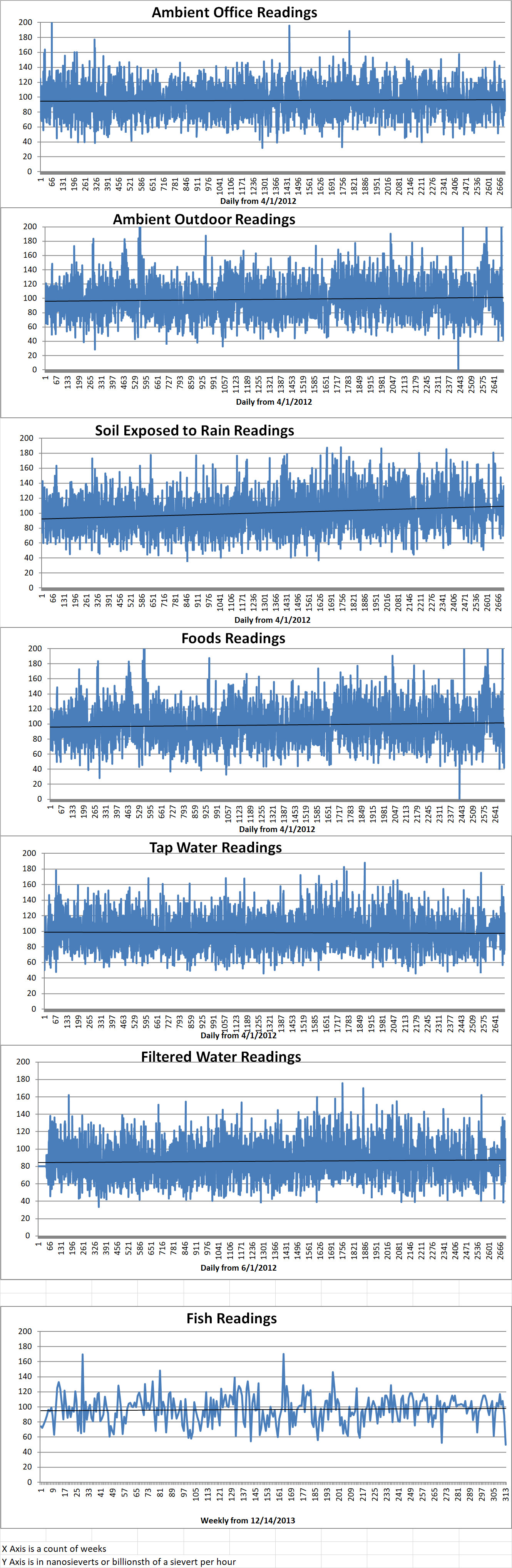
Ambient office = 123 nanosieverts per hour
Ambient outside = 100 nanosieverts per hour
Soil exposed to rain water = 101 nanosieverts per hour
Tomato from Central Market = 115 nanosieverts per hour
Tap water = 95 nanosieverts per hour
Filtered water = 80 nanosieverts per hour
-

Nuclear Fusion 67 – Japanese Researchers Working On Understanding Of Mixing Of Hydrogen Isotopes In Plasmas
A great deal of money is being poured into research into nuclear fusion as a possible commercial energy source. If the power of the sun can be harnessed, it would mean abundant energy with less pollution, less dangerous waste, less expense, less fuel, etc. that many other power sources. Instead of fission which generates energy by the radioactive decay of heavy atoms of uranium or plutonium, nuclear fission generates energy by the fusion of atoms of light elements into atoms of heavier elements.
Most fusion reactors being developed today are based on the creation of a cloud of hydrogen ions or a plasma which is subjected to great pressure and temperature. One of the main problems is confining the plasma so that it does not touch the walls of the containment vessel. Another problem is ensuring that the distribution of different hydrogen isotopes is uniform within the vessel.
A Japanese team has just developed an understanding of the confinement of hydrogen isotopes in plasmas in nuclear fusion that will help actually make fusion power a reality. They published a report on their work in the January 14th in Physical Review Letters.
Normal hydrogen contains one proton in the nucleus. Deuterium is an isotope of hydrogen that has one proton and one neutron in the nucleus. It has twice the weight of normal hydrogen. Tritium is an isotope of hydrogen with one proton and two neutrons in the nucleus and weights three times the weight of normal hydrogen.
The researchers were working on ratios of distribution of the different hydrogen isotopes in a plasma produced by the Large Helical Device (LHD) at the National Institute for Fusion Science. (NIFS). The plasma in the LHD consisted of normal hydrogen and deuterium. The researchers hope to be able to predict the distribution of hydrogen, deuterium and tritium in a plasma based on their work with a hydrogen-deuterium mix.
Katsumi Ida is a professor with both the National Institute for Fusion Science and the Graduate University for Advanced Studies. He is the author of the just published paper. He said, “In the core of fusion plasma , it is most desirable to have an even split between deuterium and tritium because it gives the highest fusion power,” said paper author Katsumi Ida, a professor with both the National Institute for Fusion Science and the Graduate University for Advanced Studies. “However, we can only control the isotope ratio at the edge of the plasma, not in the core. We set out to investigate if the isotope ratio is uniform throughout the mixture. If it’s not, can we make it uniform?”
Ida and his team discovered that the uniformity of the plasma is determined by how the different isotopes move. This plasma is in a turbulent state. Isotopes influence by ion temperature gradient (iTG) turbulence turned out to be far more uniformly distributed than isotopes influenced by trapped-electron mode (TEM) turbulence. Ida said, “The ITG-dominant state is far more favorable in fusion plasma. We saw the formation of a non-mixing profile and its transition to a uniform isotope state in the plasma, associated with the increase of turbulence propagating along the ion temperature gradient.”
ITG turbulence is related to a temperature gradient that is matched to the magnetic bottle that is confining the fusion plasma. The isotopes move faster if they are in the hotter region of temperature. This allows the isotopes to mix uniformly. This new understanding of plasma behavior could assist researchers in controlling isotopic uniformity in plasmas and increase the power of fusion isotopes mixtures.
Next, Ida and his team plan to study the uniformity of other elements in plasmas including helium which is produced by the fusion of deuterium and tritium. -
Nuclear News Roundup Feb 26, 2020
-
Geiger Readings for Feb 26, 2020
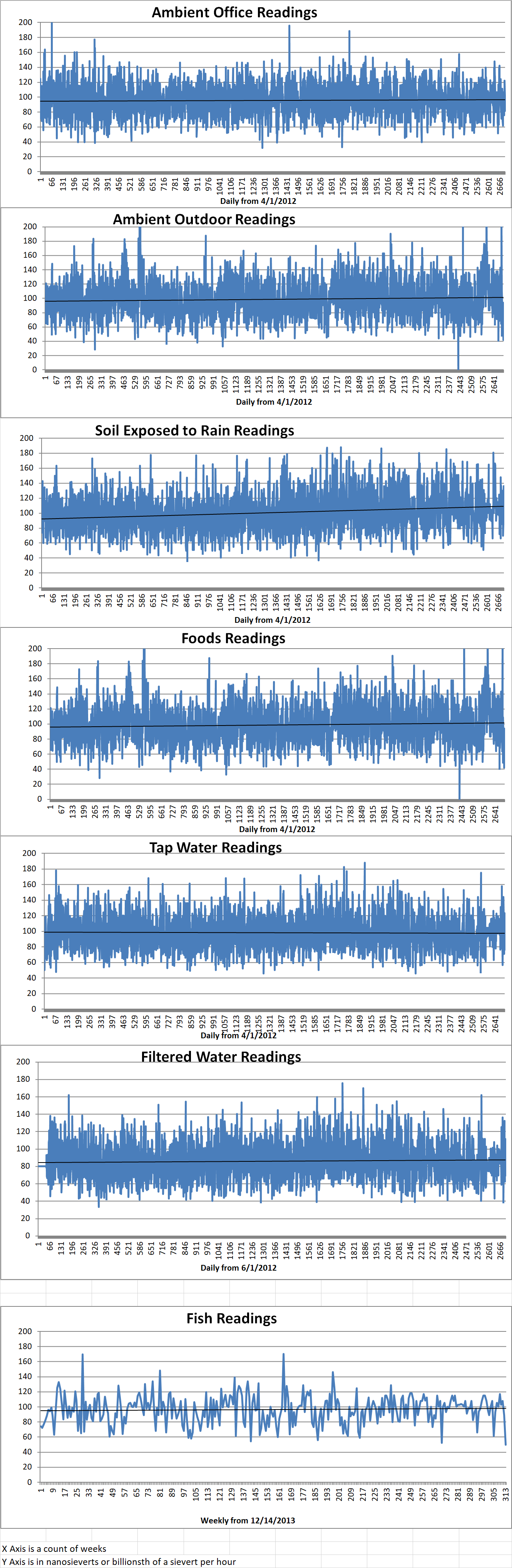
Ambient office = 113 nanosieverts per hour
Ambient outside = 116 nanosieverts per hour
Soil exposed to rain water = 114 nanosieverts per hour
English cucumbers from Central Market = 93 nanosieverts per hour
Tap water = 108 nanosieverts per hour
Filtered water = 81 nanosieverts per hour
-

Radioactive Waste 756 – General Accounting Office Report Finds Cleanup Problems At Hanford – Part 2 of 2 Parts
Part 2 of 2 Parts
The Hanford cleanup has been plagued by waste and incompetence. Mandated milestones have been continuously pushed back as contractors encountered unforeseen difficulties. Earlier GAO reports found that although the DoE had spent over nineteen billion dollars over a twenty-five-year period on “treatment and disposition of 56 million gallons of hazardous waste”, no waste was actually treated. This project was originally scheduled to be finished by 2011 with a total cost of four billion three hundred million dollars. In addition to the cost overruns and failure to meet schedules, the waste was stored in a chaotic way that made cleanup dangerous for workers.
Industrial equipment that was used to extract and refine plutonium was stored in underground tunnels reinforced by wooden timbers. Studies in 1978 and 1991 concluded that the tunnels were structurally sound. The DoE should have conducted a follow-up study that might have revealed structural problems with the tunnels, but it did not. In 2017, one of the tunnels suffered a partial collapse. The DoE refused to do a “root cause analysis” which might have revealed the cause of the collapse. The contractor requested that the analysis not be conducted.
The GAO report said, “According to a written explanation provided to us by [the contractor’s] management, while the tunnel collapse was due to structural degradation, [the contractor’s] first priority was stabilizing the tunnel to mitigate the potential for further collapse, and a programmatic root cause analysis to determine the cause was not warranted.” Instead of the root cause analysis, the DoE conducted an “apparent cause analysis”. That analysis concluded that the tunnel probably collapsed because the wooden timbers propping up the ceiling had decayed.
Other parts of Hanford have never had a safety inspection of any kind. Some of these areas were used to store nuclear waste. Some of those areas including processing facilities called “canyons” where plutonium was extracted from uranium fuel rods have not been entered or inspected for fifty years.
U.S. Senator Ron Wyden (D-Oregon) castigated the DoE for the way it has handled the Hanford cleanup in a letter he sent to Energy Secretary Dan Brouilletter. In the letter, Wyden states that the DoE has accepted all the GAO recommendations but said that those changes are simply not sufficient to protect the workers and citizens in the Hanford area.
Wyden explicitly blamed the collapse of the tunnel on the failure of the DoE to conduct the comprehensive inspections. Wyden wrote that the tunnel collapse “seems largely due to a failure of [the Energy Department] and its contractors to independently verify the tunnel’s physical condition ― a state of affairs replicated over many years across the site’s facilities.”
The state of Washington has repeatedly had to drag the DoE and Hanford contractors into court to try to enforce promised milestones in the cleanup. The health of some of the Hanford workers has been seriously impacted during work at Hanford. While the workers have been going to court for compensation, the DoE claims, despite evidence to the contrary, that no one has been seriously harmed. In addition, contractors have often broken laws and regulations regarding the cleanup and disposal of nuclear waste at Hanford. Considering the billions and billions of dollars spent on nuclear weapons, it would seem that a few more billion could be allocated to the cleanup.