
I have blogged before about the idea of nuclear winter. If there is a nuclear conflict in which at least a hundred nuclear warheads are detonated, the soot, soil and smoke thrown into the atmosphere would shut out sunlight for years and crop failures would kill billions that survived the actual conflict. Now scientists are studying what effect a nuclear war might have on the world’s oceans.
Nicole Lovenduski at the University of Colorado Boulder led the team that carried out the new study. Their report on the study was published in the journal Geophysical Research Letters in January of this year. They used estimations of the amount of soot thrown into the atmosphere in four different nuclear war scenarios. The soot was measured in teragrams which represent one trillion grams or one thousand kilotons. Three of the scenarios involved different levels of nuclear war between India and Pakistan with five teragrams, twenty-seven terragrams and forty seven terragrams of soot injected into the atmosphere. The fourth scenario dealt with an all-out nuclear war between Russia and the U.S. with one hundred and fifty terragrams of soot.
Michelle Taylor at LaboratoryEquipment.com offered a summary of the effects of the least powerful nuclear exchange involving five teragrams of soot. She wrote, “… the researchers found that the conflict would likely generate huge amounts of black carbon high in Earth’s atmosphere, causing the globe to cool. Interestingly, the researchers found that the fallout from a nuclear detonation would come in two stages: the first within one year, and the second between three and five years post-bombing.
Soon after denotation and no longer than one year later, global climate models showed the acidity of the world’s oceans would likely dip. Years later, the world’s saltwater would begin to suck up more carbon dioxide from the air. Supplies of carbonate in the oceans would shrink, removing the key ingredient that corals use to maintain their reefs and oysters use to sustain their shells.”
Lovenduski told Taylor that there would be a severe disruption of the food web in the oceans that would definitely have a major impact on the human food chain. Taylor wrote that there are more than three billion people who are dependent on ocean fisheries for food and/or income. Crustaceans in the oceans would heavily impacted.
Brian Toon at University of Colorado Boulder was co-author of the report. He said, “This result is one that no one expected. In fact, few people have previously considered the impact of a nuclear conflict on the ocean.” Lovenduski added, “A lot of things would change in the oceans once you dim the lights [via soot in the atmosphere]. The way the water moves in the ocean, for example, is sensitive to how much heat it gets from the atmosphere …
It makes me question whether organisms could adapt to such a change. We’re already questioning whether they can adapt to the relatively slower process of man-made ocean acidification, and this would happen much more abruptly.”
Lovenduski said that it was too early to say exactly what the fate of shelled creatures would be in the event of nuclear war. She hopes that her research group’s conclusions will shine more light on how devastating even a limited nuclear exchange would be. She wrote, “I hope this study helps us to gain perspective on the fact that even a small-scale nuclear war could have global ramifications.”
Blog
-

Nuclear Weapons 718 – Even A Limited Nuclear Exchange Would Have A Major Impact On The Oceans And Marine Life
-
Nuclear News Roundup Feb 10, 2020
FitzPatrick nuclear plant hasn’t produced power since automatic shutdown last week. Syracuse.com
Macron seeks leading role in post-Brexit EU nuclear strategy. Defensenews.com
Could Trump convince Boris Johnson to kill the Iran nuclear deal? Thehill.com
French regulator requests improvement in EDF’s Fessenheim decommissioning plan neimagazine.com
-

Geiger Readings for Feb 10, 2020
Ambient office = 101 nanosieverts per hour
Ambient outside = 104 nanosieverts per hour
Soil exposed to rain water = 101 nanosieverts per hour
Red bell pepper from Central Market = 89 nanosieverts per hour
Tap water = 103 nanosieverts per hour
Filtered water = 87 nanosieverts per hour
-
Nuclear News Roundup Feb 9, 2020
-

Geiger Readings for Feb 9, 2020
Ambient office = 104 nanosieverts per hour
Ambient outside = 80 nanosieverts per hour
Soil exposed to rain water = 81 nanosieverts per hour
Avodcao from Central Market = 129 nanosieverts per hour
Tap water = 94 nanosieverts per hour
Filtered water = 67 nanosieverts per hour
-
Nuclear News Roundup Feb 8, 2020
Global cooling after nuclear war would harm ocean life scdiencedaily.com
Sellafield Ltd will relocate employees to West Cumbria House, Lillyhall, under a 10-year lease agreement with Cumbria County Council. Www.gov.uk
Idaho, Energy Department ink deal on reactor’s nuclear waste kmvt.com
Dem front runner Pete Buttigieg tells young New Hampshire voters that nuclear energy ‘has a place’ dailymail.co.uk
-
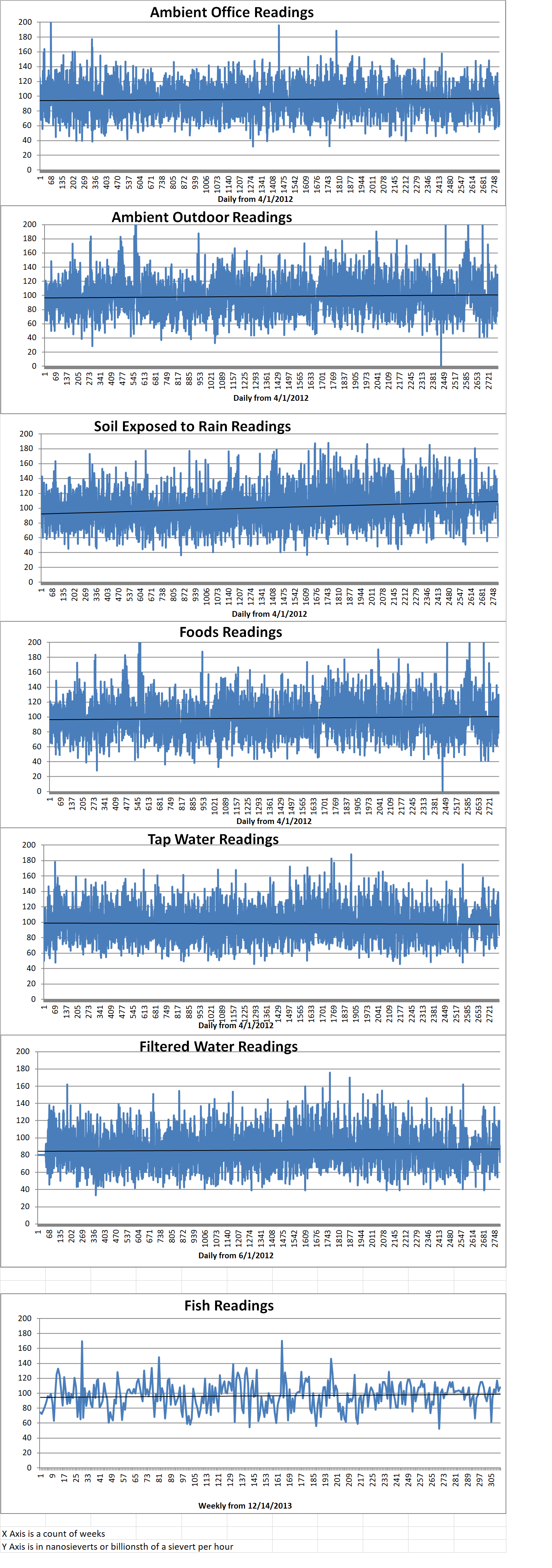
Geiger Readings for Feb 8, 2020
Ambient outside = 64 nanosieverts per hour
Soil exposed to rain water = 63 nanosieverts per hour
Poblano pepper from Central Market = 79 nanosieverts per hour
Tap water = 84 nanosieverts per hour
Filtered water = 72 nanosieverts per hour
Dover sole – Caught in USA = 108 nanosieverts per hour
-

Radioactive Waste 753 – Sellafield is Working On Using Virtual Reality To Train Crane Operators
Sellafield is a major energy company in the United Kingdom. They have recently collaborated with the University of Liverpool’s Virtual Engineering Centre (VEC) to develop a mixed-reality simulator which imitates the working environment of a nuclear power plant waste removal crane. Sellafield was considering the possible application of virtual reality to train operators for its newly commissioned nuclear waste removal crane. This crane is designed to pick up and remove nuclear waste from the Sellafield’s seventy-year-old Pile Fuel Cladding Silo. In order to explore this possibility, Sellafield approached the VEC experts for their help.
Sarah Martin-Tyrel is the senior marketing manager for VEC. She said that Sellafield was working on two major projects when they contacted VEC. One project was the development and installation of their new cutting edge silo crane for decommissioning nuclear waste. The other project was to explore VR training for their complex and sophisticated hardware such as the new crane.
Martin-Tyrel recalls that “They came to the Engineering Centre, where we had a session and discussed the two different projects when we realized that we could leverage that and then came up with the VR technology within the crane system.”
VEC experts met with the Sellafield team at the VEC innovation center at Sci Tech Daresbury. Together, the two teams utilized an existing 3D model of the Silo and the Crane to create a simulator. The first simulator used a replica of the crane operator’s chair, joystick and spatial working environment.
Martin-Tyrel said, “We had this virtual world exactly how it would be in the real world and we took the integration of the control system and applied the exact same facial movements and awareness to the same control stick and the same movement of the chair. So that allowed for the operators to control the virtual environment from a real-world space and that’s why we call the technology mixed reality.”
The Crane training simulator provides a very realistic environment for the Sellafield Crane operators. It allows them to operate the nuclear waste retrieval Crane in a safe environment before they participate in the full-scale training program. Martin-Tyrel said, “Because we can train people in this kind of virtual mixed reality environment, we don’t have to take anybody out of the actual job to do that, which means – productivity benefits and making Sellafield safer.” This new technology is believed to build the confidence of operators more quickly and to reduce the delivery schedule for the whole project.
Following the initial success of the first version of the simulator, the Sellafield Silo waste retrieval team decided that the simulator should be the primary tool for training operators. Making this choice has allowed Sellafield to re-purpose the training system that was originally intended to for the Crane to use for a second retrieval system. Twenty-six million dollars were saved as a result of this decision.
There have been major challenges in the simulator project. Martin-Tyrel said, “Sometimes the design engineers would go inside the virtual system before commissioning, have a walk around and say: ‘Well, this is too close to that, the CCTV camera can go there, we need a bigger room or we need to move this 30 centimeters back .” She also said that during one recent trial, they were able to move far more waste in a day than was expected. They attributed this to the new training simulator.
Martin-Tyrel said that this new mixed reality technology makes hazardous safer and more time-efficient. She concluded “I think this type of mixed reality, real life training can be applied to different fields to ensure similar cost-reductions and productivity rise.” -
Nuclear News Roundup Feb 7, 2020
Russian priests shouldn’t bless nuclear weapons, other weapons of mass destruction, Orthodox Church says foxnews.com
The World Didn’t Understand How Bad Nuclear War Would Be Before This Exercise news.yahoo.com
A trip to the Fukushima No. 1 nuclear plant: Full-body suits and three layers of socks japantimes.co.jp
U.S. Space Force Conducts Its First Nuclear-Capable Missile Test gizmodo.com
-

Geiger Readings for Feb 7, 2020
Ambient office = 87 nanosieverts per hour
Ambient outside = 97 nanosieverts per hour
Soil exposed to rain water = 96 nanosieverts per hour
Danjo pear from Central Market = 105 nanosieverts per hour
Tap water = 101 nanosieverts per hour
Filtered water = 91 nanosieverts per hour