Blog
-
Geiger Readings for May 16, 2017
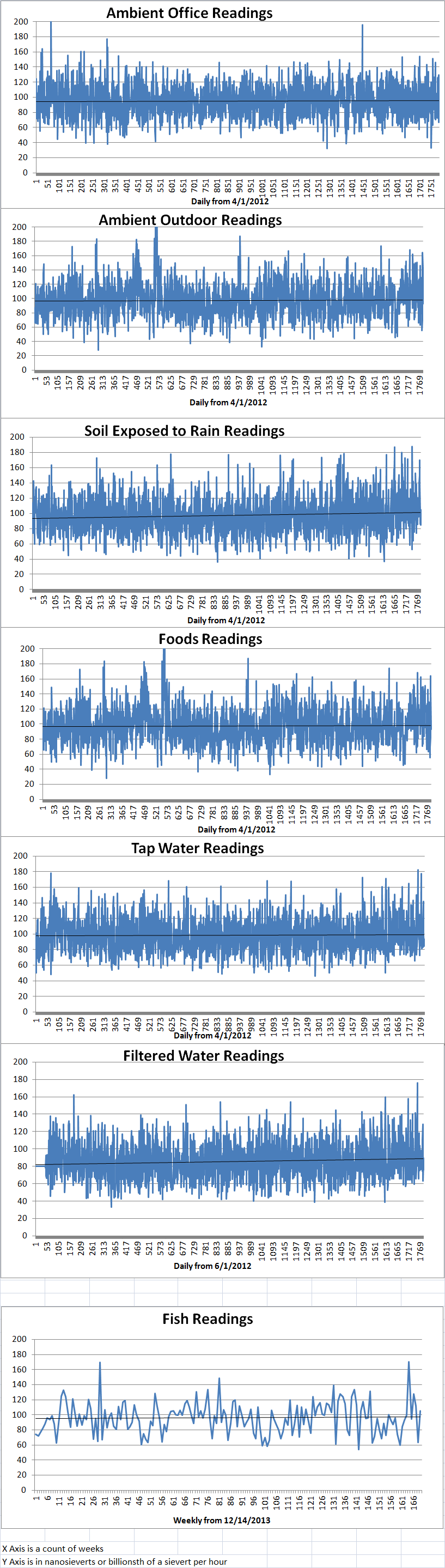
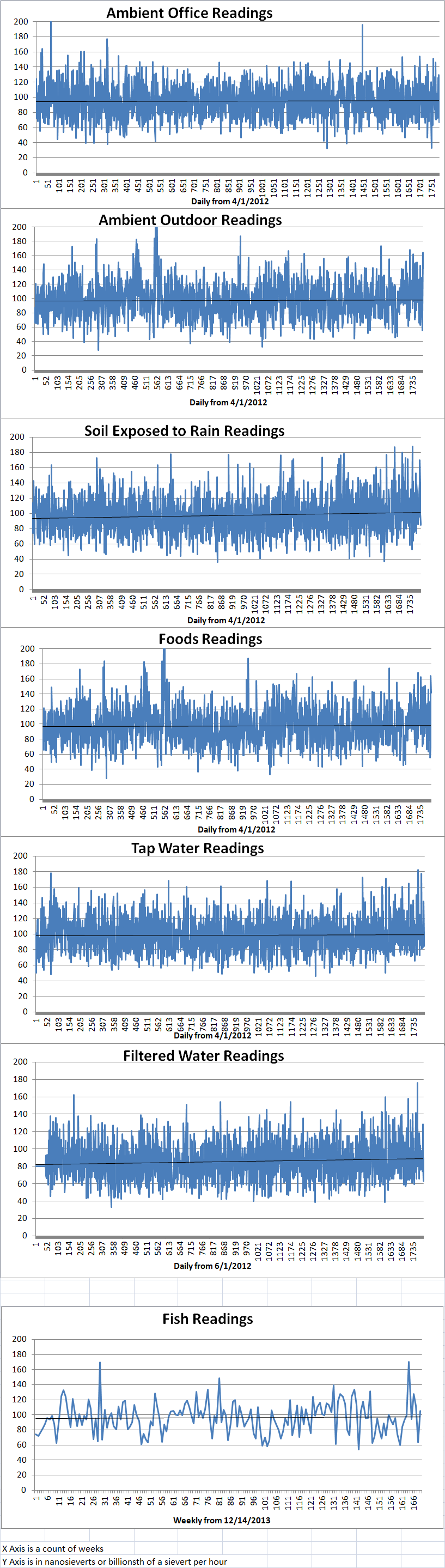
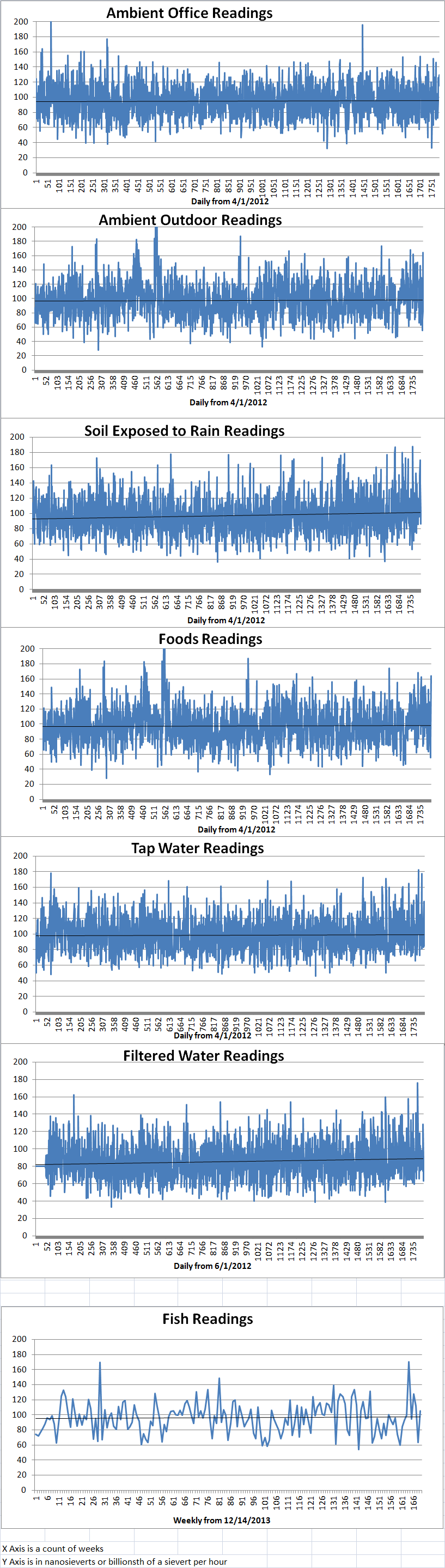
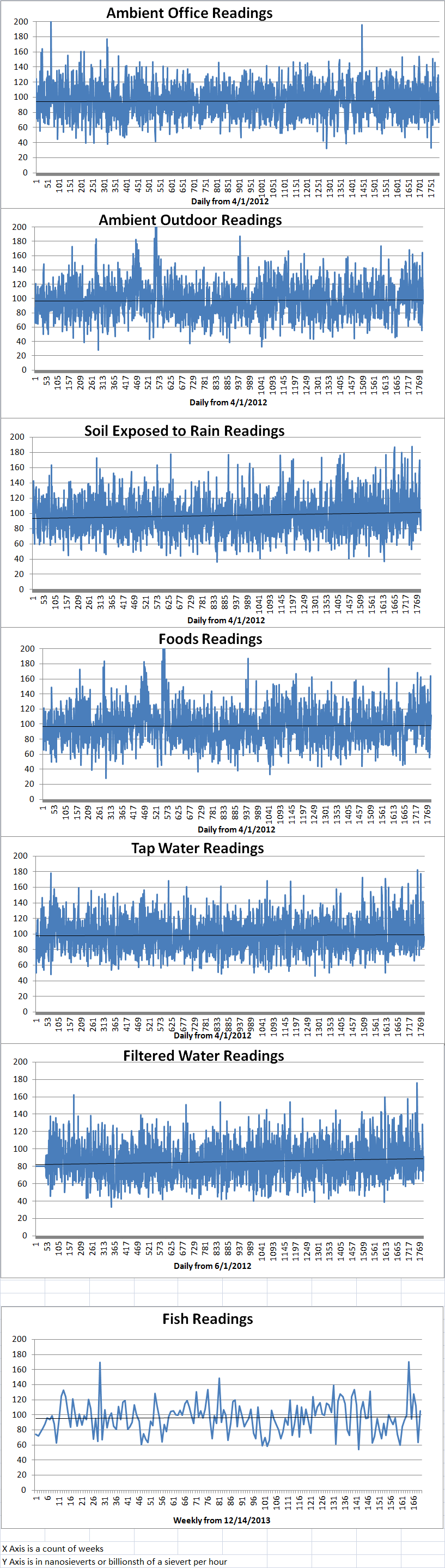
Ambient office = 84 nanosieverts per hourAmbient outside = 77 nanosieverts per hourSoil exposed to rain water = 78 nanosieverts per hourOrange bell pepper from Central Market = 112 nanosieverts per hourTap water = 97 nanosieverts per hourFilter water = 91 nanosieverts per hour -
Nuclear Weapons 278 – Underwater Nuclear Detonations Would Not Be An Effective Use Of Nuclear Bombs
It has been suggested that a nuclear warhead could be smuggled into a harbor and detonated to cause a destructive tsunami. There have been reports that Russia may have planted nuclear warheads on the bottom of the ocean off the coast of the U.S. There have also been recent stories that claim that Russia is perfecting underwater swift stealth drones that could carry nuclear warheads into U.S. harbors undetected. What are the realities of such threats? Gregg Sprigs, a nuclear-weapons physicist at Lawrence Livermore National Laboratory, said “It would be a stupid waste of a perfectly good nuclear weapon.”
Underwater tests of nuclear bombs were conducted by the U.S. in the 1940s and 1950s. The bombs detonated were in the fifteen kiloton range, relatively small by today’s standards. Still, the fireballs generated by the explosions sent out powerful shockwaves and threw seawater more than a mile into the air. Warships had been placed near the explosion to measure their destructive power. Some of the closest ships were totally vaporized and others were quickly sunk in the turbulence. Those further away from the explosions had their hulls cracked, engines crippled and sustained other serious damage. Small tsunamis flooded inland areas of nearby islands.
Spriggs said that “the energy in a large nuclear weapon is but a drop in the bucket compared to the energy of a [naturally]-occurring tsunami. So, any tsunami created by a nuclear weapon couldn’t be very large.” As an example, a 2011 earthquake in Japan generated a tsunami that was equivalent to almost ten million megatons of TNT which is millions of times greater than the nuclear bombs and warheads in the world’s nuclear arsenals. Spriggs went on to say that “because of the small solid angle that would subtended by a nuclear-induced tsunami (in the direction of the shoreline), most of the energy would be wasted going back out to sea.”
In reality, an enemy intent on inflicting maximum damage on an enemy’s cities would get a lot more “bang for the buck” by simply dropping a nuclear bomb on an enemy city rather than trying to drown it by detonating an offshore underwater explosion. According to Spriggs “if they dropped a 10 megaton nuclear weapon directly over a city, they could kill millions of people as opposed to a small nuclear-induced tsunami that may, at best, kill only a few thousand people that may be within a few thousand yards of the beach.”
So if the idea of using nuclear weapons underwater near an enemy’s port cities is so ridiculous, how did it get into circulation in the world media? This last February, an opinion piece written by Viktor Baranetz, a former spokesman for the Russian Defense Ministry, was published in Komsomolskaya Pravda, a Russian tabloid. Baranetz was responding to a statement by U.S. President Donald Trump to the effect that Trump wanted to increase the U.S. defense budget by almost ten percent from six hundred billion dollars to six hundred and fifty four billion dollars. Baranetz said that this amounted to almost ten times what Russia was spending annually on defense.
Baranetz stated that Russia had found a variety of ways to counter the U.S. military buildup that did not cost nearly as much. One of the “asymmetrical” responses that Baranetz mentioned was the “seeding” of unmanned nuclear “mole” missiles along the U.S. coastline that would lie there quietly until needed. British tabloids began publishing articles based on a translation of the Baranetz in March. By late April, some of these stories mentioned the idea that the Russian “mole” submarines could launch nuclear torpedoes which could be detonated to cause tsunamis. Refutations, including by Baranetz himself, immediately began appearing to counter these claims.
Baranetz went on to clarify his report on the “Status-6” Russian project to station unmanned nuclear submarines off the coast of the U.S. and other potential enemies. The task of the unmanned submarines would be to use nuclear torpedoes and nuclear missiles to wreck havoc on U.S. ports and create large areas of radioactive contamination. There was no mention of any intent to trigger tsunamis with underwater detonations.
-
Geiger Readings for May 15, 2017
Ambient office = 89 nanosieverts per hourAmbient outside = 96 nanosieverts per hourSoil exposed to rain water = 105 nanosieverts per hourRoma from Central Market = 93 nanosieverts per hourTap water = 94 nanosieverts per hourFilter water = 76 nanosieverts per hour -
Geiger Readings for May 14, 2017
Ambient office = 67 nanosieverts per hourAmbient outside = 80 nanosieverts per hourSoil exposed to rain water = 85 nanosieverts per hourMango from Central Market = 141 nanosieverts per hourTap water = 93 nanosieverts per hourFilter water = 89 nanosieverts per hour -
Nuclear News Roundup May 13, 2017
The Canadian Nuclear Safety Commission is considering whether a 34-year-old nuclear power plant just across the border from Maine should be relicensed for another five years. Bangordailynews.com
A cybersecurity expert says the biggest cyberextortion attack in history is going to be dwarfed by the next big ransomware attack. Sanfrancisco.cbslocal.com
The UAE has a leading role in shaping the future of nuclear power development, industry experts say. Thenatiional.ae
-
Geiger Readings for May 13, 2017
Ambient office = 130 nanosieverts per hourAmbient outside = 98 nanosieverts per hourSoil exposed to rain water = 86 nanosieverts per hourRomaine lettuce from Central Market = 164 nanosieverts per hourTap water = 85 nanosieverts per hourFilter water = 63 nanosieverts per hourHalibut – Caught in USA = 105 nanosieverts per hour -
Radioactive Waste 229 – Multiple Warnings About Vulnerability of The Tunnel That Collapsed at Hanford
For the past few days, I have been blogging about the tunnel collapse that happened Tuesday at the Hanford Nuclear Reservation in south central Washington State near the Plutonium Uranium Extraction Plant (PUREX). As the days pass, more information is being released so I am continuing to blog about the accident.
“The infrastructure built to temporarily store radioactive waste is now more than a half-century old,” said Maia Bellon, director of the state ecology department. The three hundred and sixty foot railway tunnel was built in 1956 and was used between 1956 and 1988 to move spent nuclear fuel from Hanford Reactors to the PUREX so that uranium and plutonium could be extracted for the manufacture of nuclear weapons. It is estimated that seventy thousand tons of spent uranium fuel rods were moved through the two underground tunnels. After the end of the Cold War, the tunnels were used to store the radioactive railway cars that had been used to move the spent fuel. Other equipment and materials that had been contaminated were also stored in the tunnel. The tunnel contains about seven hundred and eighty cubic yards of radioactive waste.
It turns out that although the collapse of the tunnel was discovered on Tuesday, it could have happened up to four days before it was discovered. There are no regularly scheduled inspections of the underground tunnels. The nuclear waste manager for the Washington state Department of Ecology, which helps regulate the Hanford site, said “It’s not acceptable that the hole could have been open for four days.” Washington state officials demanded that the DoE “immediately assess the integrity of the Hanford tunnels.”
The dirt that fell into the tunnel when the ceiling collapsed apparently prevented the release of any of the radioactive material in the tunnel because the Hanford authorities claim that no radiation has been detected around the hole. Fifty four truck loads of dirt were poured into the hole to fill it.
In 2015, the U.S. DoE commissioned a report on the integrity of the tunnels. The report said that the steel, concrete and wood used to construct the tunnels had been weakened by exposure to intense radiation and that the tunnels could be collapsed by earthquakes.
Rick Perry, the new Director of the U.S. Department of Energy, said that filling the hole “was accomplished swiftly and safely to help prevent any further complications. Our next step is to identify and implement longer-term measures to further reduce risks.”
The Yakima Indians were moved off the land where the Hanford Nuclear Reservation is located which had been their reservation by treaty. Although they moved, they were given the right to monitor the Hanford Nuclear Reservation environment. The Yakima Tribe has released a statement that says that they had warned the DoE for several years that the tunnels were unsafe. “No preventative action was taken,” the tribe said in a statement. The tribe also said that the railroad tunnels should be completely cleaned out long before the new 2042 deadline that has been granted to the DoE.