Blog
-
Geiger Readings for May 05, 2017
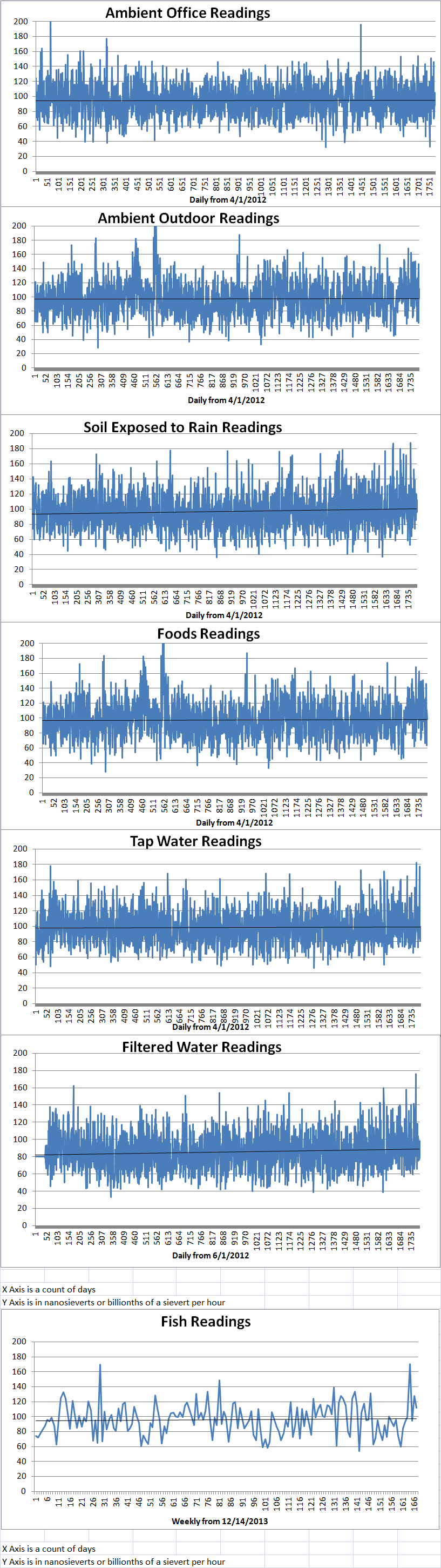
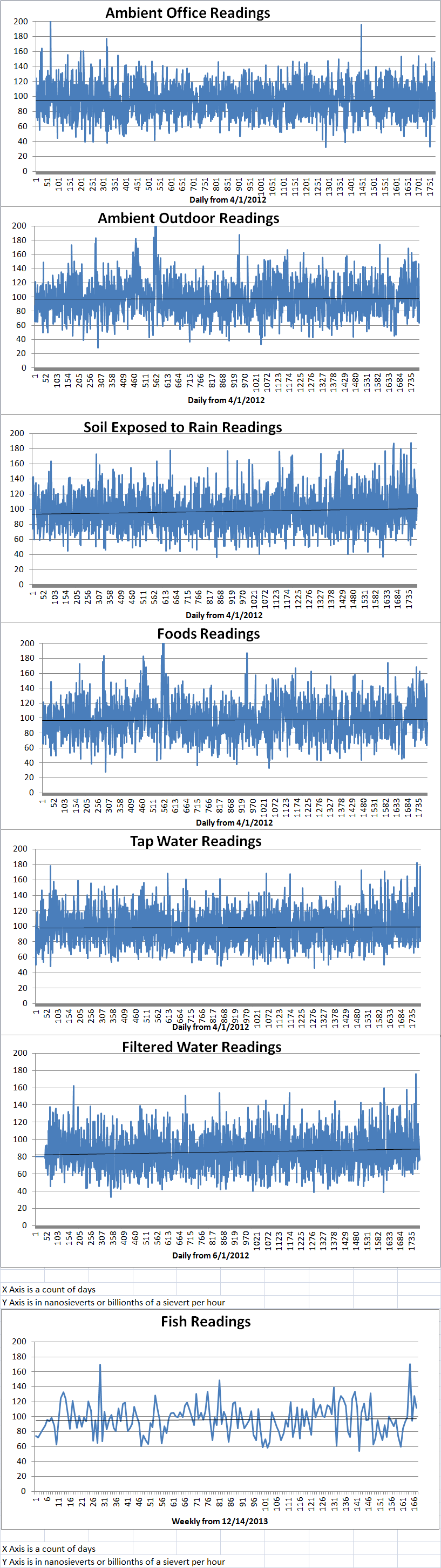
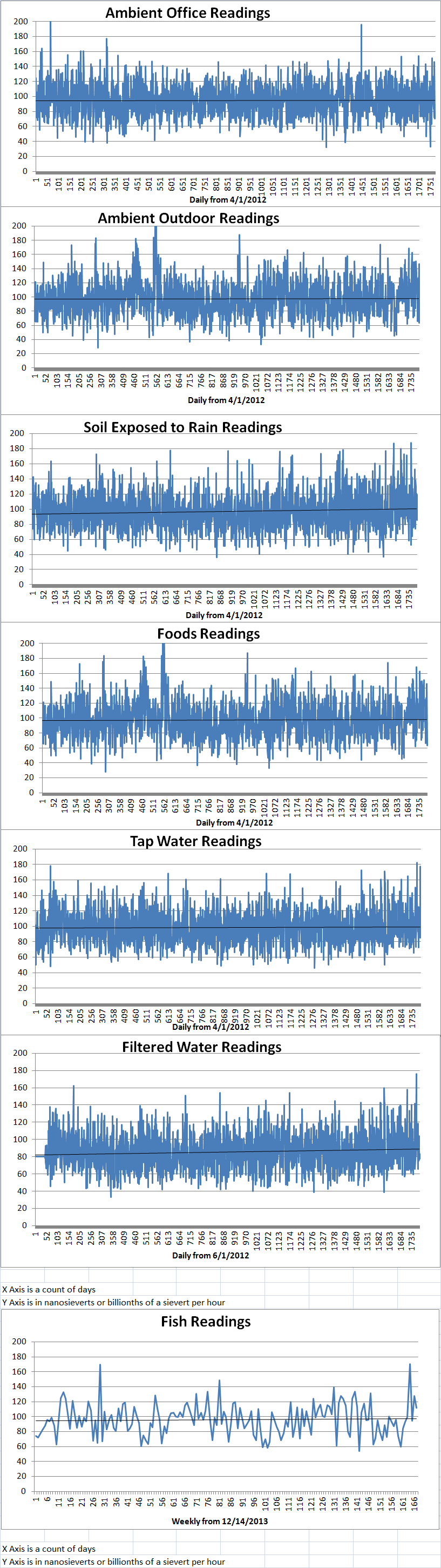
Ambient office = 90 nanosieverts per hourAmbient outside = 116 nanosieverts per hourSoil exposed to rain water = 112 nanosieverts per hourCrimini mushroom from Central Market = 98 nanosieverts per hourTap water = 100 nanosieverts per hourFilter water = 98 nanosieverts per hour -
Radioactive Waste 224 – Brexit Nuclear Nuclear Negotiations Between United Kingdom and European Union
The United Kingdom (U.K.) has just entered a two-year period of negotiations with the European Union (E.U.) over the exact terms of its exit from the E.U. As part of its exit from the E.U., it will also be negotiating its exit from Euroatom (the European transnational nuclear association) which currently governs its participation in nuclear projects and the terms of its interaction with nuclear vendors.
The E.U. governing body in Brussels has stated that when the U.K. leaves the E.U., Brussels will transfer ownership of E.U. nuclear waste current stored in the U.K. to the official ownership of the U.K. The negotiating position of the E.U. was published Wednesday as part of the opening of negotiations.
Currently, there is about one hundred and thirty tons of plutonium stored at the Sellafield facility in Cumbria in the U.K. The E.U. proposal would make the U.K. responsible not only for its own fissionable materials but also tons of waste transported over decades from other European countries for reprocessing at Sellafield.
Paul Dorfman, at the Energy Institute at University College London, said, “What was a joint European legacy now becomes a UK home brew, with potentially dire economic consequences for the UK given the sheer expense and weight of this radiological inventory.”
The E.U. says that passing over the legal ownership of the nuclear waste is just a formality because Euroatom’s ownership only existed in “theory.” Timothy Abram, professor of nuclear fuel technology at Manchester university, said, “Euratom has the right to sequester fissile material in extreme circumstances but it is a historical throwback reflecting the world as it was when the treaty was negotiated in the 1950s and there was a threat of nuclear war with the Soviet Union.”
Euroatom is a separate legal entity from the E.U. but it is administered by the E.U. institutions. A U.K. government spokesperson said “The UK supports Euratom and will want to see continuity of co-operation and standards. We remain absolutely committed to the highest standards of nuclear safety, safeguards and support for the industry.” The U.K will also take possession of the property of Euroatom that has been used to monitor and safeguard the fissile material being transferred to U.K.
The U.K. has already concluded agreements with Germany, France, Sweden and the Netherlands to accept permanent responsibility for some of the plutonium that has been reprocessed from the import spent nuclear fuel from those nations. The U.K. government said when it accepted the responsibility for the reprocessed plutonium that it considered that this was a “mutually beneficial arrangement” because it removed the necessity of transporting the plutonium back to the countries that sent it to the U.K.
About twenty percent of the one hundred and thirty tons of plutonium at Sellafield came from the reprocessing of spent nuclear fuel. The plutonium is stored in sealed flasks in a building with tight security. It costs about a hundred million dollars a year to store the plutonium. During the 1990s, the U.K. spent almost two billion dollars to build a facility at Sellafield to create nuclear fuel from the stored plutonium. However, due to many problems encountered in the attempt to complete the facility, the project was abandoned in 2011. There have been some proposals to spend billions of dollars on alternative plutonium recycling but a lot of people would just like to permanently dispose of the plutonium and forget about recycling.
-
Nuclear News Roundup May 04, 2017
The Swedish framework for physical protection and computer security at nuclear power plants, other nuclear facilities and for nuclear material in transport continues to show good progress, an International Atomic Energy Agency (IAEA) report concludes following a mission there last year. World-nuclear-news.org
-
Geiger Readings for May 04, 2017
Ambient office = 89 nanosieverts per hourAmbient outside = 90 nanosieverts per hourSoil exposed to rain water = 96 nanosieverts per hourCelery from Central Market = 112 nanosieverts per hourTap water = 97 nanosieverts per hourFilter water = 79 nanosieverts per hour -
Nuclear Reactors 279 – Nuclear Industry Association Lays Out Issues To Be Negotiated For The Brexit
When the U.K. Parliament passed the bill at the end of January authorizing the exit from the E.U., they included a note to the effect that the U.K. would also be leaving Euroatom at the same time. At the end of March, the Prime Minister of the U.K. triggered Article 50 which calls for a two-year period during which the U.K. and the European Union will negotiate over the exact terms of the U.K. exit.
The Nuclear Industry Association (NIA) “represents more than 260 companies including nuclear power station operators, new build developers, and vendors, those engaged in decommissioning, waste management, all aspects of the nuclear fuel cycle, supply chain and consultancy companies.” The NIA issued a position paper today titled Exiting Euroatom which outlined the major issues that the U.K. must negotiate with the European Atomic Energy Community (Euroatom) in order to ensure a smooth transition for the UK and European nuclear industries as the U.K. leaves the European Union.
The NIA position paper outlined six areas of concern that they insisted must be part of the nuclear-related negotiations between the U.K. and the E.U. The U.K. must draft a Voluntary Offer Agreement with the IAEA with respect to a U.K. nuclear safety regime to replace the current E.U. safety regime which will no longer be applicable.
The U.K. will have to negotiate new Nuclear Cooperation Agreements (NCA) with nuclear vendors such as Australia, Canada, the Euratom Community, Kazakhstan, South Korea and the USA because it will no longer be a part of the E.U. arrangements with nuclear vendors.
The U.K. currently has NCAs with Japan, the U.S. and some other countries that supply nuclear technology and materials. These existing agreements will have to be reviewed and in some cases modified to take into account the U.K. exit from the E.U.
The U.K. will have to explicitly define the protocols and procedures for the safe transport of materials, goods, people and services involved in the nuclear industry because previously the U.K. could employ the transportation standards of the E.U.
The U.K. is currently involved in R & D projects related to nuclear materials and technologies as part of the E.U. Once the U.K. has exited the E.U., the U.K. share of the funding for these projects must be renegotiated on a project by project basis.
Finally, the U.K. must do all it can to ensure international confidence in the U.K. nuclear program and to find the necessary funding needed to support major nuclear projects.
Tom Greatrex, NIA chief executive, said: “The UK civil nuclear industry is ready and willing to work with the government as it begins the process of putting replacement arrangements for Euratom in place. The clock is ticking, and this is a priority of increasing urgency. This new report demonstrates that without new arrangements in place by the time the UK leaves the Euratom Community, there is scope for real and considerable disruption. The industry has not only set out the priority areas that need to be addressed, but also the steps we think the government needs to take to address those issues.
Government ministers have stated their desire to both work with industry and to ensure the same high standards will continue to apply as the UK leaves the EU – there is no disagreement on that principle. The government now needs to get down to the work of putting such arrangements in place, including a prudent approach to ensuring there are transitional arrangements in place, to avoid a gap in regulation. That would not be in the interests of the EU, the UK or the industry globally.”
-
Geiger Readings for May 03, 2017
Ambient office = 105 nanosieverts per hourAmbient outside = 108 nanosieverts per hourSoil exposed to rain water = 103 nanosieverts per hourAvocado from Central Market = 94 nanosieverts per hourTap water = 81 nanosieverts per hourFilter water = 77 nanosieverts per hour -
Nuclear Reactors 278 – Eastern European Countries Seek Funding For Nuclear Projects
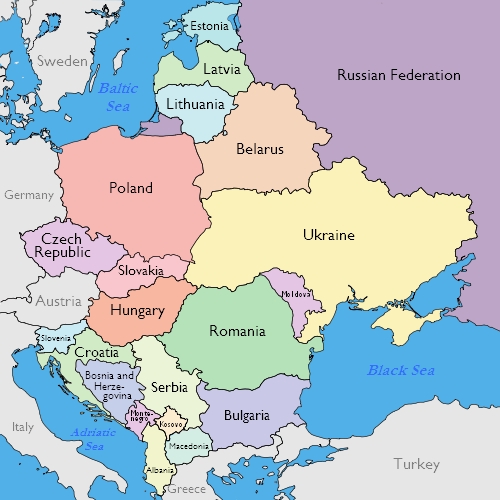
Western Europe is having a lot of problems with nuclear power. Germany is working out how to shut down all of their nuclear power plants. Austria is suing other European Union nations over nuclear issues. The Brexit threw shockwaves into the European nuclear industry. France’s nuclear reactor manufacturer Areva is in serious financial difficulty. There are voices in the E.U. calling for a nuclear policy for all of Europe to help deal with difficult issues. While Western Europe is grappling with the question of whether or not nuclear energy should be part of the future energy mix, Eastern Europe, which inherited nuclear reactors from the Soviet Union, is enthusiastic about the future of nuclear power.
While public opinion is trending against nuclear power in Western Europe, the public is fine with nuclear power in Eastern Europe. However, Eastern European countries are having a difficult problem coming up with the necessary funding for the expansion of nuclear power.
Adding to their nuclear fleet has been a long-term goal of the Czech government. The Czech people do not seem to be worried about safety concerns. But the question of who will provide the twelve billion dollar investment needed to carry out current plans has not been answered. They have been having trouble selling nuclear projects to domestic investors. Even a state-owned energy group called CEZ is facing resistance from private shareholders. CEZ pulled out of an eight billion dollar tender because the Czech government would not offer power price guarantees.
Russia and China are both eager to expand their export businesses in nuclear power reactors in Eastern Europe. Russia has sent signals to the Czech government that they would like to find a mutually satisfactory way to help fund new nuclear projects in the Czech Republic.
In Poland, a recent poll found that sixty-one percent of the Polish public supports nuclear power as a solution to Poland’s energy needs. As with the Czech public, the Polish citizens do not seem to be worried about safety. The Polish people have a high regard for scientists and other experts. There is also a long-standing vision of nuclear power as a symbol of national achievement.
Russia and China have expressed interest in Polish nuclear projects but Poland is concerned about foreign capital interfering with Polish interests and is seeking other ways of raising the capital. However, no alternatives to foreign assistance have been found so far.
Hungary has been working for some time on getting E.U. permission to contract Rosatom, the Russian government-owned company, to expand the Hungarian Paks power plant. The E.U. permission finally came through this last February. Rosatom promised Hungary about ten million dollars to get around an EU requirement that member countries had to seek tenders for major infrastructure projects.
Slovakia is involved in a project to expand the Mochovce plant but it is way over budget and way behind schedule. Slovakia had been working with an Italian utility company named Enel but the problems with the project have resulted in Enel making plans to leave Slovakia. This will raise the problem of financing the completion of the project.
Eastern European countries are dedicated to nuclear power but nuclear projects are expensive and difficult to launch and complete. Time will tell whether Eastern European countries can fulfill their nuclear dreams.
-
Geiger Readings for May 02, 2017
Ambient office = 80 nanosieverts per hourAmbient outside = 132 nanosieverts per hourSoil exposed to rain water = 119 nanosieverts per hourRoma tomato from Central Market = 63 nanosieverts per hourTap water = 85 nanosieverts per hourFilter water = 78 nanosieverts per hour