Blog
-
Geiger Readings for Apr 03, 2017
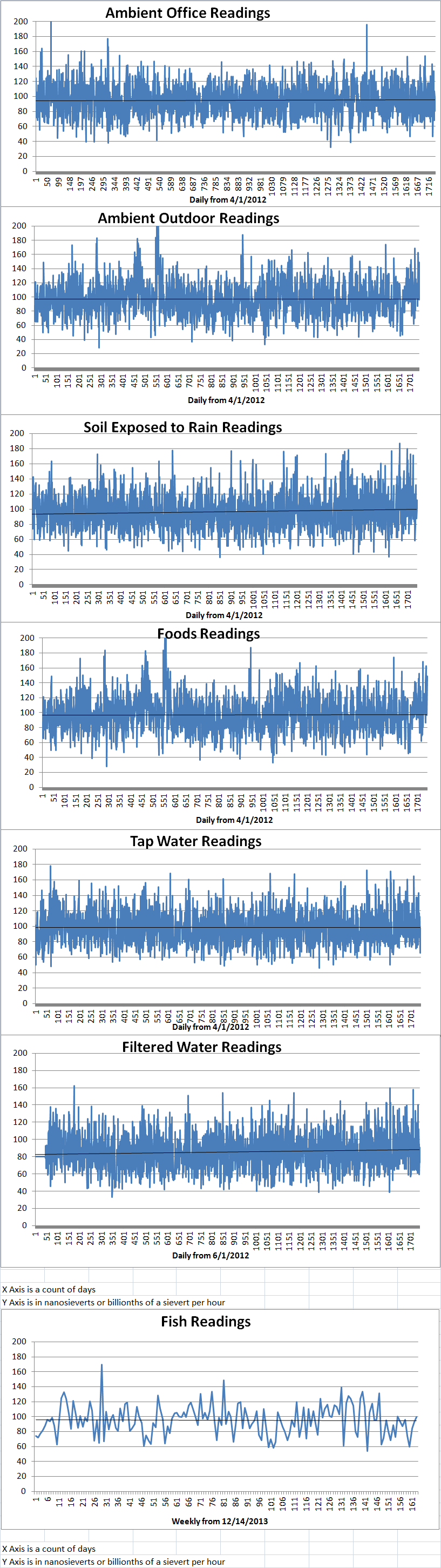
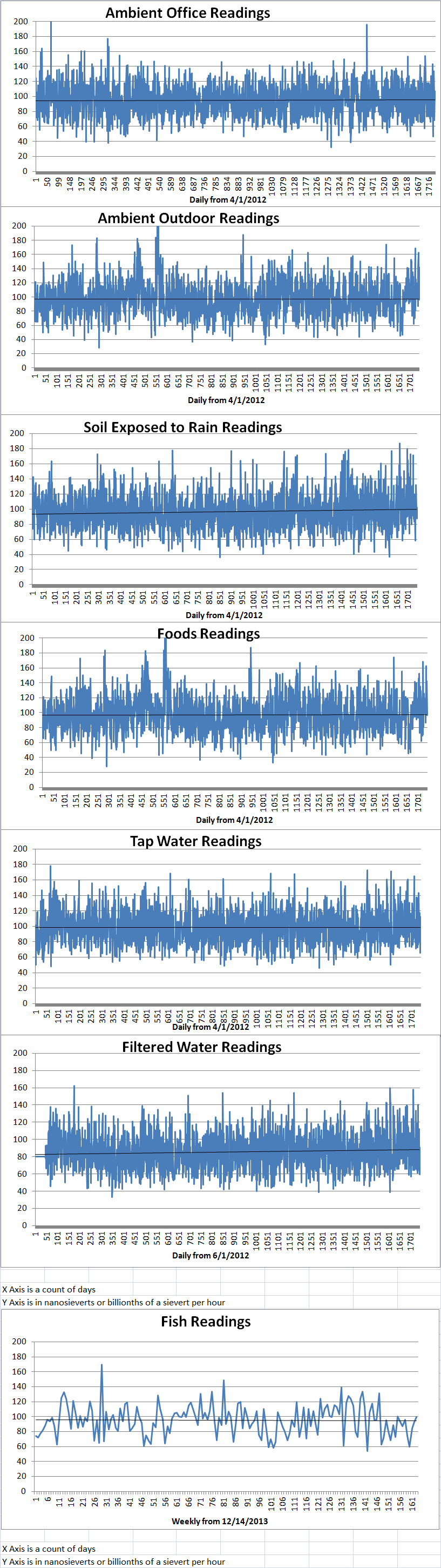
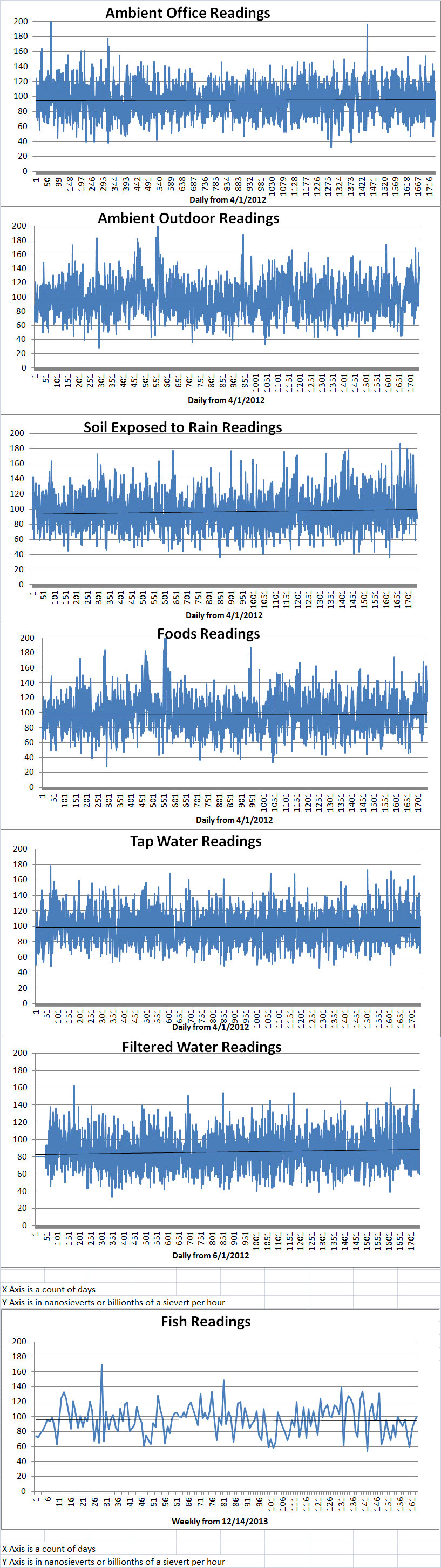
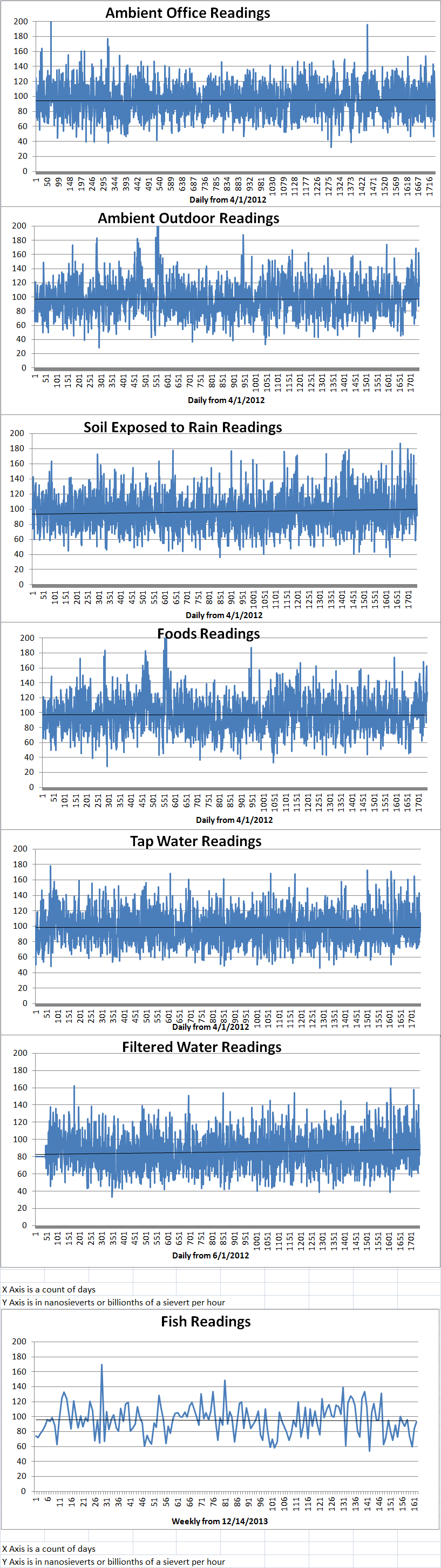
Ambient office = 81 nanosieverts per hourAmbient outside = 122 nanosieverts per hourSoil exposed to rain water = 112 nanosieverts per hourCrimini mushroom from Central Market = 149 nanosieverts per hourTap water = 85 nanosieverts per hourFilter water = 73 nanosieverts per hour -
Nuclear News Roundup Apr 02, 2017
The Hungarian Atomic Energy Authority yesterday issued the site licence required to build two new units at the Paks nuclear power plant, while the environmental licence is expected to be finalised within weeks. Attila Aszódi, the government commissioner responsible for the Paks II project, told World Nuclear News today that receiving the site licence is a “major milestone” and the target remains for the first unit to be completed in 2025 and the second in 2026. world-nuclear-news.org
-
Geiger Readings for Apr 02, 2017
Ambient office = 96 nanosieverts per hourAmbient outside = 110 nanosieverts per hourSoil exposed to rain water = 102 nanosieverts per hourCarrot from Central Market = 97 nanosieverts per hourTap water = 98 nanosieverts per hourFilter water = 91 nanosieverts per hour -
Nuclear News Roundup Apr 01, 2017
A regulatory application was lodged today for a large used fuel storage facility in the US state of New Mexico. With a capacity of 10,000 canisters, Holtec’s Hi-Store Consolidated Interim Storage facility could store used fuel from any US nuclear power plant. world-nuclear-news.org
New South African Finance Minister Malusi Gigaba insist that government’s controversial nuclear-build program will continue as planned, but that it will not be implemented recklessly. timeslive.co.za
-
Geiger Readings for Apr 01, 2017
Ambient office = 98 nanosieverts per hourAmbient outside = 103 nanosieverts per hourSoil exposed to rain water = 88 nanosieverts per hourAvocado from Central Market = 142 nanosieverts per hourTap water = 65 nanosieverts per hourFilter water = 60 nanosieverts per hourHalibut – Caught in USA = 99 nanosieverts per hour -
Nuclear Weapons 262 – Saudi Arabia Has Nuclear Weapons Abitions
Saudi Arabia is been interested in acquiring nuclear weapons. They fear that if their archenemy Iran acquires nuclear weapons, the Saudis will be at a severe strategic disadvantage. The Institute for Science and International Security, a Washington D.C.-based organization that monitors global proliferation issues has just issued a new report about Saudi nuclear ambitions.
Even though the recently international agreement with Iran was intended to preclude the manufacture of nuclear weapons by Iran, Saudi Arabia’s concerns increased as the Iranian sophisticated nuclear power program proceeds. According to the report “Saudi Arabia is in the early stages of nuclear development and is expected to more actively seek nuclear weapons capabilities” to counter the perceived threat of Iranian nuclear weapons.
The United States hoped that the Iranian nuclear deal would ease tensions in the Middle East. Unfortunately, that does not appear to be the case. Iran continues to harass the U.S. Navy in the Persian Gulf and support terrorism in other countries.
Saudi Arabia has plans to construct sixteen nuclear power reactors. The Iran nuclear deal has reduced pressure on Saudi Arabia to develop their own nuclear arsenal in the near future. However, as the date of the end of the Iranian nuclear deal approaches, Saudi may feel the need to move forward on nuclear weapons development.
The reports says “There is little reason to doubt that Saudi Arabia will more actively seek nuclear weapons capabilities, motivated by its concerns about the ending of the [nuclear deal’s] major nuclear limitations starting after year 10 of the deal or sooner if the deal fails. If Iran expands its enrichment capabilities, as it states it will do, Tehran will reduce nuclear breakout times, or the time needed to produce enough weapon-grade uranium for a nuclear weapon, to weeks and then days. With these concerns, the Kingdom is likely to seek nuclear weapons capabilities as a hedge.”
Since at least 2014, Saudi Arabia has been working on acquiring all the technical expertise and equipment necessary to develop and control their own nuclear fuel cycle. Ostensibly dedicated to their civilian nuclear power program, the same technology and equipment can be repurposed to develop nuclear weapons.
“At this point in time and at its current pace of nuclear development, Saudi Arabia would require years to create the nuclear infrastructure needed to launch a nuclear weapons effort,” the report says. The authors of the report add that “the intention to achieve such a capability seems clear.”
Saudi Arabia has been teaming up with other nations such as Russia, China and South Korea for assistance in developing its nuclear capabilities. They are also creating research programs for nuclear technology and developing educational programs to train their own nuclear engineers and scientists.
The report continues “Saudi Arabia appears genuinely committed to importing many nuclear reactors and has pursued numerous cooperation agreements with other countries. However, Saudi Arabia appears on a trajectory to create domestic appendages that could provide a nuclear weapons capability, even if for some time these capabilities would likely be under international safeguards.”

-
Geiger Readings for Mar 31, 2017
Ambient office = 107 nanosieverts per hourAmbient outside = 103 nanosieverts per hourSoil exposed to rain water = 91 nanosieverts per hourRoma tomato from Central Market = 127 nanosieverts per hourTap water = 65 nanosieverts per hourFilter water = 60 nanosieverts per hour -
Nuclear Reactors 272 – Westinghouse Bankruptcy Calls Completion Of New Reactors At Summer Nuclear Generating Station Into Question
Financial problems at Toshiba and its nuclear subsidiary, Westinghouse continue to roil the nuclear industry. Westinghouse has just filed for Chapter 11 bankruptcy. Toshiba and Westinghouse say that only U.S. operations of Westinghouse will be affected by the bankruptcy filing.
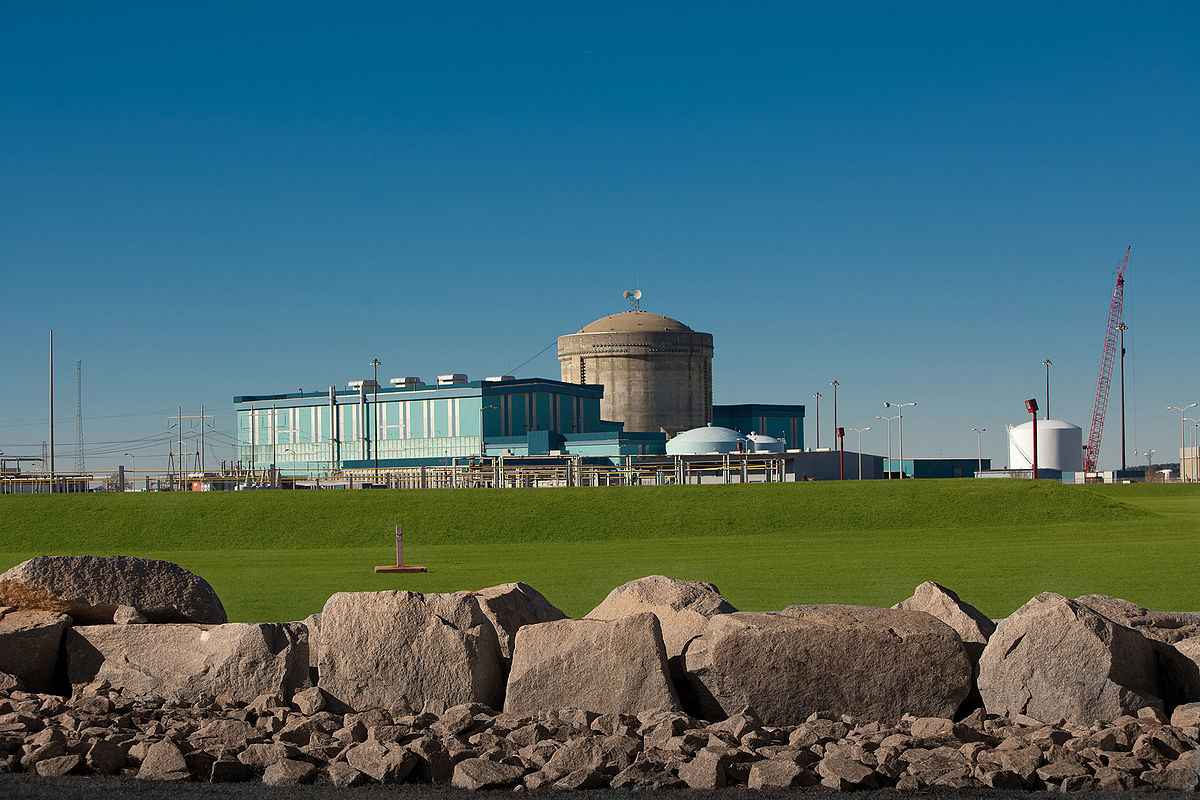
South Carolina Electricity and Gas (SCE&G), a subsidiary of Scana Corporation, and Santee Cooper contracted Westinghouse to build two AP1000 nuclear power reactors at the Virgil C. Summer Nuclear Generating Station near Jenkinsville in Fairfield County, South Carolina. The Westinghouse U.S. bankruptcy filing has called the completion of the project at the Summer power plant into question.
The CEO of Scana said yesterday that Scana and Santee Cooper had reached an agreement with Westinghouse after the bankruptcy filing that allows for work on the two AP1000s at the Summer power plant to continue during a thirty days evaluation period. This will give Scana a chance to consider the best route forward for the project. The bankruptcy court will have to approve the thirty-day evaluation.
The first step in the evaluation is to have Westinghouse provide Scana with an estimate of how much it will cost to complete construction of the two reactors. This will be in addition to funds that have already been allocated for existing contracts. Scana expects to be compensated for the extra costs by Westinghouse and Toshiba. In addition to the issues of funding, there may also be a surety bond posted by Westinghouse as well as an arrangement where AP1000 intellectual property and software would be placed in escrow by Westinghouse.
There will be a variety of options to be considered by Scana during the thirty day evaluation period. 1) They may continue with the construction of both reactors. 2) They may focus on the completion of only one reactor and delay construction on the other reactor. 3) They may focus on the completion of only one reactor and abandon construction of the other reactor. 4) They may abandon construction of both of the reactors. If they decide to abandon the construction of one or both of the reactors, Scana will attempt to recover the money they have already spent under the provisions of South Carolina’s Base Load Review Act.
The Scana CEO said that his company will carefully review and consider all options but that his personal preference would be for Scana and Santee Cooper to complete construction of both of the reactors. He said “We built these plants because we needed generation for our service territory. We were looking for a long-term clean energy solution, which these plants provide … If we just cancel these plants we still have a generation issue we need to face. Our commitment is still to try to finish these plants – that would be my preferred option before going through the evaluation. The least preferred option, realistically, is abandonment.”
There are only a few nuclear power reactors being built in the U.S. after a long period with no new reactor construction. The nuclear industry is trying hard to come back from decades of decline in the U.S. but the bankruptcy of Westinghouse and the problems with completion of the new Summer power plant reactors will certainly make recovery of industry momentum more difficult.
Virgil C. Summer Nuclear Generating Station: