Blog
-
Geiger Readings for Dec 24, 2016
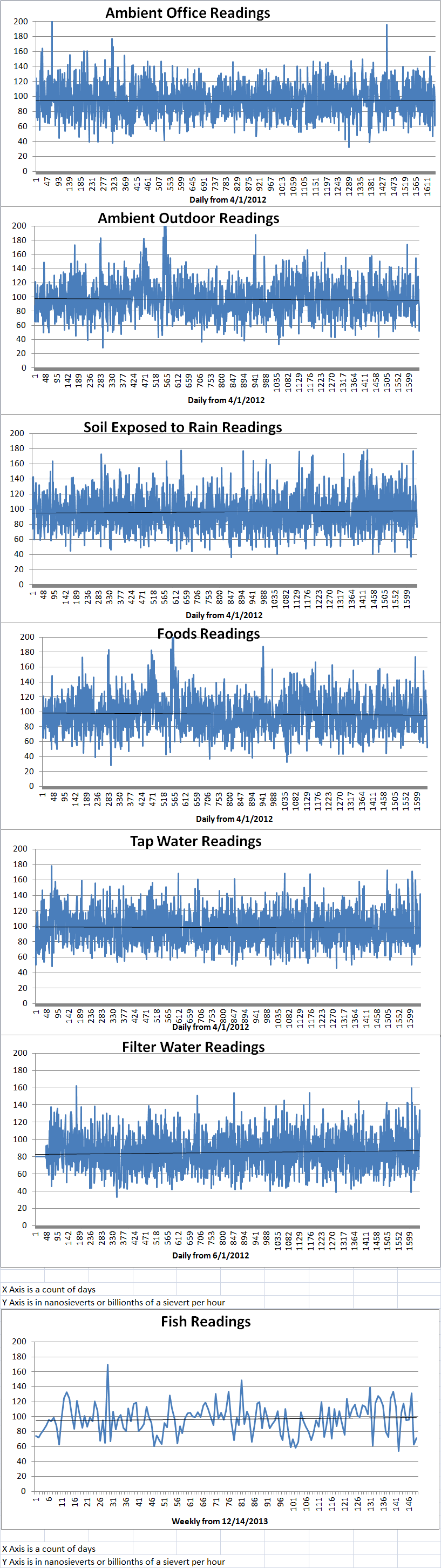
Ambient office = 91 nanosieverts per hourAmbient outside = 93 nanosieverts per hourSoil exposed to rain water = 76 nanosieverts per hourSeedless grapes from Central Market = 52 nanosieverts per hourTap water = 109 nanosieverts per hourFilter water = 103 nanosieverts per hourDover sole – Caught in USA = 72 nanosieverts per hour -
Nuclear Reactor 441 – Federal Energy Regulatory Agency Considers Regulation Changes For Nuclear Power
The Federal Energy Regulatory Commission (FERC) was formed in 1977. The top priorities of FERC include:
· Promotes reliable, efficient, and sustainable energy for consumers;
- Ensures just and reasonable rates, terms, and conditions;
- Promotes safe, reliable, secure, and efficient infrastructure; and
- Enforces compliance with FERC rules and federal law by detecting and deterring energy market manipulation.
- Regulates the transmission and wholesale sales of electricity in interstate commerce;
- Reviews certain mergers and acquisitions and corporate transactions by electricity companies;
- Regulates the transmission and sale of natural gas for resale in interstate commerce;
- Regulates the transportation of oil by pipeline in interstate commerce;
- Approves the siting and abandonment of interstate natural gas pipelines and storage facilities;
- Reviews the siting application for electric transmission projects under limited circumstances;
- Ensures the safe operation and reliability of proposed and operating LNG terminals;
- Licenses and inspects private, municipal, and state hydroelectric projects;
- Protects the reliability of the high voltage interstate transmission system through mandatory reliability standards;
- Monitors and investigates energy markets;
- Enforces FERC regulatory requirements through imposition of civil penalties and other means;
- Oversees environmental matters related to natural gas and hydroelectricity projects and other matters; and
- Administers accounting and financial reporting regulations and conduct of regulated companies. (Wikipedia)
FERC has special pricing requirements with respect to “fast start” power generation sources such as coal, oil and natural gas plants that can respond to sudden spikes in energy demand. Such spikes are often caused by the variability of solar and wind power sources that do not match the variation in energy demand. Experts say that because of the fact that nuclear energy is not included in this special pricing, it cannot compete commercially with current fast start sources. They claim that this means that nuclear power is undervalued.
Half the U.S. fleet of around one hundred reactors are boiling water reactors that can practice load following which means varying their output to follow demand. While they can change their output, it is not particularly relevant to the cost of operating the plant. It costs about the same to run at full capacity as it does to run at half capacity.
Currently, the undervaluation of nuclear power production results in a serious disadvantage in the marketplace. Within the past two years, six states have shut down nuclear power plants because of economic issues. It is estimated that almost half the power reactors in the U.S. are in danger of being closed because they cannot compete.
New regulations are being considered at FERC to take into account the ability of boiling water reactors to quickly ramp up their electricity production but critics say that there are other important price related issues that are not being addressed. It is estimated that the average nuclear power plant must spend twenty two million dollars every year to comply with government regulation. This is a much greater compliance cost that other sources of electricity. However, nuclear power plants are much more complex and dangerous that other forms of power generation. Getting regulatory approval to construct a new nuclear power plant in the U.S. can take up to twenty five years.
Critics of current policies point out that competing with other power sources that receive special subsidies such as wind and solar power put nuclear power reactors at a distinct disadvantage in the power marketplace. While this may be true, on the other hand, these other power sources release less carbon dioxide into the atmosphere than nuclear power. They also do not generate dangerous nuclear waste and they do not pose the same threat to the environment and human health.
There is concern at FERC that widespread use of wind and solar power in the U.S. could make the U.S. grid unreliable. If coal, oil or natural gas have to be used to make up shortfalls of electricity due to demand spikes, then a great deal of unwanted carbon dioxide will enter the atmosphere. On the other hand, advances in massive batteries and other types of energy storage devices could help level out the energy supply in case of demand spikes. I find the arguments for new FERC regulations to help nuclear power reactors compete in the marketplace to be unconvincing.

-
Nuclear News Roundup Dec 23, 2016
Kazakhstan, producer of more than 20,000 tonnes of natural uranium per year, has welcomed security guidance recently developed by the International Atomic Energy Agency (IAEA). The Vienna-based agency said yesterday that Kazakhstan – which established a “comprehensive system for the control and physical protection of natural uranium” in 2010 – had contributed to an IAEA publication entitled Nuclear Security in the Uranium Extraction Industry and issued in February this year. world-nuclear-news.org
-
Geiger Readings for Dec 23, 2016
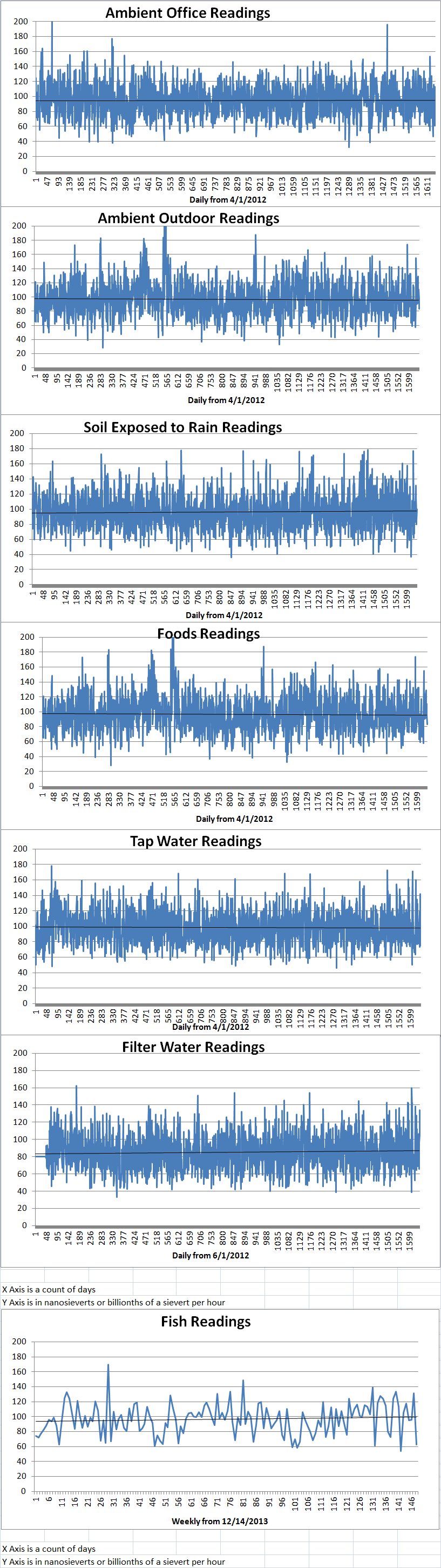
Ambient office = 61 nanosieverts per hourAmbient outside = 108 nanosieverts per hourSoil exposed to rain water = 100 nanosieverts per hourCelery from Central Market = 83 nanosieverts per hourTap water = 142 nanosieverts per hourFilter water = 134 nanosieverts per hour -
Radioactive Waste 204 – Breakthrough In Modeling Electronic States Of Uranium Nitrides
I have often posted articles about problems with the disposal of nuclear waste. This is one of the greatest issues with the use of nuclear power. The waste from nuclear power plants has radioactive isotopes that are dangerous for thousands of years. Many schemes to bury the waste and/or process it to make it less dangerous have been proposed. Today I am going to talk about research on the nature of uranium compounds that might help with the disposal of nuclear waste.
Researchers at the Centre for Radiochemistry Research (CRR) at the University of Manchester in the U.K. are working on describing the quantitative modeling of the electronic structure of a family of uranium nitride compounds. Studying the electronic structure of these complexes is difficult4 because inter-electronic repulsion, crystal field, and spin–orbit coupling effects can be of similar magnitude. This new model should help with disposal of nuclear waste by improving separation and recycling technologies by leading to an improved understanding of the way in which actinide complexes interact with extractants which are used in separating the different components of nuclear waste.
The Co-Chairman of the CRR said, “quantifying the electronic structure of these elements in molecules is a major challenge because many complex electronic effects become very important and of similar magnitude to each other with heavy elements. This makes their modeling very complex and much more difficult than for more routinely probed elements such as the transition metals.
This means that traditional descriptions of the electronic structure of actinide elements are often of a qualitative nature – but this is precisely the area where quantitative models are needed because our understanding of core chemical concepts become increasingly nebulous at the foot of the periodic table.”
Some of the researchers at the CRR had previously found that some uranium nitrides and uranium oxo molecules were essentially the same except for the a single nitrogen atom being swapped with a single oxygen atom. The symmetry of the molecular complexes and the oxidation state of the uranium ions made them ideal candidates for developing a quantitative model of electronic states.
In order to proceed with their project, the researchers needed to produce a large family of molecules but existing methods of synthesis were not reliable. Fortunately, the researchers were able to develop a new way to reliably synthesize the uranium complexes that they needed. A family of fifteen uranium nitrides and oxo compounds was prepared.
Important information about the lowest electronic states of the molecules was obtained through the use of variable temperature magnetization and electron paramagnetic resonance spectroscopy. Near-infrared spectroscopy was used to probe electronic transitions into energy states above the low levels studied with the first two processes. These three techniques allowed the researchers to build comprehensive pictures of the full electronic structures of the molecules.
Further research into the interaction of uranium nitride and oxo complexes with extractants used in separation and recycling of nuclear waste will be aided by this new understanding of the behavior of electrons in these uranium complexes.
-
Geiger Readings for Dec 22, 2016
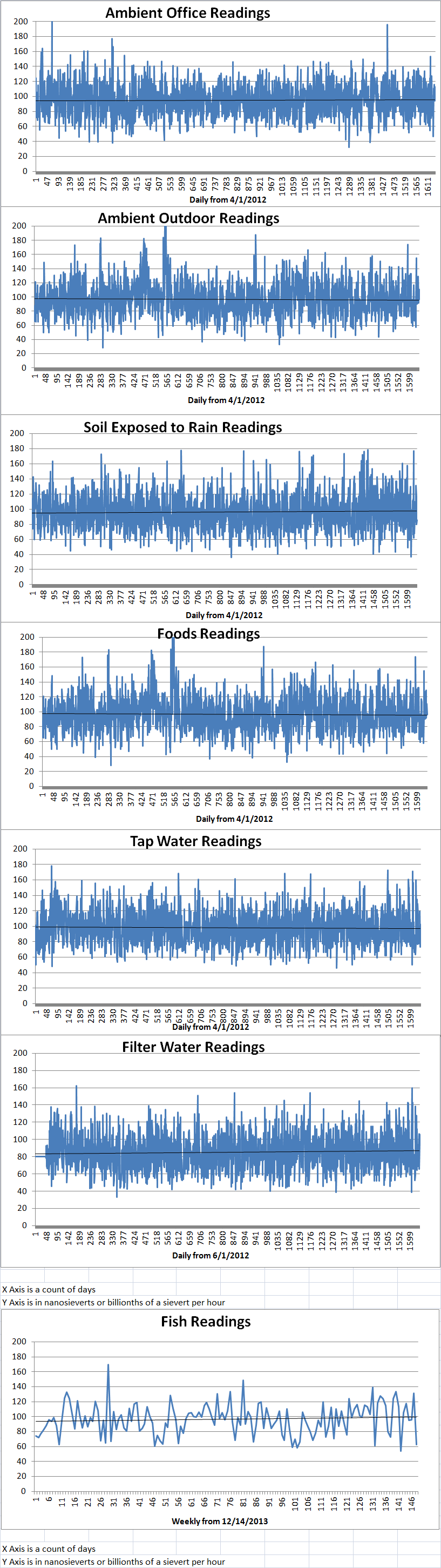
Ambient office = 94 nanosieverts per hourAmbient outside = 93 nanosieverts per hourSoil exposed to rain water = 85 nanosieverts per hourHoney Crisp Apple from Central Market = 96 nanosieverts per hourTap water = 74 nanosieverts per hourFilter water = 106 nanosieverts per hour -
Nuclear Fusion 29 – Researchers In Russian Explore New Materials For Nuclear Fusion Reactors
The conditions of high heat, high pressure and neutron bombardment inside nuclear reactors are very damaging to the materials used in the fuel and components. I have posted a number of articles about the development of new materials for use in the construction and fueling of nuclear reactors. These have all been about the materials used in fission reactors. With all the research being done on fusion reactors these days, the problem of developing materials that can withstand the conditions inside a fusion reactor has now become critical to creating commercial fusion reactors.
The Russian National Research Nuclear University MEPhI (NRNU) was created in 2008 by government edict. The purpose of the University is “the provision of human resources and scientific and innovation support to the nuclear industry and other high-technology branches of national economy and social sphere of the Russian Federation relevant to the fields of expertise of the University on the basis of system-based modernization of multi-level professional education within the framework of the unified educational space, ensuring integration of science, education and production.” The NRNU consists of eleven universities and fifteen colleges and secondary technical schools spread over five federal districts. The Moscow Engineering Physics Institute (MEPhI) is one of both the name of one of the main institutions in the NRNU and is also appended to the NRNU as part of the name of the network of organizations.
Scientists at the MEPhI are exploring how altering the atomic level or nanostructure of materials changes their plasticity, heat resistance and other important properties. The requirements for resisting the heat and radiation of nuclear fusions reactions will be about twice the current requirements for materials used in fission reactors.
The NRNU scientists are focusing on what are called certain ferrite-martensite steel alloys. These alloys contain iron and chromium (Fe-Cr). They are formed by rapid cooling which alters the way that carbon diffuses through the crystalline lattice. They are harder than steel alloys that are cooled slowly and allow carbon to form molecules with the iron atoms.
They are also working with oxide-dispersion strengthened steels. (ODS) These steels use randomly positioned oxide particles in the metal lattice of the steel to reduce the propagation of flaws through the lattice.
The researchers are altering the atomic structure of the Fe-Cr alloys and the ODS steels and then subjecting them to stress to see how the atomic level changes in structure influence the important properties such as plasticity and heat resistance. They have found that they can improve or degrade those properties depending on the changes that they make.
The scientists at MEPhI say that experimental research nuclear fusion research reactors in the future will require materials that are far superior to the materials now being used in fusion research on such devices as the ITER project being built in France. In order to construct commercial fusion reactors, new materials will have to be developed. Fortunately, the recent development of advanced nanoscale imaging and manipulation will aid in this research.
-
Nuclear News Roundup Dec 21, 2016
-
Geiger Readings for Dec 21, 2016
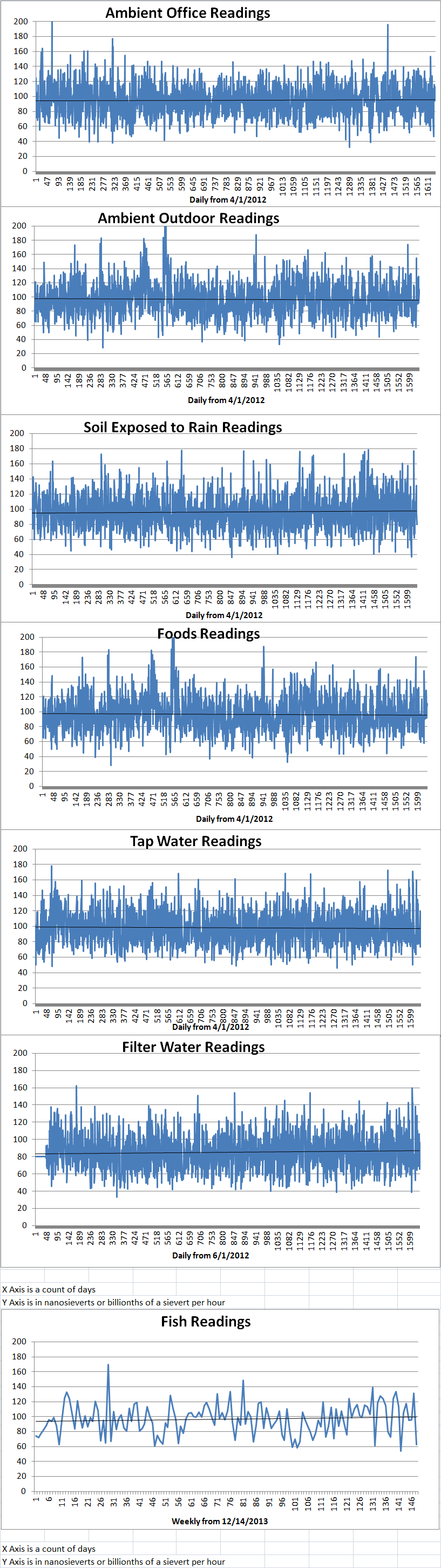
Ambient office = 113 nanosieverts per hourAmbient outside = 81 nanosieverts per hourSoil exposed to rain water = 80 nanosieverts per hourRoma tomato from Central Market = 111 nanosieverts per hourTap water = 102 nanosieverts per hourFilter water = 97 nanosieverts per hour