Blog
-
Geiger Readings for Dec 06, 2016
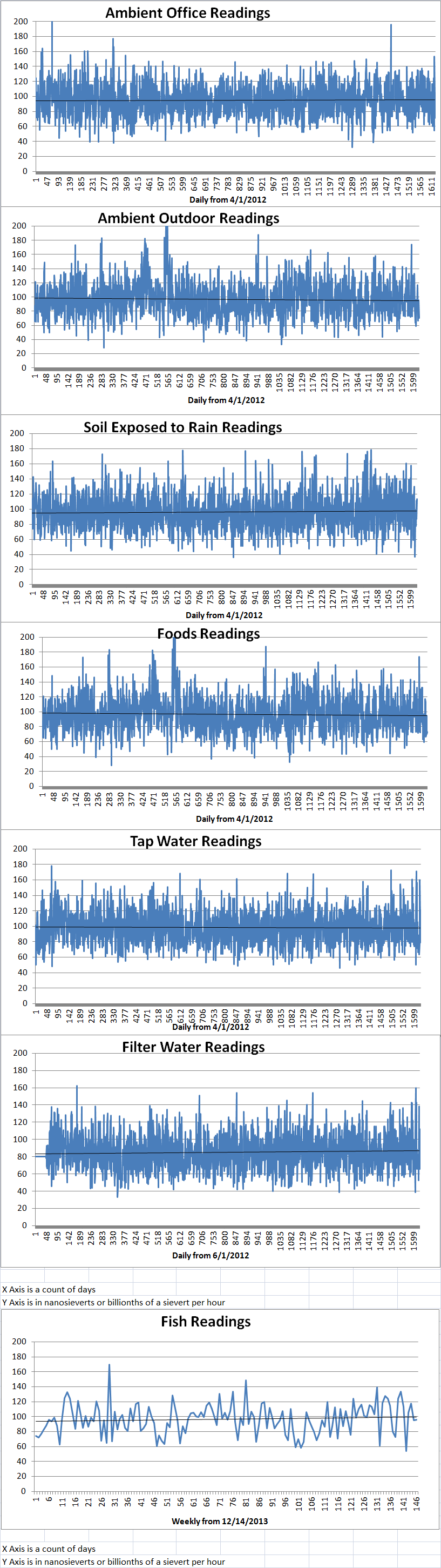
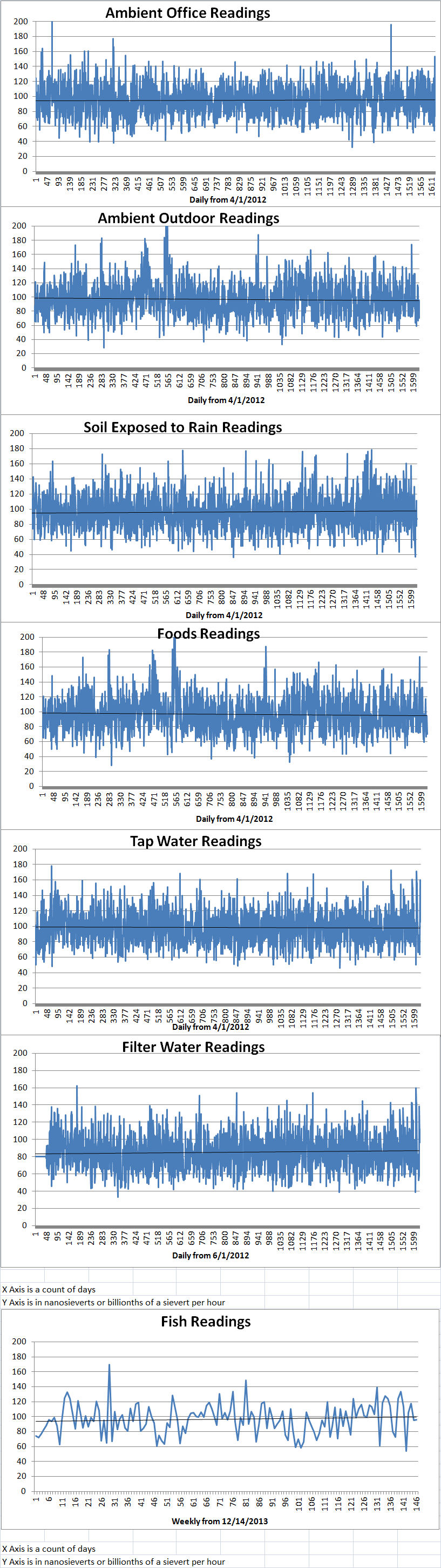
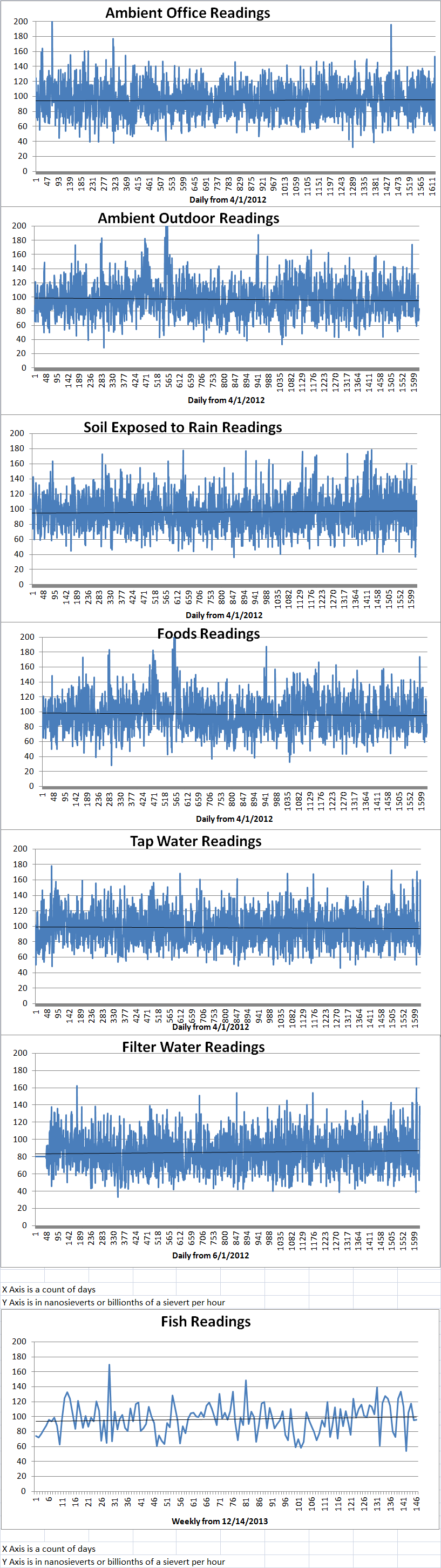
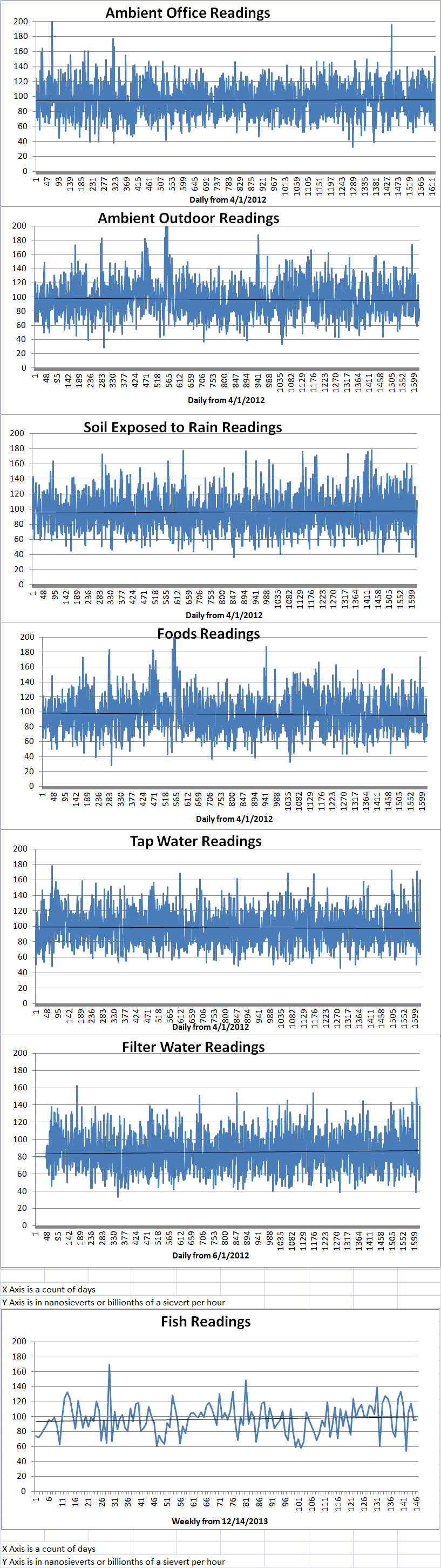
Ambient office = 71 nanosieverts per hourAmbient outside = 112 nanosieverts per hourSoil exposed to rain water = 113 nanosieverts per hourCarrot from Central Market = 73 nanosieverts per hourTap water = 79 nanosieverts per hourFilter water = 66 nanosieverts per hour -
Nuclear Reactors 433 – IAEA Reviews Italy’s Nuclear Regulatory Practices
An 18-member team from the International Atomic Energy Agency carried out an Integrated Regulatory Review Service (IRRS) mission to evaluate the regulatory framework for nuclear and radiation safety in Italy in late November of this year. Fourteen experts from Sweden, France, Germany, Switzerland, Finland, Slovenia, Cuba, Luxembourg, Spain and Hungary, plus four International Atomic Energy Agency staff members, spent 12 days in Italy. The mission was hosted by the Italian government and the Italian Institute for Environmental Protection and Research’s (ISPRA’s) nuclear, technological and industrial risk department.
The IRRS carries out these review missions in order to ” strengthen the effectiveness of the national radiation safety regulatory infrastructure, while recognizing the responsibility of each member state to ensure nuclear and radiation safety.” The IRRS review compares the nuclear regulatory frameworks in a member country with IAEA standards and best practices in the international nuclear industry. The review results in a report that identifies good nuclear regulatory practices in the nation hosting the review and also points out area for improvement.
The review verified that Italy has a regulatory framework for nuclear safety. Italy has “state of the art” practices with respect to decommissioning nuclear reactors and handling nuclear waste. There is a comprehensive database and analytical software for evaluating nuclear transport issues. And, the IRRS review concluded that Italy has excellent training for radiation protection experts.
The IRRS review identified areas where Italy could improve its framework for regulating nuclear safety. Italy should continue working on national policies for safety, decommissioning and radioactive waste management. It also recommended that Italy complete work on legal frameworks for “the approval of technical services, the establishment of national databases related to safety and improvements in aspects of the authorization process.”
The IRRS review suggested that an integrated management and communication system should be developed for the new NSRP regulatory board and said that Italy should improve the regulation of “review and assessment, authorization, inspection, emergency preparedness and response, and occupational and public exposure control.”
The ISPRA Director said, “The effort made by ISPRA staff to conduct the self-assessment and to host the IRRS mission as well as the commendable work done by the IRRS team will provide very useful basis for further improving our national regulatory system for nuclear safety and radiation protection.”
Italy has operated four nuclear power reactors in the past but decided to abandon the use of nuclear power following the Chernobyl nuclear disaster in 1986. The last two power reactors were shut down in 1990. The Management Company for Nuclear Plants was created to oversee the decommissioning of the old nuclear power plants and to locate a site for the permanent disposal of nuclear waste. Italy still operates five research reactors and utilizes nuclear radiations sources for medical, industrial and research applications.
Legislation was passed in 2014 in Italy to create the Inspectorate for Nuclear Safety and Radiation Protection (NSRP) which will take over the duties for nuclear regulation from ISPRA which has had that responsibility for many years.
-
Geiger Readings for Dec 05, 2016
Ambient office = 73 nanosieverts per hourAmbient outside = 81 nanosieverts per hourSoil exposed to rain water = 87 nanosieverts per hourRomaine lettuce from Central Market = 70 nanosieverts per hourTap water = 121 nanosieverts per hourFilter water = 112 nanosieverts per hour -
Geiger Readings for Dec 04, 2016
Ambient office = 99 nanosieverts per hourAmbient outside = 104 nanosieverts per hourSoil exposed to rain water = 88 nanosieverts per hourOrange bell pepper from Central Market = 95 nanosieverts per hourTap water = 106 nanosieverts per hourFilter water = 97 nanosieverts per hour -
Geiger Readings for Dec 03, 2016
Ambient office = 153 nanosieverts per hourAmbient outside = 95 nanosieverts per hourSoil exposed to rain water = 111 nanosieverts per hourRedleaf lettuce from Central Market = 84 nanosieverts per hourTap water = 160 nanosieverts per hourFilter water = 138 nanosieverts per hourAlaskan Cod – Caught in USA = 96 nanosieverts per hour -
Nuclear Fusion 27 – Issues Involving The Brexit And Nuclear Fusion Research In The U.K
I have discussed the possible impact of the Brexit vote on the nuclear program of the U.K. That post was dedicated to nuclear fission. There are also issues about the future of nuclear fusion research in the U.K. and Europe related to the Brexit.
Culham Centre for Fusion Research (CCFR) is the national laboratory for the U.K. for fusion research. It is located at the Culham Science Centre in Oxfordshire. The CCFR is owned and operated by the U.K. Atomic Energy Authority (UKAEA).
The current focus of the Centre is the Mega Amp Spherical Tokamak (MAST) experiment. This experiment is funded by the U.K. Engineering and Physical Sciences Research Council and by the European Union under the Euratom framework.
The Centre also hosts the Joint European Torus (JET), the world’s largest magnetic fusion experiment on behalf of the E.U. European fusions scientists collectively share the use of the JET which is located next to the U.K. fusion experiment at the CCFR. The JET facility employs over five hundred people with over three hundred and fifty European scientists visiting the facility each year.
With respect to the Brexit vote, the CEO of the UKAEA pointed out that the U.K. has been on the cutting edge of fusion research for fifty years and that “It would be bizarre and extreme for the UK to just leave these projects.” The U.K. has not yet commented on its plans for future involvement in the Euratom framework which will have to include the future of the JET. If the JET is decommissioned, there will be almost ten thousand cubic feet of radioactive waste left over which will cost in the neighborhood of three hundred and seventy million dollars to deal with.
The JET experiment has logged a number of important milestones in the quest for nuclear fusion. Recently, JET has been used to run experiments that are aimed at helping to build the ITER fusion reactor in France. The continued operation of JET is critical to the ITER project. JET was scheduled to be concluded in 2018 but delays in the ITER project have resulted in plans to keep JET running past 2018. This is one of the issues that must be dealt with during the Brexit negotiations.
In my previous post about the Brexit, I mentioned that there has been a discussion of continued U.K. involvement in the Euratom framework for nuclear cooperation among European nations. While Euratom is not one of the founding documents of the European Union, nonetheless, the U.K. exit from the E.U. will significantly impact its participation in Euratom. One of the possibilities being discussed is to have the U.K. continue to participate in Euratom and JET for a few years after leaving the E.U. in order to allow time for negotiating an alternative framework for the U.K. to participate in nuclear cooperation with European nations after the U.K. E.U. exit.
Some critics of the Brexit point out that legally, Parliament must vote to leave the E.U. While the Prime Minister has said that she will abide by the Brexit vote, she does not have the legal authority to remove the U.K. from the E.U. The backlash of the U.K. public against the anticipated problems associated with the Brexit might result in Parliament refusing to vote for the exit. This would certainly be to the benefit of the JET experiment and the work on ITER.
-
Nuclear News Roundup Dec 02, 2016
Russia’s ,State Atomic Energy Corporation, Rosatom, has, said that Nigeria should add nuclear energy to its energy mix to harness abundant benefits and most importantly improve its current power situation. vanguardngr.com
Gérard Magnin, the former director of EDF who stepped down from the board in July in protest at the Hinkley Point C approval, says French nuclear industry is in its worst situation ever, and calls on UK to promote citizen solar. reneweconomy.com.au
-
Geiger Readings for Dec 02, 2016
Ambient office = 55 nanosieverts per hourAmbient outside = 76 nanosieverts per hourSoil exposed to rain water = 77 nanosieverts per hourCrimini mushroom from Central Market = 73 nanosieverts per hourTap water = 78 nanosieverts per hourFilter water = 59 nanosieverts per hour