Blog
-
Geiger Readings for July 10, 2016
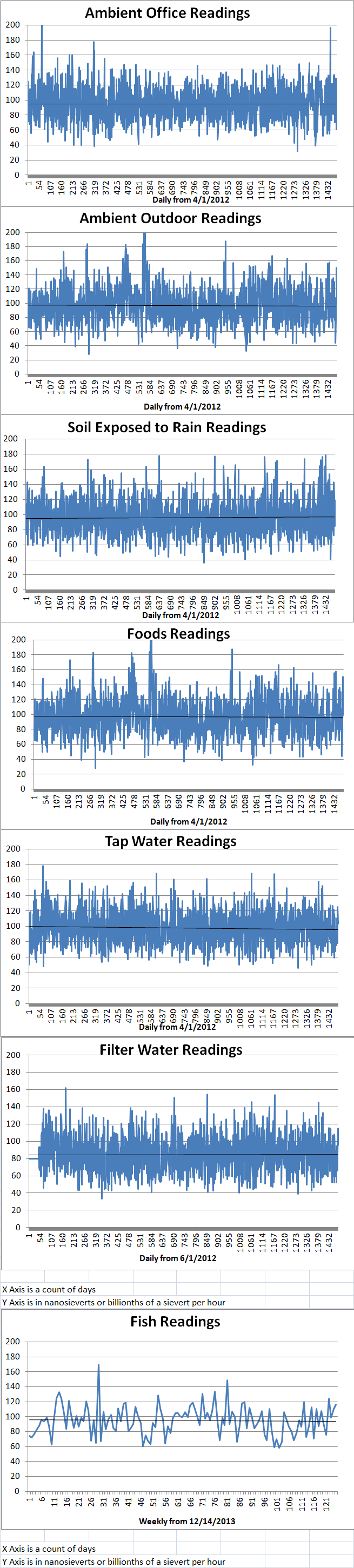
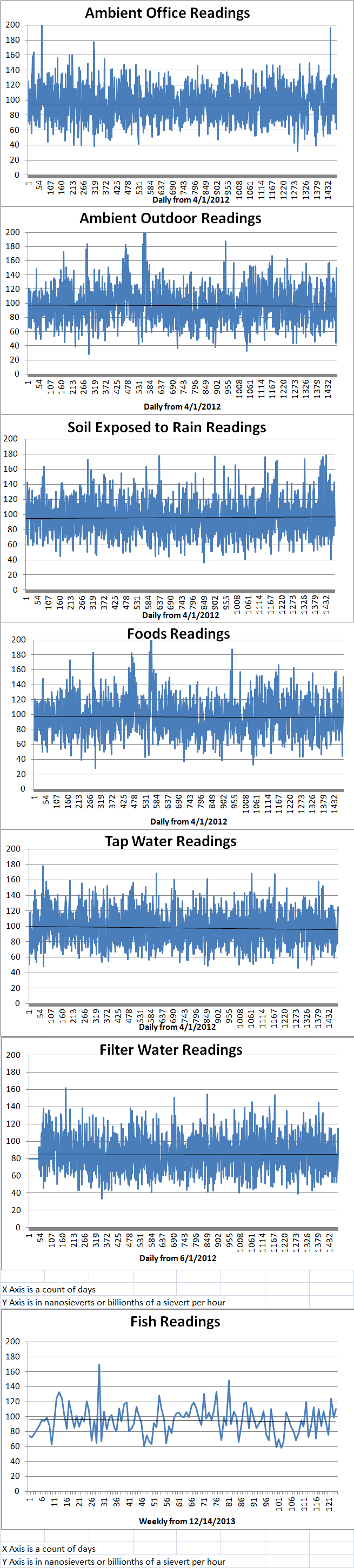
Ambient office = 108 nanosieverts per hourAmbient outside = 87 nanosieverts per hourSoil exposed to rain water = 73 nanosieverts per hourLemon from Central Market = 103 nanosieverts per hourTap water = 108 nanosieverts per hourFiltered water = 95 nanosieverts per hour -
Geiger Readings for July 09, 2016
Ambient office = 128 nanosieverts per hourAmbient outside = 116 nanosieverts per hourSoil exposed to rain water = 119 nanosieverts per hourApricot from Central Market = 121 nanosieverts per hourTap water = 104 nanosieverts per hourFiltered water = 95 nanosieverts per hourDover sole – Caught in USA = 116 nanosieverts per hour -
Nuclear Materials Smuggled Out Of Russia Through Georgia
Yesterday, I blogged about an old nuclear power reactor in Armenia that should be shut down permanently as soon as possible. I mentioned in passing that a lot of fissionable materials are being smuggled through Armenia and its neighbor, Georgia. I have already blogged about smuggling of nuclear materials in Moldova. Today, I am going to focus on smuggling in Georgia.
In the past six months, there have been attempts to smuggle uranium-238, uranium-235 and cesium 137 through Georgia into Turkey. All of these fissionable materials could be used to make a dirty bomb that would wreck havoc if detonated in a city. Georgia was a very corrupt member of the Soviet Union before it collapsed in 1991. Following the disintegration of the S.U., Georgia became a popular route for smuggling radioactive materials out of former members of the S.U. Georgia is holding two dozen individuals in its prisons for being involved in nuclear smuggling. Most are Georgians with a few Armenians and a single Russia.
Last January, three Georgians were arrested in Tbilisi, the Georgian capital, for trying to sell a hundred thousand dollars worth of Cs-137 to undercover agents. On April 17th, three Georgians and three Armenians were arrested in Tbilisi for trying to sell U-238 for two hundred million dollars. On April 28th, five Georgian men were arrested in Kobuleti near the Turkish border with one and a half grams of U-238 and a half gram of U-235 for trying to sell the materials to undercover agents for three million dollars. The containers for the U-238 and the Cs-137 had markings in the Russian language but Georgian officials would not answer questions about the probable origin of the smuggled materials. While Russia insists that it has excellent security for all of its nuclear materials, a recent report by nuclear analysts says that Russia is the worst country for nuclear security out of twenty four countries that have nuclear materials.
A few years ago, the Georgian provinces of Abkhazia and South Ossetia declared independence from Georgia with the support of Russia. Now, Georgian officials claim that these two breakaway provinces are prime smuggling routes into Georgia. This may be true or it may be Georgia trying to blame Abkhazia and South Ossetia for activities that are taking place elsewhere in Georgia.
In response to international criticism, the head of the Georgian agency charged with nuclear and radiation safety says that Georgia has adequate security for nuclear materials. He said that every Georgia border crossing has technology that will identify cars that have been driven through radioactive areas. He admitted that some recent smuggling attempts have passed successfully into Georgia because the police at the border crossings had turned off their radiation detection equipment as part of a sting operation. He admitted that the radiation detection equipment used at the borders could be defeated if the radioactive materials were shielded in lead containers. He failed to address the recent arrests for nuclear smuggling in Georgia.
Turkish officials dismissed concerns about nuclear materials being smuggled in from Georgia. They say that Turkey and Georgia have a good cooperative framework in place to deal with such smuggling. Of one hundred and fifty non-nuclear countries, Turkey is rated as being number thirty five with respect to smuggling risk and Georgia is rated as number twenty seven.
Map of Georgia:

-
Geiger Readings for July 08, 2016
Ambient office = 61 nanosieverts per hourAmbient outside = 91 nanosieverts per hourSoil exposed to rain water = 85 nanosieverts per hourPeach from Central Market = 150 nanosieverts per hourTap water = 125 nanosieverts per hourFiltered water = 115 nanosieverts per hour -
Nuclear Reactors 386 – Metsamor Nuclear Power Plant In Armenia Is A Threat To Global Nuclear Security
I have blogged in the past that one of the big dangers with nuclear power is the fact nuclear power plants are prime targets for terrorism and warfare. After the recent Paris attack, there was evidence that some of the same terrorists might have been working on an attack on a nuclear facility in Brussels, Belgium. Terrorists could take over a nuclear plant and try to cause a meltdown. They could try detonating explosives to drain the spent fuel cooling pool which would lead to explosive release of radioactive materials when the exposed fuel rods spontaneously caught fire. The danger during warfare would be that an attacker could deliberately bombard a nuclear power plant or that the plant could be accidentally damaged. Of course nuclear plants vary in their vulnerability and the probability that they might be involved in a conflict.
The Metsamor nuclear power plant in Armenia was built by the Soviet Union in 1976. It is similar in design to the Chernobyl nuclear power plant which was the site of a terrible accident in 1986. The Metsamor plant has no emergency cooling system.
Metsamor was closed after an earthquake in 1988. It was restarted during the Nagorno-Karabakh war which ended in 1994. Metsamor reached the end of its design life time in 2010. Armenia was planning to decommission the plant in 2010 but it continues to operate and Armenia now says that it use to plant to generate electricity until 2026. It generates about forty percent of the electricity for Armenia.
A lot nuclear materials is being smuggled through Armenia and Georgia. Recently, smuggler were arrested while trying to smuggle hundreds of millions of dollars worth of U-238. The great fear is that terrorists will purchase nuclear materials on the Armenian black market to build dirty bombs.
The Nagorno-Karabakh region was occupied by Armenia during the war and is poorly monitored. It is estimated that there are at least thirty different locations in N-K where spent nuclear fuel removed from Metsamor is being buried with little concern for safety. This is a great threat to the environment in that area. In addition, terrorists could dig up the buried waste for use in dirty bombs.
The European Union is very concerned about the continued operation of this old nuclear power plant and the disposal of its spent fuel. E.U. analysts say that it would be impossible for Armenia to upgrade Metsamor to meet current international standards for nuclear power reactor safety. The E.U. has repeatedly called for the closure of the plant and even went so far as to offer Armenia over two hundred million dollars to help with the closure of Metsamor but Armenia turned them down.
Armenia is close to the Middle East, the site of many recent conflicts and much terrorist activity. This proximity increases the chances that Middle Eastern terrorists may gain access to the materials they need for dirty bombs. It is to the interest of the whole world for a solution to be found for Armenian power needs that does not include the continued operation of the Metsamor nuclear power plant.
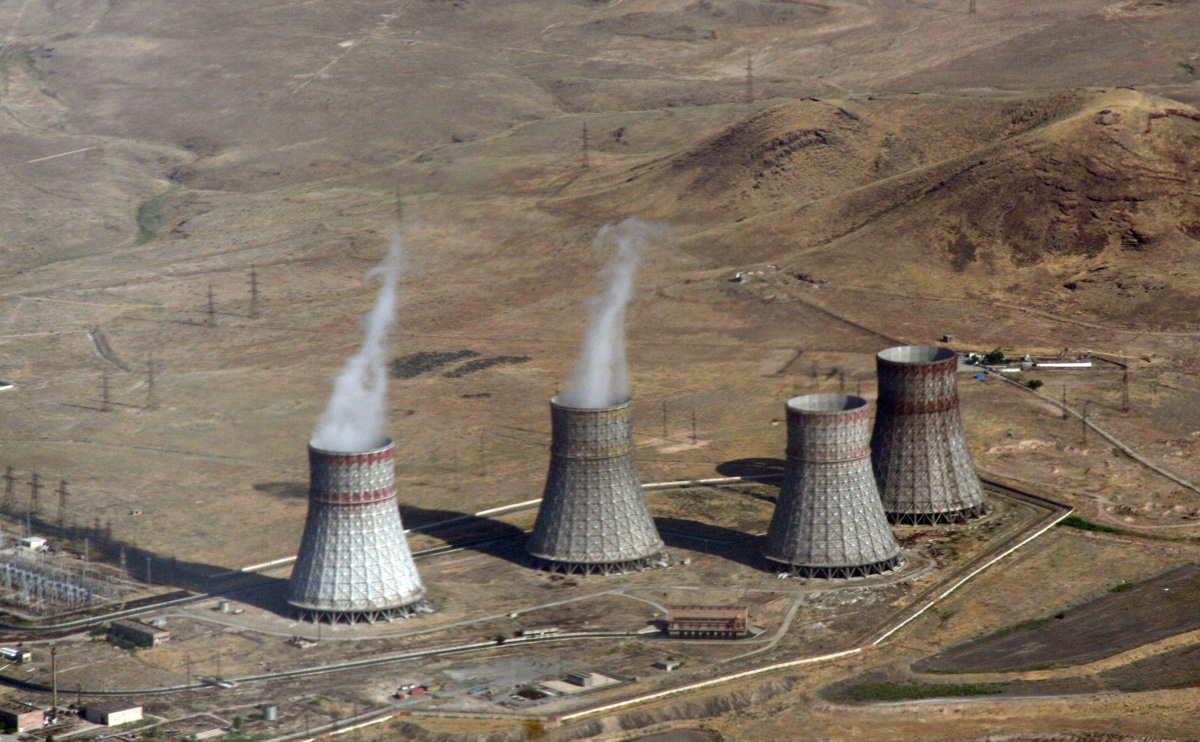
Metsamor nuclear power plant:
-
Geiger Readings for July 07, 2016
Ambient office = 88 nanosieverts per hourAmbient outside = 102 nanosieverts per hourSoil exposed to rain water = 87 nanosieverts per hourAvocado from Central Market = 100 nanosieverts per hourTap water = 94 nanosieverts per hourFiltered water = 88 nanosieverts per hour -
Nuclear Reactors 385 – Russia Seriously Conflicted Over Nuclear Contracts With Ukraine
Yesterday, I blogged about a new Russian nuclear fuel called REMIX that is under development. Russia is working on contracts to build many new reactors around the world in the next few decades. They are also planning on being a major fuel supplier to the world’s nuclear reactors in the coming decades. One of the legacies of the Soviet Union consists of nuclear power reactors in the countries of eastern Europe which were once members of the Soviet Union. Russia has been supplying these reactors with fuel since the fall of the Soviet Union. However, some problems have risen with respect to their fuel supply business with Ukaine.
Since pro-Russian government fell in Ukraine several years ago and the Russians annexed the Crimea, former arrangements between Russia and Ukraine have suffered. A week ago, Rosatom, the Russian owned nuclear company, announced that it was going to halt the removal of spent nuclear fuel from Ukrainian Soviet-era nuclear power reactors due to the failure of Ukraine to pay for the fuel removal services. Rosatom has a contract to remove and recycle Ukrainian spent nuclear fuel but the first scheduled removal was stopped. Ukraine has stated its intentions to build a storage facility for spent nuclear fuel inside Ukraine but they will not be recycling the fuel.
On the other hand, Rosatom had a contract to supply nuclear fuel to the Ukrainian nuclear power reactor fleet that predated the change of governments. Years ago, Ukraine tried to use Westinghouse nuclear fuel assemblies in place of Russian nuclear fuel in some of its reactors but there were technical problems and the attempt was abandoned. Now Ukraine has once again decided to use U.S. nuclear fuel from Westinghouse in its power reactors.
This week, the head of the Russian Foreign Affairs Ministry’s Department of Non-Proliferation and Arms Control expressed concerns with the Ukrainian decision. He stated that Ukraine’s decision was a political one based on the recent tensions between the new government and Russia. He said that they were not taking technical and economic realities into consideration and that there would probably be technical problems caused by the new fuel. He claimed that the U.S. nuclear fuel assemblies were untested and that Ukraine was foolish to allow itself to be used as a testing ground for the new U.S. fuel. He also referenced the previous failed attempt to use Westinghouse nuclear fuel.
Ukraine is in the process of adapting some of its nuclear power reactors to be able to vary their production of power instead of always operating at full power as is now the practice. This is not a simple task to accomplish. The Russian Foreign Ministry official also commented that the combination of adapting Ukraine reactors to variable power production and the use of new and untested U.S. nuclear fuel would seriously increase the dangers of technical problems and accidents.
I do have to point out that it is ironic that during the same week, Russian spokesmen for nuclear related agencies and companies have criticized Ukraine for canceling nuclear fuel contracts and criticized Ukraine for failing to pay for contracted nuclear fuel services. If Ukraine can’t pay its bills, perhaps it is just as well that Ukraine cancelled nuclear fuel purchases from Russia.
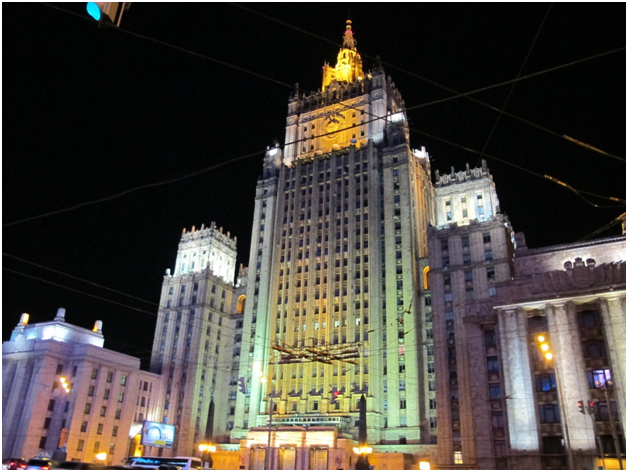
Russian Ministry of Foreign Affairs Building: