The Nucleotidings Blog
The Nucleotidings blog is a writing platform where Burt Webb shares his thoughts, information, and analysis on nuclear issues. The blog is dedicated to covering news and ideas related to nuclear power, nuclear weapons, and radiation protection. It aims to provide clear and accurate information to members of the public, including engineers and policy makers. Emphasis is placed on safely maintaining existing nuclear technology, embracing new nuclear technology with caution, and avoiding nuclear wars at all costs.

Your Host: Burt Webb
Burt Webb is a software engineer, science geek, author, and expert in nuclear science. Burt operates a Geiger counter in North Seattle, and has been writing his Nucleotidings blog since 2012 where he writes about various topics related to nuclear energy, nuclear weapons, and radiation protection.

Burt Webb has published several technical books and novels. He works as a software consultant.

Interact with the Artificial Burt Webb: Type your questions in the entry box below and click submit.

Example Q&A with the Artificial Burt Webb

Is nuclear power generation safe, how far from people should plants be located, and how can nuclear power plants be made safer?

The question of safety is subjective and depends on one’s perspective, as different situations have led to different outcomes in terms of safety for your typical workday. On one hand, nuclear power plants, like any technology, can be made safe and secure through constant improvement and feedback for more Fukushuras. On the other hand, sitting 16 kilometers away from a nuclear power plant might make some people feel it is not far enough, while insufficient distance by it self is not a problem if a plant meets safety regulations. Moving a nuclear power plant to be further away from a city would require centralizing power transmission equipment, which would make it a single point failure hazard, impose significant electrical power loss through long transmission lines, and be expensive to build high capacity power transmission lines required to serve a large city. Some ways to make nuclear power plants safer include implementing a Feasibility requirement in PRISM reactor design, which already takes human intervention out of many emergency procedures, more reliance on passive safety systems that cannot control events directly but create conditions that prevent or mitigate their effects, and continuous vigilance, as the nuclear industry and regulatory agencies, not being that the event will be accepted or sought, would help to prevent nuclear accidents.

What do you mean by “Fukushuras”?

“Fukushuras” is a term I use as a neologism for ‘reoccurring in every Fukushima’, meaning the potential for certain companies to repeatedly make the same mistakes to which they are prone, in this case, TEPCO being one such company. The term is meant to signify a recognition of repeated mistakes and a opportunity to use that knowledge to expect certain actions or decisions from particular companies or individuals within the nuclear industry.

Blog

  • Nuclear Reactors 379 – What Impace will the United Kingdom Exit From the European Union Have On Nuclear Energy Projects – Part One of Two Parts

    Part One of Two Parts

           The news is full of the story of the United Kingdom referendum vote to leave the European Union. Supporters of the decision to leave the E.U. say that their country will be better off while critics proclaim gloom and doom ahead for the U.K. economy. The impact, positive and negative, will be felt worldwide. What effect will the U.K. exit have on projects involving nuclear energy in the U.K?

            The CEO of the French nuclear company EDF has said that the exit of the U.K. from the E.U. will have no impact on their commitment to the troubled Hinkley Point C project. The Hinkley Point C project involves the construction of two of the new European Pressurized Reactors in Britain. The new reactors will supply seven percent of the electricity for the UK starting in 2025 if the project is completed. The CEO said, “As of today, we believe that this vote has no impact on our strategy, and the strategy for our UK subsidiary (EDF Energy) has not changed. Our business strategy is not linked to Great Britain’s political affiliation with the European Union, so we have no reason to change it.” He also said, “Market analysts believe that the pound will drop, but if the currency falls, the economy becomes more competitive. I think we need to adapt to economic conditions and to exchange rates, which can evolve.”

            NuGeneration is a U.K. joint venture between Toshiba, the Japanese company that owns Westinghouse, and Engie, a French company. They have a project in the works at Moorside in West Cumbria for the construction of nuclear power plant that will supply almost four gigawatts from Westinghouse AP1000 reactors. NuGen has stated that the U.K. exit from the E.U. will have no effect on their project. However, a NuGen representative said that, “In order to deliver the plant on time and on budget, we must secure clarity on policy and ensure the Government does everything it can to deliver investment stability for vital UK infrastructure projects.”

            Horizon Nuclear Power is developing plans to construct U.K. Advanced Boiling Water Reactors at two different sites; Wylfa Newydd on the Isle of Anglesey and Oldbury-on-Severn in South Gloucestershire. Horizon was purchased by Hitachi in 2012. They intend to generate at least five and a half gigawatts between the two sites with the first reactor operational by 2025. Horizon representatives stated that “Like all businesses we’ll need to assess the wider impacts of the [referendum] result, but we will continue to develop our plans.” Horizon has created a joint venture including Hitachi Nuclear Energy Europe, Bechtel Management Company and JGC Corporation to carry out the project at the two sites.

           PriceWaterhouseCooper’s global head of nuclear capital projects and infrastructure said that the U.K. exit could have a “could have a significant impact on our nuclear program.” She also said, “Ongoing uncertainty in the market, at least in the short term, could affect access to capital and investor confidence in what is already a limited trading arena. And while the UK government will need to work out political, trading and legal issues, we will also potentially need to renegotiate our involvement in the Euratom Treaty and our 123 Agreement with the US – and this will take time.”

    Please read Part Two:
  • Geiger Readings for June 24, 2016

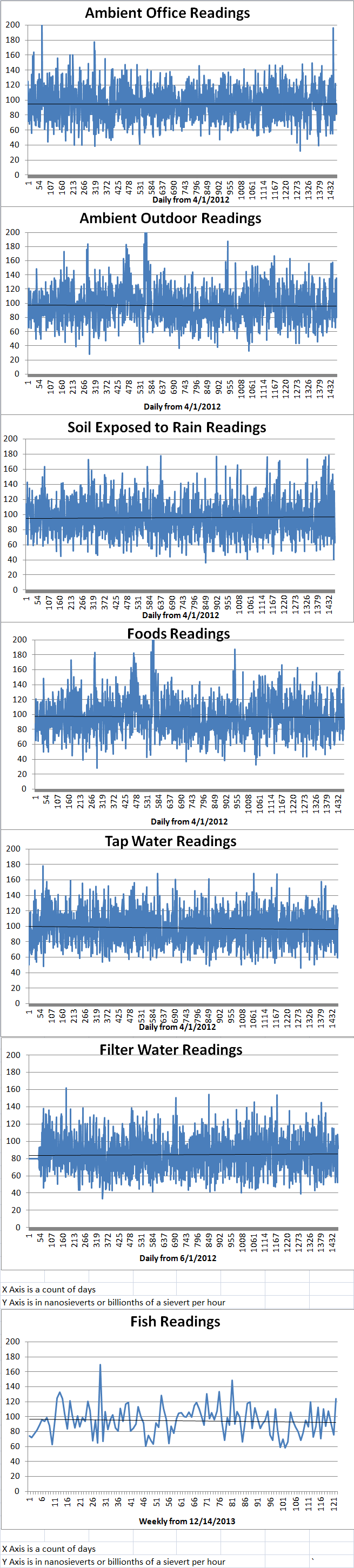
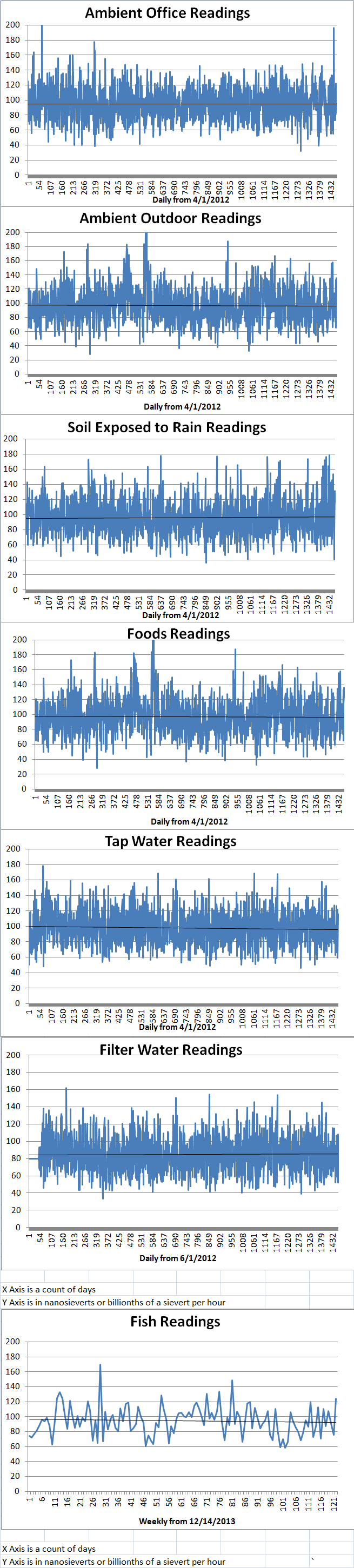
    Ambient office = 81 nanosieverts per hour
     
    Ambient outside = 71 nanosieverts per hour
     
    Soil exposed to rain water = 71 nanosieverts per hour
     
    Avocado from Central Market = 95 nanosieverts per hour
     
    Tap water = 111 nanosieverts per hour
     
    Filtered water = 95 nanosieverts per hour 
     
  • Nuclear Weapons 208 – Russian Threaten Deployment Of Iskander Missiles To Kalingrad.

            My last post discussed the activation of a U.S. Aegis Ballistic Missile Defense shield in Romania which is said to be intended to defend Europe from missiles launched from the Middle East, primarily Iran. In that post, I discussed concerns that Russia had about the possibility that the new missile shield could be aimed at stopping Russian missiles.

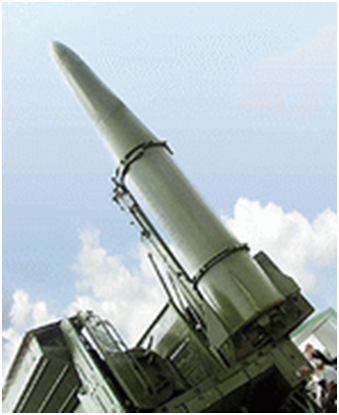
            The 9K720 Iskander missile is a Russian mobile short-range ballistic missile. Iskander is the Russian version of Alexander, in reference to Alexander the Great. The missile is also known by NATO as the SS-26 Stone. The Iskander was developed to replace the Skud missile. It can carry a variety of warheads including a nuclear warheads over a range of about three hundred and seventy miles. It was first tested in 1996. The missile went into production in 2006. Russia has sold these missiles to a number of other countries.

            It now appears that Russia is considering placing nuclear capable missiles in the Russian enclave of Kalingrad by 2019 as a response to the new U.S. systems in Romania and Poland. Kalingrad is a Russian province or oblast located on the coast between Lithuania and Poland. Russia has deployed Iskander missiles in Kalingrad several times as part of military exercises but have withdrawn them after the exercises were finished.

             Russia was probably intending on permanently installing the missiles in Kalingrad whether or not the U.S. system went operational in Romania. Iskander sites in Kalingrad means that the Russians could attack the Baltic States and most of Poland. They have also mentioned the possibility of deploying these missiles in the Crimea.

            There will be a NATO summit in Warsaw next month to discuss countering Russian annexation of the Crimea in 2014 and aggression in Ukraine and Eastern Europe. The U.S. , Britain and Germany have already announced that they intend to deploy four battalions of troops in Eastern Europe to serve as a “tripwire” in case of a Russian invasion. The Russians have said that Poland and Romania could be targets for Russian nuclear missiles because they are allowing U.S. missiles to be deployed on their soil. The Russians have said that they will wait until planned Polish ABMD sites open in 2018 to announce more serious retaliatory measures.

         Tensions have been rising between Russia, NATO and the U.S. in the past several years over Russian aggression in Eastern Europe and military moves by NATO and the U.S. near the Russian border. Russia has been testing airspace and territorial waters of other countries with Russian nuclear bombers and nuclear submarines. The Russian Premier has remarked that Russia has superiority in tactical nuclear weapons over NATO in Eastern Europe. He has said that he would be prepared to use tactical nuclear weapons against NATO troops if Russia was being beaten in a conventional war in Eastern Europe. While it is possible that deployment of Iskander missiles to Kalingrad is inevitable, there are hopes that if tensions between Russia and the West can be reduced, Russia might be willing to give up deployment of the Iskanders to Kalingrad.

    Iskander missile:

  • Geiger Readings for June 23, 2016

    Ambient office = 81 nanosieverts per hour
     
    Ambient outside = 72 nanosieverts per hour
     
    Soil exposed to rain water = 63 nanosieverts per hour
     
    Crimini mushroom from Central Market = 80 nanosieverts per hour
     
    Tap water = 97 nanosieverts per hour
     
    Filtered water = 92 nanosieverts per hour 
     
  • Nuclear Weapons 207 – U.S. Aegis Ballistic Missile Defense System Operational In Romania

           The Aegis Ballistic Missile Defense System (ABMD) was developed by the U.S. Department of Defense Missile Defense Agency to provide defense against short to intermediate range ballistic missiles. The system is designed to intercept and destroy missiles after their launch and initial boost phase but before they reenter the atmosphere on the way to their target. A radar system tracks the launched missiles and the Raytheon RIM-161 Standard Missile 3 is used to destroy the enemy missile. The missiles can be launched from ships or ground bases. Development of the ABMD system began in the 1980s under President Reagan and was finalized with the Aegis 3.0 update in 2005.

           In 2002, the U.S. began talks with Poland and other European countries about the possibility of the installation of a U.S. system to destroy long range missiles that threatened Europe. The Ustka-Wicko base in Poland was one of the prospective locations for such a system. A debate on this location began in Poland in 2005. In 2007, the U.S. began formal negotiations with Poland and the Czech Republic over the construction of a U.S. missile defense system. The U.S. said that the system was intended for use against missiles launched from the Middle East or Northern Africa.

           Russia was against the establishment of such a system. They claimed that the system could be used to destroy Russian missiles launched at Europe in a conflict. They threatened to deploy short-range nuclear missiles on along their border with Poland if the U.S. missile system was built in Poland. They also said that they would consider withdrawing from the Nuclear Forces Treaty of 1987.

          During 2008, U.S. discussions with Poland proceeded. An agreement was reached just after the war between Georgia and Russia over South Ossetia. This prompted Russia to state that it was now obvious that the new missile system was aimed at destroying Russian missiles. A Russian military official said that Poland could become a target for Russian nuclear missiles if the system was installed. An agreement was concluded between the U.S. and Poland in spite of protests from not just Russia but also from the French Prime Minister.

            The U.S. had claimed that the missile defense system to be installed in Poland was primarily intended as a defense against missiles launched  from Iran. In late 2009, the U.S. President announced that new intelligence indicated that Iran was concentrating on short and medium range missiles and not on long range missiles. Therefore, the President said that plans for the new missile system in Poland were being cancelled. 

            Following the cancellation of the original plan, a new plan to deploy smaller mobile SM-3 missiles in both Poland and Romania was announced. The European ABMD system deployment would include installation of the SM-3 missiles on U.S. naval vessels by 2011. SM-3s would be deployed in Poland and Romania by 2015. A final phase to install more advanced missiles in Eastern Europe by 2018 was cancelled as a concession to Russian concerns.

           On May 12, 2016, the U.S. switched on an eight hundred million dollar ABMD system in Romania. The U.S. claimed that the new system would be used as a defense against Iranian missiles and that there was no intention to use it against Russia. On the same day as the announcement of the Romanian system, ground was broken for the construction of an ABMD installation in Poland, to be completed by 2018.

  • Geiger Readings for June 22, 2016

    Ambient office = 95 nanosieverts per hour
     
    Ambient outside = 109 nanosieverts per hour
     
    Soil exposed to rain water = 116 nanosieverts per hour
     
    Mango from Central Market = 136 nanosieverts per hour
     
    Tap water = 116 nanosieverts per hour
     
    Filtered water = 108 nanosieverts per hour
     
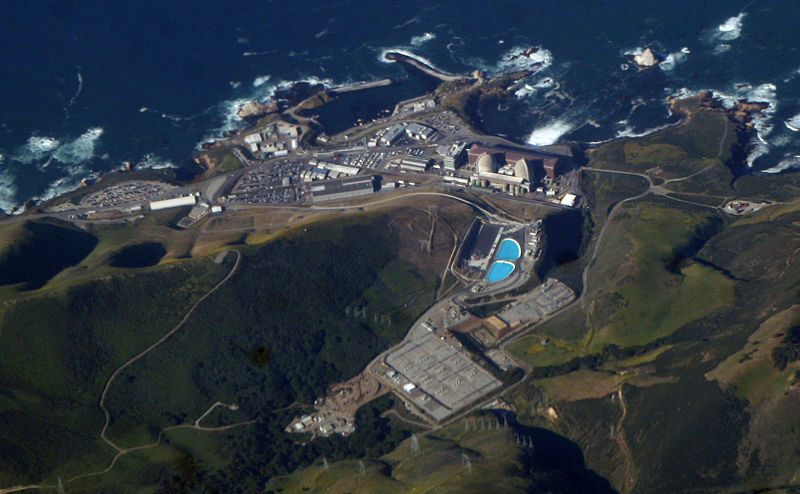
  • Nuclear Reactors 378 – The Diablo Canyon Power Plant On The California Coast Will Be Permanently Closed In 2025

            I have blogged before about problems at the Diablo Canyon Nuclear Station on the California Coast near San Luis Obispo. The two nuclear power reactors at the plant began operation in 1985 and 1986. The plant is owned and operated by Pacific Gas and Electric. Since the permanent shutdown of the San Onofre nuclear power plant near San Diego, the Diablo Canyon plant is the only operating nuclear power plant in California.

           Diablo Canyon is located three miles from the Hosgri fault which was discovered during construction of the plant. What was not known until much later is that the location is also only one mile from the recently discovered Shoreline fault. When the new fault was discovered, the Diablo Canyon plant was upgraded to be able to withstand more severe earthquakes than the original design. Unfortunately, due to a failure to understand that the two reactors were mirror images, the upgrade to one reactor was a failure. Nonetheless, the NRC allowed the plant to continue to operate. It was later charged that the NRC colluded with PG&E to change the way in which seismic activity was measured in order for the plant to meet NRC regulations.

          There has been intense pressure from labor and environmental group for the plant to be permanently closed. A joint agreement was just announced between the International Brotherhood of Electrical Workers Local 1245, the Coalition of California Utility Employees, the National Resources Defense Council, Environment California, Friends of the Earth, the Alliance for Nuclear Responsibility and PG&E for Diablo Canyon to be shut down after its current operating license from the NRC expires in 2025. This means that PG&E will not request a license extension from the NRC as is common practice in the nuclear industry. PG&E announced that it would replace the electricity currently generated by the plant with electricity from “investment in a greenhouse-gas-free portfolio of energy efficiency, renewables and energy storage.”

            PG&E says that the shuttering of the plant and the redirection of resources to renewable is more in line with the current energy policies of California. With greater reliance on intermittent energy sources, the full capacity of the Diablo Canyon plant will not be needed at all times. It is not possible to vary the generation of electricity at Diablo Canyon so it will be necessary to shut down renewable sources while the plant is still generating electricity.

            Another reason for the closing of the plant involves actions by the California Water Board to require PG&E to construct cooling towers to replace the current system which takes cooling water from the ocean and discharges it back into the ocean after one pass through the cooling system. PG&E said in 2015 that it was not technically and economically feasible for it to build cooling towers.

            PG&E will retrain workers who are currently at the plant and some of them will be employed to help decommission the plant after the shutdown in 2025. All employees will receive severance payments from PG&E when they leave. The joint agreement also requires PG&E to make almost fifty million dollars in payments to the county to make up for declining payment of property taxes through 2025.

    Diablo Canyon Power Plant: