Blog
-
Geiger Readings for Apr 05, 2016
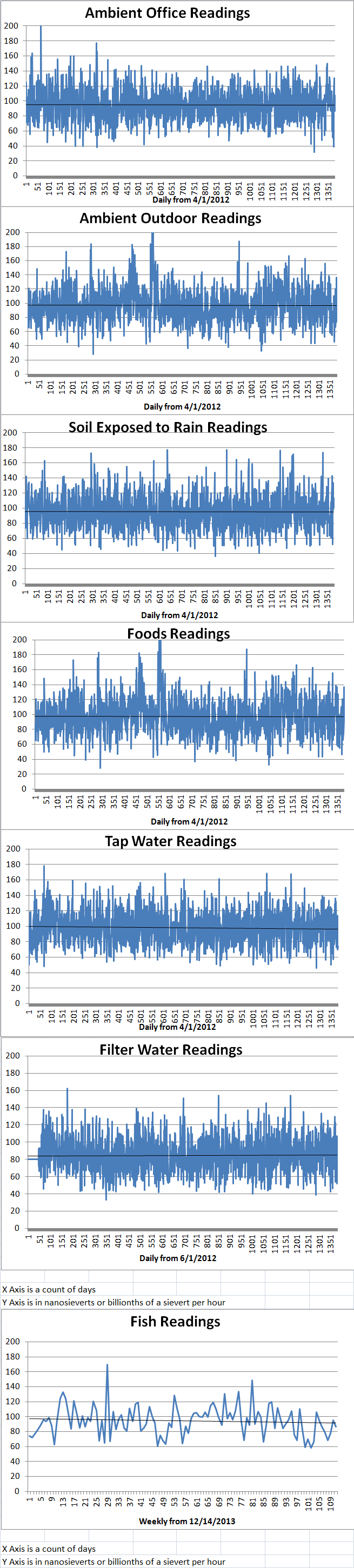
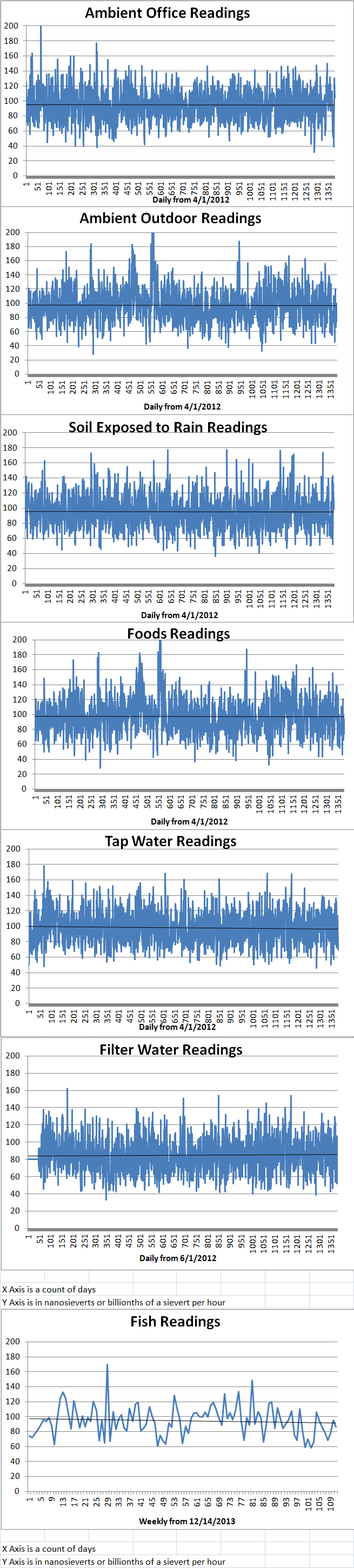
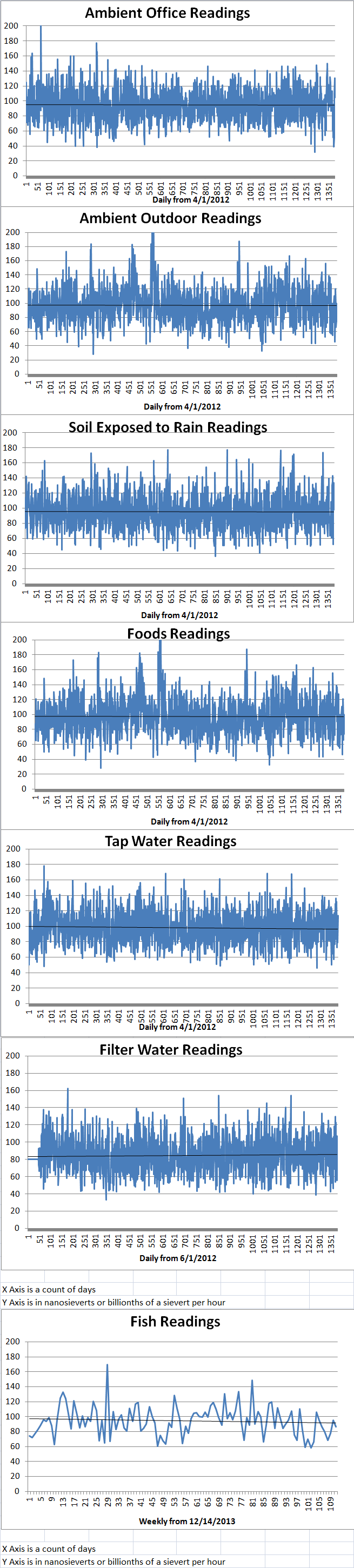
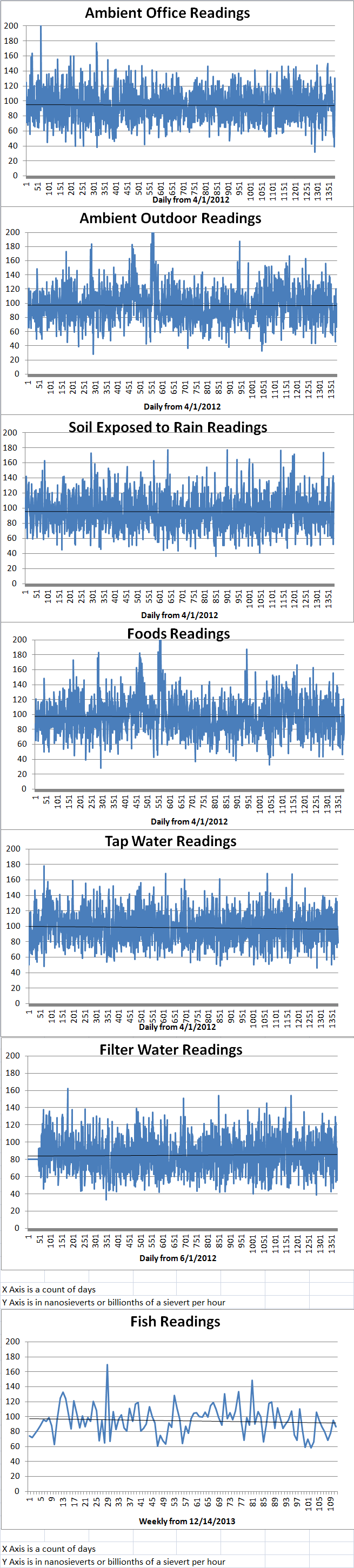
Ambient office = 86 nanosieverts per hourAmbient outside = 93 nanosieverts per hourSoil exposed to rain water = 101 nanosieverts per hourOrange bell pepper from Central Market = 137 nanosieverts per hourTap water = 74 nanosieverts per hourFiltered water = 52 nanosieverts per hour -
Nuclear Reactors 351 – Lightbridge Developes New Kind Of Nuclear Fuel
After decades of stagnation, nuclear power is enjoying a renaissance. There are sixty five new reactors being build across the globe including the first new power reactors in the U.S. in twenty years. There are plans for one hundred and seventy three more. France, China, Russia, South Korea, Japan and the U.S. are all interested in export nuclear technology. Developing countries are being courted by nuclear companies with the assistance of their respective national governments offering attractive loans.
Since the March 2011 nuclear disaster at Fukushima, Japan, safety has been of paramount concern at nuclear power plants. In addition, competition from cheap fossil fuels and sustainable renewable energy sources has put pressure on nuclear firms to lower costs of construction and operation. A nuclear industry trade group recently announced a project aimed at cutting costs by as much as one third.
All nuclear power plants require nuclear fuel. The common type of fuel in most nuclear power reactors consists of small, short cylindrical ceramic pellets of uranium oxide enriched to boost the proportion of U-235 to at least three percent. The pellets are loaded into long thin tubes made from a zirconium alloy called Zircaloy -4. A set of these tubes is bundled together in what is called a fuel assembly.
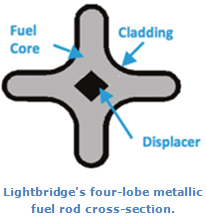
A company in Reston, Virginia called Lightbridge has been working on improving nuclear fuel technology for the past twenty five years. They just announced a new type of metallic fuel for nuclear power reactors. Instead of putting pellets of uranium oxide in a long thin tube of zirconium, Lightbridge has invented a uranium-zirconium alloy. The fuel rod is made with ridges and twisted into a helix shape. The shape has more surface area than the traditional fuel rod and that allows the flow of coolant water to transfer more heat. This makes the reactor more efficient. The greater surface area also allows the fuel rods to sustain nuclear reactions at lower temperatures. They can operate at a temperature of three hundred and sixty degrees centigrade as opposed to traditional fuel rods which operate at over twelve hundred degrees centigrade. Aside from greater efficiency and less stress on the metals of the reactor core, this also makes the new fuel rods safer to utilize.
The Lightbridge CEO said that “renewables alone will not get us there from here in terms of meeting our climate goals in time. New types of reactors will not get us there in time. The increased use of today’s reactors and new [conventional] reactors is a necessary component of any successful path to meeting climate goals.”
Lightbridge is working with the French owner company Areva, a major player in the international nuclear industry, to turn the new fuel design into a commercial product. The firms hope to be able to offer the new fuel rods by 2020. It is claimed that the new fuel rods can increase the power output of existing reactors by ten percent. Refueling with the new rods should only be necessary about every twenty four months instead of the current eighteen months refueling cycle.
Critics of the new Lightbridge fuel rods point out that they have a much lower melting point than traditional uranium oxide fuel. This means that if there is a loss of coolant, they could spontaneously combust and melt down at a much lower temperature than traditional fuel rods. Currently research is being done to create new fuel rods that could withstand higher temperatures in case of an accident, the opposite of the properties of the Lightbridge fuel rods.
-
Geiger Readings for Apr 04, 2016
Ambient office = 108 nanosieverts per hourAmbient outside = 136 nanosieverts per hourSoil exposed to rain water = 114 nanosieverts per hourCelery from Central Market = 93 nanosieverts per hourTap water = 70 nanosieverts per hourFiltered water = 52 nanosieverts per hour -
Geiger Readings for Apr 03, 2016
Ambient office = 104 nanosieverts per hourAmbient outside = 108 nanosieverts per hourSoil exposed to rain water = 112 nanosieverts per hourCrimini mushroom from Central Market = 74 nanosieverts per hourTap water = 114 nanosieverts per hourFiltered water = 107 nanosieverts per hour -
Radiation News Roundup Apr 02, 2016
Unit 4 of the Hongyanhe nuclear power plant in China’s Liaoning province today began supplying electricity to the grid. The reactor is expected to enter commercial operation later this year. world-nuclear-news.org
An anti-nuclear test agency installs a key part of a hydroacoustic monitoring system on the remote French-administered Crozet Islands. Edward Baran reports. scientificamerican.com
-
Geiger Readings for Apr 02, 2016
Ambient office = 130 nanosieverts per hourAmbient outside = 104 nanosieverts per hourSoil exposed to rain water = 98 nanosieverts per hourVine ripened tomato from Central Market = 100 nanosieverts per hourTap water = 79 nanosieverts per hourFiltered water = 56 nanosieverts per hourHalibut – Caught in USA = 87 nanosieverts per hour -
Global Nuclear Industry Pledges To Improve Nuclear Security
The possibility of nuclear terrorism has been capturing the headlines lately. Theories are circulating that the terrorists who attacked an airport and subway in Brussels, Belgium were originally planning an attack on a nuclear power plant or nuclear research facility. In my previous post, I blogged about several different types of nuclear terrorism. Yesterday, the international 2016 Nuclear Security Summit (NSS) was convened in Washington, D.C. hosted by the U.S. President. Members of the nuclear industry held their own conference on nuclear security the day before the NSS began. They drafted a joint statement to be presented at the NSS.
The nuclear industry representative opened their statement with a promise to continue their cooperation with national governments to secure radioactive materials, insure that the industry members followed regulatory standards, invest in training staff and to generally promote a culture of safety at nuclear installations. They continued with a long list of pledges that fleshed out their general statement of support for best security practices.
At the top of the list was a promise to “effectively secure all nuclear and radiological materials in industrial facilities and applications, at a minimum by complying with national regulations.” They also promised to continuously improve their security practices, work to enhance public and stakeholder practices, promote a security culture including “encouraging employees to report suspicious behavior.” They promised to work on improving security against cyberattacks, support the improvement of global nuclear security and improving radiological security.
The nuclear industry statement ended with the recognition that “highly enriched uranium and separated plutonium require special precautions and that it is of great importance that they be appropriately secured, consolidated and accounted for,” and the comment that they “are encouraged by States to continue to minimize stocks of highly enriched uranium and to keep stockpiles of separated plutonium to the minimum level, both as consistent with national requirements.”
It is nice to have this definitive statement on the part of the nuclear industry with respect to nuclear security. However, I have a problem with believing that the industry will follow through with their promises. Their record to date with respect to nuclear security is problematic to say the least. National regulatory agencies have often been tasked with both promoting nuclear power and regulating it. Regulatory capture has resulted in lax enforcement of regulations. National regulatory agencies and national governments have often been reluctant to tell their citizens about the accidental release of nuclear materials and threats to public health and the environment. In cases where accidents involved nuclear weapons, this lack of transparency has often been excused on national security grounds. Corporations are primarily focused on profits and when following security and safety regulations becomes expensive, they have been known to ignore regulations, fail to make mandated changes in their security, lie to regulatory agencies or fail to report problems altogether.
If the world is seriously concerned about nuclear security ( and it should be), then national governments are going to have to separate regulatory agencies from the promotion of nuclear power, give them more enforcement power and insure that they rigorously enforce security and safety regulations. If there is a major incident of nuclear terrorism, you can be sure that the public call for better nuclear security will put increasing pressure on the nuclear industry and regulatory agencies to improve security practices.
Training exercises at the U.S. Office of Defense Nuclear Security which develops and implements NNSA security programs to protect, control, and account for materials, information, and facilities across the nuclear security enterprise: