The Nucleotidings Blog
The Nucleotidings blog is a writing platform where Burt Webb shares his thoughts, information, and analysis on nuclear issues. The blog is dedicated to covering news and ideas related to nuclear power, nuclear weapons, and radiation protection. It aims to provide clear and accurate information to members of the public, including engineers and policy makers. Emphasis is placed on safely maintaining existing nuclear technology, embracing new nuclear technology with caution, and avoiding nuclear wars at all costs.

Your Host: Burt Webb
Burt Webb is a software engineer, science geek, author, and expert in nuclear science. Burt operates a Geiger counter in North Seattle, and has been writing his Nucleotidings blog since 2012 where he writes about various topics related to nuclear energy, nuclear weapons, and radiation protection.

Burt Webb has published several technical books and novels. He works as a software consultant.

Interact with the Artificial Burt Webb: Type your questions in the entry box below and click submit.

Example Q&A with the Artificial Burt Webb

Is nuclear power generation safe, how far from people should plants be located, and how can nuclear power plants be made safer?

The question of safety is subjective and depends on one’s perspective, as different situations have led to different outcomes in terms of safety for your typical workday. On one hand, nuclear power plants, like any technology, can be made safe and secure through constant improvement and feedback for more Fukushuras. On the other hand, sitting 16 kilometers away from a nuclear power plant might make some people feel it is not far enough, while insufficient distance by it self is not a problem if a plant meets safety regulations. Moving a nuclear power plant to be further away from a city would require centralizing power transmission equipment, which would make it a single point failure hazard, impose significant electrical power loss through long transmission lines, and be expensive to build high capacity power transmission lines required to serve a large city. Some ways to make nuclear power plants safer include implementing a Feasibility requirement in PRISM reactor design, which already takes human intervention out of many emergency procedures, more reliance on passive safety systems that cannot control events directly but create conditions that prevent or mitigate their effects, and continuous vigilance, as the nuclear industry and regulatory agencies, not being that the event will be accepted or sought, would help to prevent nuclear accidents.

What do you mean by “Fukushuras”?

“Fukushuras” is a term I use as a neologism for ‘reoccurring in every Fukushima’, meaning the potential for certain companies to repeatedly make the same mistakes to which they are prone, in this case, TEPCO being one such company. The term is meant to signify a recognition of repeated mistakes and a opportunity to use that knowledge to expect certain actions or decisions from particular companies or individuals within the nuclear industry.

Blog

  • Nuclear Reactors 341 – U.S. Criticizes Chinese Plans for Plutonium Reprocessing

            Nuclear weapons are a threat to the existence of the human race. The U.S. and Russia possess large arsenals of thousands of nuclear warheads. Other countries such as the U.K, France, China, Pakistan, India and Israel only a few hundred nuclear warheads at most. It has been estimated that the detonation of as few as a hundred nuclear warheads anywhere in the world could cause a “nuclear winter” by blocking out the sun for years and destroying agricultural production. Beyond the millions incinerated by the nuclear detonations, billions more would starve in a few years. This would completely destroy human civilization.

           There are two main tracks to the removal of this existential threat. One is the effort to reduce the number of nuclear warheads. The U.S. and the Soviet Union followed by the Russians have reduced arsenals from tens of thousands of warheads at the height of the Cold War to a few thousand today. There are groups working hard to reduce this number even further.

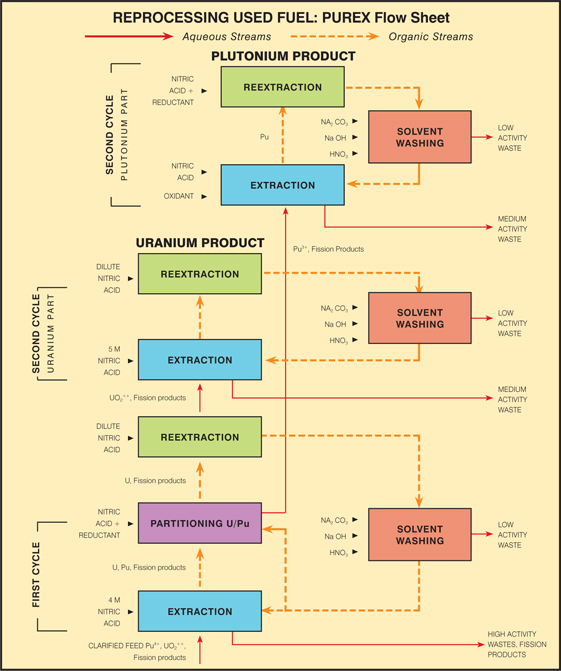
            The other track is to reduce the proliferation of nuclear weapons. One way to do this is to discourage the production of plutonium which is one of the elements used to create nuclear weapons. Plutonium is produced naturally in nuclear reactors as nuclear fuel is burned. In order to extract pure plutonium from spent nuclear fuel, special reprocessing facilities and technologies are required. Those opposed to the spread of nuclear weapons work to prevent the use of existing facilities and the construction of new facilities for plutonium extraction. There is currently about 300 metric tons of plutonium in world.

            China recently announced their plans to proceed with the construction of a “commercial scale” facility for extracting plutonium from spent nuclear fuel. The facility is slated to begin construction around 2020 and take a decade to complete. The Chinese are strongly committed to nuclear power and one third of the new builds under construction or being planned are in China. Although the U.S. says that plutonium reprocessing is not commercially viable, China may consider it a strategic necessity to insure an internal supply of fuel for their reactor fleet in the future. The U.S. Secretary of Energy has spoken out strongly against the Chinese plans. He said, “We don’t support large-scale reprocessing,” and  that the Chinese reprocessing plant “certainly isn’t a positive in terms of nonproliferation.”

           In the U.S., spent nuclear fuel is stored and reprocessing is prohibited because of concerns over nuclear proliferation. In other countries that utilize nuclear power such as France and Japan, the plutonium is reprocessed and plutonium is extracted for use a as a nuclear fuel. One of the concerns of the U.S. is that big stockpiles of plutonium could easily be used to make nuclear weapons by the countries that possess them and that the plutonium would also be a tempting target for terrorists.

          The U.S. is especially worried about reprocessing and proliferation in Asia where there is less international cooperation and less transparency. The recent actions and statement of North Korea with respect to nuclear weapons has the whole region on edge. Both South Korea and Japan which have historically rejected nuclear weapons are upset enough for there to be increasing calls to consider building their own nuclear weapons. In addition, if the Chinese accumulate big stockpiles of plutonium, Japan will have additional incentive to develop nuclear weapons in response. 
  • Geiger Readings for Mar 17, 2015

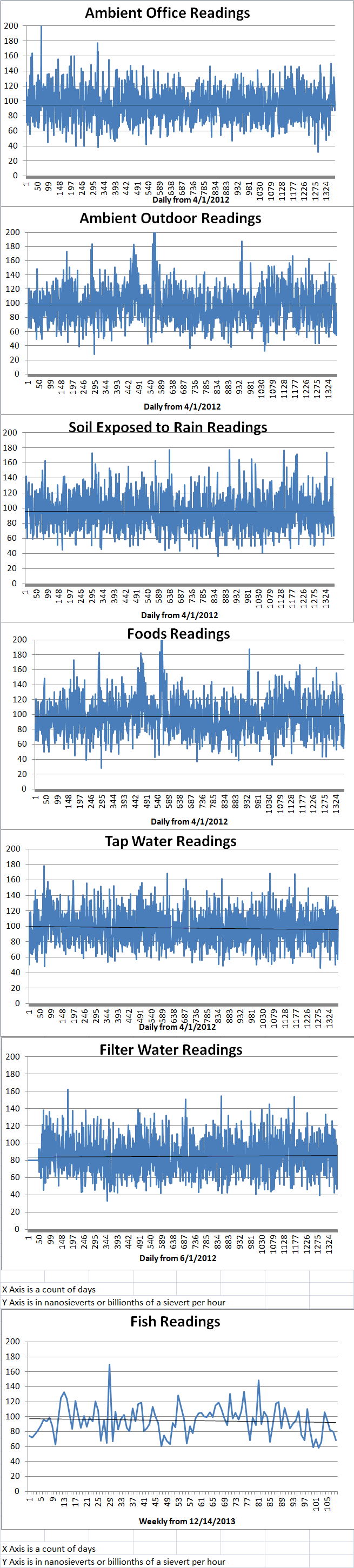
    Ambient office = 99 nanosieverts per hour
     
    Ambient outside = 93 nanosieverts per hour
     
    Soil exposed to rain water = 88 nanosieverts per hour
     
    White mushroom from Central Market = 80 nanosieverts per hour
     
    Tap water = 116 nanosieverts per hour
     
    Filtered water = 97 nanosieverts per hour
     
  • Nuclear Reactors 340 – The European Union Is Strongly Committing To Nuclear Power

            The members of the European Union (EU) are heavily conflicted over the future of nuclear power. Following Fukushima, Germany decided to close all their nuclear reactors. Austria has been suing other EU members over their nuclear policies and projects. On the other hand, the U.K. is involved in major nuclear projects such as the twenty five billion dollar Hinkley Point C project. Eastern Europe EU members who were part of the Soviet Union are building more nuclear reactors for power generation. Be that as it may, the EU as an entity is strongly committing to nuclear power.

            The first review of nuclear power in the EU since the March 2011 nuclear disaster at the Fukushima nuclear power station in Japan has been drafted and will soon be released by the European Commission (EC). The main conclusion of the draft report is that the EU should invest up to five hundred and sixty billion dollars in nuclear power by the year 2050. The report points out that ninety percent of the current nuclear power reactors in the EU will have to be retired by 2050. Increased demand for electricity in the EU and the need to reduce carbon emissions sharply will require the massive investment in new nuclear power reactors. The report also calls for the investment of at least fifty six billion dollars to upgrade existing aging reactors so they can continue to produce power as long as possible.

            The German Green Party (GGP) which is strongly opposed to nuclear power has issued a report of their own which presents the results of a study that challenges the conclusions of the EC report. The GGP study claims that the EC report has severely underestimated the cost of extending the life of existing nuclear power plants, disposing of nuclear waste and the decommissioning of closed nuclear power plants. Considering that costs of dealing with these problems is constantly rising and there are often cost overruns in active projects, this conclusion is not surprising.

           The GGP study also points out that the question of liability is not seriously addressed in the EC report. The GGP feels that there should be mandatory insurance for possible nuclear accidents and that the question of who should pay for accidents needs to be definitely settled. The problem with the current situation is that each EU member regulates liability for nuclear power plants within its borders and there are different regulations in different members. The Energy Commissioner for the EU in 2012 proposed a uniform liability insurance for nuclear power plants in member nations. To date, the EU has not put forward such a proposal.

           The EU has recommended that the national regulatory agencies of EU members work more closely together to bring more coherence and uniformity to the licensing and regulation of nuclear power plants. The EC report states that such cooperation could help lower costs of nuclear power reactors and improve safety at the same time. Such goals are laudable but perhaps the EU would do better to invest in alternative sustainable power sources.


  • Geiger Readings for Mar 16, 2015

    Ambient office = 87 nanosieverts per hour
     
    Ambient outside = 78 nanosieverts per hour
     
    Soil exposed to rain water = 63 nanosieverts per hour
     
    Cipollina onion from Central Market = 87 nanosieverts per hour
     
    Tap water = 57 nanosieverts per hour
     
    Filtered water = 47 nanosieverts per hour
     
  • Nuclear Reactors 339 – The Nuclear Regulatory Commission Is Not Doing Its Job

            I have often criticized the U.S. Nuclear Regulatory Commission for failing to do its job properly. I have charged that it has been a victim of regulatory capture by the industry that it is supposed to be regulating. I have offered examples of this such as the time that the NRC and the owners of the Diablo Canyon nuclear power plant in California conspired in secret to change the acceptable parameters of earthquake preparedness to allow the plant to satisfy regulations when new faults were discovered near the plant. Recent incidents have renewed these concerns.

           Tritium is the radioactive isotope of hydrogen. When combined with oxygen, it forms water that is radioactive. Such water is often leaked from nuclear power plants and poses a serious health risk. Recently there have been major tritium leaks from the Indian Point nuclear power plant in on the Hudson River near New York City, New York and the Turkey Point nuclear power plant on Biscayne Bay in Florida. Authorities say that the amounts leaked have not threatened public drinking water and that the public should not be concerned but the public is concerned. As a matter of fact, over three fourths of the commercial nuclear power plants in the U.S. have reported radioactive leaks. Instead of tighten regulations, the NRC has actually weakened federal regulations in order to allow nuclear power plants to keep operating in spite of thousands of reported problems across the U.S.

           In its own defense, the NRC insists that it conducts very thorough inspections and requires nuclear power plants to adhere strictly to federal regulations. Unfortunately, there are many critics who point to many incidents that would seem to raise the question of exactly how competent the NRC at regulating the nuclear industry. Following the Fukushima disaster in Japan in March of 2011, the NRC drafted new standards for emergency equipment and systems needed to cope with catastrophic failures at nuclear power plants. However, it appears that although the NRC requires that such equipment be purchased and installed, they have not drafted a set of minimum required standards for such equipment. This raises the question of what good the new regulations are if it is possible that equipment purchased and installed by nuclear power plants is not able to do the job for which it is intended.

           The Indian Point leaks of tritium were not detected by monitoring at the plant which would be best but rather by monitoring of wells in the area around the plant that were drilled to watch for tritium leaks. The leaks from the Turkey Point plant were detected by sampling and analyzing water in Biscayne Bay. In 2010, NRC staffers called for the development of new systems to monitor leaks of radioactive materials at nuclear power plants but the recommendations were turned down by the NRC commissioners.

           It is understandable that the companies that run nuclear power plants do not want to spend any money they don’t have to comply with safety regulation from the NRC. The reason for the failure of the NRC to regulate the industry properly is more difficult to understand and accept.

  • Geiger Readings for Mar 15, 2015

    Ambient office = 123 nanosieverts per hour
     
    Ambient outside = 95 nanosieverts per hour
     
    Soil exposed to rain water = 89 nanosieverts per hour
     
    Roma tomato from Central Market = 55 nanosieverts per hour
     
    Tap water = 75 nanosieverts per hour
     
    Filtered water = 67 nanosieverts per hour
     
  • Nuclear Reactors 338 – Hinkley Point C Project Vital To Britain Energy Future

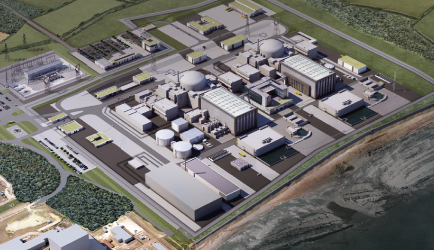
            I have blogged about the Hinkley Point C project in the U.K. several times. The price estimate of over thirty four billion dollars for two nuclear reactors makes it one of the most costly nuclear projects in history. The U.K. government decided that it was not going to fund nuclear projects several years ago which left the funding of the project in doubt. EDF, the French-owned firm that is slated to build the reactors made a tentative and controversial deal with a Chinese-owned company for about one third of the funds. There have been objections from labor unions, environmental groups, utilities and security forces in Britain to the project which I have detailed in previous posts. Today I am going to delve a bit deeper into the reason that the U.K. wants the project so badly.

            Most of the nuclear reactors in the U.K. are advanced gas-cooled reactors (AGRs). About twenty percent of the electricity in the UK comes from eight nuclear power plants, seven of which are scheduled to be closed down by 2030. Coal power plants make up another twenty two percent of the power generation for the U.K. and they are scheduled to be closed permanently by 2025. This means that the U.K. could lose up to fifty percent of its power generation  by 2030. The life of these nuclear and coal plants could be extended but this would be a temporary fix. And, extension of the coal plants would mean a setback for the reduction of carbon emissions.

           This short fall of power might stimulate the development and adoption of alternative energy sources such as wind, solar and tidal generation. But the most likely way to make up the shortage will be with Combined Gas Cycle Turbines burning natural gas. These can be build relatively quickly but they are not low-carbon sources and they will contribute to climate change.

           If Hinkley Point C is built, it will be able to supply about seven percent of the needed electricity. However, part of the deal is a guarantee by the British government to pay about twice the current price for electricity for the life of the plant. If Hinkley has to compete with gas-fired power plants and alternative energy sources that can supply cheaper electricity, then the rate payers will be locked into long term contracts at an inflated price.

           There are other nuclear projects in various stages in Britain with companies such as Hitachi and Toshiba involved. These projects may continue even if Hinkley Point C is cancelled but the odds are that they will not be unaffected. Investors might pull out because of fear that Britain is no longer able to launch and complete large energy projects.

           The U.K., France and China are seriously committed to the Hinkley Point C project. They have a huge political stake in the successful completion of the project. Beyond power generation, there is the goal of convincing the public that nuclear power is safe and economical. The failure of the Hinkley Point C project would deal a serious blow to public confidence in such projects. On the other hand, if the project is started but not finished, it would also be a serious setback. And, if the project is completed but supplies electricity at a very uncompetitive price, that will not help the future of nuclear power generation either.

    Artist’s concept of the Hinkley Point C nuclear power plant: