Blog
-
Geiger Readings for Feb 21, 2015
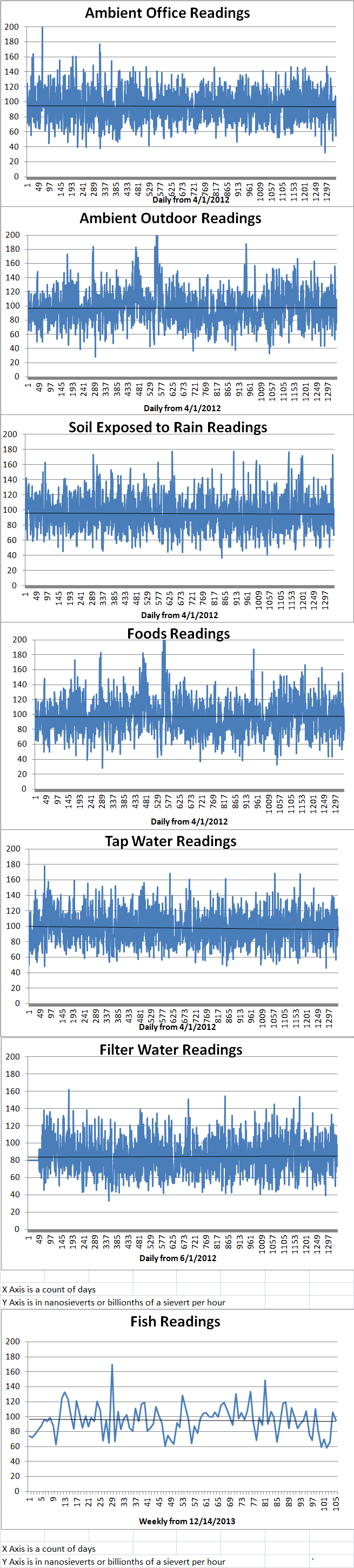
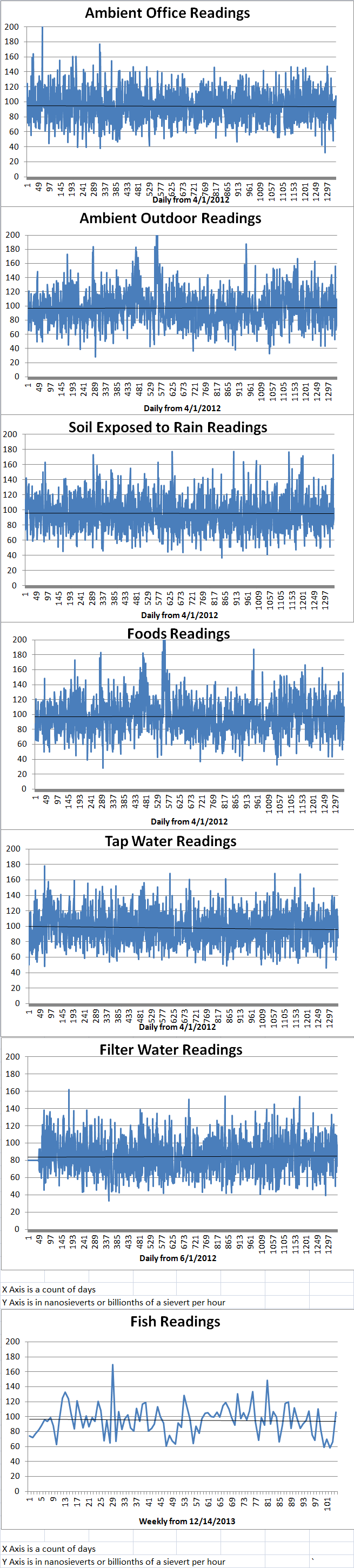
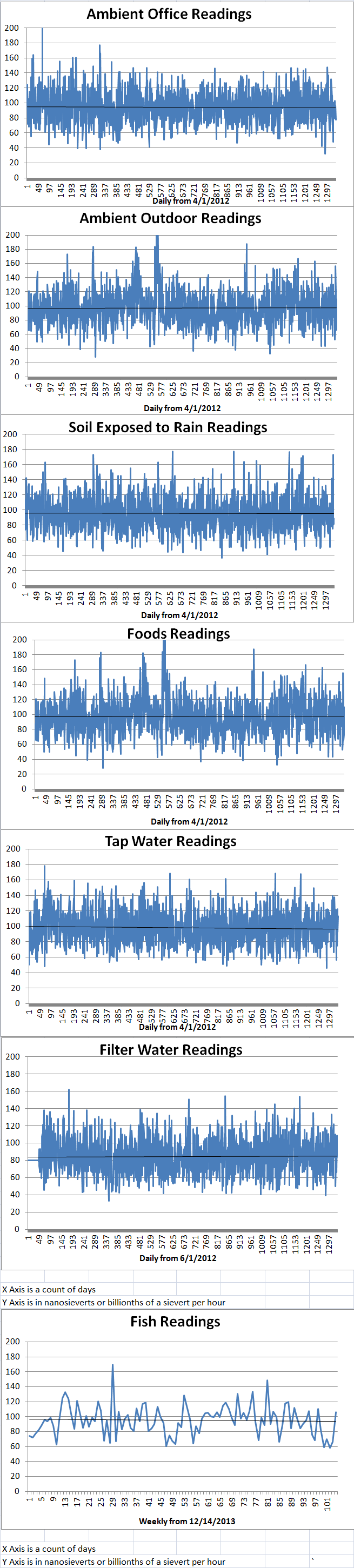
Ambient office = 99 nanosieverts per hourAmbient outside = 87 nanosieverts per hourSoil exposed to rain water = 87 nanosieverts per hourVine ripened tomato from Central Market = 72 nanosieverts per hourTap water = 125 nanosieverts per hourFiltered water = 116 nanosieverts per hour -
Geiger Readings for Feb 20, 2015
Ambient office = 54 nanosieverts per hourAmbient outside = 73 nanosieverts per hourSoil exposed to rain water = 67 nanosieverts per hourMango from Central Market = 77 nanosieverts per hourTap water = 99 nanosieverts per hourFiltered water = 83 nanosieverts per hourDover sole – Caught in USA = 95 nanosieverts per hour -
Nuclear Weapons 191 – Threat of World War III looms in Syria – Part Two of Two Parts
Part Two of Two Parts. (Please read Part One first)
The problem with writing about evolving situations is that you may have to revise what you wrote on a day to day basis. That is what has happened with this blog post.
In the past week, Turkey has been firing artillery shells into Syria at Kurdish positions that threaten their alleged ISIS supply corridor. In the meantime, Saudi Arabia has been massing troops at their northern border to hold “military exercises.” They have also sent fighter planes to Turkey for possible use in northern Syria. There are rumors that Turkey and Saudi Arabia may be considering sending troops into Syria to topple the Assad regime.
If Turkey and Saudi Arabia do attack the Assad regime in Syria, then it is entirely possible, considering the threats that Putin has made to use tactical nuclear weapons in Eastern Europe, that the Russians might consider the use of such tactical nuclear weapons in Syria if they are being pushed back in a ground war. If the Russians push Turkish forces back and cross the border into Turkey, then the U.S. and NATO are bound by treaty to respond because Turkey is a member of NATO. We could be drawn into a war with Russia. If nuclear weapons had already been used in Syria, then the risk of escalation into World War III would rise.
UPDATE:
Robert Parry, an investigative journalist, reported yesterday that Russian officials have actual said what I was worried about above. Russia only has about 20,000 troops in Syria. Turkey and Saudi Arabia could send hundreds of thousands of men into Syria to support the rebels that they back and to topple the Assad regime. Highly place Russian sources have told Parry that Russia is “prepared to use tactical nuclear weapons if necessary to save their troops in the face of a Turkish-Saudi onslaught.” He went on to point out the danger of escalation into a nuclear confrontation between Russia and NATO.
Parry says that the only person who could prevent a Turkish-Saudi invasion of Syria is the U.S. President Obama. He goes on to say that apparently Obama is not prepared to forbid Turkey and/or Saudi Arabia from such action but he has told them that the U.S. would not support any such attack. The U.S. position is complicated by the fact that Turkey, Saudi Arabia and other Middle Eastern nations have been supporting rebel groups in Syria in the fight against Assad. Critics of U.S. involvement point out that some of the Syrian Rebel groups have links to Al Qaeda and even ISIS.
SECOND UPDATE:
NATO officials have recently stated that they would not be drawn into a war between Turkey, Saudi Arabia, Syria and Russia. Normally Article 5 of the NATO treaty, which is the collective defense clause, would be invoked if any member nation is attacked. However, foreign ministers of NATO members such as Luxembourg, France and Germany have made it clear that they will not support Turkey in a war in the Middle East that Turkey provoked and that they would like to see the situation in Syria be “de-escalated.” Russia has called for an immediate meeting of the U.N. Security Council to discuss the increasing Turkish aggression on the Turkey-Syrian border.
I am going to go ahead and post this essay although I realize that it may well be outdated by developments in the near future. I hope that cooler heads prevail and that conflict in the Middle East does not bring down human civilization.
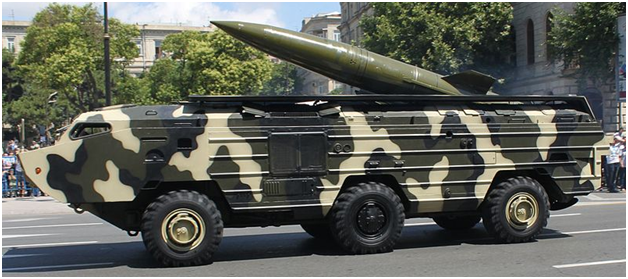
Russian ORT-21 Tochka Missile:

-
Radiation News Roundup Feb 19, 2015
Nuclear Expert in Japan: Plutonium “is everywhere… it is everywhere” after Fukushima reactors exploded. enenews.com
The US Department of Energy has agreed to grant a permit to support a small modular reactor project within the boundary of its Idaho National Laboratory (INL) site. world-nuclear-news.org
-
Geiger Readings for Feb 19, 2015
Ambient office = 108 nanosieverts per hourAmbient outside = 123 nanosieverts per hourSoil exposed to rain water = 102 nanosieverts per hourHerloom tomato from Central Market = 91 nanosieverts per hourTap water = 85 nanosieverts per hourFiltered water = 73 nanosieverts per hour -
Nuclear Weapons 190 – Threat of World War III looms in Syria – Part one of Two Parts
Part One of Two Parts:
The problem with writing about evolving situations is that you may have to revise what you wrote on a day to day basis. That is what has happened with this blog post.
When Russia stole the Crimea from Ukraine and backed Ukrainian rebels, NATO became concerned about Russian aggression in Eastern Europe. Putin, the Russian President, said that if there was a conventional ground war with NATO forces and the Russians were losing, he would consider ordering the use of tactical nuclear weapons. These are low-yield nuclear bombs delivered by bombers, cruise missiles and artillery shells. Both Russia and NATO continue to talk about the deployment of tactical nuclear weapons in Eastern Europe.
Recently, a reporter went to Moscow and talked to a number of military officials and high-ranking members of the Russian government. Some of these sources said that Putin and his close advisors were serious about the use of nuclear weapons. They said that there was talk of detonating at least one nuclear device in Eastern Europe on the theory that NATO would be horrified and intimidated into dropping their support for Eastern European nations along the Russian border.
Russia was invited into Syria by Bashir Assad, the Syrian President, to defend his regime against rebel groups including ISIS. The Russians have a major naval base on the Syrian coast which they are dedicated to defending. Critics of the Russian presence complain that the Russians have been bombing “moderate rebel groups” with ties to Saudi Arabia and the U.S. but they apparently don’t understand the Russian mission. The Russians are protecting Assad’s government and the Russian naval base against ALL threats.
Russia has fired cruise missiles from a submarine in the Caspian Sea into Syria to strike ISIS positions. A high-ranking military Russian naval officer later said that those cruise missiles can also carry nuclear warheads but that he did not think the situation in Syria would require the uses of such warheads.
Turkey shot down a Russia fighter that they said strayed into Turkish airspace. The Russian denied that they had entered Turkish airspace. In any case, the Russians are furious with Turkey and have retaliated with stiff economic sanctions. Russia has been accusing Turkey of allowing fighters and supplies to cross the Turkish Syrian border to help ISIS. The Russians also claim that Turkey has been importing oil from ISIS and that top Turkish officials are reaping huge profits off the smuggled ISIS oil.
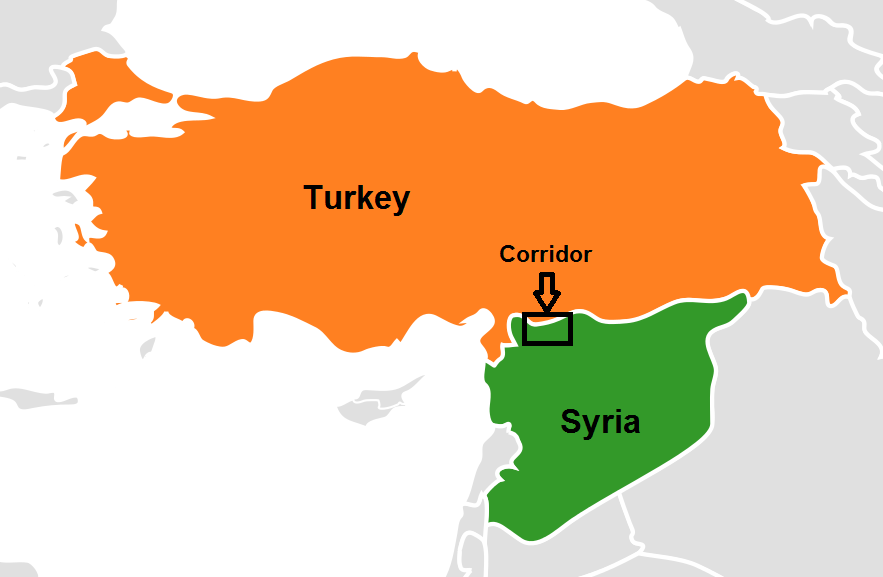
Recently, the Russians have linked up with the Kurds against ISIS and other rebel groups tied to Turkey who are fighting against the Assad government. Kurds control a lot of the border between Syria and Turkey. There is a corridor in north central Syria between two Kurdish controlled regions that Russia claims Turkey has been using to supply ISIS and to import ISIS oil. The Kurds and the Russians want to close that corridor. Turkey has been fighting Kurdish rebels in eastern Turkey for decades and is dead set against letting the Kurds control the entire Syrian and Turkish border.
Please read Part Two.
-
Geiger Readings for Feb 18, 2015
Ambient office = 78 nanosieverts per hourAmbient outside = 85 nanosieverts per hourSoil exposed to rain water = 89 nanosieverts per hourCelery from Central Market = 110 nanosieverts per hourTap water = 114 nanosieverts per hourFiltered water = 98 nanosieverts per hour -
Radioactve Waste 166 – Complex Technical Problems with Permanent Geological Repositories – Part Two of Two Parts
Part Two of Two Parts (Please read part One first.)
Critics of the criticality study have said that there appears to be a number of faulty assumption in the study that call some of the conclusions into question. The study may have underestimated the probability of criticality in an underground repository.
(1) It is assumed that transuranics will have been degraded to a lower level of radioactivity BEFORE corrosion of the waste containers. There are thin walled waste containers made by the Holtec company that could easily corrode before degradation. This would release radioactive materials that could be deposited along with uranium in a depression and lead to a criticality.
( 2) There was an assumption that the temperature of an underground storages facility would be roughly 68 Fahrenheit. The temperature may be much higher. There is a research lab in Minnesota that is more than two thousand feet underground and the temperatures of the rock outside the lab may be as high as 86 degrees Fahrenheit .
(3) There was an assumption that container designs are sub-critical. The Holtec company has asked for and received exemptions from the U.S. Nuclear Regulatory Agency for the design and construction of their nuclear waste containers. The walls of the sealed part of the containers are only one half inch thick and the aluminum from which they are constructed is prone to corrosion from ground water. The neutron absorber Metamic that is used in the Holtec containers received exemptions from quality control. There are concerns about the welds in the fuel baskets. They could fail and allow a container to collapse into a geometry that may increase the risk of criticality. The baskets are aluminum and do not contain boron neutron absorbers which would reduce criticality risk.
(4) The report states that if two uranium depositions are more than two feet apart, the neutrons emitted by the two depositions will not influence each other. There is the danger of collapse by accident with respect to the Holtec waste containers that might shorten the separation distance. There are also waste repositories which are designed for the roof to collapse after the waste containers are sealed in. The collapsing roof of the chamber might also separate the distance between two containers of waste. If the distance between two depositions of uranium falls under the two foot limit, it might trigger a criticality.
While it sounded like a good idea to bury nuclear waste deep underground, seal it in and forget about it, it turns out to be much more complex than originally thought. Geological repositories may be a workable solution to the need to dispose of many tons of nuclear waste. However, it appears that there is a lot more research than needs to be done before we can be confident that this disposal method is safe and permanent.
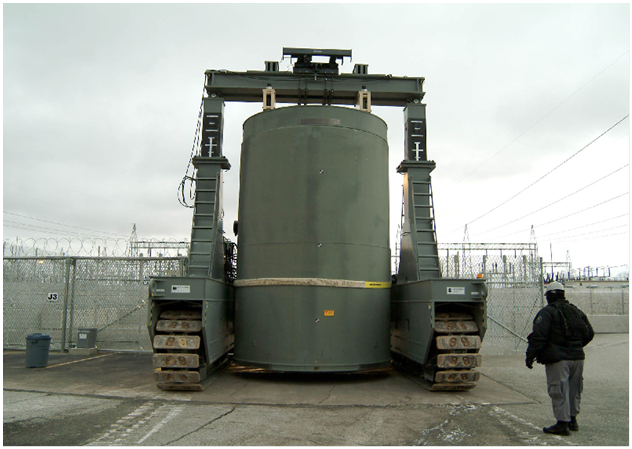
Holtec Hi-Storm Nuclear Waste Storage Container: