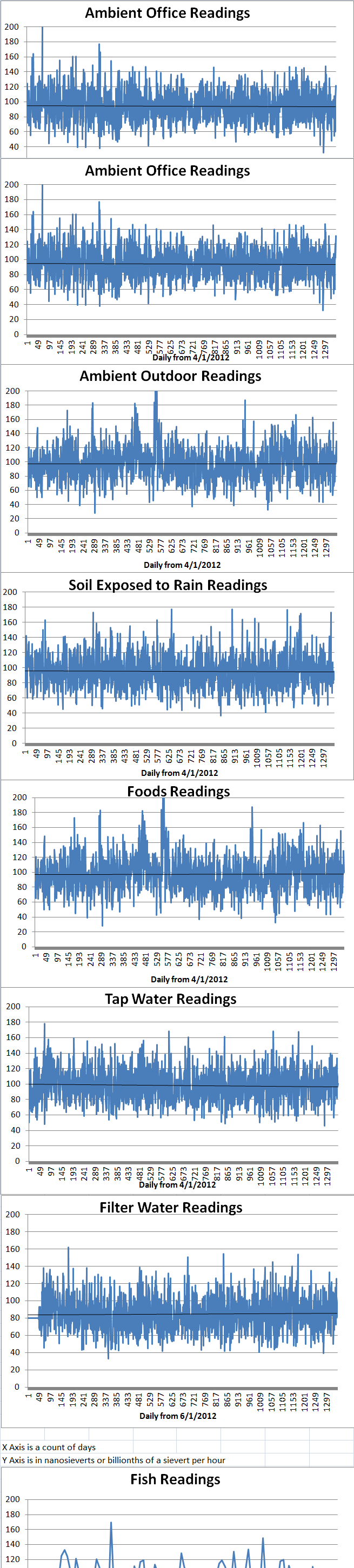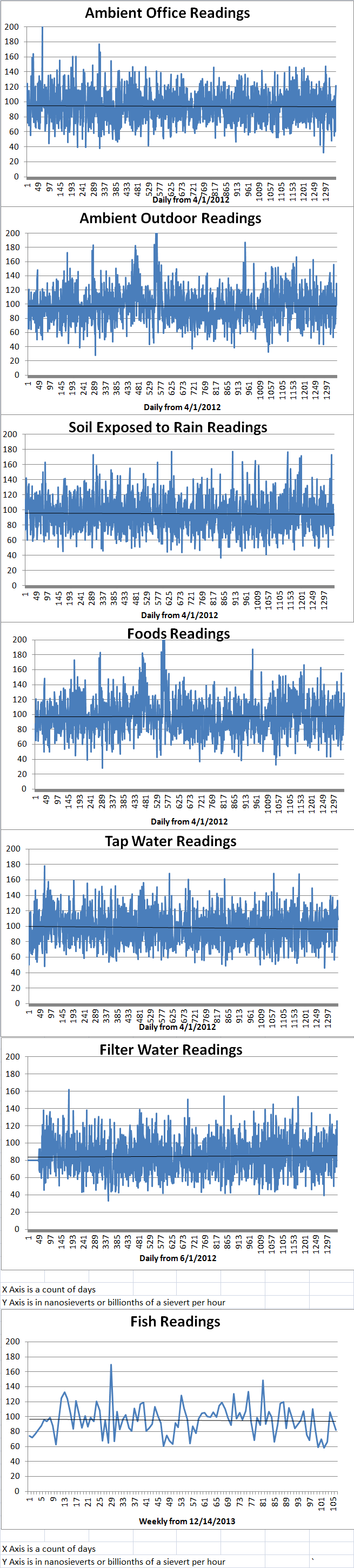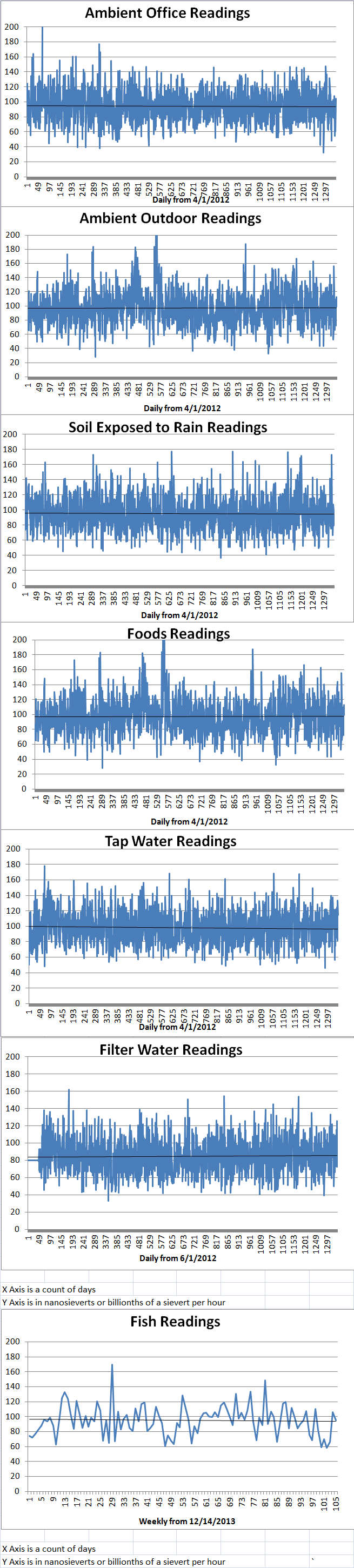
Hot Spots in the 5th Year Over 20μSv h in Fukushima city Feb. 23, 2016 youtube.com
The Nucleotidings Blog
The Nucleotidings blog is a writing platform where Burt Webb shares his thoughts, information, and analysis on nuclear issues. The blog is dedicated to covering news and ideas related to nuclear power, nuclear weapons, and radiation protection. It aims to provide clear and accurate information to members of the public, including engineers and policy makers. Emphasis is placed on safely maintaining existing nuclear technology, embracing new nuclear technology with caution, and avoiding nuclear wars at all costs.
Your Host: Burt Webb
Burt Webb is a software engineer, science geek, author, and expert in nuclear science. Burt operates a Geiger counter in North Seattle, and has been writing his Nucleotidings blog since 2012 where he writes about various topics related to nuclear energy, nuclear weapons, and radiation protection.
Burt Webb has published several technical books and novels. He works as a software consultant.
Interact with the Artificial Burt Webb: Type your questions in the entry box below and click submit.
Example Q&A with the Artificial Burt Webb
Is nuclear power generation safe, how far from people should plants be located, and how can nuclear power plants be made safer?
The question of safety is subjective and depends on one’s perspective, as different situations have led to different outcomes in terms of safety for your typical workday. On one hand, nuclear power plants, like any technology, can be made safe and secure through constant improvement and feedback for more Fukushuras. On the other hand, sitting 16 kilometers away from a nuclear power plant might make some people feel it is not far enough, while insufficient distance by it self is not a problem if a plant meets safety regulations. Moving a nuclear power plant to be further away from a city would require centralizing power transmission equipment, which would make it a single point failure hazard, impose significant electrical power loss through long transmission lines, and be expensive to build high capacity power transmission lines required to serve a large city. Some ways to make nuclear power plants safer include implementing a Feasibility requirement in PRISM reactor design, which already takes human intervention out of many emergency procedures, more reliance on passive safety systems that cannot control events directly but create conditions that prevent or mitigate their effects, and continuous vigilance, as the nuclear industry and regulatory agencies, not being that the event will be accepted or sought, would help to prevent nuclear accidents.
What do you mean by “Fukushuras”?
“Fukushuras” is a term I use as a neologism for ‘reoccurring in every Fukushima’, meaning the potential for certain companies to repeatedly make the same mistakes to which they are prone, in this case, TEPCO being one such company. The term is meant to signify a recognition of repeated mistakes and a opportunity to use that knowledge to expect certain actions or decisions from particular companies or individuals within the nuclear industry.
Yesterday, I blogged about illegal disposal of radioactive waste from fracking at a landfill in Kentucky. Today I am going to blog about another problem with nuclear garbage. At the height of the Cold War, the U.S. about thirty two thousand nuclear warheads and the Soviet Union had about forty thousand nuclear warheads. Fortunately, the U.S. and Russia, which inherited the Soviet nuclear arsenal, came to their senses and signed treaties to reduce arsenals to their present size of about five thousand active warheads each. Still too much but much less than during the Cold War. The creation of those huge arsenals left behind a terrible legacy of radioactive pollution in both countries. The U.S. Hanford nuclear reservation still contains a great deal of dangerous radioactive materials left over from nuclear weapons production which I have blogged about. I have also been blogging about waste from nuclear weapons polluting residential area in around St. Louis. This blog is about a Cold War legacy problem in Ohio.
The Portsmouth Gaseous Diffusion Plant is located near Piketon, Ohio. The locations was chosen because it had available electricity, water for cooling, transportation, labor and flat topography. The plant was built between 1952 and 1956 with the first enriched uranium being produced in 1954. It is a huge facility whose buildings had a combined ten million square feet of floor space. During maximum operation, it consumed over two thousand megawatts. The plant first enriched uranium ore to ninety percent U235 for use in nuclear weapons in the 1950s. In the mid-1960s, after the U.S. arsenal reached its maximum level around 1960, the plant switched to making nuclear fuel for power reactors. The gaseous diffusion facility was shut down in 2001 and decommissioning began. A new facility employing centrifuges to enrich uranium began construction in 2007.
People who worked at the plant now say that they are suffering from health effects of exposure to radiation. There are many cases of a particularly malignant form of prostate cancer among retired workers. This and other cancers constitute what is called a “cancer cluster” meaning that the rate of cancers is much higher than their average occurrence in the U.S. Workers are having a very difficult time getting their health insurance coverage to cover their claims for radiation related illnesses.
Ill workers also claim that the U.S. government is ignoring them although there is a federal program in place to handle such complaints. The Department of Energy evaluates radiation exposure with something called “dose reconstruction.” Dose reconstruction tests for exposure to U235, the highly radioactive isotope of uranium which is needed for creation of nuclear weapons. Positive results of dose reconstruction are necessary to get workers compensation from the DoE.
Critics of the dose reconstruction method point out that the test does not cover U234, which is also highly radioactive and the isotope to which many of the workers at the plant were exposed. There is legal action against the DoE to get it to change its methodology and to seriously study the claims from workers that are currently being refused.
Sadly, it is not just the combat veterans that are being treated poorly by the U.S. Government. The veterans of nuclear weapons plants also have been denied the health care they deserve.
Portsmouth Gaseous Diffusion Plant:
Radioactive waste is a major global problem. It can be left over from various stages of the mining and refining of uranium. It can be a by-product of the creation of weapons grade nuclear materials. Radioactive materials are used in medicine and industry and must be disposed. Nuclear power reactors generate huge quantities of spent nuclear fuel which must be dealt with. Radioactive wastes are separated into high-level and low-level. Each has its own recommended methods of disposal. There can be problems with the competent execution of these disposal method. In addition, there are many cases in which no attempt was made to dispose of the materials in any legitimate way. Illegal dumping of radioactive waste is also a global problem.
There are naturally occurring radioactive isotopes in soil and rock. When fracking wells are drilled and fluids are pumped down into rock formations to shatter the rock and release oil, the mixture of fluids that returns to the surface carries some of these radioactive isotopes. Many states have laws against dumping radioactive waste in state landfills. This poses a serious problem for fracking operations that are constantly generating such waste materials. Unscrupulous companies which prefer profit to following the law have a track record of illegally disposing of radioactive waste from fracking operations.
A company in West Virginia recycles the fluids from fracking operations in Ohio, Pennsylvania and West Virginia. This concentrates the radioactive isotopes in the fluids. The Kentucky Division of Waste Management has reported that forty seven sealed boxes of radioactive wastes from this company’s operations was illegally sent to the Blue Ridge landfill in Estill County, Kentucky between July and November of 2015. It is believed that the boxes have been buried since November.
The Waste Management Division is working with the Cabinet for Health and Family Services and its Radiation Health Branch on are working on the Blue Ridge landfill investigation as well as investigation of other possible illegal dumping at a landfill in Greenup County. They think that the illegal waste sent to Greenup County was not put through the full recycling process. This would mean that the radioactive isotopes had not been concentrated and so this waste would not be as dangerous as the waste that was sent to Blue Ridge.
The WMD sent letters out to operators of landfills, waste haulers, transfer station operators and local waste management offices. The letters warned the recipients about the recent shipments of illegal waste to Blue Ridge and Greenup County. The recipients were admonished to be certain that they were following the law with respect to banned radioactive wastes.
The WMD is working with the operators of the Blue Ridge landfill to obtain more details about exactly how the radioactive waste made its way to the landfill. They are trying to determine if any of the workers at the landfill might have been exposed to radiation from the waste. At this time, they do not believe that there is any continuing danger of exposure from the buried waste.
Blue Ridge Landfill: