Blog
-
Geiger Readings for Mar 03, 2015
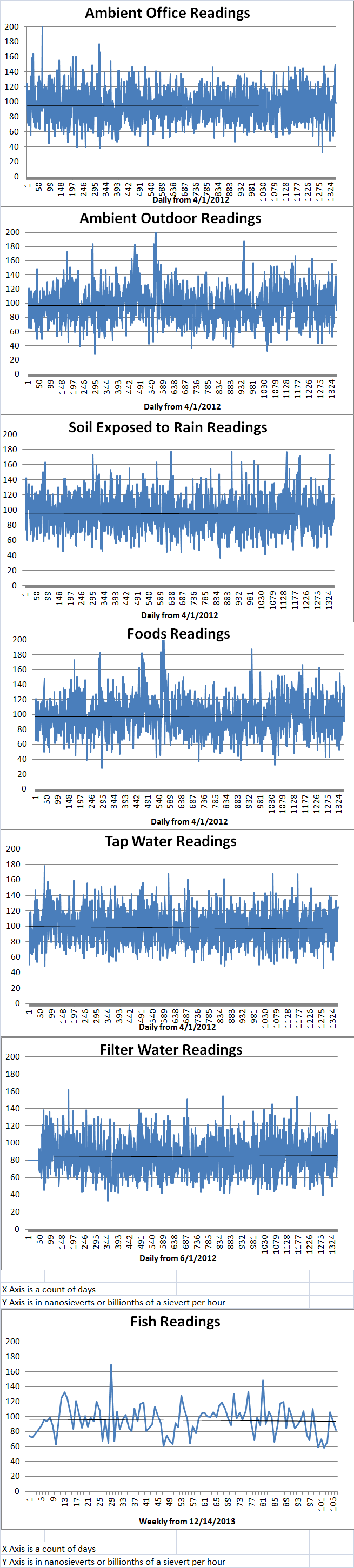
Ambient office = 98 nanosieverts per hourAmbient outside = 72 nanosieverts per hourSoil exposed to rain water = 88 nanosieverts per hourVine ripened tomato from Central Market = 137 nanosieverts per hourTap water = 125 nanosieverts per hourFiltered water = 116 nanosieverts per hour -
U.S. Nuclear Regulatory Cancelled Needed Nuclear Plant Health Risk Study in 2015
There is widespread public distrust of nuclear power. Major accidents such as Chernobyl, Three Mile Island and Fukushima have frightened the public. Radiation is invisible and health problems from radiation exposure can take decades to develop. Governments have been reluctant to share real information about the public dangers of nuclear power for political and economic reasons. Corporations in the nuclear industry have been caught ignoring regulations, dragging their feet on maintenance, lying about problems at nuclear plants and other behaviors that have abused public trust. There has not been sufficient research into the dangers posed by nuclear power plants to determine just what the risk is for people living around the power plant, especially in the long term.
There have been some studies to determine if there is a health risk from living near a power plant. But many of these have been challenged on a number of grounds including small sample size, accusations of bias, sloppy methodology, etc.
Some studies have found no evidence of risk such as a 1991 study of cancer deaths in over one hundred counties in the U.S. near a power plant. The NRC often cites the 1991 study in discussions of the risks of nuclear power plants. Many of these studies have been challenged by critics of nuclear power.
Some studies have found risk of cancer and other health problems from living near a nuclear plant such as a 2009 study that concluded that an increase in the rate of thyroid cancers in an area of New England is connected to radioactive iodine emissions from sixteen nuclear power plants within ninety miles of this area. Many of these studies have been challenged by supporters of nuclear power.
What is needed is a very thorough epidemiological study by a neutral and reputable research organization. Such a study was commissioned and tentatively funded by the U.S. Nuclear Regulatory Commission in 2010. The new study was to be done by the National Academy of Sciences which has a good reputation for objective research.
For Phase 1, the NAS recommended two studies to assess risk and a pilot project that would study seven nuclear power plants. This pilot study would lay the ground work for a comprehensive study of all nuclear power plants and nuclear fuel facilities in the U.S. as Phase 2. Some of the problems that would be studied in Phase 1 were the need for very large sample sizes, the lack of uniformity in the availability and reliability of cancer data for any area smaller than a county and the problem with obtaining data on a variety of factors that could may understanding the data more complex.
Phase 1 would include a population study of cancer diagnosis and mortality rates for multiple types of cancer across all age groups and a targeted study of the occurrence of childhood cancers for children born within a specific distance of a nuclear power facility. There would be a planning project and an execution project in Phase 1. The planning part began in fall of 2013.
Unfortunately, in report on the planning part of Phase 1, the NAS reported that it was unlikely that any solid and useful conclusions could be drawn from the pilot study in Phase 1 of the project that would be useful for Phase 2. Considering that it would take eight million dollars and three years to even complete the pilot study, the NRC cancelled the project in 2015.
It would be to the interest of both the critics and supporters of nuclear power to have such a study carried out. Although, there are international research projects that could answer some of these questions, it would be best for the NRC to go ahead and do this study. It may take years to accomplish but the longer the delay, the longer it will take to get useful answers.

-
Geiger Readings for Mar 02, 2015
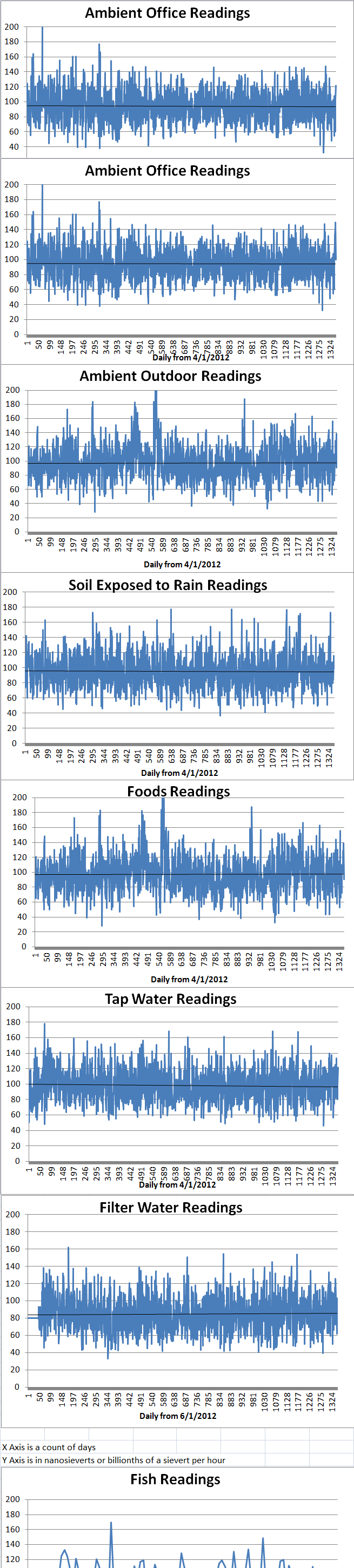
Ambient office = 100 nanosieverts per hourAmbient outside = 119 nanosieverts per hourSoil exposed to rain water = 116 nanosieverts per hourBartlett pear from Central Market = 91 nanosieverts per hourTap water = 121 nanosieverts per hourFiltered water = 103 nanosieverts per hour -
Nuclear Weapons 192 – Old Helicopters Cannot Protect U.S. Nuclear Missile Bases
Malmstrom Air Force Base in Montana, Minot Air Force Base in North Dakota and F.E. Warren Air Force Base in Wyoming are the primary locations of U.S. nuclear ICBMs. I have blogged about the sad condition of the U.S. nuclear missile force. There are problems with the command staff, the maintenance of the missiles and silos, the training of the officers that man the silos, etc. The missile force used to be one of the top postings for members of the military but now it is a dead end for a military career. The missile bases are targets for Russia nuclear weapon attacks, of course, but there is also concern about a possible ground attack by terrorists. In such a case, a rapidly deployable counter force of U.S. military personnel would have to be on hand to handle it and that may not be available.
Recently, the chairman of panel of the House Armed Services committee that is responsible for the security of the missile bases, said that U.S. military personnel “are not capable of doing the job of responding to an alert” at one of the missile bases. The main problem seems to be that the helicopters that would carry security personnel to a missile base in the event of a security alert are UH-1N Huey models that date back to the Vietnam war. The chairman said “Listen, I don’t like talking about this publicly,” Rogers added in the interview with CQ. “This is a vulnerability that I don’t like being in the public domain. But I can’t get it fixed, apparently, without focusing some attention on this matter and how unacceptable it is. … You’re going to hear my language get more direct on this topic in the coming days and weeks in public. Our situation is completely unacceptable.”
The first mention by the Air Force of the need for new helicopters to replace the old Hueys was in 2004. About thirty Hueys are currently assigned to provide security for the missile bases. There were plans to replace the Hueys but that replacement has been delayed several times. That need has also been mentioned in some Congressional hearings recently but the exact nature of the problem was not made public.
The problem with the Hueys attracted increased attention when they failed to perform adequately in recent annual military exercises at the F.E. Warren AFB in Wyoming. The commander of U.S. Strategic Command demanded the quick replacement of the Huey fleet soon after their failure during the exercises. While the details of the Huey failures is classified, it is known that they failed every time they were tested in the exercises. The Hueys do not have the range to fly the distance from their base to the missile bases, hover over the bases and engage in battles. They cannot lift sufficient weight to carry the required payloads, they cannot operate effectively at night and they can not handle some of the rough weather that occurs in that area.
There is an argument going on in Congress about how to best handle the situation with the Huey fleet. Critics are saying that the fleet should have already been replaced. It has been suggested that the usual competition and bidding process for military hardware be circumvented to speed up acquisition of new helicopters. Up to a billion dollars may be spent in the next five years to accomplish this goal.
Frankly, I am appalled that this situation was allowed to develop. This problem has been well-known for over a decade. The Hueys didn’t suddenly develop these deficiencies. They never had the capability to handle the job they were assigned. This is rank incompetence! Fortunately, they have not been needed to handle serious security needs at the missile bases for they surely would have failed. This situation needs to be remedied as quickly as possible. I am dead set against the use of and the very existence of nuclear weapons in the U.S. But, if we have them, then they should be well protected.
Huey UH-N1 helicopter:
-
Geiger Readings for Mar 01, 2015
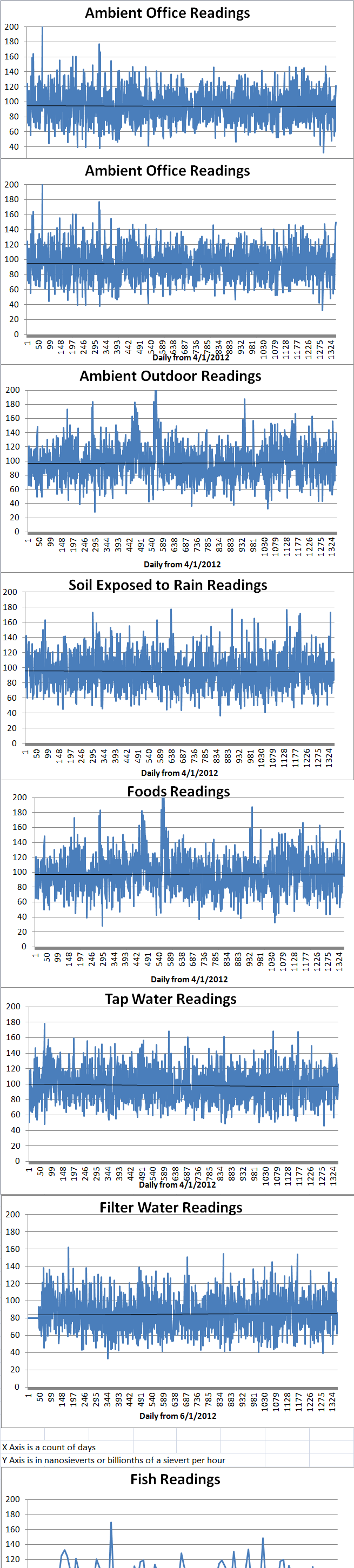
Ambient office = 150 nanosieverts per hourAmbient outside = 80 nanosieverts per hourSoil exposed to rain water = 99 nanosieverts per hourAvocado from Central Market = 95 nanosieverts per hourTap water = 100 nanosieverts per hourFiltered water = 86 nanosieverts per hour -
Radioactive Waste 170 – Another Truck with Radioactive Waste Is Stolen in Mexico
I have often blogged about radioactive waste but it is usually about spent nuclear fuel, uranium mining and refining or weapons. Radioactive isotopes are also used for a lot of medical and industrial purposes and there is a lot of waste generated when the equipment and materials are retired.
In late 2013, a truck that was carrying radioactive cobalt-60 was stolen on the way from a hospital in Tijuana, Mexico to a radioactive waste disposal site. The truck was not properly equipped for such a task because it did not have a GPS tracing unit. It was thought at the time that the thieves did not know what was on the truck they stole. Since any radioactive material can be used to make a “dirty” bomb authorities put out an alert. In a dirty bomb, conventional explosives are used to disperse radioactive materials. The truck and cobalt-60 were recovered within days of the theft. The cobalt-60 container was found at a distance from the truck and it had been opened. The thieves may have been injured by the radiation from the cobalt-60 but they were never identified. Now it has happened again.
Early Saturday morning, a red 2006 Chevrolet Silverado pickup truck with an industrial pipeline scanner in the back was stolen in San Juan del Rio, north of Mexico City in the state of Queretaro. The device uses a radioactive isotope of iridium to generate gamma radiation. The theft was reported by the National Commission of Nuclear Security and Safety of the Mexican federal government. It is not known whether the iridium-192 in the scanner was the target of the theft or the thieves were just after the truck. There is concern that the iridium-192 could be used to make a dirty bomb.
The Mexican government issued a statement saying that the iridium-192 can be harmful if not handled properly. It is safe as long as it is in its container but if the container is opened, the iridium-192 can cause serious damage to skin in minutes to hours. Prolonged exposure could cause death.
I am solidly against nuclear power and nuclear weapons. I believe that we should get rid of both as soon as possible. On the other hand, there are many medical and industrial applications that utilize a wide variety of radioactive isotopes. In many cases, there are no alternative approaches to accomplish the same ends. So we are obviously not going to get rid of all use and transport of radioactive materials even if we close the books on nuclear power and nuclear weapons.
The only answer to what happened in Mexico is to increase the monitoring of the handling and transport of radioactive isotopes. In addition, the public must be better educated about the dangers of radioactive isotopes. Accidents and thefts are inevitable but the damage that results can be reduced. We are also developing ways of healing tissue damaged by radiation which will be useful when people are injured by the mishandling of medical and industrial radioactive isotopes.
-
Geiger Readings for Feb 29, 2015
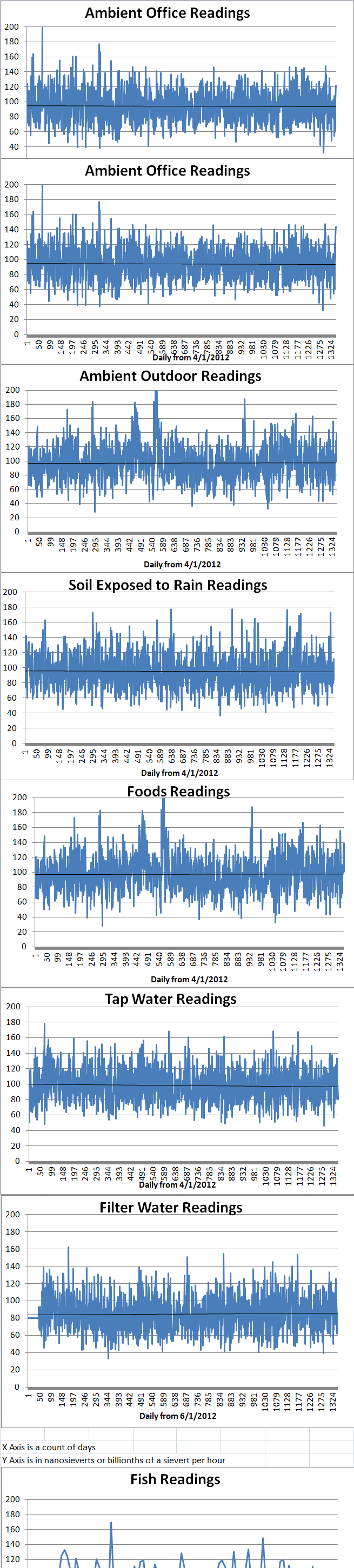
Ambient office = 144 nanosieverts per hourAmbient outside = 108 nanosieverts per hourSoil exposed to rain water = 112 nanosieverts per hourOrange bell pepper from Central Market = 139 nanosieverts per hourTap water = 81 nanosieverts per hourFiltered water = 62 nanosieverts per hour