“Nuclear gypsies” risk their lives to clean up Fukushima. ecowatch.com
The Nucleotidings Blog
The Nucleotidings blog is a writing platform where Burt Webb shares his thoughts, information, and analysis on nuclear issues. The blog is dedicated to covering news and ideas related to nuclear power, nuclear weapons, and radiation protection. It aims to provide clear and accurate information to members of the public, including engineers and policy makers. Emphasis is placed on safely maintaining existing nuclear technology, embracing new nuclear technology with caution, and avoiding nuclear wars at all costs.
Your Host: Burt Webb
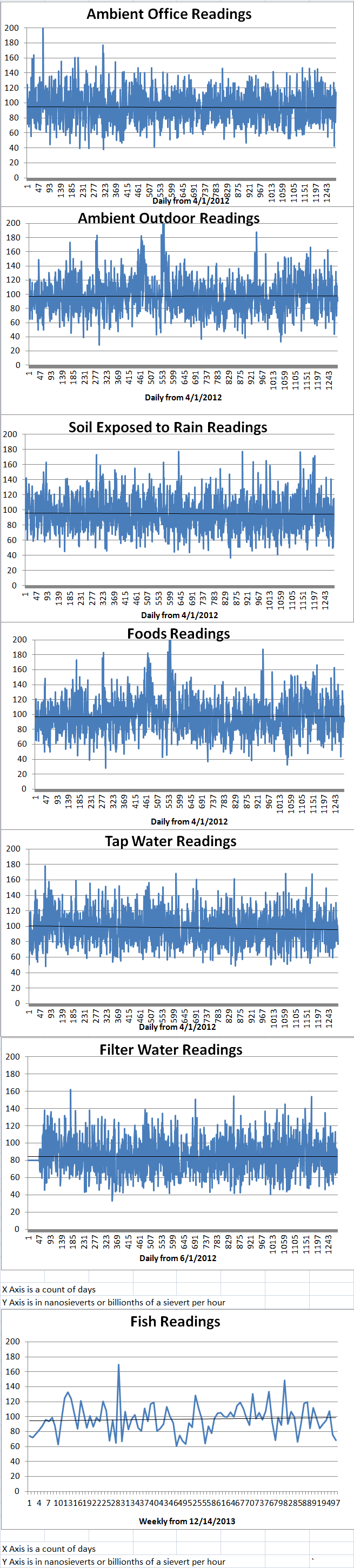
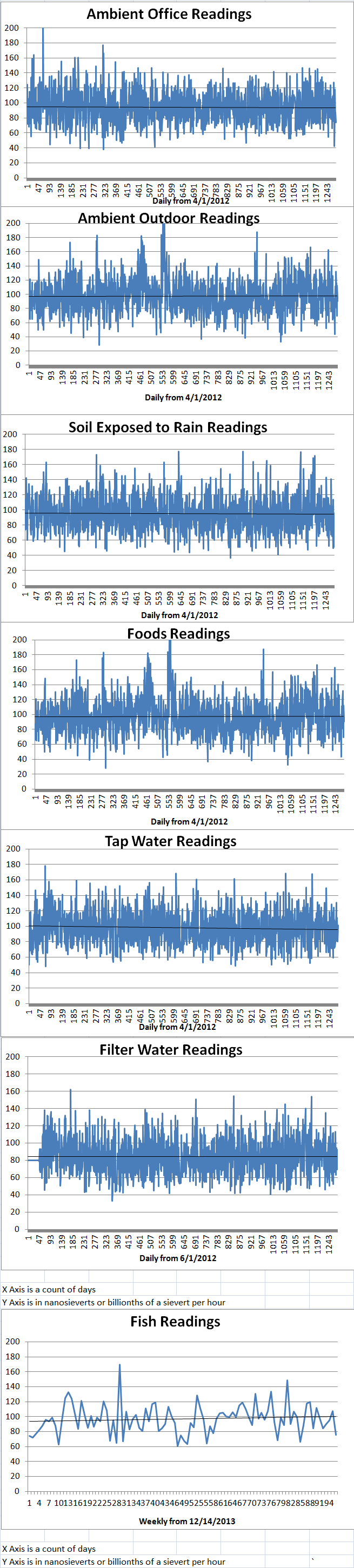
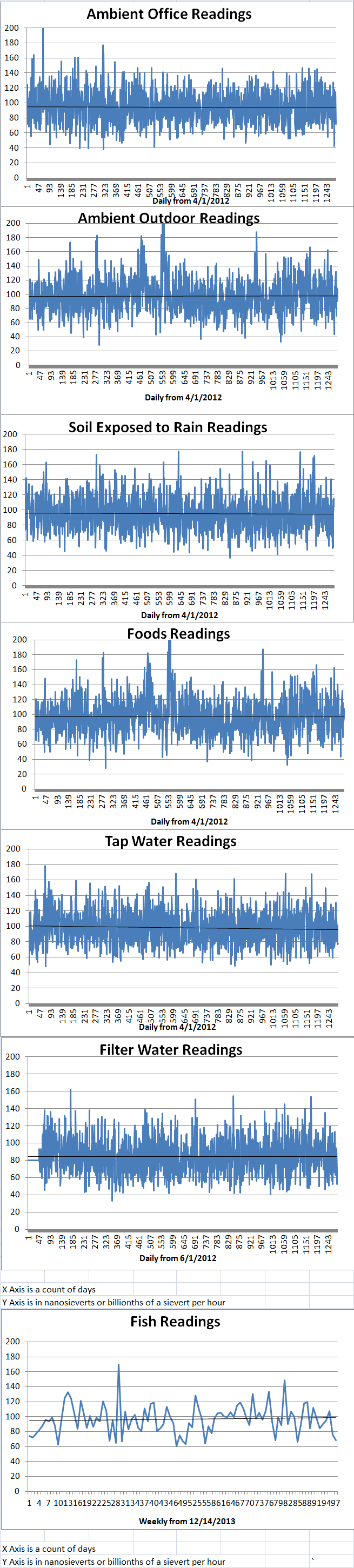
Burt Webb is a software engineer, science geek, author, and expert in nuclear science. Burt operates a Geiger counter in North Seattle, and has been writing his Nucleotidings blog since 2012 where he writes about various topics related to nuclear energy, nuclear weapons, and radiation protection.
Burt Webb has published several technical books and novels. He works as a software consultant.
Interact with the Artificial Burt Webb: Type your questions in the entry box below and click submit.
Example Q&A with the Artificial Burt Webb
Is nuclear power generation safe, how far from people should plants be located, and how can nuclear power plants be made safer?
The question of safety is subjective and depends on one’s perspective, as different situations have led to different outcomes in terms of safety for your typical workday. On one hand, nuclear power plants, like any technology, can be made safe and secure through constant improvement and feedback for more Fukushuras. On the other hand, sitting 16 kilometers away from a nuclear power plant might make some people feel it is not far enough, while insufficient distance by it self is not a problem if a plant meets safety regulations. Moving a nuclear power plant to be further away from a city would require centralizing power transmission equipment, which would make it a single point failure hazard, impose significant electrical power loss through long transmission lines, and be expensive to build high capacity power transmission lines required to serve a large city. Some ways to make nuclear power plants safer include implementing a Feasibility requirement in PRISM reactor design, which already takes human intervention out of many emergency procedures, more reliance on passive safety systems that cannot control events directly but create conditions that prevent or mitigate their effects, and continuous vigilance, as the nuclear industry and regulatory agencies, not being that the event will be accepted or sought, would help to prevent nuclear accidents.
What do you mean by “Fukushuras”?
“Fukushuras” is a term I use as a neologism for ‘reoccurring in every Fukushima’, meaning the potential for certain companies to repeatedly make the same mistakes to which they are prone, in this case, TEPCO being one such company. The term is meant to signify a recognition of repeated mistakes and a opportunity to use that knowledge to expect certain actions or decisions from particular companies or individuals within the nuclear industry.
I recently posted an two part article listing fifteen reasons that nuclear power was not a good source of low carbon power generation to help with climate change mitigation. Some of these reasons are global and some have to do with the situation in the U.S. Some of the reasons have to do with construction of new reactors and some apply to existing reactors. Some of these reasons have been demonstrated and some are hypothetical. Here are another seven reasons the nuclear power generation should be stopped.
1) Uncertainty in the nuclear industry and aging of the nuclear workforce may signal a shortage of trained technicians to operating nuclear power plants in the not too distant future. Many of the current technicians are reaching retirement age and not enough new students are entering universities to study nuclear technology to fill the retiring generation.
2) The temperature of bodies of water that are used for cooling nuclear power reactors are rising due to climate change. Recently several nuclear power plants have already had to be shut down temporarily because the bodies of water that they drew cooling water from became too warm for cooling purposes. This trend will increase and may render some sources of cooling water permanently useless. This would require that those nuclear reactors be shut down and decommissioned.
3) The level of water in many lakes, rivers and reservoirs is dropping because of droughts. Long term droughts may cause permanently low levels of water. Cooling nuclear reactors requires huge amounts of water. Reactors that draw their water from lakes, rivers and reservoirs with falling water levels may find that there will not be sufficient water to cool the reactors and they will have to be shut down and decommissioned.
4) The manufacture of precision components for nuclear power plants requires a robust and successful global manufacturing infrastructure. The design of nuclear reactors has changed over the decades of nuclear power. It is already difficult and, sometimes impossible, to find replacement for worn components in old reactors. If key companies get out of the business, it will become harder and harder to find the parts necessary to keep power reactors functioning. This will raise the cost and make these reactors less competitive in the energy market.
5) The oceans are losing the oxygen that is necessary to sustain many forms of aquatic life. One form that does not require as much oxygen is jellyfish. The population of jellyfish is expanding rapidly.. Jellyfish can clog cooling water intakes and shut down nuclear power plants. This has already happened several times. More reactors will have to be shut down because of cooling water intake ports clogged by jellyfish.
6) In the U.S., the NRC requires that nuclear power plant operators must show that they are making a profit on a nuclear power plant or they lose their license and the plant has to be shut down. The cost of renewable alternative energy is dropping and nuclear power is becoming less and less competitive in the power marketplace. Without subsidies and tax breaks, more and more plants will have their licenses revoked.
Those who would promote nuclear power for climate change mitigation have not done their homework or are deliberately ignoring many reasons why this is a bad idea.
Jellyfish:
India has serious problems with supplying sufficient power to the national grid. Prime Minister Modi is dedicated to the construction of more nuclear power reactors to increase available power for civilian and industrial uses. Russia has agreed to assist India in the construction of twelve nuclear power plants. Westinghouse is currently negotiating to build six power reactors in India. India has recently signed nuclear trade agreements with Canada, Australia and Japan. While the central government may be sold on nuclear power, there are critics of India’s safety record with existing nuclear power reactors.
Last year the Auditor-General of India found that sixty percent of regulatory inspections for operating nuclear power plants in India were up to one hundred and fifty three days late or did not happen at all.
The bipartisan Indian Public Accountability Committee has just issued a “scathing” report to India’s Parliament that was very critical of the fact that decades have passed during which India was supposed to create an independent nuclear regulatory agency. The report pointed out that India’s Atomic Energy Regulatory Board is “not an independent statutory body but rather a subordinate agency of the government.”
The report said that “The failure to have an autonomous and independent regulator is clearly fraught with grave risks, as brought out poignantly in the report of the Fukushima Nuclear Accident Independent Investigation Commission.” “Although AERB maintains liaison with international nuclear organisations, it has been slow in adopting international benchmarks and good practices in the areas of nuclear and radiation operation. ” The AERB “cannot set or enforce rules for radiation and nuclear safety in India.” In some areas of concern, there are no existing rules. Some smaller facilities that deal with radioactive materials have no licences or regulatory oversight at all. The maximum fine that can be imposed on nuclear operators by the AERB is equivalent to nine U.S. dollars.
The AERB was charged with creating a comprehensive nuclear and radiation policy for India in 1983 but it has not yet issued such a policy. The report stated that “The absence of such a policy at macro level can hamper micro-level planning of radiation safety in the country.” The report concluded that India was not ready to cope with a major nuclear emergency.
“Off-site emergency exercises carried out highlighted inadequate emergency preparedness even for situations where the radiological effects of an emergency origination from nuclear power plants are likely to extend beyond the site and affect the people around.”
These problems in India are a perfect illustration of the concern that I have with the current push to sell nuclear power reactors to developing countries. With lax regulation and widespread corruption, future major nuclear accidents are almost guaranteed. And, as the report pointed out for India, these countries are less prepared to cope with nuclear accidents than major industrial nations which have serious difficulties of their own in dealing with nuclear disasters. The promotion of nuclear power reactors to countries ill prepared to deal with the complexity of managing nuclear power generation is a threat to the whole world.